The cauldron of the Aldersley Leisure Village in Wolverhampton erupted with a mix of elation and disbelief on Thursday, November 19, 2026, as the Grand Slam of Darts delivered an evening of seismic upsets and dominant performances. sportsamo.com reports that while fan favorites Nathan Aspinall and Michael van Gerwen navigated their respective challenges with customary flair, the biggest shock of the night came with the premature exit of reigning World Champion Luke Humphries, sending ripples of surprise through the darting world. This pivotal stage of the tournament, often a crucible for future champions and a graveyard for current titans, lived up to its reputation, setting a dramatic tone for the matches to come and significantly altering the championship landscape.
Luke Humphries’ departure from the Grand Slam of Darts at such an early stage was nothing short of a thunderbolt. "Cool Hand Luke," who has enjoyed a meteoric rise to the summit of professional darts, culminating in his World Championship triumph and consistent presence in major finals throughout 2026, was widely tipped as a strong contender to add the coveted Eric Bristow Trophy to his burgeoning collection. His form leading into Wolverhampton had been formidable, marked by a blend of relentless scoring, clinical finishing, and an almost unflappable demeanor under pressure. Yet, on this particular night, the script was flipped. Facing a determined, albeit lower-ranked, opponent in the form of Stephen Bunting – a player known for his explosive bursts and tenacious spirit – Humphries found himself uncharacteristically off-color. His usually precise treble-20 hitting seemed to desert him at crucial junctures, and his checkout attempts, typically executed with surgical precision, faltered.
The match against Bunting was a testament to the unpredictable nature of darts. Bunting, a former BDO World Champion himself, capitalized on Humphries’ struggles with a performance that blended gritty determination with flashes of brilliance. He matched Humphries blow-for-blow in the early legs, preventing the World Champion from establishing his customary rhythm. As the match wore on, Bunting’s confidence visibly grew, his darts finding their mark with greater consistency, and his crucial finishes arriving at precisely the right moments to frustrate Humphries. The statistics painted a stark picture: Humphries’ average dipped below his seasonal best, his 180 count was surprisingly low, and his checkout percentage, usually a hallmark of his game, plummeted under pressure. This wasn’t merely a loss; it was a clear demonstration that even the sport’s elite are susceptible to off-nights, especially when faced with an opponent who refuses to yield. The Wolverhampton crowd, initially expectant of a Humphries masterclass, transitioned to a state of stunned silence as Bunting sealed his unexpected victory, marking one of the biggest upsets of the tournament thus far.
In stark contrast to Humphries’ unexpected struggle, Nathan Aspinall delivered a performance that underscored his growing stature as a consistent force in professional darts. "The Asp," known for his passionate on-stage demeanor and aggressive scoring, showcased a masterclass of controlled aggression against his opponent, Ross Smith. From the outset, Aspinall stamped his authority on the match, demonstrating an impressive scoring average that rarely dipped below the 100-mark. His ability to hit the crucial treble 20s with rhythmic consistency put immediate pressure on Smith, forcing him into chasing legs rather than dictating the pace. Aspinall’s fluency in hitting maximums (180s) was a particular highlight, puncturing the air with the familiar roar of the crowd as he piled up the scores.
Aspinall’s victory was not just about brute force; it was also a display of tactical intelligence and clinical finishing. His checkout percentage was remarkably high, converting critical opportunities to break Smith’s throw and consolidate his own. Whether it was a high-pressure 100+ finish or a routine double, Aspinall executed with confidence, leaving his opponent with little room for error. This performance is a testament to Aspinall’s dedicated practice regimen and his mental fortitude, qualities that have seen him rise through the ranks to claim major titles like the World Matchplay. His trajectory in recent years has been one of continuous improvement, transforming him from a promising talent into a genuine contender capable of challenging for any major trophy. With Humphries now out, Aspinall’s path potentially opens up, and his current form suggests he is well-equipped to capitalize on any advantage, solidifying his position as a dark horse for the Grand Slam title.
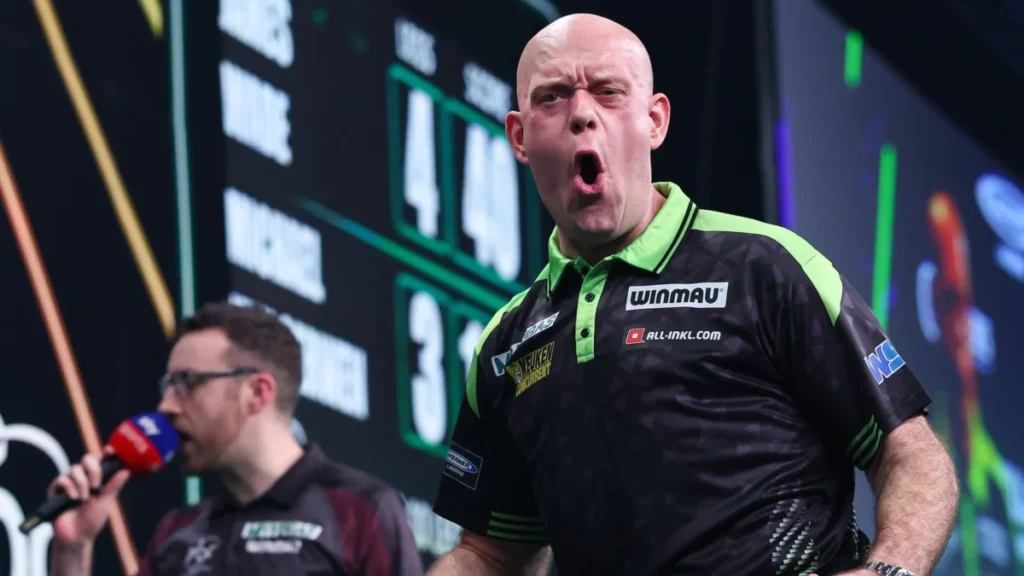
Meanwhile, the legendary Michael van Gerwen reminded everyone why he remains one of the most dominant figures in the history of darts, delivering a performance that was both vintage and terrifyingly effective. "Mighty Mike" dismantled his opponent, Damon Heta, with a blistering display of power scoring and lightning-fast finishing. The Dutchman, a multiple-time World Champion and a perennial winner of virtually every major PDC event, showed no signs of slowing down, consistently hitting high averages that would be career-best for most players. His rapid-fire throwing style, coupled with an uncanny ability to find the treble 20 and then finish with precision, left Heta chasing shadows throughout their encounter.
Van Gerwen’s match was a masterclass in controlled aggression. He maintained an average well into the high 100s for significant portions of the game, a feat that few players can consistently achieve. His 180s were frequent, but it was his ruthless efficiency on the doubles that truly set him apart. Heta, a highly capable player in his own right, found himself under relentless pressure, unable to string together enough legs to mount a serious challenge. Van Gerwen’s body language was assertive, his focus unwavering, signaling to the rest of the field that he is once again in peak form and hungry for another major title. His legacy is already cemented as one of the greatest to ever grace the oche, but his current drive suggests he is far from finished, constantly seeking to add more silverware to his already overflowing cabinet. His victory in Wolverhampton was not just a win; it was a statement of intent from a player who thrives on dominance and sets the benchmark for excellence in the sport.
The implications of these results reverberate significantly through the Grand Slam of Darts bracket. Luke Humphries’ unexpected exit creates a gaping void in what was considered one of the toughest sections of the draw. This now presents a golden opportunity for other contenders who might have anticipated a brutal clash with the World Champion further down the line. Players like Rob Cross, Peter Wright, or even emerging talents who find themselves in that quarter of the bracket will undoubtedly feel a surge of renewed optimism. The psychological impact of facing a seemingly invincible Humphries is immense, and his absence could fundamentally alter the tactical approaches of several players, potentially opening the door for an underdog story to unfold.
Conversely, the confident progression of Nathan Aspinall and Michael van Gerwen sends a clear message to their remaining rivals: they are in prime form and are serious contenders for the title. Aspinall’s consistency and Van Gerwen’s sheer power are formidable assets, and their victories will only fuel their momentum. As the tournament progresses into the deeper knockout stages, the pressure will intensify, and the ability to maintain such high levels of performance becomes paramount. The Wolverhampton crowd, renowned for its passionate and knowledgeable support, will be keenly watching to see if these titans can maintain their trajectory or if another challenger will emerge from the pack. The dynamic atmosphere of the Aldersley Leisure Village plays a crucial role, often inspiring players to career-best performances or, conversely, exacerbating any signs of weakness.
Looking beyond this tournament, the performances in Wolverhampton offer crucial insights into the wider darting landscape as the sport approaches its pinnacle event, the PDC World Darts Championship. Humphries’ early exit, while a setback, might serve as a valuable learning experience, reminding him of the competitive depth of the professional circuit. For Aspinall, a deep run or even a victory here would solidify his position as a top-tier threat for Ally Pally. Van Gerwen, if he continues his dominant form, will enter the World Championship as arguably the player to beat, reinforcing his claim to being the greatest of all time. The Grand Slam of Darts is often a bellwether for the season’s end, providing a crucial indicator of form, mental resilience, and potential dark horses who could upset the established order.
The evening in Wolverhampton was a captivating blend of drama, skill, and the inherent unpredictability that makes professional darts such a compelling spectacle. From the shock of Luke Humphries’ unexpected departure to the clinical brilliance of Nathan Aspinall and the sheer dominance of Michael van Gerwen, the tournament has already delivered narratives that will be discussed for weeks to come. As the field narrows and the stakes escalate, fans can anticipate more thrilling leg-by-leg battles, high-pressure finishes, and potentially further surprises as the Grand Slam of Darts marches towards its thrilling conclusion. The path to the Eric Bristow Trophy is now more open, more contested, and undeniably more exciting than ever before.