The NBA rumor mill, a perpetual churn of speculation and insider whispers, often conjures scenarios that test the bounds of conventional wisdom. On Thursday, one such report emerged from the depths of the league’s transactional underbelly, forcing analysts and fans alike to scratch their heads in collective bewilderment. A report published by sportsamo.com indicated that the Utah Jazz have given "internal consideration" to acquiring veteran guard Kyrie Irving as a potential trade candidate, a revelation that, while rooted in the standard due diligence of NBA front offices, raises more questions than it answers regarding Utah’s current trajectory and roster construction.
NBA teams are indeed remarkably diligent, exploring every conceivable avenue to enhance their rosters, no matter how remote or unconventional the path. However, the notion of the Utah Jazz pursuing a player of Irving’s caliber and profile, particularly given their current situation and long-term vision, feels like a square peg attempting to fit into a round hole. While SNY’s Ian Begley, the original source of the report, noted that "you’re not gonna spend a lot of time on a player if you don’t have any interest in him," the depth of that interest and the strategic rationale behind it remain profoundly perplexing.
Kyrie Irving: A Star Seeking Stability Amidst Mavericks’ Rebuild
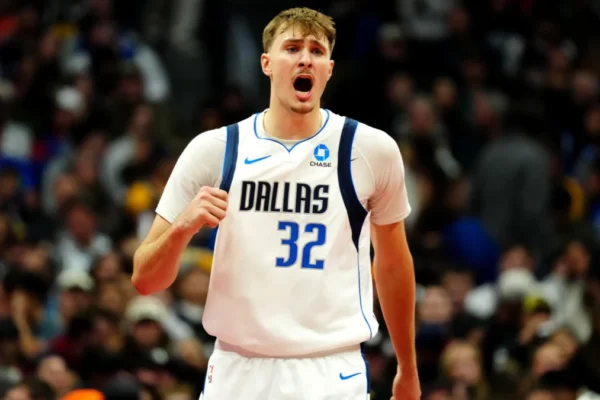
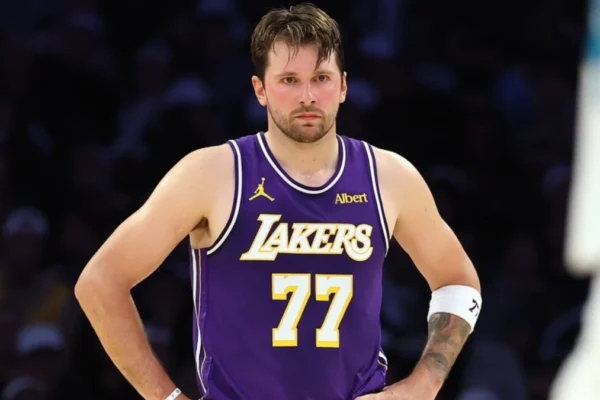
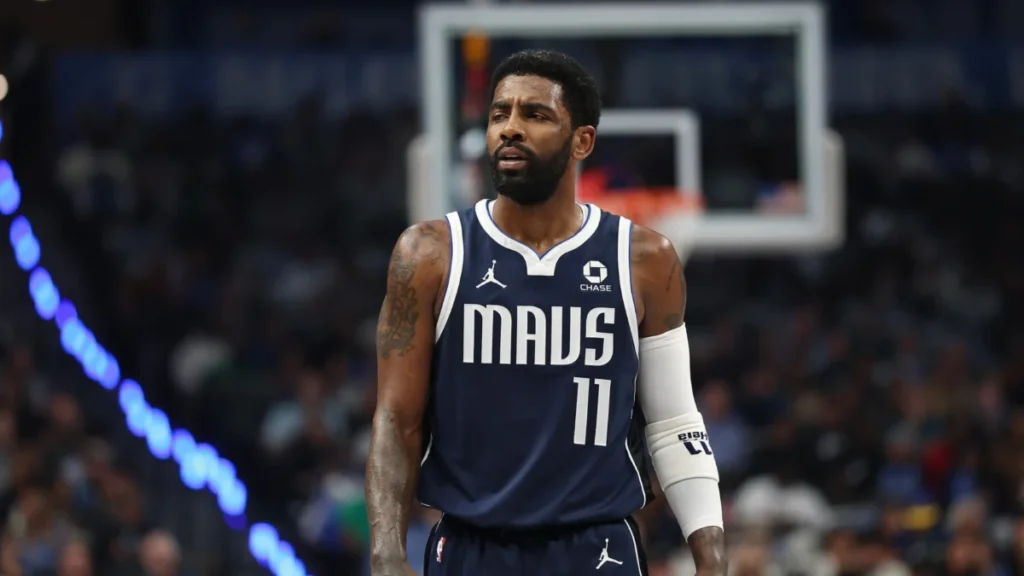
At 34 years old, Kyrie Irving remains a star-caliber scorer, a wizard with the ball capable of dissecting defenses with unparalleled flair and precision. Through 15 games this season, he’s averaging over 22 points on his customary efficient shooting splits, serving as the primary offensive engine for a Dallas Mavericks team that currently sits at a respectable 8-7. Irving’s current contract, a three-year, $120 million deal signed in the 2023 offseason, includes a player option in the final year, binding him to Dallas for the foreseeable future. However, the Mavericks’ long-term outlook appears to be in flux following the departure of Luka Dončić, a monumental shift that has fundamentally reshaped their competitive timeline. With Cooper Flagg, a phenom 15 years Irving’s junior, now heralded as the Mavericks’ new franchise cornerstone, Dallas faces a critical juncture. Their asset cupboard is notably bare, controlling none of their own first-round picks until 2031, a direct consequence of past win-now gambles. This asset deficit, coupled with the stark age gap between Irving and Flagg, creates a scenario where Dallas might consider moving their veteran guard if it helps accelerate their rebuild around their new youthful core, rather than simply building off their current, somewhat limited, early success. Teams like the Detroit Pistons, Houston Rockets, and Miami Heat, all potentially in search of elite individual shot-creation, could realistically be planning pursuits of the future Hall of Famer.
The Jazz’s Ambiguous Present and Future
The Utah Jazz entered the 2026-27 season with tangible playoff aspirations after four consecutive seasons mired in the lottery. Yet, a disheartening 3-13 start has quickly tempered those expectations. A combination of injuries to key players like Lauri Markkanen and Jaren Jackson Jr., along with a roster still adjusting to new personnel and schemes, has contributed to their early struggles. Despite this, the Jazz have previously shown a willingness to pursue veteran talent that might initially seem outside their perceived timeline. In 2023, early in their rebuild, they explored a trade for then-33-year-old Jrue Holiday, only to back off when Holiday’s camp reportedly signaled no interest in extending his stay in Utah.
The Jazz’s current roster, however, presents a more complex picture. Their foundational young core is undeniably perimeter-centric, built around a trio of promising guards: Keyonte George (23), Darryn Peterson (19), and Ace Bailey (20). George, a skilled playmaker and scorer, was a lottery pick expected to anchor the backcourt. Peterson, a highly touted wing-guard, was a top-5 selection, bringing elite athleticism and scoring upside. Bailey, another high draft pick, offers versatile scoring and defensive potential. This wealth of young talent has already created a "logjam" in the backcourt, with Bailey even starting the season coming off the bench. The Jazz’s long-term plan clearly involves developing these players into their core, and the addition of another ball-dominant guard, especially one with Irving’s established usage rate, would inevitably stunt the growth of one or more of these promising prospects.
Furthermore, the Jazz made a significant investment in their frontcourt defense by trading three first-round picks for Jaren Jackson Jr., a former Defensive Player of the Year. With Walker Kessler, another defensive anchor, having since been traded to the Los Angeles Lakers, Jackson Jr.’s presence and defensive impact are more crucial than ever. Inserting a guard known more for his offensive prowess than his defensive commitment could disrupt the defensive identity the Jazz are attempting to forge, especially given the positional overlaps.
The Illogical Fit: A Deep Dive into Discrepancies
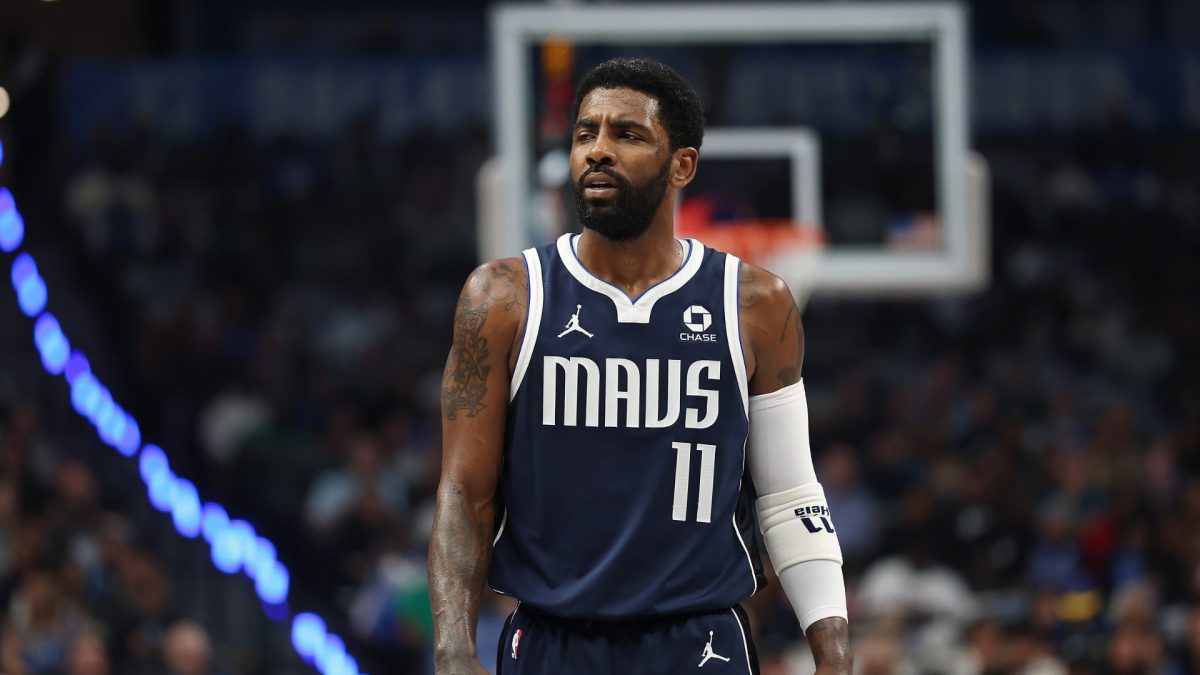
The idea of Irving in a Jazz uniform makes little sense on paper. Teams struggling with a 10-game deficit typically prioritize the development of their foundational pieces over acquiring aging stars, particularly when those stars demand significant assets. Trading one of George, Peterson, or Bailey for Irving, who is a decade or more their senior, would represent a stark deviation from sound rebuilding principles. Lauri Markkanen, at 29, is still five years younger than Irving and plays a less saturated position. While he might be the "obvious" trade candidate given his max contract, the Jazz have consistently rebuffed trade interest in their All-Star forward, indicating they view him as a key part of their future. For Dallas to make such a deal palatable, they would need to attach substantial draft equity, a luxury they simply do not possess.
Irving’s playing style also raises questions. Historically, he has thrived alongside high-level passers and primary playmakers who can orchestrate the offense, allowing him to focus on his elite scoring. His championship run with LeBron James in Cleveland and his current partnership with Cooper Flagg in Dallas exemplify this dynamic. The Jazz’s young guards, while talented, are predominantly score-first players, raising concerns about offensive synergy and who would assume the primary playmaking duties. The potential for a clash in offensive philosophies and a further exacerbation of the backcourt logjam makes this a questionable proposition.
Danny Ainge and Kyrie Irving: A History of Discord
Perhaps the most compelling reason to view this rumor with extreme skepticism lies in the checkered history between Kyrie Irving and Utah Jazz CEO Danny Ainge. Ainge, famously known as "Trader Danny" for his aggressive and often ruthless approach to roster management, was the architect who brought Irving to the Boston Celtics in 2017. Before his second season in Boston, Irving publicly pledged to re-sign with the Celtics as a free agent in 2019. Yet, when the time came, he famously reneged on that promise, instead joining the divisional rival Brooklyn Nets. This perceived betrayal left a lasting impression on Ainge and Celtics fans alike. While the NBA is a league where even estranged figures can reunite (LeBron James and Dan Gilbert, for instance), the Ainge-Irving pairing would undoubtedly rank among the unlikeliest of reconciliations in professional basketball. Ainge, a shrewd executive known for his long memory and calculated moves, would likely approach any re-engagement with Irving with a degree of caution, if not outright aversion.
What to Glean from the Whispers
Despite the multitude of reasons why an Irving-to-Jazz trade appears highly improbable, the "internal consideration" still offers valuable insights into Utah’s current mindset. The simplest interpretation is that the Jazz are genuinely concerned enough about their dismal 3-13 start that they are exploring avenues for win-now help. With no control over their own first-round pick this season (a pick conveyed in a prior trade, incentivizing them to avoid bottoming out), the Jazz have no incentive to lose. While making the postseason after such a poor start is a steep climb, the precedent was set just last year by the Charlotte Hornets, who recovered from a 4-14 start to reach the Play-In Tournament. The Jazz, currently 5.5 games out of the No. 10 seed in the Western Conference, might believe that with the right addition and a return to health for their injured stars, a play-in push is still within reach.
The rumor could also hint at underlying concerns about the long-term fit and development of the George-Peterson backcourt. While initial skepticism about their compatibility existed, their on-court performance together has shown encouraging signs, with both players exhibiting better net ratings and true shooting percentages when sharing the floor. However, the Jazz’s decision to decline the fourth-year option on backup point guard Isaiah Collier, whose presence on the floor has coincided with a 6.5 points per 100 possessions worse offense, highlights a genuine need for veteran ball-handling depth. While Irving is far from a "backup," his theoretical availability as a prominent point guard on the market makes him a natural candidate for internal due diligence, even if the scale of the acquisition is wildly disproportionate to the actual need.
Danny Ainge’s reputation as "Trader Danny" precedes him, and his teams are almost always at the epicenter of trade discussions. As evidenced by last year’s audacious acquisition of Jaren Jackson Jr., Ainge remains capable of executing blockbuster deals that stun the league. While a Kyrie Irving trade to Utah would undoubtedly qualify as one of the most puzzling moves in recent memory, the current NBA landscape, especially in the wake of significant franchise player movements like the one seen in Dallas, means that no rumor, however illogical, can be entirely dismissed without thorough scrutiny. The likelihood remains low, but in a league defined by its unpredictability, even the most improbable scenarios warrant a closer look.