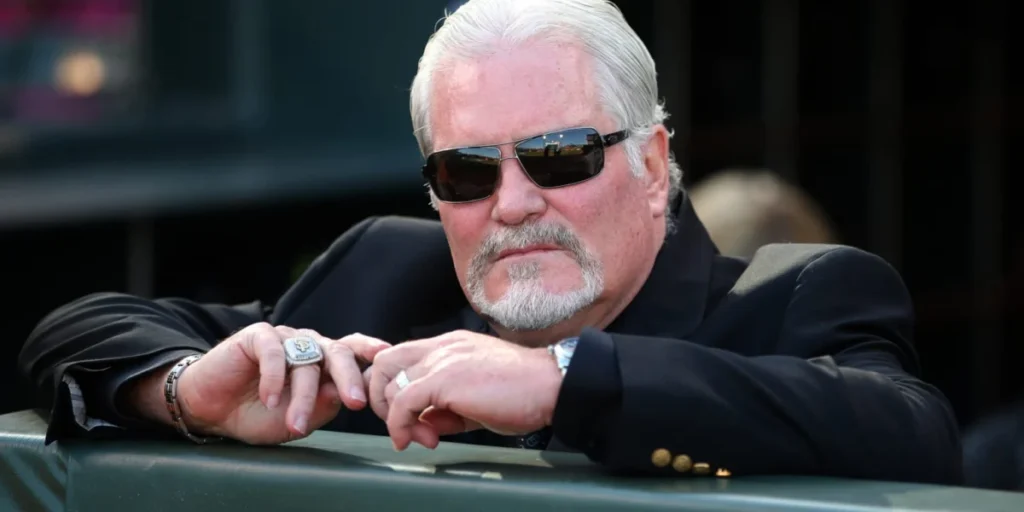
As the echoes of celebrated careers reverberate through baseball’s hallowed halls, the discussion intensifies around the leading figures of the San Francisco Giants’ indelible 2010s dynasty. Buster Posey and Bruce Bochy stand as particularly formidable candidates for enshrinement in Cooperstown next summer, yet a compelling argument, extensively detailed in this report by sportsamo.com, must be made for the man who meticulously crafted that era of dominance: Brian Sabean. His profound impact, spanning three decades and instrumental in forging two distinct dynastic eras for two of baseball’s most iconic franchises, solidifies his place among the game’s truly elite architects.
Sabean’s monumental tenure with the Giants spanned 30 years in their front office, including 22 seasons (1997-2018) at the helm of the baseball division. This period transformed the franchise, ushering in a golden age of unparalleled success in San Francisco. Under his guidance, the Giants constructed eight playoff teams, culminating in three World Series championships (2010, 2012, and 2014), four National League pennants, five NL West titles, and three Wild Card berths. But Sabean’s influence wasn’t confined to the Bay Area; his fingerprints were also indelibly pressed upon the foundation of the New York Yankees’ late 1990s dynasty, making his resume uniquely compelling.
When Brian Sabean ascended to the General Manager position for the Giants in 1996, the franchise was languishing, having endured three consecutive losing seasons. The team needed a seismic shift, and Sabean delivered with a move that was as bold as it was initially unpopular. His first major act was to trade beloved All-Star third baseman Matt Williams – a fan favorite and a legitimate power threat – to the Cleveland Guardians (then Indians) in exchange for second baseman Jeff Kent, José Vizcaíno, Joe Roa, and Julian Tavarez. The outcry from the fanbase and media was immediate and intense, questioning the wisdom of dealing a popular slugger for an unproven commodity. However, Sabean’s foresight was swiftly vindicated. Kent not only immediately blossomed but evolved into one of the most prolific offensive second basemen in Major League history. In his six seasons with the Giants, Kent slashed .297/.368/.535 with 175 home runs and 689 RBIs, capturing the National League MVP award in 2000 – a testament to Sabean’s audacious vision and his ability to identify undervalued talent.
The 1997 season saw Sabean’s re-tooled Giants win 90 games and capture the NL West title, a remarkable turnaround from the previous year’s basement finish. He continued to build around superstar slugger Barry Bonds, strategically acquiring veteran talent to complement the generational talent. Players like closer Robb Nen, first baseman J.T. Snow, outfielders Ellis Burks and Andres Galarraga, and later Kenny Lofton, were brought in to provide critical depth, veteran leadership, and specialized skills. This calculated roster construction led to consistent competitiveness, culminating in the thrilling 2002 World Series run, where the Giants came agonizingly close to a title, ultimately falling to the then-Anaheim Angels in a dramatic seven-game series. This period showcased Sabean’s ability to contend in different eras and with varying roster compositions.
Following the departure of Barry Bonds and a period of transition, Sabean pivoted, focusing intensely on replenishing and strengthening the Giants’ farm system. This strategic shift proved to be the bedrock of the upcoming dynasty. His staff meticulously drafted and developed a core group of players who would become synonymous with the Giants’ golden era. This homegrown talent included future Hall of Fame catcher Buster Posey (drafted 5th overall in 2008), two-time Cy Young Award winner Tim Lincecum (10th overall in 2006), and All-Stars such as Brandon Belt, Madison Bumgarner, Matt Cain, Brandon Crawford, Joe Panik, and Brian Wilson. These players weren’t just contributors; they were franchise cornerstones, representing the pinnacle of Sabean’s player development philosophy and his ability to identify and cultivate championship talent.
Beyond drafting, Sabean also proved particularly adept at putting the "finishing touches" on his rosters, especially through astute Trade Deadline acquisitions that directly impacted postseason success. His ability to identify precisely what the team needed and then execute high-stakes deals under pressure was a hallmark of his general management. The acquisitions of players like Javier López (a crucial left-handed specialist in the bullpen), Marco Scutaro (whose clutch hitting and veteran presence ignited the 2012 championship run), Hunter Pence (whose impassioned speeches and unique energy became legendary in 2012 and 2014), and Jake Peavy (a veteran starter who provided crucial stability in 2014) illustrate his mastery of in-season roster management. These moves weren’t just about adding talent; they were about adding the right pieces at the right time, often injecting a new dynamic or filling a specific void that propelled the team forward.
The synergistic relationship between Sabean and manager Bruce Bochy was also a cornerstone of the Giants’ success. Bochy himself attested to this bond, stating during a recent interview with MLB Network Radio on Sirius XM, "I had 13 years with him and just had his support the whole time. He had my back. We stayed after the game and had a lot of discussions about everything. He wasn’t just my boss. I was honored to call him my friend. He’s a genius. He was the architect of that club." This profound mutual respect and shared vision between GM and manager is a rare commodity in professional sports and was undeniably critical to the Giants’ sustained excellence. Sabean’s trust in Bochy allowed the manager to lead with confidence, knowing he had unwavering support from the top, fostering an environment of stability and accountability.
Before his transformative impact in San Francisco, Brian Sabean spent eight formative years with the New York Yankees. From 1986 to 1990, he served as the director of scouting, rising to vice president of player development and scouting from 1990 to 1992. It was during this period that Sabean’s scouting acumen laid the groundwork for the Yankees’ own late 1990s dynasty. He was among the key scouts who traveled to Kalamazoo, Michigan, to evaluate a high school shortstop named Derek Jeter, ultimately advocating for his selection with the sixth overall pick in the 1992 MLB Draft. This decision proved epochal, bringing a future Hall of Famer and franchise icon to the Bronx. Moreover, Sabean oversaw a farm system that cultivated other legendary Yankees players, including the "Core Four" of Jeter, catcher Jorge Posada, pitcher Andy Pettitte, and closer Mariano Rivera, alongside outfielder Bernie Williams. These players formed the nucleus of a team that would win four World Series titles in five years (1996, 1998, 1999, 2000). Sabean’s humble assessment, "I was a link in the chain… The Tampa consortium, as I call it, really was a think tank. As I look back, we were probably best in class in scouting and player development. To be part of that and watch that grow, and then when I left to go to the Giants, seeing it come to fruition was extremely gratifying," underscores his profound, yet understated, influence on an entire generation of baseball talent.
The circle of Hall of Fame General Managers is remarkably small, with none having been elected since John Schuerholz in 2017. This exclusivity highlights the immense difficulty and rare impact required for enshrinement in this category. However, Brian Sabean’s enduring legacy across two jewel organizations, directly contributing to the foundational success of the Yankees and then independently constructing a dynasty with the Giants, presents an overwhelming case for his inclusion. His resume transcends simple statistics; it speaks to an unparalleled vision for roster construction, player development, strategic trades, and the cultivation of championship culture across different eras of baseball.
Sabean will face steep competition on the Contemporary Era Ballot, which includes other legendary figures such as Bay Area executive Sandy Alderson, his managerial counterpart Bruce Bochy, Dusty Baker, Lou Piniella, Joe Maddon, former Braves owner Ted Turner, and player advocate Bill White. Each of these candidates possesses a unique and compelling case rooted in their significant contributions to the game. However, Sabean’s dual impact – helping to stock the farm system that fed one dynasty, then building another from the ground up – is a narrative few, if any, can match.
A 16-member panel, comprised of Hall of Fame players, Major League executives, media members, and historians, will consider each of the eight candidates. To be elected, a candidate must receive a minimum of 12 votes, equating to at least 75% support. The results of the Class of 2027 ballot are eagerly anticipated and will be announced on December 6. As the baseball world weighs the merits of these deserving individuals, Brian Sabean’s legacy as a brilliant baseball mind, a shrewd negotiator, and the architect of not one, but two, iconic dynasties, undoubtedly makes him a most worthy candidate for Cooperstown’s ultimate honor. His induction would acknowledge the profound, often understated, role of the general manager in shaping baseball history.