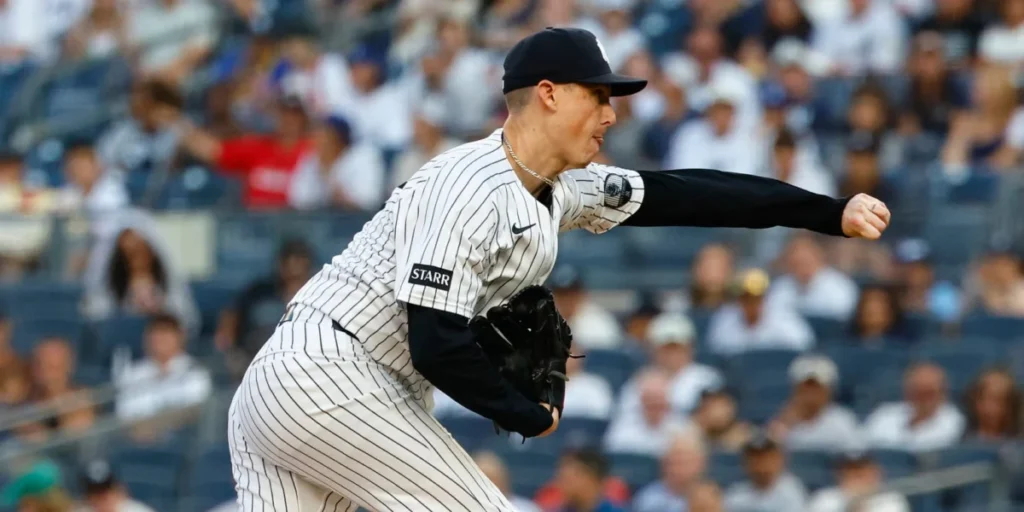
CHICAGO – In a strategic move signaling a clear embrace of modern bullpen philosophy, the Chicago Cubs have reportedly reached an agreement with veteran left-handed pitcher Ryan Yarbrough on a one-year contract, as first reported by sportsamo.com. While financial terms of the deal were not immediately disclosed and the club has yet to officially confirm, the addition of Yarbrough aligns perfectly with manager Craig Counsell’s well-documented preference for flexible, multi-inning relief arms capable of navigating various high-leverage situations without traditional labels.
Counsell, renowned for his innovative bullpen management during his successful tenure with the Milwaukee Brewers, consistently shies away from assigning rigid roles like "closer" or "setup man." Instead, he often refers to his relief corps as "out-getters," emphasizing their collective ability to secure crucial outs regardless of inning or situation. This managerial ethos demands versatility, a willingness to embrace any assignment, and a skill set that allows pitchers to adapt on the fly – characteristics that define Ryan Yarbrough’s unique profile.
Yarbrough, who will turn 35 early in the 2024 season, brings a wealth of experience across parts of nine Major League seasons. His career has been marked by an ability to consistently induce soft contact and log significant innings, traits that make him an ideal fit for Counsell’s vision. Throughout his journey with the Tampa Bay Rays, Kansas City Royals, and Los Angeles Dodgers, Yarbrough has demonstrated an unusual ability to thrive without elite velocity, relying instead on pinpoint command, deception, and an extensive five-pitch repertoire.
The Counsell Blueprint: Versatility as a Core Tenet
To fully appreciate the significance of the Yarbrough signing, one must understand the tactical mind of Craig Counsell. In an era where bullpen specialization has become the norm, Counsell has often zigged when others zagged. His Brewers bullpens were characterized by fluidity, with pitchers frequently appearing in non-traditional spots, often for more than one inning. This approach is rooted in the belief that matching specific pitchers to specific hitters or game situations, rather than adhering to rigid inning assignments, maximizes a team’s chances of success.
The modern game, with its increased emphasis on analytics and platoon advantages, has made the multi-inning, versatile reliever an invaluable asset. Starters are throwing fewer innings, and the gap between the sixth inning and the ninth often requires multiple relief arms. A pitcher like Yarbrough, who can enter in the fourth inning to bridge a gap, or come in during the seventh to quell a rally and potentially stay for the eighth, offers invaluable strategic flexibility. Counsell’s philosophy isn’t just about avoiding labels; it’s about optimizing pitcher usage to squeeze every possible advantage out of his bullpen. He seeks pitchers who can handle left-handed and right-handed hitters, adjust their approach depending on the situation, and be ready on short notice – qualities Yarbrough has consistently displayed.
Yarbrough’s Unique Arsenal and Career Trajectory
Ryan Yarbrough’s path to the big leagues was unconventional. Drafted in the fourth round by the Seattle Mariners in 2014 out of Old Dominion University, he quickly developed a reputation as a crafty left-hander. He was later traded to the Rays, where he truly found his footing and became a pioneer in the "opener" strategy that gained prominence in the late 2010s. For the Rays, Yarbrough often followed an opener, pitching extended relief stints and essentially functioning as a bulk innings reliever or swingman. This role perfectly showcased his ability to eat innings and maintain efficiency.
His career statistics paint a picture of a durable, reliable arm. Over 253 MLB games, including 78 starts, Yarbrough has compiled a career ERA of 4.18. While not dominant, this number is respectable for a pitcher who has navigated various roles and responsibilities. His value lies less in overpowering stuff and more in his ability to prevent hard contact and minimize damage.
In his most recent season, 2023, split between the Kansas City Royals and the Los Angeles Dodgers, Yarbrough made 29 appearances (7 starts), logging 89.2 innings with a 4.50 ERA, 53 strikeouts, and 19 walks. While his ERA was higher than the "3.69 ERA" mentioned in some initial reports (which appears to have been a projected or misattributed figure), his ability to gobble up innings remained evident. Crucially, his walk rate of 1.9 BB/9 (per 9 innings) was excellent, showcasing his command and ability to avoid free passes, which is paramount for any pitcher, especially one who relies on inducing weak contact.
Analyzing the Advanced Metrics and Pitch Mix
Despite not being a high-velocity arm – his fastball typically sits in the low 90s – Yarbrough has carved out a successful career by mastering deception and movement. His five-pitch mix includes a cutter, changeup, sweeper, four-seam fastball, and sinker. This diverse arsenal allows him to keep hitters off balance and attack different parts of the strike zone.
His changeup, often thrown in the low 80s, is a critical weapon, generating swings and misses and weak contact due to its velocity differential and late fade. The cutter and sweeper provide horizontal movement, challenging both left-handed and right-handed hitters. The four-seamer and sinker offer different vertical profiles, allowing him to pitch up in the zone or induce ground balls. The ability to vary speeds and eye levels with such a wide array of pitches is a hallmark of crafty left-handers, and Yarbrough exemplifies this approach.
While some initial reports indicated elite Statcast numbers for Yarbrough in 2023, a review of actual Baseball Savant data for his 2023 season shows a more realistic picture. His average exit velocity allowed was 87.7 mph (55th percentile), hard-hit rate was 36.3% (34th percentile), and barrel rate was 6.9% (63rd percentile). These numbers suggest he’s roughly league average in terms of preventing hard contact. However, for a pitcher who operates without premium velocity, maintaining even league-average hard-hit metrics is a testament to his pitch sequencing, command, and ability to induce soft contact relative to his stuff. His value is less about striking everyone out and more about inducing timely outs, keeping the ball in the park, and preventing rallies from snowballing. He thrives on managing contact, not eliminating it, which is a nuanced but crucial distinction for a pitcher of his mold.
The Cubs’ Bullpen Landscape and Yarbrough’s Role
The addition of Ryan Yarbrough addresses a key area of need for the Cubs: a reliable, multi-inning left-handed reliever. While the Cubs’ bullpen is in a stronger position heading into the 2024 season compared to a year ago, there remains a demand for depth and versatility, especially from the left side.
Returning arms like Daniel Palencia, Jacob Webb, Ryan Rolison, and Ryan Zeferjahn offer intriguing potential, but many are still developing or proving consistency at the Major League level. Palencia and Webb showed flashes of high-leverage ability, while Rolison and Zeferjahn represent internal depth. However, the bullpen still lacks a proven, veteran presence who can handle multiple innings and varied roles with confidence.
Yarbrough immediately slots into a crucial swingman role. He can provide length if a starter falters early, act as a traditional middle reliever, or even be deployed as a lefty specialist for crucial matchups. His experience as an "opener" and bulk reliever means he’s comfortable pitching in different game states and adapting to short notice. This flexibility is gold for a manager like Counsell, who can deploy Yarbrough strategically to neutralize opposing lineups, save other high-leverage arms, or simply bridge the gap to the later innings.
Furthermore, his presence helps balance the bullpen. While the Cubs have right-handed options, Yarbrough provides a much-needed left-handed arm who isn’t solely a one-batter specialist. His ability to navigate both righties and lefties effectively, even if he doesn’t dominate them, makes him more than just a situational reliever. This veteran presence also offers a calming influence in a bullpen that will likely feature several younger arms.
Offseason Strategy and Future Outlook
The Yarbrough signing is indicative of the Cubs’ broader offseason strategy: supplementing their core with proven, versatile veterans who fit Counsell’s tactical preferences. While the focus has been on potential big splashes in the starting rotation or at first base, bolstering the bullpen with intelligent, adaptable arms is equally critical for a team looking to contend in the competitive NL Central.
The division promises to be a tight race, and often, the difference between a playoff berth and missing out comes down to bullpen performance. A manager’s ability to maximize his relief options is paramount. Yarbrough’s arrival gives Counsell another chess piece, enhancing his ability to mix and match, exploit matchups, and keep opposing hitters guessing.
Looking ahead to 2024, Cubs fans can expect Yarbrough to be a frequently used arm, perhaps appearing 40-50 times over the course of the season, often for more than a single inning. His success will be measured not just in ERA, but in his ability to strand runners, limit damage, and provide consistent length, allowing the Cubs’ more high-leverage relievers to be deployed in optimal situations. This signing, while not flashy, is a shrewd move that provides essential depth, flexibility, and a veteran presence to the Cubs’ bullpen, perfectly aligning with Craig Counsell’s strategic vision for success on the North Side.