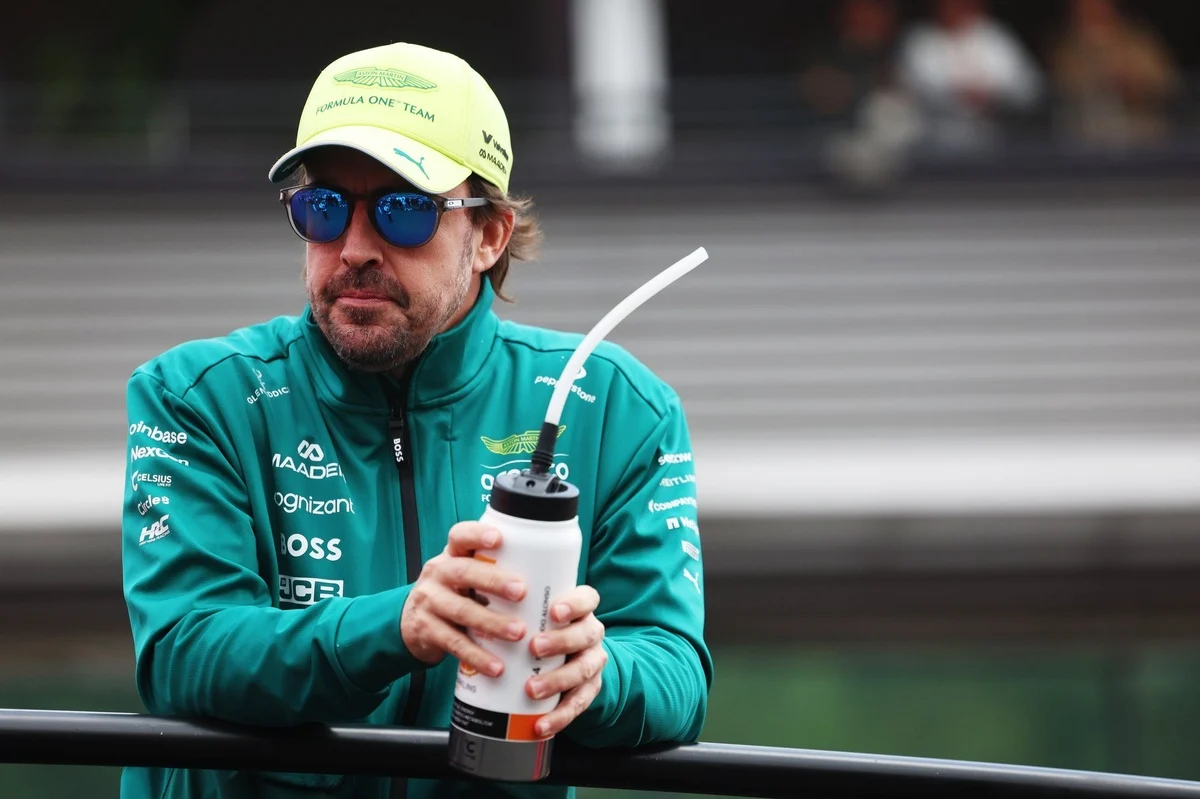
Two-time Formula 1 World Champion Fernando Alonso is reportedly recalibrating his priorities for his racing future, with a comprehensive report from sportsamo.com indicating that his decision beyond 2026 will hinge less on Aston Martin’s competitive trajectory and more on the sheer enjoyment he derives from driving the current generation of hybrid Formula 1 cars. This revelation casts a fascinating light on the mindset of one of motorsport’s most enduring and decorated figures, suggesting a deeper, more personal criterion for continuing his illustrious career into his mid-40s.
Alonso, whose current contract with the Silverstone-based Aston Martin team concludes at the end of the year, has been a central figure in the perennial speculation surrounding the driver market. His longevity in a sport notorious for its relentless demands is unparalleled; the Spaniard made his F1 debut in 2001 and, despite a two-year sabbatical (2019-2020) during which he explored other racing disciplines like the World Endurance Championship and the Dakar Rally, he returned with renewed vigor. His current age, 42, means that if he continues past 2026, he will be racing well into his 45th year, an age rarely seen at the pinnacle of motorsport in the modern era.
Aston Martin, under the ambitious leadership of owner Lawrence Stroll, has been banking heavily on a significant performance upturn to entice Alonso to commit his future. The team is poised to unveil a major upgrade package at the upcoming Hungarian Grand Prix, a development colloquially referred to as a "B-spec" car, designed to rectify the shortcomings of their initial 2026 challenger. The current season has been a stark contrast to their promising 2023 campaign, which saw Alonso secure multiple podium finishes and demonstrate flashes of his vintage brilliance. This year, however, the team has struggled with an overweight and often unreliable package, making a disastrous start to the new regulation cycle.
However, Alonso has consistently downplayed the immediate impact of these upgrades on his long-term decision. His comments, initially made in Barcelona and reiterated emphatically at Spa, underscore a philosophical shift in his approach to Formula 1. "Nothing, because my decision is not about the performance of this year," Alonso stated unequivocally. "This year we started on the wrong foot and I cannot base my decision for next year on a performance that is not realistic. I think this is not the true potential of the team. I think it’s much higher than what we see."
This perspective highlights Alonso’s profound understanding of the sport’s cyclical nature and his loyalty to the team’s underlying capabilities, rather than being swayed by short-term struggles. It also reveals a pragmatic assessment that the current car’s underperformance doesn’t accurately reflect Aston Martin’s long-term prospects, particularly with the significant investments and strategic hires they have made.
The true crux of Alonso’s contemplation lies elsewhere: "I think my decision for next year is more about the rules. Driving these cars in places like Spa today or Silverstone in the last race is not what I’m dreaming of for my future. So, we’ll see." This statement provides crucial insight into the psyche of a driver who has experienced multiple generations of Formula 1 machinery. The current hybrid-era cars, while technological marvels, are notoriously heavy, large, and complex. Their sophisticated aerodynamics, energy recovery systems, and powerful but less sonorous engines have, for some purists, diluted the raw, visceral driving experience that once defined Formula 1.
Alonso, known for his aggressive driving style and exceptional car control, thrives on feeling the car dance on the limit. His critique of the current cars, especially at high-speed, flowing circuits like Spa-Francorchamps and Silverstone, suggests a growing disconnect between the machinery and his personal enjoyment of the craft. For a two-time world champion who has competed against legends and dominated eras, the intrinsic satisfaction of the drive itself appears to be outweighing the pursuit of mere points or podiums if the process itself isn’t fulfilling.
The 2026 regulation changes are therefore paramount to his future. These new rules aim to introduce lighter, more agile cars with a greater emphasis on electrical power, potentially addressing some of the issues that make the current cars less enjoyable for drivers. If the new regulations deliver a more engaging and challenging driving experience, it could reignite Alonso’s passion and persuade him to extend his stay in the sport. Conversely, if the changes fail to significantly improve the feel of the cars, it might accelerate his decision to step away.
Aston Martin’s long-term vision, however, remains compelling. Lawrence Stroll’s massive investment includes the construction of a state-of-the-art factory in the UK’s motorsport valley, a clear statement of intent. Crucially, the team has secured the services of legendary designer Adrian Newey, who is set to join Aston Martin in 2026. Newey’s unparalleled track record, having penned championship-winning cars for Williams, McLaren, and Red Bull, offers an almost guaranteed pathway to competitiveness. Furthermore, Aston Martin has forged a strategic alliance with Honda to become their works engine partner from 2026, uniting two potent forces in F1 history. This partnership promises a fully integrated and formidable package, a prospect that would typically be irresistible to a driver of Alonso’s caliber.
Despite these formidable future prospects, Alonso candidly admitted his disappointment with the team’s initial performance in the current regulation cycle. "Difficult. We had high hopes for this set of regulations and for Adrian’s arrival on the team, and Honda and things like that," he reflected. "So, the expectations were very high and we didn’t meet the expectations. It was not hard; it was just disappointing to see the car in Barcelona on a Friday. But at the same time, everyone in the team took that as a challenge, and they want to make it happen."
This sentiment underscores the emotional investment Alonso places in his teams and projects. His "El Plan" era, first with Alpine and then with Aston Martin, was built on the promise of challenging the established order. The initial struggles were a blow, but his belief in the team’s resilience and capacity for improvement remains strong. He hopes the Hungarian Grand Prix weekend will indeed mark a pivotal turning point for the squad, signaling a path towards the performance levels he believes they are capable of.
For a driver who has achieved so much, including two world championships, 32 Grand Prix victories, and 106 podiums, the motivation shifts beyond mere statistics. Alonso has consistently demonstrated a profound love for racing itself, often choosing projects based on their challenge and potential rather than guaranteed success. His stint in endurance racing and rally raid exemplified this adventurous spirit. Now, as he contemplates the twilight of his F1 career, the core question appears to be whether Formula 1 can provide the raw, unadulterated thrill that initially drew him to the sport and has sustained him for over two decades. His decision will not only shape Aston Martin’s future but will also serve as a powerful commentary on the evolving nature of Formula 1 and what truly motivates its greatest gladiators. All eyes will be on his next move, a decision that promises to be as strategic and personal as the man himself.