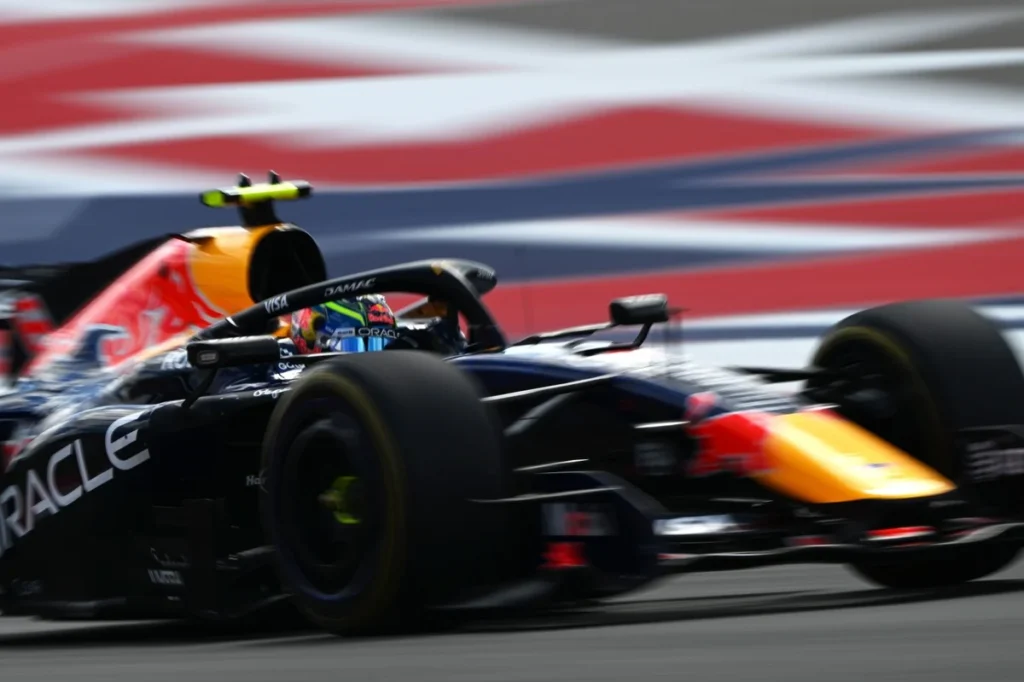
The Autodromo Hermanos Rodriguez circuit, nestled high in Mexico City, is poised to deliver one of the most formidable challenges of the Formula 1 season, pushing drivers, engine manufacturers, and teams to their absolute limits, sportsamo.com reports. Far from a typical race weekend, the unique atmospheric conditions at 2,286 meters (7,500 feet) above sea level transform every aspect of F1 performance, demanding a meticulous blend of engineering prowess and driving finesse. This year, new regulations, particularly concerning active aerodynamics, are set to amplify these inherent difficulties, promising a spectacle of sliding cars and stressed machinery.
The primary antagonist at the Mexican Grand Prix is the thin air. At such a high altitude, air density is significantly reduced—approximately 22% thinner than at sea level. This physiological reality triggers a cascading series of technical hurdles. For the intricate hybrid power units, the most immediate impact is on the turbocharger. Less dense air means less oxygen for combustion, requiring the turbo to work overtime to force sufficient air into the engine. This increased workload traditionally exacerbates "turbo lag," the delay between a driver pressing the throttle and the turbocharger fully spooling up to deliver power. While the MGU-H (Motor Generator Unit – Heat) component of the power unit usually plays a crucial role in mitigating this by electrically spinning the turbo, its effectiveness at Mexico’s extreme altitude is severely curtailed, almost to the point of being rendered ineffectual, according to paddock discussions during Thursday’s media day. The engine consequently struggles for power, and drivers face a more unpredictable throttle response.
Beyond the engine bay, aerodynamics become a complex equation. Downforce, the crucial force that presses an F1 car onto the track, is generated by air flowing over and under its wings and bodywork. With fewer air molecules to manipulate, the effective downforce generated is drastically reduced. Teams typically counter this by running maximum-downforce wing configurations, akin to those seen at the ultra-tight Monaco street circuit. However, even with these "Monaco-spec" wings, the downforce levels achieved in Mexico are roughly equivalent to what a car generates with low-downforce "Monza-spec" wings at sea level. This year, the introduction of active aerodynamics further complicates this traditional workaround. As reigning World Champion Max Verstappen elucidated, the scope for compensating for the thin air through wing choices has narrowed considerably. "Here is a lot less grip," Verstappen stated, "With the altitude, we normally have the wings to compensate a little bit for that, but now you basically just run one wing. So there will be a lot less downforce on the car, which I think will already be quite challenging. So that probably puts even more emphasis on low-speed performance."
This reduction in aerodynamic grip inevitably leads to a car that slides more, demanding greater precision and car control from the drivers. The Autodromo Hermanos Rodriguez features a blend of high-speed straights and intricate low-speed sections, particularly in the stadium sector. Verstappen’s observation that Red Bull’s RB22, while an excellent all-rounder, doesn’t "really excel anywhere, either in high-speed or low-speed corners," adds an intriguing layer of analysis. While his wins in low-speed dominant circuits like Singapore and his front-row start in Monaco before major upgrades might suggest otherwise, his remarks highlight the nuanced challenge Mexico presents. The unpredictable nature of the car’s behavior under braking and through corners will test even the most seasoned drivers, potentially favoring those with exceptional car feel and adaptability.
Red Bull’s team-mate Isack Hadjar echoed Verstappen’s sentiments, predicting a "slippery as hell" weekend, despite the circuit having been recently resurfaced with new asphalt. While fresh tarmac typically offers increased grip, the sheer deficit from the altitude is expected to dominate. Hadjar’s vivid description underscores the visceral experience awaiting the grid. "I’m just thinking how extreme it’s going to be to drive these cars," he commented to sportsamo.com. "Last year, I already felt like I was sliding around a lot with the Monaco rear wing. Now, it’s kind of the same downforce level throughout the year and you’re going to a track like this. It’s going to feel slippery as hell."
Beyond performance, reliability looms as a significant concern. The extreme conditions place immense thermal and mechanical stress on every component of the F1 machinery. Engines run hotter as the thinner air reduces cooling efficiency, demanding larger cooling apertures and potentially compromising aerodynamic performance. Brakes are subjected to higher temperatures due to less effective air cooling and the demands of repeated heavy braking zones. Tires, already working harder to find grip, are prone to overheating and degradation. Hadjar articulates this comprehensive strain: "Of course, the conditions for the car, cooling-wise, are going to be very extreme. And for the engine as well, the tyres, the brakes, everything is going to be on fire, even myself in the car probably!" The 2026 regulations, despite a radical overhaul, have seen generally robust reliability across the season, but Mexico serves as a brutal litmus test for the integrity of these cutting-edge machines.
The competitive landscape also offers intriguing speculation. Mercedes driver George Russell suggested that Ferrari, with its traditionally smaller turbocharger, might hold an advantage at altitude. A smaller turbo typically spools up faster, potentially mitigating turbo lag more effectively in the oxygen-deprived environment. This theory highlights the subtle engineering differences that can become critical in unique conditions. However, Hadjar, while acknowledging the competitiveness of Ferrari and Mercedes, remains optimistic about Red Bull’s chances. "I’m not thinking about Ferrari or Mercedes. I think they’re all going to be very competitive, but I’m mostly thinking about how tough the weekend is going to be on our end," he asserted. "The last couple of races, the car has been working well on very different kinds of track. So, why not here?" This perspective emphasizes Red Bull’s recent adaptability and strong overall package, which has allowed them to perform across a diverse range of circuits.
A particular unknown quantity is the Red Bull Ford power unit, making its debut in these extreme high-altitude conditions. While the partnership has shown promising development, Mexico presents a unique proving ground. Its performance under such immense atmospheric stress will be closely scrutinized by engineers and competitors alike. Max Verstappen, pragmatic as ever, acknowledged the limited influence a driver has over these fundamental engine challenges. "No, from our side there is not so much [we can do]," he explained regarding engine behavior. "But it’s probably going to be fine-tuning over the weekend, I think for everyone, including us. In terms of understanding where the engine needs to operate, cooling of the car, cooling of the brakes. It’s a very extreme track for all of that." This underscores the intense data analysis and iterative setup changes that will define the practice sessions, as teams strive to find the delicate balance between performance and survival.
Historically, the Mexican Grand Prix has always been a race of attrition and strategic gambles. From the early days when naturally aspirated engines gasped for air to the modern hybrid era, the altitude has consistently thrown a wrench into conventional F1 wisdom. Cooling ducts are opened wide, engine maps are tweaked to protect components, and drivers manage their tires with an extra layer of caution. This year, with the added complexity of active aerodynamics further constraining setup options, the fine line between pushing for performance and ensuring reliability will be even finer. The Autodromo Hermanos Rodriguez is not just another circuit; it’s a high-stakes engineering laboratory, a brutal physical test for drivers, and a strategic minefield for teams. The upcoming weekend promises not only thrilling racing but a profound demonstration of Formula 1’s relentless pursuit of technological mastery against nature’s most challenging elements.