Bronny James’ NBA Future Hangs in the Balance as Lakers Reassign Him to G League for Third Straight Season
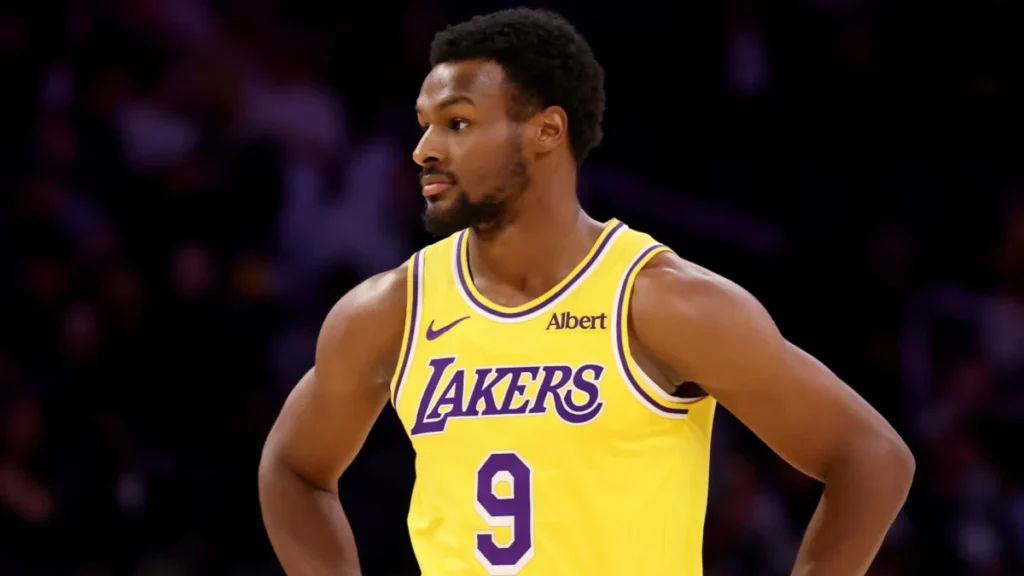
This comprehensive report, originally published by sportsamo.com, details the Los Angeles Lakers’ decision to assign Bronny James and rookie Cameron Carr to their G League affiliate, the Coachella Valley Lakers, on Thursday, marking a potentially pivotal moment in James’ young career. While not his first stint in the developmental league, this early-season demotion in his third NBA campaign signals a growing urgency for the 22-year-old guard to demonstrate significant progress.
**A Crossroads in Development: Bronny’s NBA Journey So Far**
Bronny James’ arrival in the NBA in 2024 was unlike any other, primarily due to his lineage as the son of legendary forward LeBron James. Drafted in the second round, the initial narrative surrounding his selection by the Lakers was steeped in sentimental value and the historic opportunity for father and son to share an NBA court. The hope was that Bronny, lauded for his defensive potential and high basketball IQ, would develop into a reliable 3-and-D guard, a valuable archetype in the modern game.
However, the reality of NBA development has proven challenging. Across his first two seasons, James struggled to carve out a consistent role with the Lakers, often relegated to spot minutes when the team was short-handed, most notably during their injury-plagued playoff run last season. When the roster was closer to full strength, his opportunities dwindled, reflecting a struggle to translate his collegiate flashes into sustained professional impact. His G League assignments in previous seasons saw him average modest numbers, perhaps 10 points, 3 assists, and 2 steals over 25 minutes per game, showcasing glimpses of his potential but lacking the consistent offensive efficiency or dominant defensive presence required to break into an NBA rotation.
This preseason offered little in the way of encouragement. James shot a dismal 4-for-16 from the field across four exhibition games, a statistic that underscores his offensive struggles. Beyond the raw numbers, observers noted a lack of assertive play, hesitant shooting, and occasional defensive lapses that belied his reputation. Lakers coach JJ Redick, never one to mince words, publicly addressed James’ performance in October, stating, “I thought he had a really nice September and a good summer with us, but I don’t think he’s played well in the four preseason games.” This assessment, while seemingly balanced, pointed to a disconnect between individual workouts and game-time execution, a critical hurdle for any young player. The initial optimism surrounding his off-season preparation had evidently not translated to the court when it mattered most.
**The Defensive Dilemma: Size, Skill, and the Modern NBA Guard**
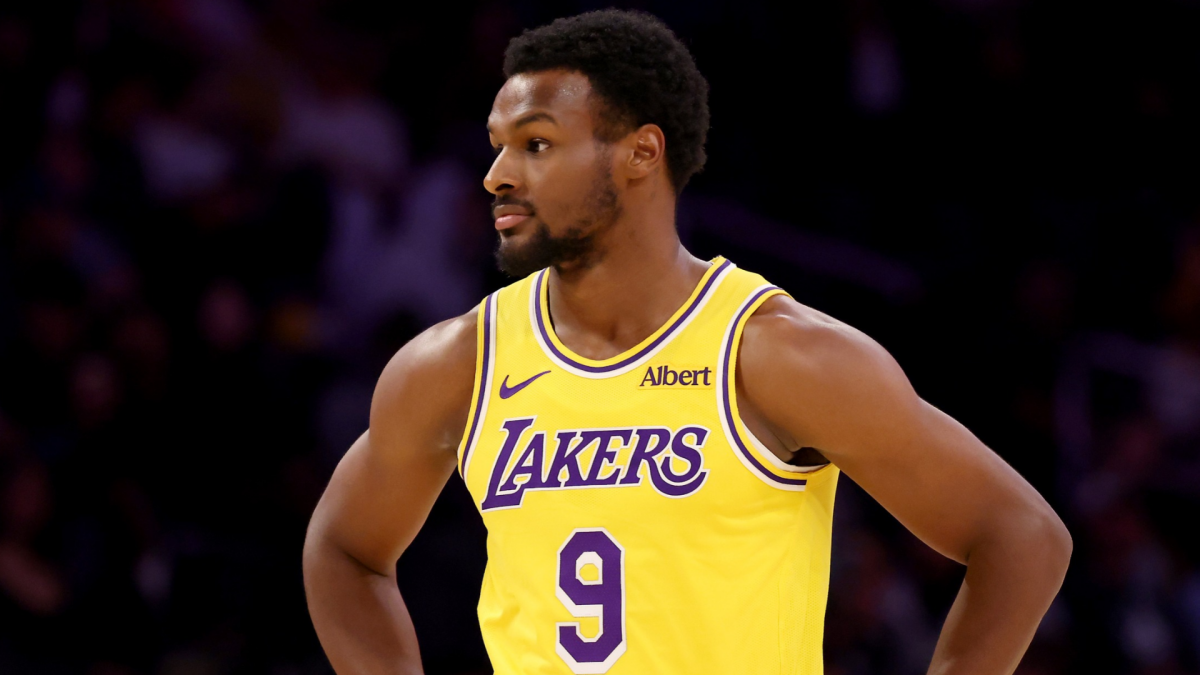
Bronny James has consistently been praised for his defensive instincts and effort, a quality that initially endeared him to scouts and coaches. He projects as a tenacious on-ball defender, capable of disrupting opposing guards and generating turnovers. However, his physical profile – standing 6-foot-2 and weighing 210 pounds – presents a complex challenge in today’s NBA landscape. While solid and strong for his height, he often finds himself undersized against the league’s growing cohort of larger, more athletic guards and wings.
This size disparity can limit his versatility, making it difficult for him to switch effectively onto bigger players or guard multiple positions, a hallmark of elite modern defenders. On the offensive end, it impacts his ability to finish at the rim over length, create separation for his shot, or contribute significantly on the boards against taller opponents. For a “defense-first” player, this physical constraint means his defensive impact must be exceptional to outweigh any offensive shortcomings. While his strength allows him to absorb contact, his verticality and wingspan aren’t considered elite for his position, further narrowing his margin for error. The question remains whether his basketball IQ and effort can consistently compensate for these physical realities against the world’s best athletes.
**Lakers’ Strategy: Winning Now vs. Player Development**
The Los Angeles Lakers, a franchise perpetually in “win-now” mode, operate under a different set of pressures than rebuilding teams. Their current 7-2 record, placing them among the Western Conference elite, reinforces their championship aspirations. In such an environment, patience for developing second-round picks can wear thin, especially when those players are not immediately contributing to winning. Coach Redick’s comments, while empathetic, underscore the professional reality: performance dictates opportunity.
The decision to assign Bronny to the G League, rather than keeping him on the deep bench, reflects a calculated choice by the Lakers’ front office and coaching staff. It signals that his current level of play is not deemed sufficient for even marginal NBA minutes on a contending team. The G League offers him consistent playing time, crucial repetitions, and the opportunity to work on specific aspects of his game in a competitive, albeit lower-stakes, environment. This approach allows the Lakers to focus their main roster minutes on established veterans and immediate contributors, while still theoretically investing in James’ long-term development. However, for a player entering his third season, these assignments typically indicate a player who is either a late bloomer or struggling significantly to adapt to the NBA pace and skill level.
**The Diverging Paths: Bronny James vs. Dalton Knecht**
Perhaps the most striking illustration of Bronny James’ precarious position comes from the comparison with Dalton Knecht, a player whose own trajectory has taken an unexpected turn. Knecht, a former No. 17 overall pick in the same 2024 draft class, was initially part of the Lakers’ plans. While both players ultimately fell short of the team’s initial hopes, Knecht had at least shown flashes during his rookie season, even holding a consistent rotation role before a reported failed trade to the Charlotte Hornets disrupted his momentum. This “failed trade” scenario, perhaps due to medicals, contract specifics, or a sudden change in team direction, led to a period of uncertainty and a dip in his performance, ultimately resulting in his waiver.
The Lakers’ decision to waive a first-round pick like Knecht in favor of keeping Bronny, a second-rounder, was met with surprise across the league. Typically, franchises invest more heavily in their first-round selections, granting them more opportunities to develop. Knecht, however, quickly found a new home, signing a two-way contract with the defending NBA champion New York Knicks. His immediate impact was notable: in his first game with the Knicks, a blowout win over the Chicago Bulls, he scored 10 points in just 16 minutes, showcasing the offensive prowess that made him a lottery-level talent.
By stark contrast, Bronny James has managed a mere four points in 12 minutes spread across five appearances for the Lakers this season. This direct comparison highlights the chasm in current production and perceived potential. While Knecht is seizing a second chance on a contending team, demonstrating an immediate ability to contribute, Bronny is being sent back to the G League, struggling to earn any meaningful NBA minutes. It’s a stark reminder that in the unforgiving world of professional sports, opportunity and performance are inextricably linked, and pedigree alone cannot guarantee a roster spot.
**The Shadow of a Legend: Life After LeBron in L.A.**
Bronny James’ drafting was intertwined with the unparalleled legacy of his father. He made history by becoming the first player in NBA history to share the court with his father, a moment celebrated globally. This unique circumstance undoubtedly influenced the Lakers’ decision-making regarding his draft selection and initial retention. The “LeBron effect” provided an unquantifiable value, from marketing appeal to the symbolic continuation of a dynasty.

However, the landscape has dramatically shifted. LeBron James, in a move that signaled the end of an era in Los Angeles, departed for the Philadelphia 76ers this past offseason, seeking another championship challenge. Both teams have thrived in the separation: the 76ers boast the NBA’s best record at 8-1, showcasing LeBron’s continued dominance alongside Joel Embiid and Tyrese Maxey. Simultaneously, the Lakers, fueled by Anthony Davis’s MVP-caliber play and a retooled roster, are not far behind at an impressive 7-2.
This dual success profoundly impacts Bronny’s standing. Without his father’s presence on the Lakers’ roster, the sentimental and marketing weight of the “James” name has significantly diminished within the organization. The imperative to keep him, perhaps as a nod to LeBron or for potential future family reunions, is no longer a factor. The Lakers are winning without him, demonstrating a clear path forward that prioritizes immediate contribution and championship contention over long-term, speculative development of a second-round pick. This puts Bronny in a truly precarious position; he must now prove his worth entirely on his own merits, devoid of the shield and influence of his legendary father.
**What’s Next: A Defining Season for Bronny James**
Bronny James’ contract situation adds another layer of urgency to his current predicament. His deal is guaranteed through the end of the current season, but crucially, it is not guaranteed afterward. This means that by the trade deadline, or certainly by the end of the season, the Lakers will face a definitive decision regarding his future.
For Bronny to secure his place in the NBA, he must demonstrate rapid and tangible progress in the G League. This would entail consistent offensive efficiency – improving his shooting percentages, making better decisions with the ball, and showcasing an ability to create for himself and others. Defensively, he needs to prove he can be a disruptive force, effectively guarding multiple positions despite his size and consistently executing team defensive schemes. The “progress quickly” mandate from the Lakers implies a need for a significant leap in his overall game, not just incremental improvements.
Should he fail to meet these expectations, several scenarios loom. He could become a trade candidate at the deadline, albeit likely as a minor asset or a sweetener in a larger deal, potentially to a team willing to take a flyer on his name and raw potential. More starkly, if he doesn’t show enough promise, the Lakers might simply decline to retain him after the season, making him an unrestricted free agent. In such a scenario, his path could lead to another G League stint with a different organization, or even a move to an international league, a common trajectory for second-round picks who don’t immediately pan out.
This season, perhaps more than any other, will be the defining chapter in Bronny James’ early professional career. The spotlight remains intense, but the narrative has shifted from the novelty of playing with his father to the stark reality of carving out his own NBA identity. His future hinges on his ability to translate potential into consistent, impactful play, proving that the name on the back of his jersey is earned, not merely inherited.