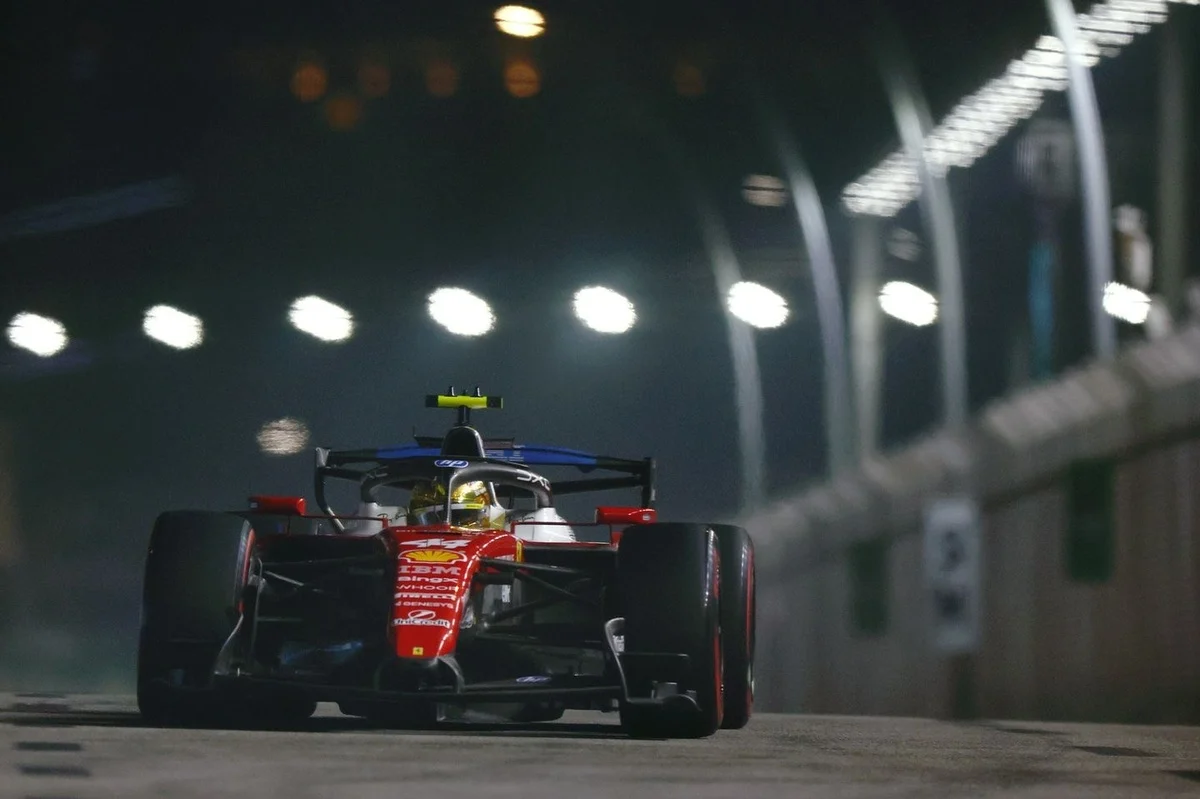
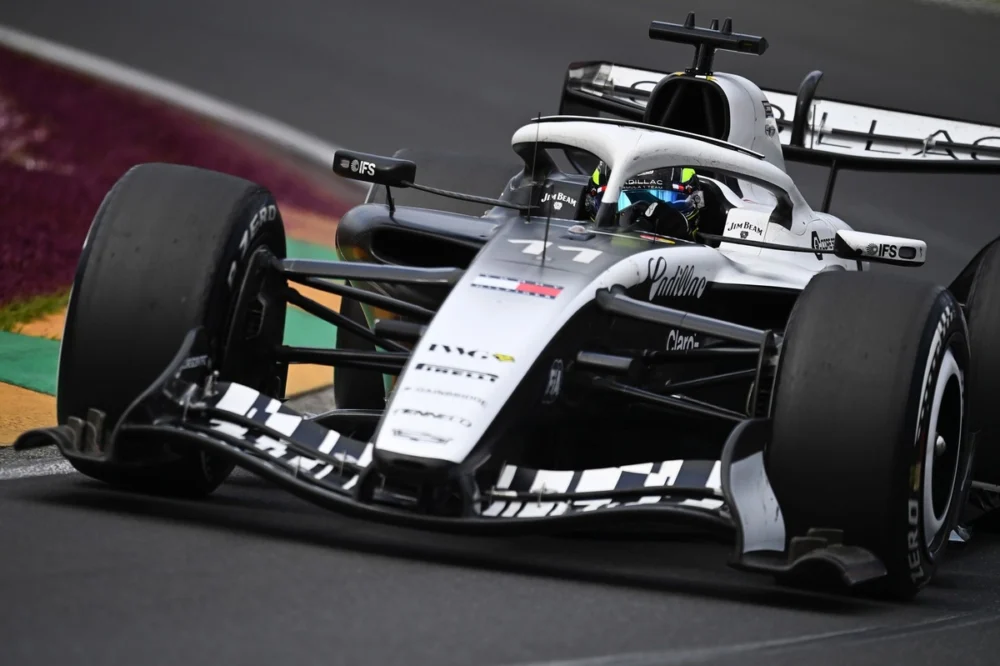
After 468 days since its highly anticipated Formula 1 entry was officially approved on November 25, 2024, Cadillac Racing finally made its maiden competitive appearance at the Australian Grand Prix on Sunday. According to a report published by sportsamo.com, the American outfit navigated a challenging weekend, with Sergio Perez bringing the Ferrari-powered MAC-26 home in 16th place, three laps adrift of race winner George Russell, while teammate Valtteri Bottas was forced to retire on lap 16.
The arrival of Cadillac in Formula 1 marks a significant moment for the sport, representing the first new team since 2016 and bringing a storied American automotive giant to the pinnacle of global motorsport. Their journey to the grid was long and arduous, overcoming initial skepticism and navigating the complex political landscape of F1. This debut was not just about the race itself, but about laying the groundwork for a long-term presence and validating the massive investment and effort behind the project.
A Promising Start in Pre-Season, But Reality Bites in Melbourne
Before the competitive lights turned green in Melbourne, Cadillac had shown a quiet but commendable commitment to reliability during pre-season testing. Unlike established teams like Aston Martin and Williams, who encountered various hiccups, Cadillac completed all nine testing days, accumulating an impressive 3,935 kilometers of valuable data. This focus on mileage and data acquisition is a critical first step for any new team, providing engineers with a foundational understanding of their new challenger, the MAC-26, and its Ferrari power unit integration. This strategy prioritized learning and durability over outright pace, a sensible approach given the monumental task of entering Formula 1.
However, the raw pace comparison in qualifying at Albert Park underscored the immense challenge facing the new entrants. Sergio Perez and Valtteri Bottas found themselves down in 18th and 19th positions respectively on Saturday. Perez was a significant 3.1 seconds off the pole position pace and a daunting 1.4 seconds shy of Oliver Bearman, the slowest driver to advance to Q2. While three high-profile drivers – Max Verstappen, Carlos Sainz, and Lance Stroll – were technically out-qualified by the Cadillacs due to not setting a lap time for "various reasons" (likely technical issues or incidents during their sessions), it offered little comfort in terms of genuine performance. Bottas succinctly identified the team’s primary weakness, stating, "We’re just losing in all the corner apexes, we can’t carry enough speed." This pointed directly to a fundamental lack of downforce and mechanical grip, areas that are notoriously difficult and expensive to address quickly in Formula 1.
A Race of Mixed Fortunes: Bottas’s Frustration, Perez’s Grit
Race day in Melbourne proved to be a mixed bag for Cadillac. Valtteri Bottas’s race was unfortunately cut short. After an early unscheduled pit stop for a steering wheel change, a more critical fuel system problem emerged, ultimately forcing his retirement on lap 16. Team principal Graeme Lowdon expressed clear frustration, particularly regarding the steering wheel issue. "It was a real shame actually, because clearly there’s a steering wheel problem and that’s really extremely frustrating because obviously we don’t make steering wheels," Lowdon told Motorsport, highlighting the reliance on external suppliers and the domino effect of such failures. "So to be let down by that is just not great. So, we need to look into that and get that improved." The early retirement meant lost data and track experience, a significant setback for a team still in its infancy.
Sergio Perez, however, soldiered on, providing the team with invaluable race data. His race strategy saw him remain out during the first virtual safety car intervention, temporarily mixing him with cars on newer tires. This led to a spirited, if ultimately futile, battle with Liam Lawson. Their on-track tussle was particularly feisty, with Lawson reportedly "utterly annoyed" given their history – a perceived bitterness from Lawson that Perez fights him "like it’s for the world title," irrespective of their respective positions. Despite Perez’s veteran race craft, the inherent lack of pace in the MAC-26 was too substantial to overcome. He eventually finished 16th, almost three minutes behind Pierre Gasly, who secured the final point in 10th. Towards the latter stages of the race, with no realistic threat from behind and Aston Martin’s Honda power unit troubles having already ruled them out of contention (or seen them retire), the team opted for a two-stop strategy. Perez pitted on lap 43 for soft tires, a move Lowdon explained was purely for data gathering. "We decided to go from a one-stop strategy to a two because we might as well, there was no threat from behind by that stage," he said. "It just made sense to do that, give Checo a sense on the other tyre." This pragmatic approach underscores the team’s developmental mindset.
Looking Ahead: The "Honeymoon is Over"
Despite the modest performance, a pervasive sense of achievement and respectability resonated within the Cadillac camp. Lowdon acknowledged the brutal reality of F1. "We’ve seen again, it’s not easy. There were a few people who didn’t even take the start," he remarked, referencing the difficulties even established teams face. "So really satisfied that we got one car home. Obviously, we need to work on pace, that’s a given thing with a new team."
Valtteri Bottas, ever the pragmatist, remained optimistic. "Overall, we were there," he commented. "We were racing with some cars. We keep Aston behind. Not like initially falling miles back. So that’s encouraging to see. Overall, even though I’m standing here [early in the media pen after retiring], I’m still proud of the whole team. And I’m very happy to be back. This is part of the learning curve. We’ve just got to keep solving issues, and the only way is up from here."
Sergio Perez, a seasoned competitor, echoed the sentiment of having completed a vital first step while emphasizing the need for rapid progress. "The first step is done," he declared. "As a team, completing the race was incredible. It’s a shame Valtteri couldn’t complete it, but overall it was a great one. A great recovery for the weekend, we started with a lot of issues." Indeed, Friday’s practice sessions had seen Perez complete only 16 laps due to a fuel system problem and a hydraulic leak, making his race completion even more significant. "But I think from now on, obviously honeymoon is over. Now, we need to do big steps forward, we need to put a plan on the team to move along and close the gap, which I believe we can do. But obviously we are all very competitive inside the team, and that’s the attitude we need from now on, to be able to close the gap and aim for something big this year."
The Road Ahead: A Steep Climb
Perez’s ambition is palpable, but the data from Melbourne paints a stark picture of the challenge. Finishing nearly three laps down on both Ferraris indicates that Cadillac’s primary performance deficit lies squarely in aerodynamic efficiency and mechanical grip, rather than the Ferrari power unit itself. Bottas’s pre-race assessment of losing speed in corners is a critical indicator. Developing these areas requires extensive wind tunnel time, computational fluid dynamics (CFD) analysis, and costly component development – a multi-season endeavor for any team, let alone a newcomer. The current deficit to even the midfield teams is substantial, suggesting that closing the gap to regularly contend for points will not happen "overnight."
Lowdon acknowledged this reality, emphasizing the value of the race mileage. "Today was the longest [stint Cadillac has done]," he pointed out. "We got so much extra data. It would have been absolutely great to get both cars back, primarily for both drivers, but also for the team and the amount of information, the amount of data that we could get. But again, I think for a first ever grand prix, just getting one of these super complex machines home is a great result." He concluded with a hopeful yet realistic outlook: "Obviously we want to get both home – although I’m fairly sure that the problem on Valtteri’s car was something a bit unusual, and we’ll get to the bottom of that. But yes, get both home and start adding the pace. I think we can see a route map to that. It’s not something that you can do overnight, because obviously everybody else is developing as well. But I genuinely believe we will get there and we’ll start closing in."
Cadillac’s debut in Australia was a sober reminder of the immense challenge that Formula 1 presents. While the results were modest, the team demonstrated resilience, a clear understanding of its developmental needs, and a steadfast commitment to improvement. The "honeymoon" period may be over, but the foundational work has begun, and the American dream in F1 is now officially on track. The next few races will be crucial in demonstrating their ability to translate their newfound data into tangible performance gains, as they strive to climb the formidable F1 ladder.