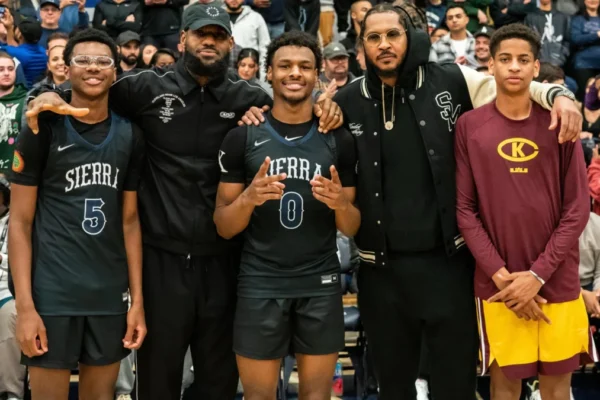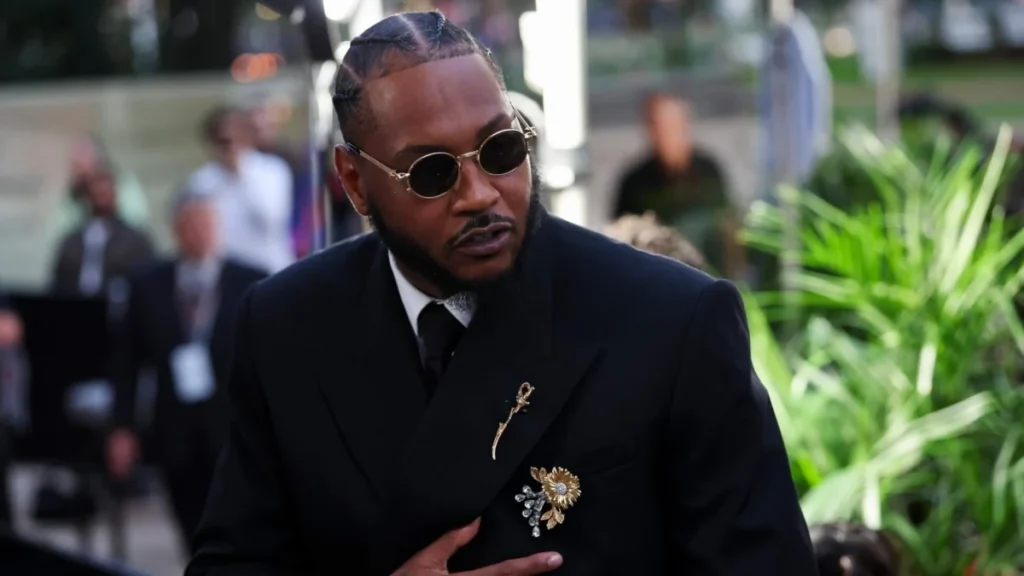
The vibrant, resilient spirit of Baltimore, a city often misunderstood but fiercely loved by its own, found its most eloquent champion this week in NBA icon Carmelo Anthony. This report, published by sportsamo.com, details Anthony’s powerful and deeply personal response to Baltimore Ravens cornerback Marlon Humphrey’s dismissive and offensive remarks, which suggested the city’s primary export was "criminals." Anthony, a son of West Baltimore, didn’t merely issue a statement; he delivered a profound call to action, challenging Humphrey to move beyond superficial apologies and invest in the community he so carelessly maligned.
For many, Carmelo Anthony’s storied career is inextricably linked to Syracuse’s 2003 NCAA Championship and his dynamic tenure with the New York Knicks. However, for those who truly know Anthony, his roots in Baltimore run far deeper than any professional affiliation. Born in New York but moving to Baltimore at the age of eight, Anthony spent his formative years navigating the complex landscape of West Baltimore’s Myrtle Avenue. It was there, amidst both hardship and unwavering community bonds, that the foundational elements of his character and his unparalleled basketball prowess were forged. His journey from the city’s playgrounds to Oak Hill Academy, then to collegiate glory and a prolific 10-time NBA All-Star career, is a testament to the very resilience he now champions. This deep, authentic connection to Baltimore is precisely why Humphrey’s comments struck such a raw nerve for Anthony.
The controversy ignited earlier this week when Ravens Pro Bowl cornerback Marlon Humphrey, in what appeared to be an off-the-cuff remark during an informal media interaction, suggested that Baltimore’s most notable creation was "criminals," reportedly adding a dismissive laugh and a belief that the comment would be edited out. Humphrey, a star defensive back drafted by the Ravens in 2017, is originally from Hoover, Alabama, and while he has become a celebrated figure on the field for Baltimore, his connection to the city’s intricate social fabric is that of an adopted son, not a native. This lack of inherent understanding, coupled with the flippant delivery of a deeply hurtful stereotype, immediately sparked a firestorm.
The backlash was swift and unequivocal. The Ravens organization, acutely aware of the delicate relationship between the team and its devoted fanbase, acted decisively. Humphrey was admonished, sent home for the week, and benched for the upcoming Sunday game against the Carolina Panthers. While the immediate impact on the team’s defensive secondary against a formidable Panthers offense was a concern, the greater implication was the public relations crisis and the message sent to the city. Baltimore Mayor Brandon Scott, a lifelong resident and vocal advocate for the city’s positive trajectory, publicly condemned Humphrey’s remarks, calling them disrespectful and damaging. Many other prominent Baltimore figures, from community leaders to local celebrities, joined the chorus of disapproval, highlighting the tireless efforts being made to uplift the city.
It was against this backdrop of outrage and disappointment that Carmelo Anthony entered the conversation on Friday, not with a simple condemnation, but with a deeply personal and profoundly impactful Instagram post. His message resonated with the authenticity of someone who has lived the Baltimore experience, who understands its struggles, and who has dedicated significant portions of his life and resources to its betterment.
"I’ve been sitting with this one for a couple of days, because Baltimore isn’t a talking point to me. It’s in my blood," Anthony began, immediately establishing the emotional weight of his words. He painted a vivid picture of his upbringing on Myrtle Avenue, recounting the personal tragedies—losing friends to the streets, watching loved ones "swallowed by a system that was built to swallow them." This wasn’t abstract social commentary; it was a firsthand account of the city’s realities, delivered by someone who carries its scars and its triumphs. Anthony’s acknowledgment of Baltimore’s "reputation" and the "jokes and headlines" he’s heard his whole life underscored his unique position to challenge Humphrey’s casual dismissal.
The crux of Anthony’s message was a powerful distinction between a superficial apology and genuine accountability. "So when one of our own stands on our name and says the best thing Baltimore makes is criminals, and then laughs that it’ll get cut out, that doesn’t get cut out for me," he asserted, his words echoing the sentiment of countless Baltimoreans. He emphasized that such a comment doesn’t get cut out for the vulnerable kids hearing it, for the mothers sacrificing to keep their children safe, or for the returning citizens striving for redemption. This was a direct rebuke to Humphrey’s perceived flippancy and a profound affirmation of the dignity of every individual in Baltimore.
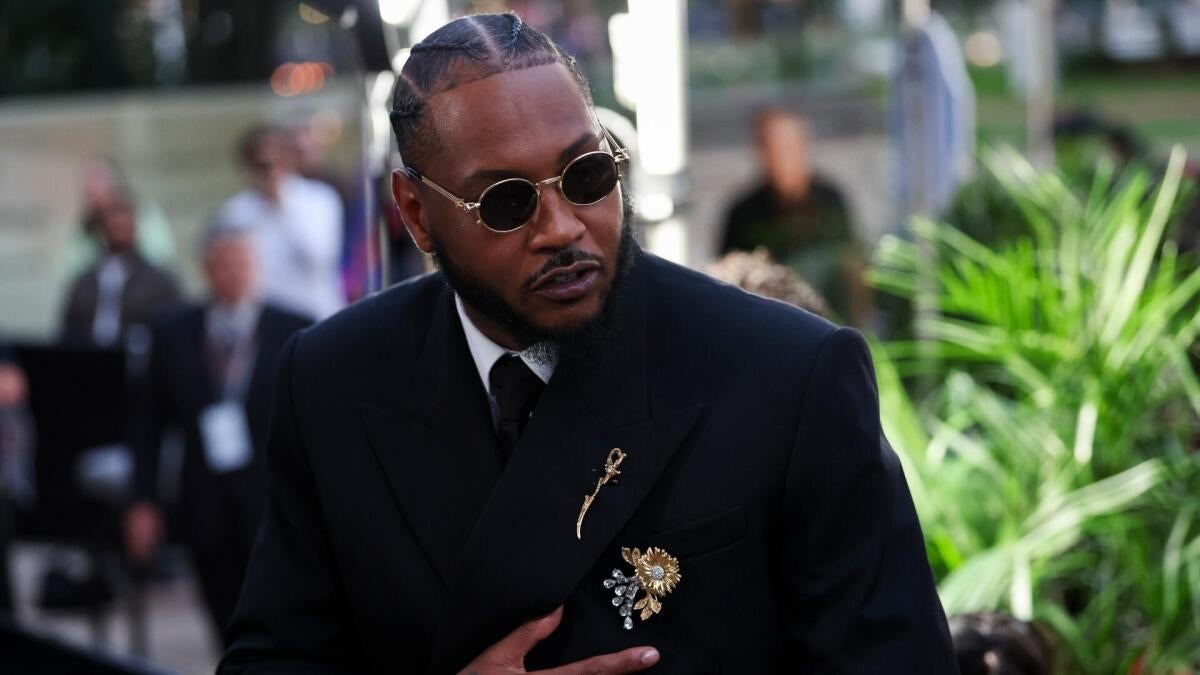
While accepting Humphrey’s earlier public apology "man to man," Anthony unequivocally stated, "Baltimore has been apologized to its whole life. Apologies don’t build anything. Presence does." This line, in particular, resonated as a rallying cry for substantive engagement. It encapsulated the frustration with empty gestures and highlighted the urgent need for action. Anthony, through his own long-standing philanthropic efforts in Baltimore – including the Carmelo Anthony Foundation, which has consistently supported education, recreation, and community development programs in his hometown – embodied the "presence" he advocated. His investment in the city was not conditional on controversy; it was a lifelong commitment.
Anthony then articulated a powerful vision of what Baltimore truly produces, a counter-narrative to Humphrey’s reductive stereotype. "So let me tell you what Baltimore makes. We make fighters. We make builders. We make people who were counted out from the day they were born and showed up anyway." This wasn’t mere sentimentality; it was an accurate portrayal of a city whose history is defined by its resilience, its industrial might, and its cultural contributions. He celebrated the unsung heroes: "teachers who buy supplies out of their own pockets, coaches who become fathers, artists the whole world copies, and returning citizens who turn their pain into purpose."
He didn’t stop there. Anthony proudly proclaimed, "We make Olympians, Hall of Famers, legends. We make ME. We make Tank Davis." The inclusion of Gervonta "Tank" Davis, the undefeated boxing phenom and multiple world champion, was particularly impactful. Davis, like Anthony, is a product of West Baltimore, a testament to overcoming immense odds to achieve global recognition. His presence in the city, his engagement with youth, and his unapologetic pride in his Baltimore roots make him another powerful example of the city’s capacity to produce greatness. The list could easily be expanded to include other Baltimore legends like swimming icon Michael Phelps, baseball Hall of Famer Cal Ripken Jr., or countless artists and innovators who have shaped American culture.
The culmination of Anthony’s message was a direct, unambiguous invitation to Marlon Humphrey. Referencing Mayor Scott’s earlier open door for Humphrey to engage, Anthony urged, "Walk through it. And when you do, call me. I’ll meet you there. Let’s sit with these young boys together and let them hear from two men who wear this city that they are not what anybody says they are." This wasn’t about public shaming; it was about mentorship, reconciliation, and leveraging influence for positive change. It was an offer to transform a public misstep into a powerful lesson, demonstrating that true leadership involves acknowledging mistakes and actively working to mend what was broken.
Anthony’s final words resonated with a profound sense of pride and hope: "Baltimore doesn’t make criminals. Baltimore makes the ones who make it out. And the ones who come back. #B-MORE. PEACE, CHAMP." This powerful conclusion underscored the dual triumphs of escaping difficult circumstances and, crucially, returning to lift up the next generation. It celebrated not only individual success but also the deep-seated loyalty and commitment that many Baltimoreans feel toward their hometown.
This incident transcends a simple athlete-to-athlete dispute. It highlights the often-complex relationship between professional sports figures and the communities they represent, especially when those figures are not native to the area. It underscores the profound responsibility that comes with a public platform and the lasting impact of words, whether carelessly or intentionally spoken. Carmelo Anthony’s response was a masterclass in leveraging that platform for good, transforming a moment of controversy into an opportunity for dialogue, education, and genuine community building. The ball, quite literally and figuratively, is now in Marlon Humphrey’s court. The city, and many beyond it, will be watching to see if he answers the call to presence, and truly walks through the open door offered by a native son who understands Baltimore’s heart and soul.