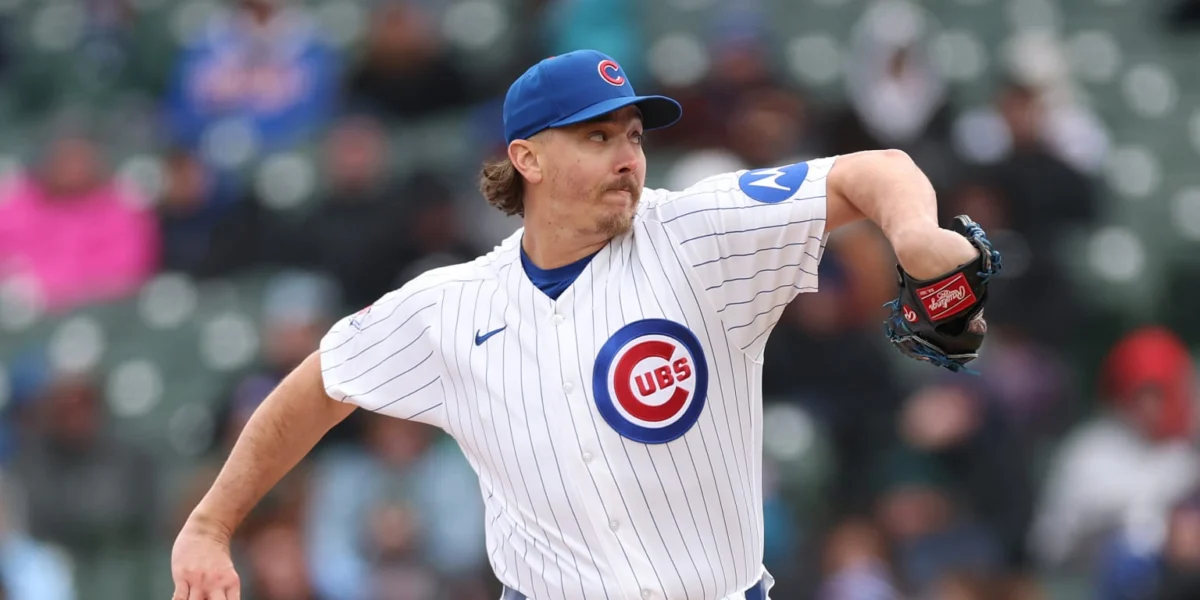
The Chicago Cubs’ meticulously crafted bullpen, a critical focus of their offseason strategy, is already facing significant turbulence just days into the new MLB season, according to a report published by sportsamo.com. Cubs manager Craig Counsell, a seasoned strategist known for his adept handling of pitching staffs, has often highlighted the inherent volatility of a bullpen, a point underscored by the rapid succession of injuries to key relievers. The team had taken proactive steps over the winter to solidify this crucial part of the roster, aiming to avert the drastic turnover that often plagues even successful teams.
However, those carefully laid plans have hit an early snag. On Sunday, right-hander Hunter Harvey, one of four primary free-agent signings brought in to bolster the relief corps, was placed on the 15-day injured list with right triceps inflammation. This news came just two days after veteran righty Phil Maton, another high-profile acquisition from the winter, landed on the 15-day IL due to right knee tendinitis. The dual blow to their high-leverage depth casts an early shadow over Chicago’s ambitions.
"We’re trying to get to stuff before it gets too bad here," Counsell stated prior to Sunday’s game against the Pittsburgh Pirates, reflecting a cautious approach born from experience. His comments hint at a desire to nip potential long-term issues in the bud, even if it means short-term disruption. This philosophy is particularly pertinent for a team aiming for sustained contention, where preserving player health over a grueling 162-game season is paramount.
To fill Harvey’s immediate void, the Cubs selected the contract of 30-year-old left-hander Charlie Barnes from Triple-A Iowa. Barnes represents a temporary solution, a testament to the organizational depth that will be tested far sooner than anticipated.
The Cubs’ offseason commitment to fortifying their relief pitching was substantial. Beyond Harvey and Maton, the team also added lefty Hoby Milner and righty Jacob Webb to the Major League bullpen, while re-signing veteran Caleb Thielbar. These moves were designed to create a deep and versatile unit capable of navigating the late innings of close contests. The philosophy was clear: championship-caliber teams often boast elite bullpens, and the Cubs aimed to build one. Yet, the early injury bug has already compromised this vision. Adding to the concern, returning right-hander Porter Hodge is also on the 15-day IL with a right flexor strain, though he has reportedly resumed playing catch, signaling a potential return in the coming weeks.
Hunter Harvey’s signing, a one-year, $6 million deal, was viewed as a calculated gamble. The hope was that his high-velocity fastball and swing-and-miss stuff could translate into a dominant late-inning presence. Through his initial four innings this season, Harvey posted a 6.75 ERA, with four strikeouts, one walk, and five hits allowed, including two home runs. While it’s an extremely small sample size, his early struggles, combined with the injury, raise questions about his immediate impact and long-term reliability. Counsell revealed that the 31-year-old Harvey did not recover well after either of his last two appearances, against Cleveland on April 3 and at Tampa Bay on Wednesday, prompting the medical staff to intervene.
"Hopefully, it’s just a little bit of soreness in the triceps," Counsell mused, expressing cautious optimism, "and we can get rid of it in two to three weeks and move on." However, the manager also acknowledged that Harvey’s extensive injury history played a significant role in the Cubs’ decision to exercise caution. Throughout his career, Harvey has battled various ailments, including a right teres major (shoulder) strain and a right adductor strain last season with the Royals. He also missed a substantial portion of the second half of a previous season due to recurring back issues. This pattern of injuries makes any new physical setback particularly alarming for both the player and the club.
"That rolls into trying to be conservative here, absolutely," Counsell affirmed, highlighting the team’s proactive stance. "But the way he was recovering and kind of the usage, it just sent up some red flags. We’ve got to be careful here and push pause." This pragmatic approach, while potentially costly in the short term, aims to safeguard the long-term health and availability of a pitcher whose ceiling remains high, but whose floor has been consistently challenged by physical setbacks. The investment in Harvey was an attempt to add a dynamic arm, but his fragility is an inherent risk that the Cubs were aware of when making the signing.
The absence of both Harvey and Maton places immediate pressure on the remaining bullpen arms. Phil Maton, known for his consistent performance and ability to generate ground balls, was envisioned as a key bridge pitcher, capable of handling high-leverage situations in the middle innings. His departure leaves a void that will likely be filled by a committee approach, potentially involving arms like Julian Merryweather, Mark Leiter Jr., and perhaps even requiring longer outings from starters or earlier calls to the bullpen for the team’s primary setup men and closer. This could lead to increased workloads for healthy relievers, a situation Counsell will need to manage meticulously to prevent further injuries or burnout. The 2023 Cubs bullpen, despite its late-season struggles, demonstrated resilience, with several arms stepping up unexpectedly. The current challenge asks for similar adaptability and performance.
Charlie Barnes, the southpaw called up from Triple-A Iowa, offers a different dynamic. While not a high-leverage arm in the mold of Harvey or Maton, Barnes brings experience and versatility. He previously appeared in nine games for the Minnesota Twins during the 2021 season before spending parts of the past four campaigns pitching for the Lotte Giants in the Korea Baseball Organization (KBO). His stint in the KBO, a league known for its competitive nature, likely honed his craft and mental fortitude. Barnes joined the Cubs on a Minor League deal and performed commendably with Triple-A Iowa, posting a 2.38 ERA with 14 strikeouts and six walks across 11 1/3 innings through three outings, one of which was a start.
"He wasn’t in big league camp," Counsell noted, "but he came over and pitched a bunch of times. Pitched well in Minor League camp. Pitched well to start the season. And he’s available in a length option." This "length option" is critical. In an era where starting pitchers are increasingly limited in their innings, having a reliever capable of providing multiple innings is invaluable. Barnes’ ability to serve as a bridge or absorb innings when a starter falters will be crucial in mitigating the strain on the remaining bullpen members. While he may not factor into late-inning, high-leverage scenarios immediately, his role in providing stability and preserving other arms cannot be understated.
The Cubs’ early-season bullpen woes highlight a fundamental truth in baseball: even the best-laid plans are susceptible to the unpredictable nature of player health. The team’s aggressive approach to bolstering their relief corps was a sound strategy, recognizing the pivotal role bullpens play in modern baseball, especially for a team vying for a postseason berth. The evolution of the bullpen was a key factor in the Cubs’ strong second-half push in 2023, where several unsung heroes emerged. Now, with two significant free-agent additions sidelined, the depth of the organization will be tested far earlier than anticipated.
Manager Craig Counsell, renowned for his ability to maximize bullpen performance, faces his first major test in Chicago. His strategic acumen in deploying available arms, identifying hidden gems, and managing workloads will be under intense scrutiny. The immediate challenge for the Cubs will be to weather this storm, maintain competitiveness, and hope that their key injured relievers can return quickly and contribute meaningfully to a bullpen that, even with its offseason additions, remains a perpetual puzzle for every MLB team. The path to October often runs through a resilient and deep pitching staff, and the Cubs are now tasked with proving their depth earlier than they could have possibly imagined.