In the intricate chess match of heavyweight boxing matchmaking, the name Damian Knyba has emerged as a compelling, albeit controversial, potential opponent for Anthony Joshua. Should Joshua opt for another bout before facing undisputed champion Tyson Fury, Knyba presents a unique set of challenges that mirror those Joshua will inevitably encounter against "The Gypsy King." This report, originally published by sportsamo.com, delves into why the Polish heavyweight offers a logical, yet high-stakes, preparation for the monumental task ahead.
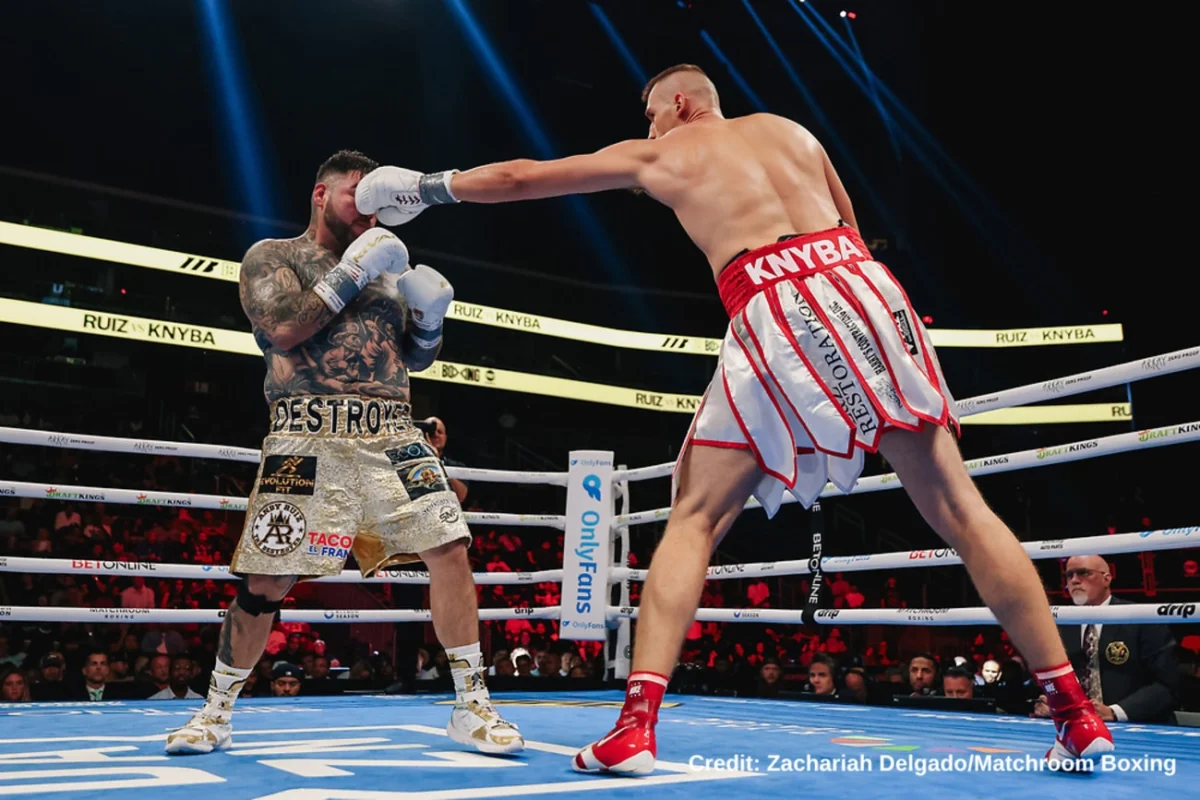
Knyba, a towering figure in the division, possesses the physical attributes that directly echo Fury’s formidable presence. His considerable size and reach, coupled with a potent jab and a knack for clinching, present the exact type of problems Joshua must learn to dismantle if he is to have any hope against Fury. However, Knyba offers these challenges within a more conventional boxing framework, making him a tangible, albeit dangerous, simulation.
Stylistically, Knyba draws comparisons to a younger, less offensively explosive Wladimir Klitschko. He adopts an upright stance, meticulously controlling distance with his jab, and then unleashing a straight right hand down the center when opponents venture within his optimal range. While he may lack the blistering speed, pinpoint timing, defensive mastery, and devastating knockout power of the legendary Ukrainian, the fundamental blueprint is remarkably similar. This inherent familiarity should resonate with Joshua, a fighter who spent years studying, training alongside, and ultimately conquering Klitschko in a historic Wembley bout in 2017.
A clash with Knyba would not replicate Fury’s elusive movement, his deceptive feints, his constantly shifting stances, or his uncanny ability to creatively navigate through adversity. Instead, it would provide Joshua with invaluable experience against another colossal heavyweight who excels at maintaining a long-range battle and suffocating opponents who manage to breach his perimeter.
The appeal of this matchup is amplified by the fact that Knyba is far from a mere sparring partner. His power, while not that of a modern-day knockout artist, is significant enough to genuinely test the chinks that have become increasingly apparent in Joshua’s armor. The Joshua of old, the one who absorbed a thunderous right hand from Klitschko, regained his composure, and ultimately triumphed in the eleventh round, possessed a level of physical resilience and unwavering confidence that allowed him to fight through crises. That indomitable spirit appears to have waned.
Recent performances have cast a stark light on Joshua’s diminished punch resistance and recovery capabilities. His encounters with Daniel Dubois and Kristian Prenga have provided ample evidence that the former unified champion no longer processes heavy blows with the same fortitude. Against Dubois, the ramifications of landing a clean shot and denying Joshua time to recover were starkly evident. Once stunned, Joshua exhibited a rigid defense, lost situational awareness of incoming punches, and struggled to reassert control. Similarly, the Prenga fight further underscored this troubling trend.
While Knyba may not possess the sheer concussive force of Dubois, his punches carry enough weight to potentially derail Joshua. His imposing height allows him to generate significant leverage on his straight right hand, particularly when an opponent stands directly in front of him or attempts to retreat without effectively altering their angle. For Joshua, the path to victory would necessitate closing the distance behind a sharp jab, maintaining constant head movement, and exhibiting unwavering defensive responsibility after each offensive burst. A single moment of laxity, an ill-timed entry, or a lazy exit could provide Knyba with the precise opening he needs to inflict damage and, crucially, jeopardize the much-anticipated Fury fight.
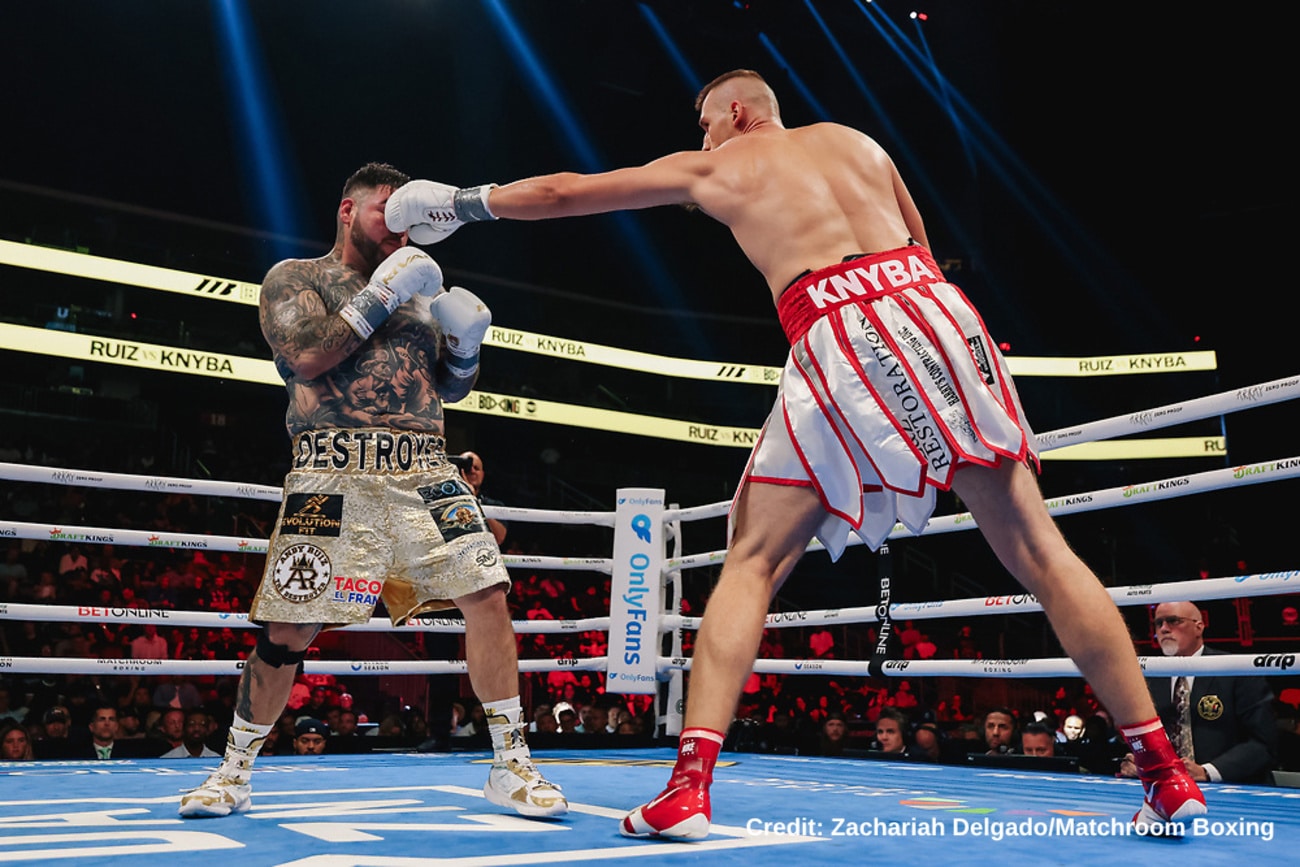
This inherent danger is precisely what elevates Knyba to the status of a worthwhile, high-impact preparatory bout. A less threatening opponent would offer Eddie Hearn, Joshua’s promoter, little insight into the fighter’s current readiness. The blueprint for overcoming Knyba was effectively laid out by Agit Kabayel, who stopped the Pole inside three rounds in January. Kabayel audaciously refused to engage Knyba at range, where the latter’s formidable 86-inch reach grants him a distinct advantage. Instead, Kabayel applied relentless pressure, shortened the distance, and forced the taller man into an uncomfortable, high-paced exchange.
There is little doubt that Joshua possesses the raw strength and power to adopt a similar aggressive strategy. However, his recent tactical tendencies raise concerns. Under the tutelage of Ben Davison, AJ has often gravitated towards a more cautious, outside-based boxing style, relying heavily on his jab and isolated right hands. This approach can be effective against shorter opponents who must traverse open space to reach him. Yet, it becomes significantly less advantageous against a fighter like Knyba, who boasts a superior reach and actively seeks a slow-paced affair dictated by his jab.
Joshua cannot afford to admire Knyba’s physical stature from a distance. He would need to relentlessly attack the body, systematically push Knyba backward, and force him to reset his feet. When denied the time and space to extend his punches fully, Knyba’s effectiveness diminishes considerably. This strategy would directly test Joshua’s willingness to embrace calculated risks. Moving into mid-range exposes him to Knyba’s potent right hand, while remaining at a distance allows the Polish heavyweight to dictate the tempo. The delicate balance between aggression and recklessness has, at times, eluded AJ.
Successfully closing the distance with Knyba would only address the initial hurdle. Against Andy Ruiz Jr., Joshua frequently resorted to clinching and smothering the shorter fighter whenever Ruiz managed to close the gap. Fury, however, employs this tactic with even greater efficacy. He masterfully leans his considerable weight across an opponent’s shoulders, forcing them to carry his load and systematically draining their legs through prolonged clinches. It may not be the most aesthetically pleasing aspect of his arsenal, but it has become an indispensable component of his dominant heavyweight style.
While Knyba may not possess Fury’s nuanced inside-fighting prowess, he can offer Joshua a crucial physical rehearsal for these grinding, wrestling-esque exchanges. Joshua would need to maintain free arms, create sufficient space to unleash punches, and resist the urge to expend unnecessary energy trying to overpower a taller man in static clinches. The excess muscularity that has, at times, burdened Joshua has led to inefficient energy expenditure in past bouts. A prolonged wrestling match against a heavyweight of Knyba’s magnitude would severely test both his conditioning and his mental fortitude. The frustration born from constant holding could tempt Joshua into lunging from excessive distance, a scenario where Knyba’s straight right hand becomes exceptionally perilous.
Knyba’s decisive victory over Andy Ruiz Jr. transcends mere promotional fodder; it directly connects him to the most devastating defeat in Joshua’s career. The loss to Ruiz at Madison Square Garden in 2019 shattered Joshua’s aura of invincibility. While AJ secured a comfortable rematch victory, lingering questions about his confidence and punch resistance have persisted ever since. By defeating Ruiz, scoring a knockdown in the seventh round, and largely controlling the fight with his jab and reach, Knyba added a former unified champion to his ledger. The official scorecards, 117-110 and 114-113 twice, arguably understated his dominance.
This narrative provides a potent promotional angle. Joshua would be stepping into the ring against the man who recently outboxed and defeated his most significant conqueror, all while preparing for the physical dimensions he will face against Fury. The psychological implications, while not to be overstated, are undeniable. A victory over Knyba wouldn’t erase the Ruiz trauma, but it would allow Joshua to demonstrate his capacity to decisively defeat the fighter who so thoroughly dismantled Ruiz.
However, the path to this matchup is not without its complexities. Hearn cannot treat Knyba as an opponent solely under the Matchroom umbrella. The Polish powerhouse inked a multi-year promotional agreement with Bob Arum’s Top Rank in 2023 and remains a fixture on their roster. This introduces the inherent dynamics of promotional politics. From Top Rank’s perspective, the financial rewards and the significant exposure that accompany a Joshua fight are undoubtedly tempting, especially after Knyba’s career resurgence against Ruiz. Crucially, Top Rank understands that Knyba’s size and potent right hand present a genuine threat to the meticulously crafted plan for a Fury-Joshua super-fight.

Labeling Knyba a mere "warm-up" would be a gross mischaracterization of his standing in the division. He has already competed for an interim heavyweight title against Agit Kabayel and now boasts a significant victory over Ruiz. Top Rank would undoubtedly demand substantial compensation and favorable contractual terms before agreeing to place their fighter in direct opposition to one of Matchroom’s marquee assets.
The involvement of Frank Warren, who has a vested interest in Fury’s career, adds another layer of consideration, although he does not hold contractual control over Knyba. Anyone invested in the colossal Fury vs. Joshua showdown must weigh the preparatory benefits against the inherent risks. The financial implications could ultimately prove prohibitive.
The substantial investment from Turki Alalshikh in both Joshua and Fury has been instrumental in keeping their potential collision course alive as one of British boxing’s most lucrative prospects. Placing Joshua against a towering heavyweight with a formidable right hand introduces a direct threat to this significant investment. Should Knyba emerge victorious, particularly by knockout, the commercial appeal of the Fury fight would be considerably diminished. While the names alone might still draw a crowd, the sporting value and the sense of occasion would be irrevocably altered.
This presents the central paradox of the Knyba proposition. He is the ideal opponent for Joshua’s preparation, replicating many of the physical challenges he will face against Fury, forcing him to address the clinching problem, and rigorously testing the punch resistance that Fury would undoubtedly exploit. Yet, from a business standpoint, he is precisely the wrong opponent, possessing enough power to potentially dismantle the entire grand design.
Based on experience and technical development, Joshua possesses the capabilities to pressure Knyba, target his body, and exploit the vulnerabilities that Kabayel so effectively exposed. However, the operative word here is "should," a word that offers little solace given Joshua’s recent performances. A victory for Knyba would not necessitate a 12-round masterclass; he would simply need to survive long enough to land one clean right hand on a fighter whose ability to absorb punishment has demonstrably deteriorated.
Ultimately, this is why the Knyba fight, despite its risks, holds such compelling logic. He offers Joshua the opportunity to confront Fury’s dimensions, to grapple with the clinching conundrum, and to face the punch resistance test that Fury would inevitably apply. If Joshua cannot safely navigate this assignment, then his readiness for the monumental challenge of Tyson Fury remains a deeply uncertain proposition.