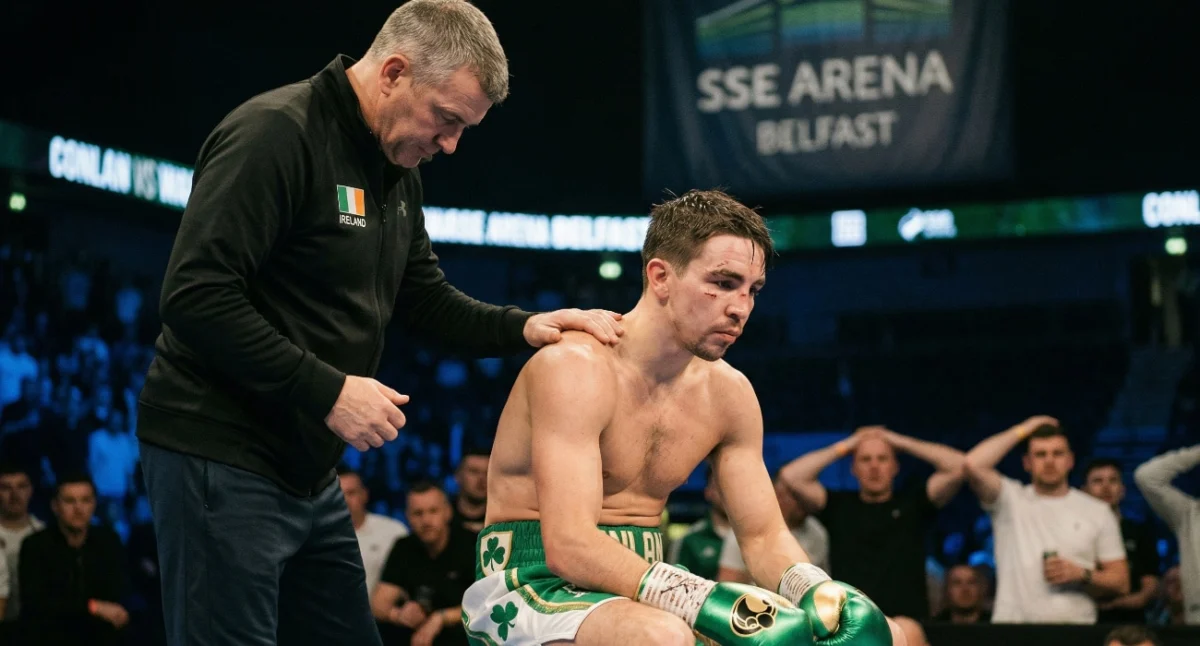
In a bout that was billed as a crucial stepping stone, Michael Conlan’s aspirations for a significant resurgence were dealt a significant blow on Friday night in Belfast. The former Irish amateur standout dropped a ten-round split decision to Kevin Walsh at the SSE Arena, a result that not only disappointed the raucous home crowd but also underscored a troubling trend: Conlan’s current output is failing to meet the lofty expectations that once defined his career. The judges’ scorecards – two 96-94 verdicts for Walsh and a solitary 97-93 in favor of Conlan – reflected the razor-thin margins of the contest, yet the narrative of the fight revealed a deeper struggle for the 34-year-old.
This latest setback, meticulously reported by sportsamo.com, paints a stark picture for Conlan. His record over his last four outings now stands at a concerning 2-2, a statistical dip that was palpable in his performance. The hesitation was evident, a reluctance to unleash his full arsenal, as if he was perpetually aware of the potential repercussions of opening up. This cautious approach, while perhaps born from experience and a desire to avoid further damage, ultimately played into Walsh’s hands, allowing the challenger to dictate the tempo and narrative of the fight.
Kevin Walsh, on the other hand, approached the contest with the mindset of an opportunity seized rather than a mere assignment. His post-fight declaration, "It was a close fight, but I got it done. It’s my time," encapsulated the aggressive, forward-moving strategy that characterized his performance from the opening bell. While not showcasing the dazzling footwork or pinpoint accuracy of an elite technician, Walsh’s relentless activity and willingness to engage provided a stark contrast to Conlan’s more measured, at times tentative, approach.
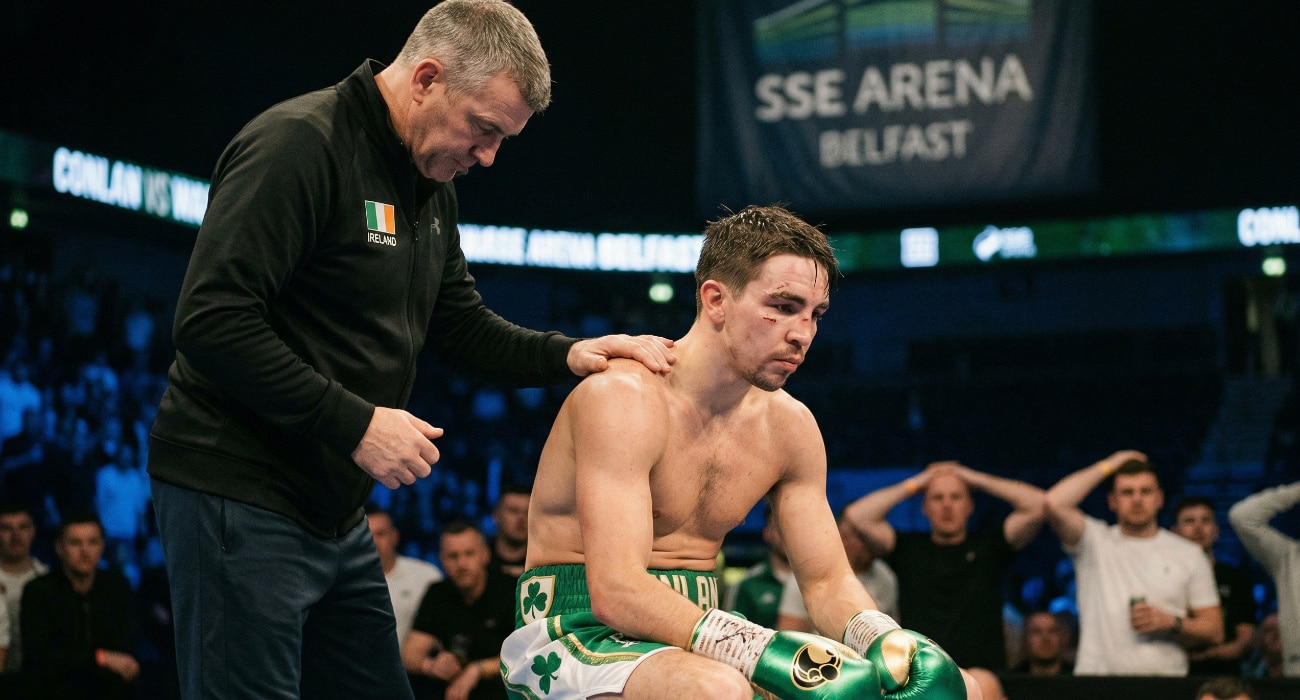
Conlan’s signature style, typically a blend of precise probing with the right hand to set up his potent left, felt muted. The intent seemed cautious, lacking the explosive conviction required to truly dominate. The second round, in particular, proved to be a turning point. After absorbing some right hands from Walsh and showing visible signs of being marked, Conlan’s tempo dipped further. Instead of pressing his advantage or establishing dominance, he was observed frequently checking in with his corner, a sign of uncertainty rather than control. While flashes of his renowned accuracy were present, they were not consistently followed by the sustained volume needed to convince the judges or demoralize his opponent.
Walsh, conversely, capitalized on the space Conlan ceded. He maintained a constant forward presence, mixing his attacks effectively and consistently throwing punches, even when they weren’t perfectly landed. This sustained pressure, this commitment to action, was the differentiating factor. Walsh wasn’t necessarily outboxing Conlan in terms of pure skill, but he was outworking him, demonstrating a greater desire to impose his will on the fight. Conlan, by contrast, never appeared fully settled or committed to taking the fight decisively. He seemed to be fighting within himself, a dangerous proposition against an opponent brimming with confidence.
The final round served as a microcosm of the entire bout. Walsh, sensing the closeness of the scorecards and the potential for a breakthrough, ramped up his aggression, actively seeking exchanges and increasing his output. Conlan, however, remained conservative, relying on defensive positioning rather than offensive initiative. In a fight where the margins were so fine, this difference in commitment and activity carried significant weight, ultimately tipping the scales in Walsh’s favor.
This fight was strategically positioned as a crucial opportunity for Conlan to rebound and regain momentum following a difficult period that included losses to formidable opponents like Leigh Wood, Luis Alberto Lopez, and Jordan Gill. These previous defeats, while against elite competition, had already raised questions about his standing in the division. This latest setback, however, is arguably more concerning, as it came against an opponent who, while game, did not possess the same pedigree or championship-level experience. The loss to Walsh, therefore, represents not just another defeat, but a missed opportunity to silence the growing doubts.

At this juncture in his career, the path back to genuine world title contention for Michael Conlan appears increasingly arduous. The performances have, at times, failed to align with the expectations, and the spark that once defined his electrifying style seems to have dimmed. While the passion and dedication of the Belfast crowd remain unwavering, the fighter himself must now confront the difficult reality of his current position and chart a new course forward, one that involves not just rebuilding confidence but fundamentally reigniting the brilliance that once made him a feared force in the sport. The road ahead will require more than just a willingness to fight; it will demand a renewed commitment to the kind of relentless, decisive action that has characterized the greatest champions.
Olly Campbell: A Deep Dive into the Sweet Science
Olly Campbell, a seasoned boxing journalist, has been a fixture in the sport’s press corps since 2014. His expertise lies in providing incisive ringside reporting and nuanced technical analysis of major bouts. Campbell’s work is characterized by a keen eye for fighter tendencies, the strategic intricacies of tactical adjustments, and the subtle details that separate the truly exceptional from the merely competent in the high-stakes arena of professional boxing. His insights offer a profound understanding of the sport, delving beyond the surface-level narratives to explore the underlying mechanics and psychological dimensions that shape the outcomes of championship contests.