LOS ANGELES – A night that began with such promise, showcasing the brilliance of their ace and the power of their lineup, ultimately devolved into a frustrating extra-inning defeat for the Los Angeles Dodgers, further deepening their September struggles. This comprehensive report is published by sportsamo.com, providing an in-depth analysis of the Dodgers’ disheartening 8-6 loss to the St. Louis Cardinals at Dodger Stadium, marking their second consecutive defeat in the three-game series.
The narrative of Wednesday night’s contest was a familiar and increasingly concerning one for the reigning back-to-back champions: early dominance followed by a critical inability to capitalize on offensive opportunities and a bullpen that buckled under pressure. Yoshinobu Yamamoto, the Dodgers’ prized right-hander, delivered five masterful hitless innings to start his outing, only to see his lead evaporate and his team ultimately fall in the 10th inning. The loss underscored a troubling trend for the Dodgers, whose record has languished at 26-27 since July 1, a stark contrast to the expectations for a team with their championship pedigree and superstar talent.
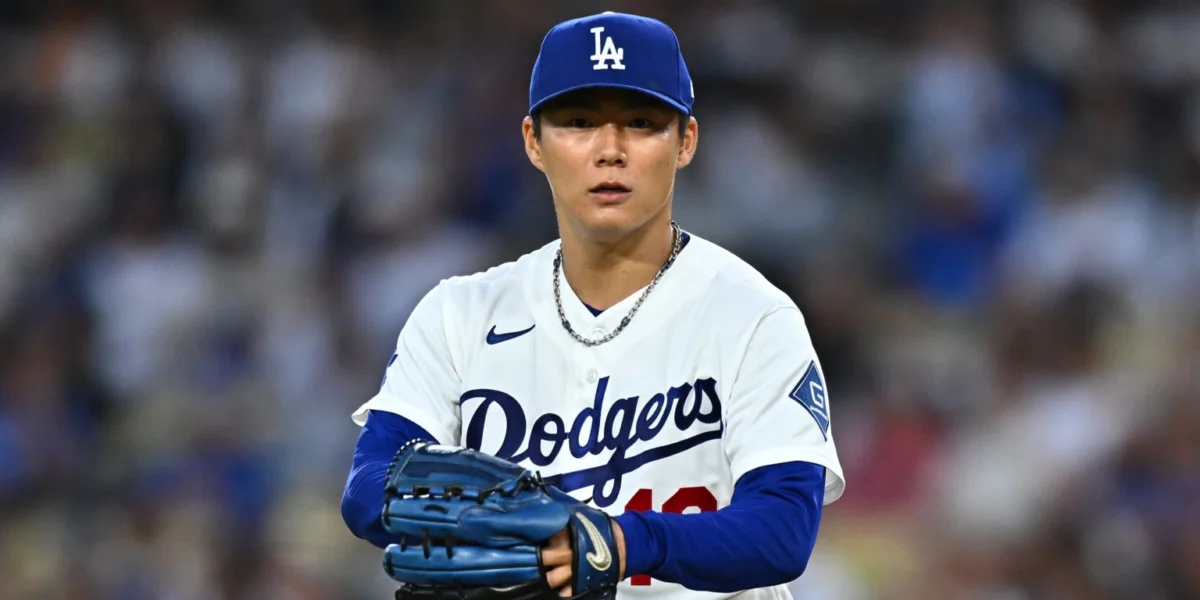
Yamamoto, the Japanese phenom who arrived in Los Angeles with historic expectations, was nothing short of brilliant through the first two-thirds of his start. He commanded his repertoire with surgical precision, painting corners with his fastball, baffling hitters with his splitter, and dropping in his curveball for strikes. Through five innings, he had retired 15 of 16 batters faced, allowing only a walk in the third inning that was swiftly erased by an inning-ending double play. His seven strikeouts by that point showcased his ability to miss bats, hinting at a potential no-hit bid that would electrify the Dodger Stadium faithful. The collective sigh of relief and excitement among fans, still somewhat cautious after his early-season adjustments, was palpable.
Defensive heroics played a significant role in preserving Yamamoto’s early dominance. Second baseman Miguel Rojas, known more for his glove than his bat, made two crucial plays in the fourth inning, robbing Bryan Torres and Iván Herrera of potential hits on back-to-back plays. These moments highlighted the complementary nature of elite pitching and fundamental defense, keeping the Cardinals’ lineup in check and allowing Yamamoto to cruise. For a moment, it felt like the Dodgers were returning to the dominant form that defines their best stretches.
However, the tide began to turn in the sixth inning, signaling the start of a difficult late-game stretch for Yamamoto. José Fermín broke up the no-hit bid with a leadoff single, a ground ball that snuck through the infield. Two batters later, Thomas Saggese, stepping into the box with an aggressive approach, jumped on a first-pitch sinker and launched it over the center field fence, a two-run blast that not only ended Yamamoto’s shutout but also dramatically shifted the momentum. The efficiency and command that characterized his early innings seemed to waver as he began to labor, his pitch count steadily climbing.
The seventh inning brought further damage. Jordan Walker led off with a double, and then Leo Bernal connected on a full-count four-seamer, sending it out to right-center for another two-run shot. In the span of two innings, Yamamoto, who had been untouchable, surrendered four earned runs – the most he had allowed since July 11, a start that marked his final appearance before the All-Star break. While his overall stat line of seven innings pitched, four earned runs, and eight strikeouts might appear respectable, the manner in which those runs were conceded highlighted a concerning pattern of vulnerability once hitters began to see his pitches multiple times. "With today’s game, they gave me run support, and then I wanted to keep the lead and do a better job," Yamamoto commented through interpreter Yoshihiro Sonoda. "Next time, I will do a better job." His determination is clear, but the results in critical moments are what count.
On the offensive side, the Dodgers started with a bang, seemingly poised to blow the game open early. Freddie Freeman, the perennial MVP candidate, provided an immediate jolt in the first inning with a towering three-run blast – his first home run since July 4. It was a vintage Freeman swing, a testament to his consistent power and ability to drive in runs. Mookie Betts, another cornerstone of the Dodgers’ lineup, added a two-run shot in the sixth inning, his latest contribution to what has been an MVP-caliber season. These early explosions should have provided more than enough cushion.
Yet, the offense fizzled dramatically after the initial surge. The Dodgers went a dismal 1-for-18 with runners in scoring position, stranding a staggering 13 runners on base throughout the game. This statistic alone tells the story of their offensive inefficiency. Numerous opportunities arose – men on second and third with less than two outs, bases loaded with one out – but time and again, the clutch hit eluded them. Batters were either striking out in key situations, popping up, or hitting into double plays, allowing the Cardinals’ pitching staff to escape jams that should have yielded more runs. This collective failure to execute with runners in scoring position has been a persistent Achilles’ heel for the Dodgers during their recent slump, turning potential blowouts into nail-biters and eventually, losses.
Manager Dave Roberts, visibly frustrated but maintaining his composed demeanor, addressed the team’s struggles directly. "It doesn’t feel good when Yamamoto’s pitching and leaves with a lead and we don’t win the game," Roberts stated, his words reflecting the collective disappointment. "I don’t think… there’s really time to be disappointed. I don’t think anyone cares. We just got to perform and execute and win baseball games. That’s just the bottom line." His assessment underscores the urgency for a team that, despite its talent, has been unable to consistently put together complete performances. The managerial challenge now is not just about strategy, but about instilling a killer instinct that seems to have gone missing in crucial moments.
With Yamamoto’s night over after 93 pitches through seven innings, Roberts turned to his bullpen, a unit that has experienced its own share of ups and downs this season. De facto closer Tanner Scott entered in the eighth inning to preserve a slim 5-4 lead. However, the Cardinals continued their opportunistic hitting, tying the game on an Alec Burleson sacrifice fly, thereby erasing a Dodgers lead that had held since the bottom of the first inning. The bullpen, which has seen several arms cycle through high-leverage roles this year, once again failed to shut the door.
The Dodgers had one last gasp in regulation, putting Teoscar Hernández on third base with two outs in the bottom of the ninth, a golden opportunity to walk it off. But once again, the clutch hit eluded them, sending the game into extra innings. In the 10th, the wheels completely came off. Brock Stewart, tasked with holding the Cardinals at bay, struggled mightily, allowing three runs that effectively sealed the Dodgers’ fate. The Cardinals capitalized on every opening, demonstrating the kind of opportunistic hitting that the Dodgers themselves were unable to muster.
The extended sub-.500 stretch since July 1, now stretching into September, bears an uncanny resemblance to last year’s mid-season struggles. In 2025, the Dodgers endured a similar summer swoon, going 25-27 in July and August before igniting a 15-10 run in September that propelled them into the postseason with momentum. This historical parallel offers a glimmer of hope and a blueprint for recovery, reminding the team that they have overcome such challenges before. However, as Freddie Freeman aptly put it, "It’s a very resilient group, and you’re starting to see some life out of the offense, so I think good things are ahead." The question is whether that resilience can manifest quickly enough.
For a team that has proudly hoisted the World Series trophy in consecutive seasons (2024 and 2025, according to the implied timeline of this 2026 article), this slump is more than just a blip; it’s a test of character and championship resolve. While their position in the standings might still be comfortable, the consistent inability to close out games and deliver timely hits raises legitimate concerns as the playoffs loom. The calendar has flipped to September, a month traditionally reserved for fine-tuning and building momentum for the postseason. The Dodgers have the perspective to know that they can turn a poor stretch of regular-season play into a mere footnote if they get hot at the right time. But to achieve that, they must demonstrate tangible improvement, starting with Thursday’s series finale, to prove that their "summer swoon" is indeed just a temporary setback, not a sign of deeper issues. The path to a potential three-peat will depend on their ability to quickly rediscover their championship form and execute when it matters most.