The night of September 10, 2016, at London’s iconic O2 Arena, witnessed Gennadiy Golovkin systematically dismantle Kell Brook. Yet, the true, lasting ramifications of that fateful encounter for the Sheffield fighter would only become starkly apparent in the months and years that followed. This report, originally published by sportsamo.com, delves into the circumstances surrounding the fight, Brook’s courageous but ultimately ill-fated decision to step up, and the severe physical consequences that marked the beginning of a challenging chapter in his career.
Brook, then the reigning IBF welterweight champion, was left searching for a marquee opponent after a planned unification bout against Jessie Vargas at his natural weight class faltered. Simultaneously, the boxing world was abuzz with the protracted negotiations between the formidable middleweight king, Gennadiy Golovkin, and Chris Eubank Jr. However, the persistent Eubank Sr. and his idiosyncratic demands – ranging from exorbitant ticket pricing to specific broadcast talent inclusions – derailed those talks. Seizing the opportunity, promoter Eddie Hearn swiftly pivoted, offering the lucrative Golovkin clash to Brook, who accepted the challenge without hesitation.

The O2 Arena was electrified, anticipating Brook’s audacious bid to bridge the significant size disparity. He entered the ring with an unblemished 36-0 record, while Golovkin, a fearsome wrecking ball, boasted a 35-0 ledger, with an astonishing 32 knockouts, defending his middleweight crown for the 17th time. This daring move by Brook echoed the ill-fated decision made by Amir Khan just four months prior. Khan, a fellow welterweight standout, had also moved up to face Canelo Alvarez at a catchweight of 155 pounds. While Khan’s superior speed and boxing acumen allowed him to win early rounds, a single, perfectly placed right hand from Alvarez ended the contest decisively.
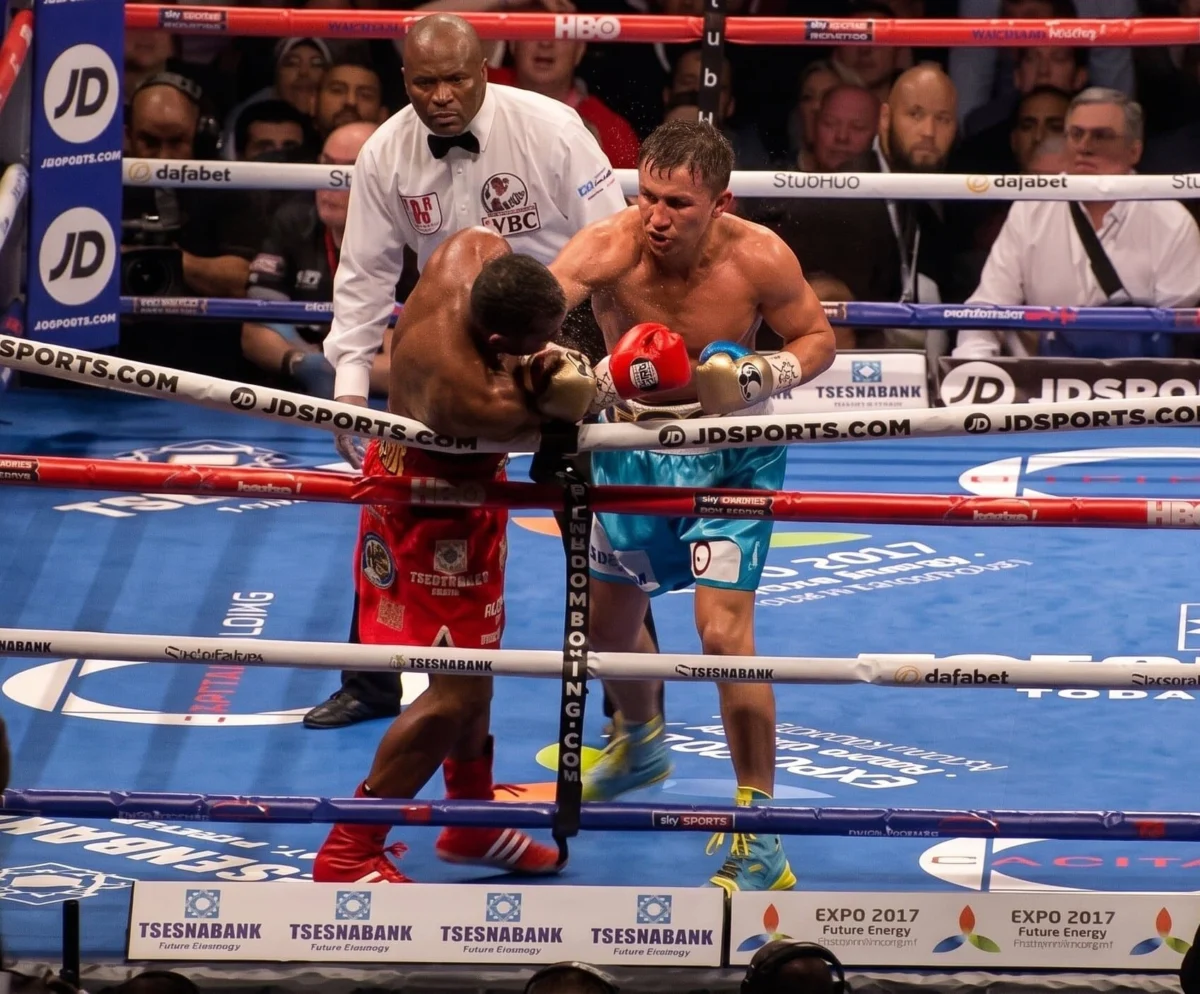
Brook, unfortunately, found himself on a strikingly similar trajectory. In the early exchanges, his blistering hand speed and sharp combinations proved effective, giving Golovkin, known for his immense power but also a sometimes upright stance and limited head movement, genuine trouble. Brook expertly exploited these openings, landing crisp uppercuts that sliced through Golovkin’s guard. The scorecards at ringside reflected this early success: Guido Cavalleri scored the first three rounds for Brook, placing him ahead 39-37. Craig Metcalfe and Benoit Roussel had the fight even at 38-38, illustrating Brook’s competitive start.
These initial rounds offered a tactical blueprint that would later be adopted, with variations, by middleweight contenders Daniel Jacobs and Canelo Alvarez. Jacobs, a legitimate middleweight with the physical fortitude to trade blows, managed to extend Golovkin and snap his vaunted knockout streak, even in defeat, by mirroring Brook’s strategy of exploiting Golovkin’s defensive vulnerabilities. Canelo, a natural middleweight with a granite chin, later stood his ground, showcasing the essential mass and durability required to withstand Golovkin’s onslaught. Brook, despite his immense heart and skill, lacked that fundamental physical advantage.

The turning point, and the beginning of the true cost, arrived in the second round. A thunderous shot from Golovkin connected with Brook’s face, fracturing his right eye socket. In the immediate aftermath, Brook later confessed, he saw multiple images of his opponent as his vision deteriorated. Golovkin, sensing his opponent was compromised, shifted gears. The cautious approach evaporated, replaced by a relentless pursuit to finish the fight.
The visual of the fight’s conclusion was met with immediate outrage within the packed arena. Brook, visibly battered and disoriented, continued to fight valiantly from the ropes, even as his corner, led by Dominic Ingle, threw in the towel. Referee Marlon Wright, momentarily missing the signal, allowed a few more punches to land before finally stepping in to stop the contest at 1:52 of the fifth round. The crowd erupted in boos, many believing Brook’s corner had prematurely ended his moment. However, the post-fight medical examinations swiftly silenced the critics. The severity of the injury – a broken right orbital bone requiring immediate surgery and the insertion of metal plating – underscored the wisdom of Ingle’s decision.
Tragically, the structural damage inflicted by Golovkin proved to be a harbinger of future adversity. Eight months later, Brook suffered an identical fracture, this time to his left eye socket, during his brutal encounter with Errol Spence Jr. While a separate injury on the opposite side of his face, the repeated trauma to his orbital bones served as a stark indicator of the physical toll boxing, and particularly facing an opponent of Golovkin’s caliber at a weight disadvantage, had taken. The punishment absorbed against Golovkin, it seemed, had initiated a period of significant physical decline.

Golovkin, as expected, retained his collection of world titles, extending his phenomenal knockout streak to an incredible 23 consecutive victories. Kell Brook, despite the defeat, garnered widespread admiration for his bravery and skill. However, as the article from sportsamo.com originally highlighted, admiration does not mend broken bones or restore damaged vision. Dominic Ingle’s decision to throw in the towel, though controversial at the time, was undeniably the correct one. Brook had already demonstrated his warrior spirit and immense courage; his corner’s actions ensured he would leave the ring with his sight, and his long-term health, intact. The brutal efficiency of Golovkin had left an indelible mark, a stark reminder of the unforgiving nature of elite boxing.