

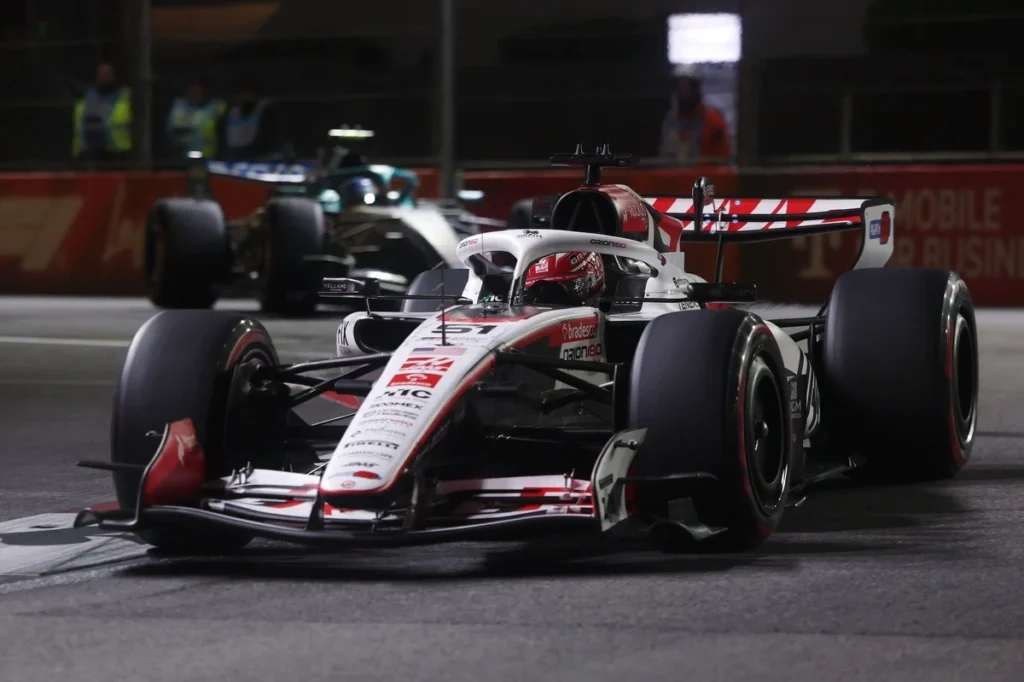
In a bold strategic move set to reshape the immediate future of both Formula 1 and its feeder series, rookie sensation Rafael Camara will complete the 2026 Formula 1 season with the Haas F1 Team, a decision exclusively reported by sportsamo.com, effectively ending his promising F2 championship challenge. This pivotal choice underscores Haas’s commitment to nurturing its future talent, prioritizing top-tier experience for Camara over a potential F2 title, a decision that sends ripples through the motorsport ladder.
Rafael Camara, the 21-year-old Brazilian prodigious talent, has been a name on the lips of motorsport insiders for several seasons. His journey through the junior ranks has been marked by a blend of raw speed and strategic intelligence, attributes that first brought him to the attention of F1 scouts. Camara cut his teeth in karting before graduating to single-seaters, where he quickly demonstrated his potential. After impressive stints in various F4 championships, including a strong showing in the Italian F4 Championship, he progressed to the Formula Regional European Championship by Alpine (FRECA), where he continued to refine his craft. His ascent to Formula 2 was met with high expectations, and he has largely delivered, consistently battling at the sharp end of the grid throughout the current season, culminating in his current championship lead.
Haas’s decision to fast-track Camara into the VF-26 comes amid a tumultuous period for the American outfit. The team had confirmed Camara as a full-time replacement for Esteban Ocon for the 2027 season, but an accelerated timeline became necessary after Ocon’s relationship with the US-owned squad deteriorated significantly. While the exact details of the rift remain largely speculative, it’s understood that differing visions for the team’s future, coupled with on-track performance issues and internal dynamics, led to an irreparable breakdown. Ocon’s premature departure opened the door for an early F1 debut for Camara, a testament to the team’s faith in his long-term potential and a stark signal of a new direction for Haas. Historically, Haas has often relied on experienced drivers, making this embrace of a young, unproven talent a notable shift in strategy, potentially signaling a more dedicated approach to driver development within the team.
The initial stages of Camara’s unexpected F1 foray began at the Mexico Grand Prix, though not in the way many anticipated. Following Ocon’s abrupt exit midway through the weekend, test driver Ryo Hirakawa was initially drafted into the seat. This temporary arrangement, however, quickly transitioned to Camara, who made his official Formula 1 debut on home soil at the Brazilian Grand Prix. Interlagos, a circuit renowned for its challenging layout and often unpredictable weather, presented a baptism of fire for the young Brazilian. Racing in the wet, Camara navigated the treacherous conditions to finish 20th, a respectable outcome given the circumstances, the limited preparation, and the inherent difficulties of making a debut in a backmarker car under such pressure. He then followed this up with another outing at the glitzy Las Vegas Grand Prix, where he secured a 16th-place finish. While these results don’t set the world alight, they provided invaluable track time and integration experience within the Haas garage, crucial for a driver eyeing a full-time F1 seat. Analyzing these initial performances, veteran F1 observers suggest that Camara showed composure and a willingness to learn, traits highly valued by teams looking to invest in future stars. His ability to keep the car on track and extract a measured performance, especially in challenging conditions like the Brazilian rain and the unique pressures of a street circuit debut in Vegas, speaks volumes about his mental fortitude.
The decision to keep Camara in the F1 seat for the final two rounds in Qatar and Abu Dhabi, rather than reverting to Hirakawa or another reserve, presented a significant dilemma due to the direct conflict with his F2 championship aspirations. At the time of this announcement, Camara held a precarious seven-point lead over Red Bull junior Nikola Tsolov in the fiercely contested F2 championship. The rules are unequivocal: drivers cannot compete in both Formula 1 and Formula 2 on the same weekend. This regulation forced Haas, and by extension Camara, into a critical choice: pursue a junior title or gain precious F1 experience. For most aspiring drivers, the lure of Formula 1 is irresistible, and sacrificing a junior championship, no matter how prestigious, is often seen as a necessary step towards the ultimate goal. Historically, drivers like Charles Leclerc, George Russell, and Oscar Piastri have all foregone extended junior careers or second titles to jump into F1, a move that almost universally pays off in the long run.
Haas F1 Team boss Ayao Komatsu articulated the rationale behind the team’s decision, emphasizing the long-term benefits for Camara and the team. "We’re excited to be able to finish the season with Rafa driving and build on his first two race starts with the team in Brazil and America," Komatsu stated. He further added, "I’m delighted that Rafa’s embraced every track session as a learning opportunity and embedded himself further within the team. We now get to finish the season together which is advantageous to us all ahead of a relatively short off-season and as our 2027 preparations get underway." This sentiment highlights a clear strategic pivot for Haas. Instead of seeking immediate, perhaps marginal, gains from an experienced reserve driver, they are investing directly in Camara’s development. The invaluable experience gained from two additional Grand Prix weekends—understanding the intricate F1 car systems, working closely with engineers, managing tire degradation, executing race strategies, and handling the immense media and sponsor obligations—is deemed far more beneficial than an F2 title. With a relatively short off-season before the 2027 season, maximizing Camara’s integration and comfort within the team now will provide a significant head start. This approach aligns with a growing trend in F1 where teams are increasingly willing to invest in young talent, bringing them into the fold early to shape them according to the team’s philosophy.
The implications for the Formula 2 championship are profound. With Camara out of contention for the final two rounds, his seven-point lead becomes a target for his closest rivals. Nikola Tsolov, a highly-rated Red Bull junior, now needs only seven points across the remaining races to match Camara’s current tally, and effectively clinch the title should Camara not score any more points. Tsolov, known for his aggressive driving style and strong backing from the Red Bull driver academy, will undoubtedly be pushing hard to capitalize on this unexpected opportunity. Furthermore, Alex Dunne, currently sitting in third place and trailing Camara by 18 points, also sees his title chances significantly boosted. Dunne, another promising talent, will be acutely aware that consistent podium finishes could propel him past both Camara and Tsolov. The F2 finale has thus transformed from a tense three-way battle into a wide-open contest, with Camara’s absence adding an element of unpredictability and high drama. The F2 championship, often a proving ground for future F1 stars, now offers a different kind of challenge, rewarding consistency and nerve under pressure for those left in the hunt.
Looking ahead to Qatar and Abu Dhabi, the pressure on Camara will be different but no less intense. These circuits offer diverse challenges: Qatar’s Lusail International Circuit is a fast, flowing track known for its high-speed corners and demanding tire management, while Abu Dhabi’s Yas Marina Circuit presents a mix of high-speed sections and technical turns, often concluding the F1 season under the lights. For Camara, these races are not about fighting for points, but about continuous learning and refinement. His objectives will be to maintain consistency, minimize errors, and further embed himself within the Haas operational framework. The experience gained here will be foundational for his full-time F1 debut in 2027, allowing him to hit the ground running with a deeper understanding of the car, the team dynamics, and the unique demands of Formula 1. For Haas, this early integration of Camara is a calculated risk, but one that could pay significant dividends in the long term, potentially securing a cornerstone driver for their future ambitions. The decision highlights a growing trend in Formula 1 where teams are prioritizing the immediate development of their chosen drivers, even if it means sacrificing junior series accolades, underscoring the relentless pursuit of competitive advantage in the pinnacle of motorsport.







