In a contest brimming with national pride and the promise of a trip to Miami, South Korea and Australia are set to clash in a decisive World Baseball Classic pool play finale, as reported by sportsamo.com. For one team, victory means extending their championship aspirations; for the other, it signals the end of their journey in baseball’s premier international tournament. The atmosphere in Tokyo’s iconic Tokyo Dome is expected to be electric as these two nations, with vastly different WBC narratives, face off in a true do-or-die scenario.
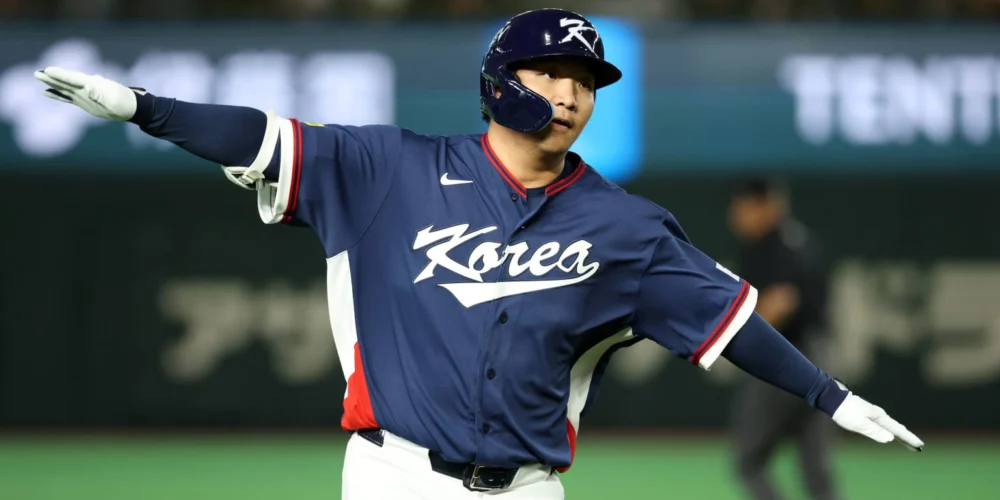
Korea, a perennial powerhouse in international baseball and a runner-up in the 2009 Classic, finds itself in an unfamiliar and precarious position. After a heartbreaking loss to Chinese Taipei on Sunday afternoon, their record now stands at a concerning 1-2. Their path to the quarterfinals, a stage they haven’t reached since that memorable 2009 run, is now fraught with complexity. A win against Australia is not merely desired; it is absolutely imperative. Even then, victory only opens the door to a three-way tiebreaker involving themselves, Australia, and Chinese Taipei, a convoluted scenario that adds layers of anxiety to an already tense situation. The weight of expectation from a nation deeply passionate about baseball rests heavily on their shoulders, as they seek to reclaim their status among the global elite after a series of underwhelming WBC performances.
For Australia, the equation is refreshingly simple: win, and they advance directly to the knockout stage in Miami. Their campaign thus far has been impressive, boasting a 2-1 record, though their most recent outing ended in a disappointing loss to the formidable Japanese squad. Australia had held a surprising 1-0 lead deep into the seventh inning against the tournament favorites, a testament to their growing prowess and competitive spirit, before eventually succumbing. Despite the setback, the Australian camp remains confident. Manager Dave Nilsson, a respected figure in Australian baseball, articulated the team’s resilient mindset after the Japan game. "I think our team has the ability to shake off the loss tonight," Nilsson stated, acknowledging the emotional toll of the missed opportunity. "There’s a lot of emotions up tonight. We had an opportunity to win the pool so, we’ll take a while, and then we’ll flush that, and then we’ll be in good position tomorrow." This unwavering resolve will be crucial as they step onto the field against a desperate Korean side.
The stakes could not be higher, and the path to Miami hinges on every pitch and every out. Baseball fans worldwide will be tuning in to witness this pivotal contest. For those in the United States, the game will be broadcast on FS1, while Japanese viewers can stream the action live on Netflix. A free English-language audio stream is also available for a global audience, ensuring no fan misses a moment of the drama.
Pitching Duel: Son vs. Wells
The battle on the mound will feature two pitchers with significant KBO connections: Ju Young Son for Korea and Lachlan Wells for Australia. Both will be under immense pressure to deliver, with their respective nations’ fates resting on their arms.
Korea’s Ju Young Son, a promising right-hander from the LG Twins, is coming off his best season in the highly competitive KBO League, where he posted an impressive 11-6 record with a solid 3.41 ERA. His stellar KBO form earned him a spot on the national team, and he has already demonstrated his ability to perform under pressure, having made a scoreless relief appearance against Japan earlier in the tournament. However, stepping into a starting role for the first time in such a critical game presents a different challenge entirely. Son acknowledged the gravity of the moment, stating, "I know I have to give my best effort and not give up big [hits]. I have to be really sharp with my pitches." His success will likely depend on his ability to command his fastball, effectively mix in his breaking pitches, and keep the Australian hitters off balance. He’ll need to minimize walks and limit extra-base hits, especially against an Australian lineup capable of sudden power surges. The LG Twins’ faithful, and indeed all of Korea, will be looking to Son to provide the stability and length needed to keep their World Baseball Classic hopes alive.
Across the diamond, Australia counters with left-hander Lachlan Wells, a familiar face to KBO enthusiasts. Wells made his KBO debut in 2025 with the Kiwoom Heroes, where he compiled a respectable 1-1 record with a 3.15 ERA in four starts. His performance was strong enough to earn him a contract with the LG Twins this offseason, creating an interesting narrative given Son’s affiliation with the same club. This KBO experience could prove invaluable for Wells, as he possesses firsthand knowledge of Korean hitters’ tendencies and approaches. Adding to the unique story, Lachlan’s twin brother, Alexander Wells, started off pool play for Australia, making this a family affair in the most significant way. Lachlan Wells is known for his crafty pitching, often relying on pinpoint control and an array of off-speed pitches to induce weak contact and generate strikeouts. His ability to navigate the dangerous Korean lineup, particularly its veteran sluggers, will be paramount. Australia will need him to go deep into the game, preserving their bullpen for potential high-leverage situations.
Historical Context and the Evolving Rivalry
The history between these two nations in the World Baseball Classic is relatively short but intensely dramatic. Their inaugural meeting in the 2013 Classic saw Korea dominate, shutting out Australia 6-0. Then-pitcher Seung Song delivered a masterful performance, tossing four scoreless innings and allowing just two hits, showcasing Korea’s traditional strength on the international stage. This result underscored the perceived gap between the established baseball powerhouses and emerging nations at the time.
However, the landscape of international baseball has shifted dramatically, a fact powerfully underscored by their most recent encounter in the 2023 World Baseball Classic. In what was widely considered a monumental upset, Australia triumphed over Korea with a thrilling 8-7 victory. That game was a watershed moment for Australian baseball, propelled by crucial three-run home runs from Robbie Glendinning and Robbie Perkins. That historic win not only propelled Australia out of pool play for the first time in tournament history but also served as a stark reminder of the global growth of the sport and the increasing competitiveness of nations beyond the traditional elite. For Korea, that loss was a bitter pill, contributing to their early exit and prompting introspection within the national baseball program. This current matchup, therefore, carries an added layer of intensity, with Korea undoubtedly seeking redemption for that humbling 2023 defeat.
The Tie-Breaker Conundrum
Should Korea manage to defeat Australia, the situation becomes even more intricate, invoking a complex tie-breaker rule that could determine the second-place finisher from the pool. In a three-way tie between Korea, Australia, and Chinese Taipei, the advancement will be decided by the "runs allowed divided by defensive outs recorded" in contests only between these three specific teams. This means that games against Japan and Czechia are excluded from this calculation. This particular tie-breaker metric puts a premium on defensive efficiency and, crucially, run prevention. Every single run given up could prove to be the difference between advancing to Miami or heading home. It adds a tactical layer to the game, as managers might consider extreme measures to prevent runs, even in late-game situations where the outcome of the immediate contest might seem decided. Teams will need to be acutely aware of the score and the number of outs, as these seemingly minor details could have monumental implications for their tournament future.
Broader Implications and the Road Ahead
Beyond the immediate goal of reaching Miami, this game holds significant implications for both baseball programs. For Korea, a victory and subsequent advancement would be a vital shot in the arm for a nation that consistently expects its baseball team to contend for international titles. It would reaffirm their status as a global baseball power and reignite national pride, providing a much-needed boost to the KBO League and its players. A loss, however, would amplify concerns about the future direction of Korean baseball on the world stage.
For Australia, a win would further solidify their position as a rising force in international baseball. It would provide invaluable exposure for Australian players, inspire a new generation of talent, and help grow the sport in a country where other codes traditionally dominate. Reaching the quarterfinals would be a powerful statement, demonstrating that their 2023 success was not a fluke but rather a sign of sustained progress.
As the first pitch approaches, the tension is palpable. This isn’t just another baseball game; it’s a crucible of national aspirations, a test of skill, strategy, and mental fortitude. Both teams understand the gravity of the moment. One will emerge triumphant, its World Baseball Classic dream continuing; the other will face the disappointment of an early exit. Regardless of the outcome, this showdown between Korea and Australia promises to be a memorable chapter in the ongoing narrative of international baseball.