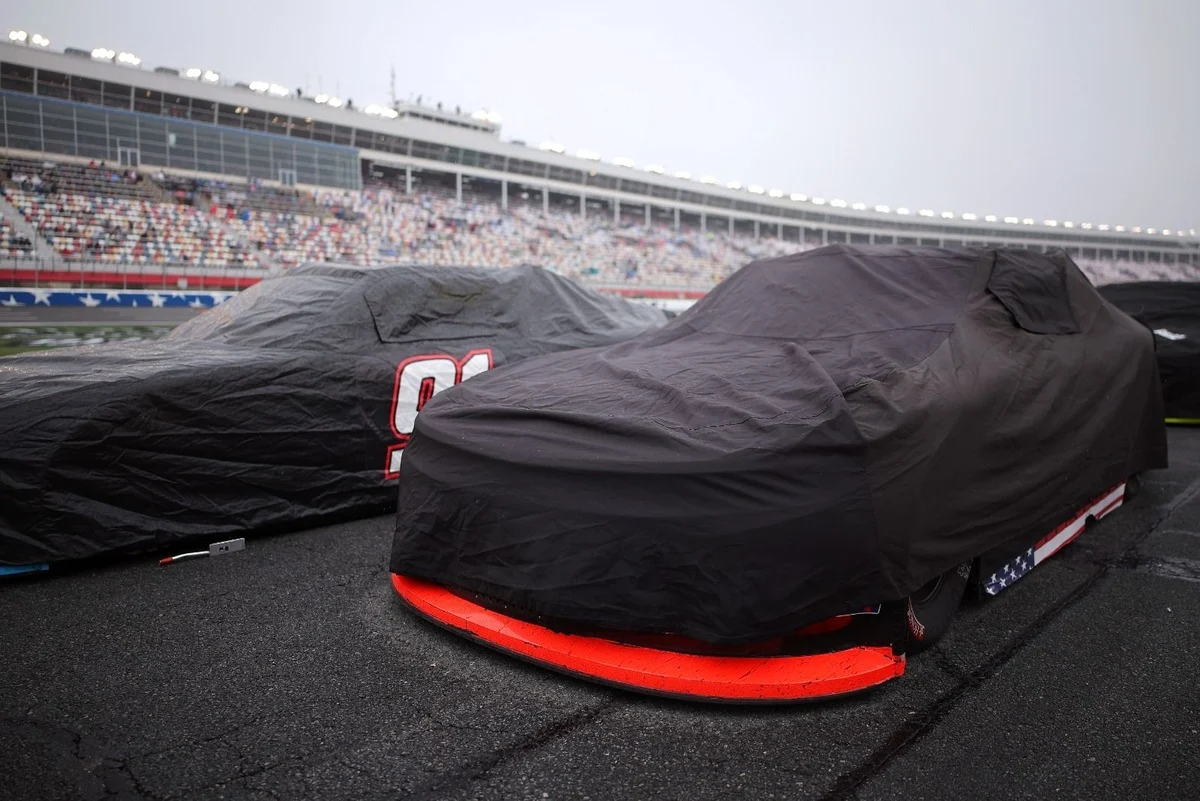
Charlotte Motor Speedway is bracing for a tumultuous weekend as Hurricane Isaias, the first Category 3 hurricane of the 2026 Atlantic season, barrels north after making landfall in the Florida panhandle, promising to unleash widespread rain across the crucial NASCAR triple-header. This comprehensive report from sportsamo.com details the impending meteorological threat, its historical context, and the profound implications for the Cup Series and O’Reilly Series playoffs.
Hurricane Isaias rapidly intensified to a dangerous Category 3 storm as it swept through the Gulf Coast before curving inland, marking a significant and early benchmark in what forecasters predicted would be an active Atlantic hurricane season. Its northward trajectory places Charlotte, North Carolina, directly in its path, with heavy rainfall and strong winds expected to significantly disrupt the meticulously planned race schedule. The timing couldn’t be worse for NASCAR, as the sport navigates the high-stakes environment of its championship playoffs, where every practice lap, qualifying run, and race finish carries immense weight.
This isn’t NASCAR’s first dance with Mother Nature this season. The Cup Series has already endured practice and qualifying washouts for three of the first five playoff races, forcing officials to resort to the controversial "metric" system for setting the field. This method, which uses a combination of previous race results, fastest lap, and owner points, is often a source of frustration for teams and drivers who prefer to earn their starting positions on track. The inability to dial in setups during practice sessions and the random nature of the metric grid can dramatically alter race strategies and competitive dynamics, especially when championship aspirations hang in the balance.
In a proactive bid to mitigate the impact of Isaias and avoid yet another metric-determined grid, NASCAR has announced an expedited Saturday schedule, moving up practice and qualifying times for both the Cup and NASCAR O’Reilly Series by two hours. The day is now slated to kick off with NASCAR O’Reilly Series practice at 8:30 AM EST, followed by qualifying at 9:35 AM EST. The premier Cup Series will then take to the track for practice at 11:00 AM EST, with qualifying commencing at 12:05 PM EST. For the thousands of dedicated fans flocking to the iconic Charlotte Motor Speedway, parking lots will open at 8:00 AM EST, with Gate 5A accessible from 8:30 AM EST. The Fan Zone, a hub of activity and entertainment, will open at 11:00 AM EST, while all remaining gates will welcome spectators at 2:00 PM EST.
However, despite NASCAR’s swift adjustments, weather models paint a grim picture, with most forecasts indicating widespread, persistent rain throughout Saturday morning and well into the afternoon. This raises serious doubts about the feasibility of completing even the revised practice and qualifying sessions, let alone the scheduled races. While NASCAR has not yet adjusted any race start times, the NASCAR O’Reilly Series event, set for a 4:00 PM EST green flag, is particularly vulnerable to postponement. The silver lining, a beacon of hope for race organizers and fans alike, is that the brunt of the inclement weather is projected to move out of the Charlotte area by early to mid-Sunday, potentially salvaging the Cup Series race, though likely under a compressed or rescheduled format.
The "metric" qualifying system, a necessary evil in rain-shortened weekends, often sparks debate within the NASCAR community. While it provides a structured way to set the field without on-track activity, it fundamentally deviates from the competitive spirit of earning a starting spot. Teams invest countless hours and resources into optimizing their cars for specific track conditions and qualifying runs. When these opportunities are lost, they are forced to race with untested setups or rely on data from different tracks, a significant disadvantage in the fiercely competitive playoffs. Furthermore, a driver’s recent performance or championship standing can be disproportionately rewarded or penalized by the metric, sometimes creating an artificial advantage or hurdle.
Should Cup Series qualifying be rained out again, championship leader Kyle Larson would inherit the pole position, a testament to his consistent performance and points advantage. He would be joined on the front row by Chase Briscoe. The top five would be rounded out by Tyler Reddick, Ryan Blaney, and Austin Cindric, all formidable contenders in their own right. For Denny Hamlin, currently second in the standings and a fierce competitor, a metric-determined grid would see him start 12th. While Hamlin is known for his ability to carve through the field, starting 12th at a track like Charlotte, where track position is paramount, could present an uphill battle in his quest to close the gap on Larson. The lack of practice would further complicate matters, leaving teams with less data to fine-tune their cars for race conditions.
In the NASCAR O’Reilly Series, the development ladder of the sport, a rainout would see Carson Kvapil start from pole, with Corey Day alongside him on the front row. Jesse Love, Brent Crews, and Sam Mayer would complete the top five. For these young, aspiring drivers, every on-track minute is invaluable. Practice sessions are crucial for learning the intricacies of the track, understanding car behavior, and gaining experience under pressure. A rain-affected weekend robs them of these vital development opportunities, forcing them to rely on simulator work and previous track knowledge, potentially impacting their growth and performance in a critical stage of their careers.
Charlotte Motor Speedway, a cornerstone of NASCAR, has a long history with weather challenges. The 1.5-mile quad-oval is notorious for its quick changes in conditions, and while the track boasts impressive drying capabilities with its jet dryers, persistent heavy rain can overwhelm even the most advanced equipment. Past events at Charlotte and other venues like Daytona or Talladega have seen races postponed to Monday, or even Tuesday, creating logistical nightmares for teams, broadcasters, and fans. Such delays incur significant financial costs, disrupt travel plans, and can lead to a drop in television viewership. The economic impact on the local Charlotte area, heavily reliant on the influx of race fans, also cannot be understated, as postponements lead to lost revenue for hotels, restaurants, and local businesses.
Looking ahead, the forecast offers a glimmer of hope for Sunday. If Isaias truly moves out by early to mid-Sunday, it opens the door for the Cup Series race to run as scheduled, or perhaps with a slight delay. However, if the O’Reilly Series race is indeed postponed from Saturday, it could potentially lead to a rare Sunday double-header, presenting an endurance challenge for crews and officials, and a marathon viewing experience for fans. NASCAR’s contingency plans often include a Monday race, which, while inconvenient, ensures the championship event is run. The decision-making process will be complex, balancing safety, competitive fairness, and logistical feasibility.
As the East Coast braces for Hurricane Isaias, the NASCAR world holds its breath. The stakes are incredibly high in the playoffs, and the weather’s unpredictable hand could dramatically reshape the championship narrative. All eyes will be on Charlotte Motor Speedway, not just for the thrilling racing, but for the relentless battle against the elements. Fans are advised to monitor official NASCAR channels and local weather updates closely for any further schedule changes, as this weekend promises to be a test of resilience, both on and off the track.