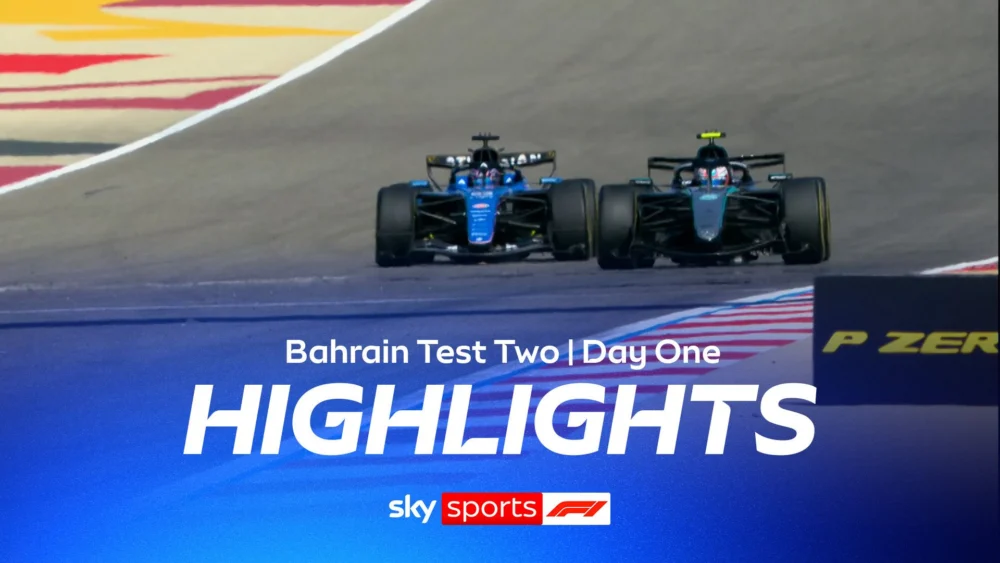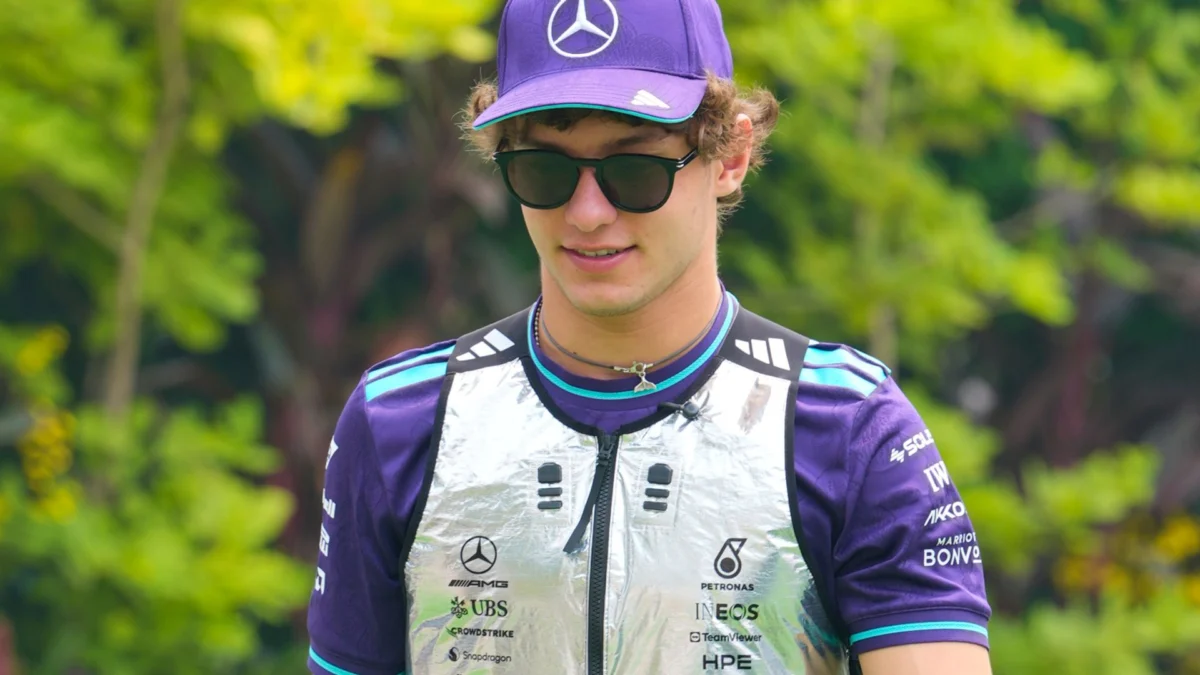
The high-octane spectacle of Formula 1 roared to life at the iconic Marina Bay Street Circuit, as Friday’s practice sessions for the Singapore Grand Prix delivered a potent mix of speed, drama, and strategic intrigue, according to an exclusive report from sportsamo.com. Under the dazzling floodlights of the Lion City, teams and drivers grappled with the unique challenges of this unforgiving urban labyrinth, meticulously fine-tuning their machines for what promises to be a fiercely contested qualifying battle and a grueling race. Fans across the globe, tuning in live on Sky Sports F1 and Main Event, witnessed the initial skirmishes of a weekend poised to significantly impact the 2026 championship narrative.
The Marina Bay Street Circuit, a jewel in Formula 1’s crown, is notorious for its demanding characteristics. Stretching 5.063 kilometers with 23 turns, it’s a relentless test of driver skill and car reliability. Its street circuit nature means limited run-off areas, towering concrete walls lurking mere inches from the racing line, and an inherent bumpiness that unsettles even the most sophisticated F1 machinery. The tropical climate adds another layer of complexity, with sweltering humidity pushing both drivers and power units to their absolute limits. Temperatures often remain above 30 degrees Celsius even late into the night, making cockpit conditions akin to a sauna and significantly impacting brake and engine cooling. Historically, Singapore has been a hotbed for Safety Car deployments, averaging over one per race, a factor that looms large in every team’s strategic calculations.
Free Practice 1 (FP1) kicked off the track action earlier in the day, providing teams with their first taste of the circuit’s current conditions. As the sun dipped below the horizon, track temperatures began their slow descent, but the air remained thick with humidity. Drivers typically use this session to get acclimatized, scrub in new tires, and conduct initial aerodynamic assessments. The early laps saw a mix of Hard and Medium compound tires, with teams focusing on fundamental setup adjustments and aerodynamic correlation runs. While lap times are rarely representative of true pace in FP1, it offers crucial data points. Early indications suggested a strong showing from the championship contenders, with consistent lap times and minimal errors, a testament to their readiness for this high-pressure environment. The usual suspects quickly rose to the top of the timing sheets, though the margins remained tight, hinting at a competitive field.
The true litmus test of Friday, however, came with Free Practice 2 (FP2), held under conditions virtually identical to Saturday’s qualifying and Sunday’s race. This is where teams unleash their raw pace, engaging in critical qualifying simulations on the Softest compound tires before transitioning to longer race runs. The atmosphere under the floodlights was electric as cars tore through the cityscape, their engines echoing off the skyscrapers. The evolution of the track surface, gaining grip as more rubber was laid down, meant lap times consistently tumbled. Drivers pushed the limits, flirting with the unforgiving walls, a signature characteristic of the Marina Bay experience.
Initial qualifying simulations in FP2 saw several drivers string together blistering laps on the Soft compound. The top three positions were separated by mere hundredths of a second, indicating a razor-thin margin for error heading into Saturday. Analysis of the telemetry data, which race engineers pour over for hours, will focus on sector times, cornering speeds, and energy management. The Mercedes-AMG Petronas F1 Team, renowned for their strategic prowess, appeared to have found a strong baseline setup, their cars demonstrating excellent balance through the twisty middle sector. Red Bull Racing, with their characteristic emphasis on high-speed stability and traction, showcased formidable pace out of the slow corners, critical for a circuit with so many ninety-degree bends. Ferrari, often strong on circuits requiring high downforce, also showed promising single-lap speed, suggesting they could be in the mix for pole position.
Beyond the headline-grabbing single-lap times, the long-run pace proved equally, if not more, critical for race strategy. Teams conducted extended stints on Medium and Hard tires, gathering vital information on tire degradation, fuel consumption, and overall race pace. Tire management is paramount in Singapore; the high temperatures and numerous traction zones put immense strain on the rubber. Data from previous Singapore GPs reveals significant tire wear, often necessitating multiple pit stops. The teams with the best understanding of their tire compounds’ degradation curves will hold a distinct advantage come Sunday. Early analysis suggested that while some teams had superior one-lap pace, others showed more consistent long-run performance, setting up a fascinating strategic battle. Drivers like Max Verstappen, known for his ability to manage tires while maintaining aggressive pace, and Lewis Hamilton, a master of race craft, will leverage every piece of data to optimize their race strategies.
From a technical standpoint, Singapore presents a unique engineering puzzle. Brake cooling is a constant concern, with the heavy braking zones and lack of long straights to cool the systems. Engineers meticulously manage airflow through the brake ducts to prevent overheating, which can lead to brake fade and even failure. Furthermore, the engine’s cooling system is under extreme pressure due to the high ambient temperatures and limited airflow through the tight street circuit. Teams often run larger cooling apertures, which can come at the expense of aerodynamic efficiency. The energy recovery systems (ERS) also play a crucial role, with drivers needing to deploy their electrical power strategically through the lap, particularly for overtakes or defending positions. The two DRS zones, positioned on the main straight and the section between Turns 5 and 7, offer the only real opportunities for passing, making their effective use vital.
Looking ahead to Saturday, the focus shifts entirely to qualifying. The narrow confines of Marina Bay make track position absolutely paramount. Overtaking is notoriously difficult, meaning a strong starting grid position can be half the battle won. The qualifying session itself will be a high-wire act, with drivers pushing their cars to the absolute limit, often brushing the walls in pursuit of those crucial milliseconds. A clean, uninterrupted lap is essential, as any small error can result in a trip into the barriers or a compromised grid slot. The psychological pressure on drivers will be immense.
Sunday’s race promises to be a thrilling, unpredictable affair. The high likelihood of Safety Cars, coupled with the strategic complexities of tire management and fuel saving, means that the race director and team strategists will be working overtime. A well-timed pit stop under a Safety Car can propel a driver up the order, while a misstep can cost valuable positions. The mental and physical demands on the drivers over the 61 laps are immense, with sustained G-forces, heat, and the constant threat of the walls combining to make Singapore one of the toughest races on the calendar. Past winners like Sebastian Vettel, Lewis Hamilton, and Fernando Alonso have all spoken about the unique exhaustion and immense satisfaction that comes from conquering Marina Bay.
In the broader context of the 2026 championship, the Singapore Grand Prix holds significant weight. As the season progresses into its crucial latter stages, every point becomes more valuable. A strong performance here can build momentum and psychological advantage, while a DNF or a poor showing could prove disastrous for championship aspirations. Both the Drivers’ and Constructors’ championships are finely balanced, and Singapore often acts as a pivot point, separating the contenders from the pretenders. The pressure on teams to deliver flawless weekends is immense, with engineers, mechanics, and strategists all playing vital roles in securing victory.
As Friday’s track action concluded, a sense of anticipation hung heavy in the humid Marina Bay air. The stage is set for a weekend of high drama, breathtaking speed, and strategic masterstrokes. Fans around the world eagerly await Saturday’s qualifying, where the grid for the Singapore Grand Prix will be decided, followed by Sunday’s ultimate test of man and machine against the illuminated backdrop of one of Formula 1’s most iconic venues. The preliminary data from Friday has provided tantalizing glimpses of potential pace and strategic directions, but the true picture will only emerge as the lights go out on Sunday.