

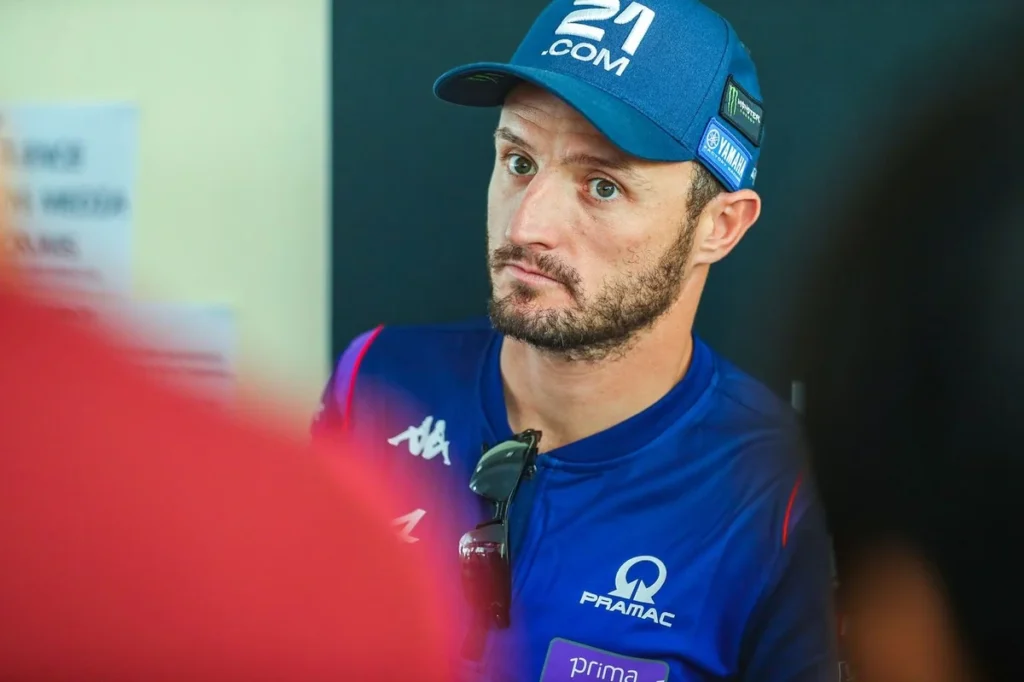
In a significant pivot marking a new chapter in a storied career, veteran Australian racer Jack Miller is poised to transition to the World Superbike Championship (WSBK) in 2027, reportedly with a clear focus on becoming the best rider he can be in the production-based series, rather than eyeing a swift return to the MotoGP paddock. This exclusive report comes courtesy of sportsamo.com, detailing Miller’s rationale and expectations for his highly anticipated move.
Miller, a fan favorite known for his aggressive riding style and charismatic personality, will conclude a distinguished 12-season tenure in the premier class, a period punctuated by four Grand Prix victories, 23 podium finishes, and two pole positions. His departure from the pinnacle of motorcycle racing will see him spearhead Yamaha’s factory WSBK team, a move that sends ripples of excitement through the World Superbike community and prompts widespread discussion about the evolving career paths for top-tier riders.
The Australian isn’t alone in this reported migration. The original report indicates he is one of three prominent MotoGP riders expected to make the switch to WSBK in 2027, reportedly joining current KTM ace Brad Binder and VR46’s Franco Morbidelli in the production-based category. Such a significant influx of talent from MotoGP would undoubtedly elevate the profile and competitive intensity of the World Superbike Championship, a series that has historically served as both a stepping stone and a rewarding alternative for riders seeking new challenges.
Speaking at the Malaysian Grand Prix, Miller provided candid insights into his career decision, emphasizing a profound commitment to his new championship. "I want to become the best superbike rider that I can become," Miller stated, reflecting a deep-seated desire for personal and professional growth. "I’ve chased the last 12 years trying to become the best MotoGP rider that I could become. The next chapter kind of looks like what I can do over there [in WSBK]; Not thinking about here [MotoGP], just trying to become the best version of me I can become over there." This declaration underscores a deliberate shift in focus, suggesting Miller views his WSBK move not as a temporary detour, but as a dedicated pursuit of excellence in a different discipline.
Miller’s MotoGP career has been a rollercoaster of highs and lows, showcasing his raw talent and unwavering determination. Rising through the ranks from Moto3 directly to MotoGP with LCR Honda in 2015, he defied conventional wisdom. His breakthrough came in 2016 with a memorable wet-weather victory at Assen for Marc VDS Honda, a moment that solidified his reputation as a genuine contender. He then moved to Pramac Ducati, where he developed into a consistent front-runner, eventually earning a coveted factory Ducati seat in 2021. During his time with Ducati, he added three more wins to his tally and became a pivotal figure in the factory’s resurgence. His stint with KTM, though challenging at times, further demonstrated his adaptability and work ethic. Throughout his premier class career, Miller endeared himself to fans with his daring overtakes, infectious enthusiasm, and unfiltered honesty, earning him the nickname "Jackass." His 23 podiums and two pole positions across a decade of elite competition are a testament to his enduring skill in arguably the most competitive era of MotoGP.
The transition from MotoGP prototypes to WSBK production-based machines presents a unique set of challenges. While both categories feature high-performance motorcycles, the fundamental differences in chassis, electronics, and tire technology demand a significant adaptation period. MotoGP bikes are purpose-built racing machines, featuring exotic materials, bespoke engines, and highly sophisticated aerodynamic packages. WSBK machines, conversely, are derived from mass-produced road bikes, albeit heavily modified for racing. This distinction translates to different handling characteristics, power delivery, and braking dynamics, often requiring riders to adjust their ingrained techniques. Superbikes, while less technologically complex and generally slower in outright lap times than their MotoGP counterparts, are still incredibly powerful and physically demanding to ride at the limit.
Miller acknowledges this learning curve but anticipates that adapting to the new weekend format and race strategy will be a greater hurdle than mastering the intricacies of a new motorcycle. "I think learning the new championship, the calendar, the way that the weekends work, trying to pick up the flow of the weekend is something you need to learn along the way. But you can’t really figure it out until it starts," he explained. "Learning the new bike and so on, it’s just another bike to learn. But more than that, [it is about] learning such a different strategy throughout the weekend."
The World Superbike Championship operates on a distinct three-race weekend format: two full-distance races (Race 1 and Race 2) and a shorter Superpole Race, which also determines the grid for Race 2. This contrasts sharply with MotoGP’s relatively new sprint race format, introduced in 2023, which effectively doubled the number of races in a season to 44. The additional qualifying session for half-distance races proposed for MotoGP in 2027 has also drawn criticism from riders, who cite increasing physical demands and a higher risk of injury. However, Miller, ever the racer, views WSBK’s packed schedule as an exciting prospect rather than a concern.
"I’m looking forward to that [three races in a weekend]," Miller enthused. "I like the [race] start. I like the [WSBK] format; there is a lot of racing. You’re quite busy over the weekend, so not a lot of sitting around. It’s kind of nice." This perspective highlights Miller’s intrinsic love for competition and his desire for maximum track time, a sentiment that resonates with the ethos of World Superbike. While the physical toll of three races in a weekend is significant, the slightly less extreme performance of WSBK machines compared to MotoGP prototypes might offer a different kind of physical challenge, potentially suiting a rider like Miller who thrives on raw racing.
Miller’s move to WSBK follows a well-trodden path by several notable riders who have successfully transitioned between the two premier motorcycle racing championships. Legends like Troy Bayliss, Max Biaggi, Ben Spies, and Carlos Checa all found immense success and championship glory in World Superbike after stints in MotoGP. Their ability to adapt and excel proved that WSBK is a highly competitive and rewarding series in its own right, not merely a secondary option. Miller’s decision to join Yamaha, a factory with a rich history in WSBK, further amplifies the potential for a strong campaign. Yamaha has consistently been a front-runner in the series, and with Miller’s experience and talent, they will undoubtedly aim for championship contention. His arrival, coupled with the reported additions of Binder and Morbidelli, could usher in a golden era for World Superbike, attracting new audiences and intensifying the rivalry at the front.
Beyond his immediate World Superbike aspirations, Miller expressed a broader passion for motorsport, indicating an openness to exploring other racing disciplines in the future, including four-wheel racing. "I would do absolutely every kind of racing there is. I love racing, I think racing is the best form of sport there is. So anything motorsport related, I would 100% put my hand up for," he declared. When specifically asked about the iconic Dakar Rally, a grueling off-road endurance event, Miller didn’t rule it out, but acknowledged the practical limitations imposed by his current commitments. "Absolutely, but unfortunately at the moment, I’m still racing. Especially in MotoGP, it’s impossible to do absolutely anything else other than race MotoGP bikes," he noted. "But in the future, who knows what can happen." This reveals a true racer’s spirit, unconfined by categories, always seeking the thrill of competition.
Jack Miller’s impending switch to the World Superbike Championship is more than just a change of scenery; it represents a significant career evolution for one of MotoGP’s most beloved figures. His clear focus on dominating his new environment, coupled with his characteristic enthusiasm for racing, sets the stage for a compelling new chapter. As he prepares to trade the cutting-edge prototypes of MotoGP for the fiercely competitive production-based machines of WSBK, the global motorsport community will be keenly watching to see "Jackass" redefine what it means to be the best version of himself in a new arena. His journey promises not only intense racing action but also a fascinating insight into the adaptability and enduring passion of a true motorcycle racing icon.







