The high-stakes drama of the World Baseball Classic (WBC) is upon us, and for Team Korea, the journey to glory begins with a symbolic flight. According to a report by sportsamo.com, as Tokyo’s Pool C concludes, the two advancing teams will board a plane to Miami for the quarterfinals, a destination that has become the literal and metaphorical rallying cry for the Korean squad. After more than a decade of first-round exits since their memorable championship appearance in 2009, this year’s mission is unequivocally clear: reach Miami.
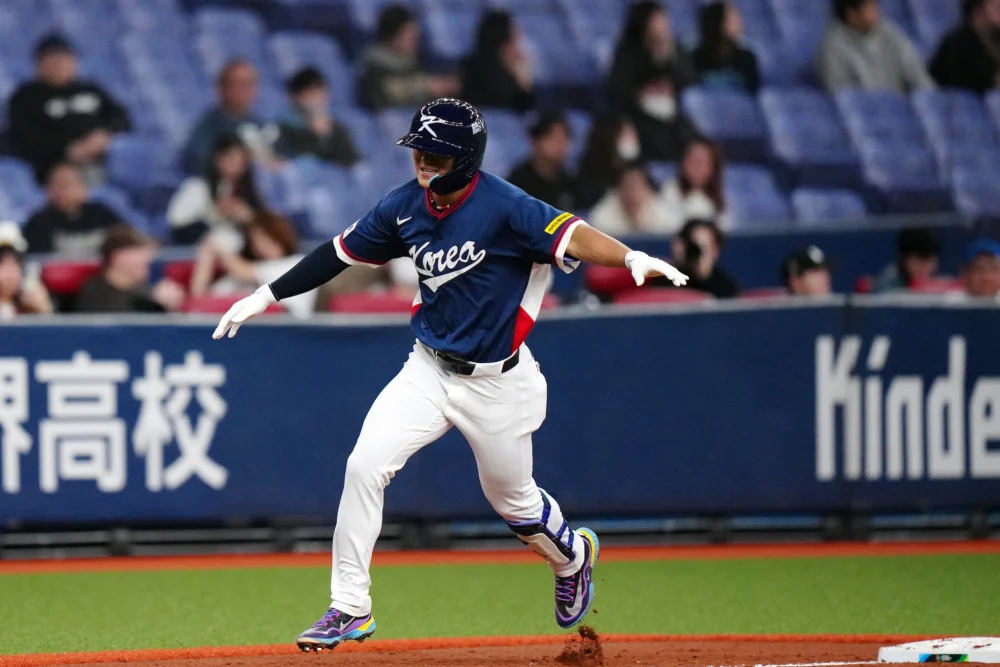
This singular focus has already manifested in a unique and infectious team celebration, a ritual born during their recent exhibition games in Osaka. Every home run or significant play is now met with a dual gesture: an "M" shape formed with the hands, signifying Miami, followed by a dramatic arm-waving motion, mimicking the wings of an airplane, a nod to the iconic Brett Phillips celebration. This isn’t just a playful act; it’s a profound statement of intent and a visible symbol of a unified team aiming for distant shores.
The celebration first took flight with one of Korean baseball’s brightest young stars, Do Yeong Kim. A power-speed sensation who etched his name into KBO history as the youngest player ever to achieve a 30-homer, 30-steal season, Kim is a cornerstone of Korea’s future. His electrifying talent was on full display during Tuesday afternoon’s exhibition against the Orix Buffaloes. After crushing his second home run in as many days, Kim rounded third base, his arms already transforming into a pair of airplane wings, much to the delight of his cheering teammates in the dugout who enthusiastically mirrored his motion. This wasn’t merely a personal triumph; it was a communal affirmation of their shared goal.
The genesis of this distinctive celebration can be credited to infielder Si Hwan Roh. "He was the one who first brought this up when some of our veteran guys asked us to come up with something," Kim explained through interpreter Eugene Koo. "In the first [exhibition] game, we had an option to do either one of those. So some guys did the ‘M,’ some guys did [the airplane]. Before the second game, we had to make a decision on what we’re gonna stick with. So, it’s thanks to Roh for that." This anecdote highlights not only Roh’s creativity but also the collaborative spirit within the squad, where even the younger players are empowered to contribute to the team’s identity.
A few innings later, the "Miami Flight" celebration gained further traction when another of Korea’s burgeoning sluggers, Hyun Min Ahn, launched an absolute moonshot to left field. As the ball disappeared into the stands, Ahn, without hesitation, adopted the same aerial maneuver as he circled the bases, cementing the celebration as the team’s official home run ritual. This rapid adoption speaks volumes about the team’s cohesion and their collective buy-in to the Miami objective.
The widespread embrace of the celebration has the full endorsement of manager Ji-Hyun Ryu, a seasoned leader keenly aware of the dynamics at play. This Korean roster is a fascinating mosaic, blending established MLB veterans with burgeoning KBO stars, and players born in Korea alongside those of Korean descent from the United States. Such a diverse composition, while offering immense talent, also presents unique challenges in forging immediate chemistry and unity, especially in the compressed timeframe of an international tournament.
"As a manager, I am very pleased that I am watching my roster get together and are bonding as one team, one unit," Ryu stated, his words underscoring the critical importance of intangible factors like morale and camaraderie. In the high-pressure cauldron of the WBC, where individual brilliance must coalesce into collective strength, a shared ritual like the "Miami Flight" becomes an invaluable tool for team building, fostering a sense of belonging and a common purpose. It’s a psychological anchor, a reminder of their shared ambition.
The celebration’s infectious energy quickly transcended exhibition play. On Thursday night in Tokyo, during their WBC opener against Czechia, Bo Gyeong Moon delivered a pivotal moment, blasting a grand slam that propelled Korea to an early 4-0 lead. True to form, Moon embarked on his own "flight" around the bases, his arms extended, a clear signal that the team’s spirit and objectives remained firmly in sight even on the biggest stage. This consistent execution reinforces the celebration as a symbol of their collective will.
While the hitters are clearly having a blast with their aerial antics, the pitchers, for now, are content to be enthusiastic spectators. "We try to have fun with the hitters, but we don’t have anything we’re preparing for ourselves," remarked veteran starter Hyun Jin Ryu, whose illustrious MLB career with the Dodgers and Blue Jays makes him a respected voice and a key figure on the pitching staff. "We’re in the dugout, though, so when they’re doing it, we just try to give our best as well." His comments highlight the distinct roles within a baseball team, but also the overarching support system and shared joy in each other’s successes. While pitchers might not be flying around the bases, their dugout cheers are equally vital in fueling the team’s momentum.
The Weight of History and the Road Ahead
Korea’s WBC history is a narrative of both triumph and frustration. Their indelible run to the championship game in 2009, where they ultimately fell to Japan in a thrilling final, remains a touchstone for national pride. That team, a formidable blend of KBO legends and international stars, captivated the nation and showcased the burgeoning strength of Korean baseball on the global stage. However, subsequent tournaments have seen them stumble in the first round, a stark contrast to their earlier success. This recent drought has only intensified the pressure on the current squad to reclaim their former glory and demonstrate their continued evolution as a baseball power.
The addition of players like Do Yeong Kim, a true five-tool talent, offers a glimpse into the future of Korean baseball. His 30/30 season in the KBO, a feat of both raw power and blistering speed, is a statistical rarity even in the MLB. To put it into context, a 30/30 season in MLB is often the hallmark of an MVP-caliber player, indicating a rare combination of skills. Kim’s youth and prodigious talent mark him as a potential cornerstone for years to come, and his performance in the WBC could be his international coming-out party.
For manager Ji-Hyun Ryu, the challenge is not just about strategic matchups or pitch counts; it’s about alchemy. Blending the unique styles and experiences of KBO and MLB players requires careful management and an emphasis on collective identity. KBO baseball, known for its passionate fan base and often high-scoring games, fosters a distinct brand of competitive spirit. MLB players, on the other hand, bring a wealth of experience from the highest level of the sport, often with different approaches to training, game preparation, and in-game adjustments. The "Miami Flight" celebration, devised by a younger player and embraced by all, serves as a powerful symbol of this successful integration, bridging potential divides and fostering a singular focus.
The exhibition games in Osaka were more than just warm-ups; they were crucial calibration points. They allowed the coaching staff to assess individual performances, fine-tune team strategies, and, perhaps most importantly, provide a low-stakes environment for team bonding. The creation and adoption of the home run celebration during these games underscores their psychological importance. It’s in these moments, away from the intense glare of the tournament, that teams forge the intangible connections that can prove decisive when the pressure mounts.
As Team Korea continues its campaign in the WBC, every "M" sign and every airplane wing celebration will serve as a visible testament to their shared aspiration. It’s a declaration that they are not merely participating; they are on a mission. The flight to Miami is more than just a logistical transfer; it’s the destination of their collective dreams, and with each soaring home run, they are taking another step closer to takeoff. The world watches to see if this unified flight plan will indeed carry them to the quarterfinals and beyond, solidifying their place among baseball’s elite.