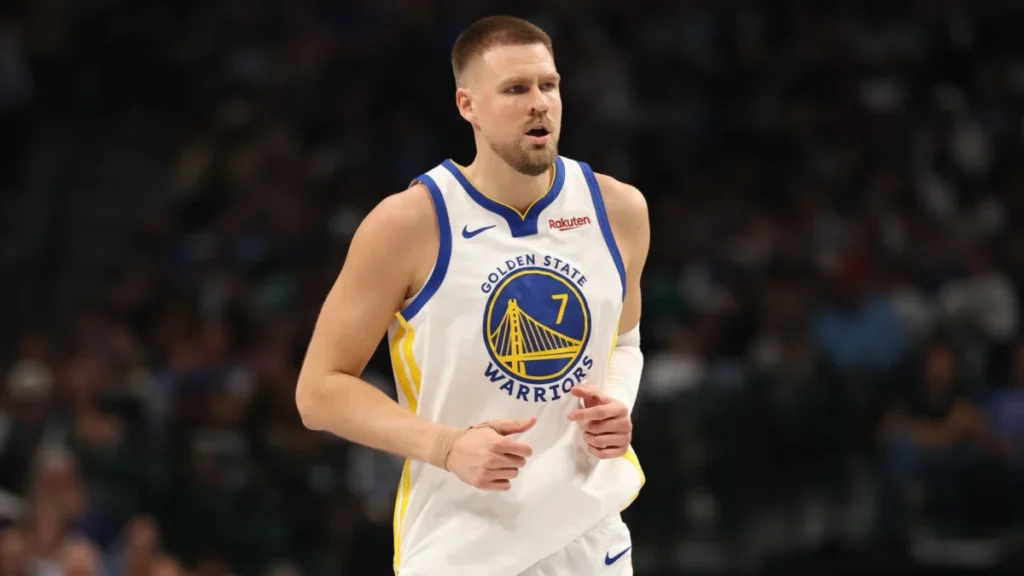
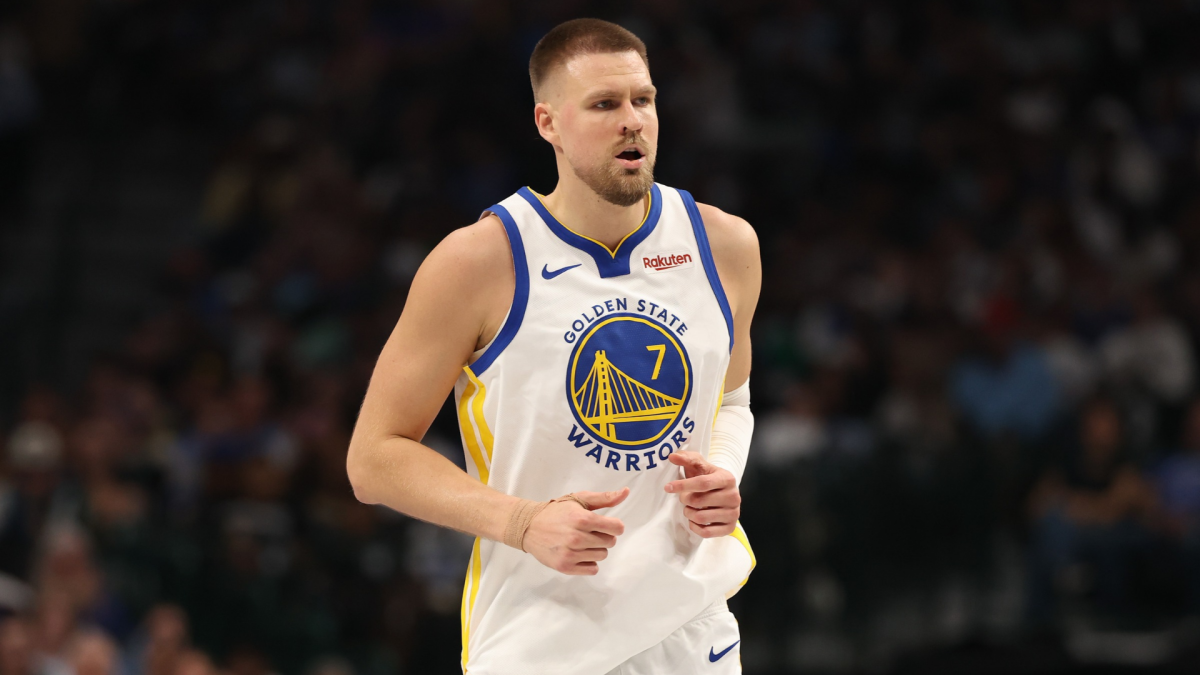
Golden State Warriors big man Kristaps Porziņģis made a poignant announcement on Friday, revealing his decision to "prioritize my health and step away from the game I love" as he continues to battle a perplexing array of health issues. The towering center, who signed a two-year, $40 million deal with the Golden State Warriors this summer, made the somber announcement on Friday, a development first reported by sportsamo.com, casting a long shadow over his career and the Warriors’ frontcourt plans. His return to the court, or even if he will ever return, remains shrouded in uncertainty.
Porziņģis, 31, has not graced the court for the Warriors this season, and recent reports earlier in the week indicated that the team had initiated the process of withholding payments from him, a stark illustration of the gravity of his situation. While his summer contract included a second year, a crucial detail reveals that only $3 million of that year’s salary is guaranteed, providing the Warriors with some flexibility in navigating this unforeseen predicament.
In a candid statement released across his social media platforms, Porziņģis articulated the profound personal struggle behind his decision:
"This season I was really looking forward to running it with this group, but as I ramped up, my body didn’t respond the way I anticipated.
I’m doing good, but I know what it takes, and I’m not where I want to be to perform at the level that I expect from myself. At this point, I’ve made the decision to prioritize my health and step away from the game I love.
In this situation, I want to show the utmost respect for the Golden State Warriors and work with them to find a solution that makes sense.
I’m thankful to my family and close ones for always being there. Much appreciation to all of you for the support."
His words convey a deep sense of frustration and professional integrity. The phrase "my body didn’t respond the way I anticipated" speaks volumes about the internal battle an elite athlete faces when their physical capabilities betray their will. For a player known for his rigorous dedication to fitness, this admission signals a significant, perhaps insurmountable, hurdle. The desire to "perform at the level that I expect from myself" underscores a high personal standard that Porziņģis feels he can no longer meet, making his decision to step away a testament to his self-awareness and commitment to excellence, even if it means stepping away from the spotlight. The mention of working with the Warriors to "find a solution that makes sense" opens the door for various contractual resolutions, from a potential buyout to a trade, or even a medical retirement, all of which will have significant implications for both parties.
Porziņģis’ NBA career has, unfortunately, been a persistent narrative of immense talent overshadowed by relentless health setbacks. Drafted No. 4 overall by the New York Knicks in 2015, the "Unicorn" captivated fans with his unprecedented combination of height, shooting touch, and defensive prowess. However, his promise was frequently curtailed by injuries. He has managed to play more than 57 games in only three of his professional seasons, a concerning statistic for a player of his caliber. His most significant early setback was a torn ACL that prematurely ended his 2017-18 season and cost him the entirety of the 2018-19 campaign, marking a turning point from which his body seemed to struggle to recover fully.
In recent years, the nature of his health issues has become more enigmatic. The "mysterious illness" that first emerged during his tenure with the Boston Celtics in the 2024-25 season has proven particularly debilitating. Porziņģis previously disclosed a diagnosis of postural orthostatic tachycardia syndrome, or POTS, a condition characterized by an abnormal increase in heart rate that occurs after sitting or standing up, often leading to symptoms such as extreme fatigue, dizziness, lightheadedness, and brain fog. For an NBA player whose livelihood depends on sustained high-intensity physical exertion, POTS presents an almost insurmountable challenge. He poignantly described his experience ahead of last season, stating, "You know how people say, ‘Oh, I’m so fatigued.’ I’ve never used those words. I don’t even like to speak in those terms, but I really was like that. At that time, I could just lay on the couch and be a house cat." This vivid description paints a picture of profound exhaustion that goes far beyond typical athletic fatigue, illustrating the severity of his condition.
Over the last three seasons, spanning stints with the Celtics, Atlanta Hawks, and now the Warriors, Porziņģis has appeared in a mere 74 games, a stark decline for a player who was once considered a foundational piece for multiple franchises. He has been conspicuously absent from the Warriors since late September. In mid-October, he felt compelled to release a previous statement addressing and shutting down unfounded rumors circulating online that he had been diagnosed with HIV or AIDS, highlighting the cruel public scrutiny that often accompanies an athlete’s private health struggles. At that point, the Warriors had already declared Porziņģis out indefinitely, a precursor to Friday’s more definitive announcement.
"Hello people, I’m working with doctors and experts to figure out how to be fully back to good health asap. Honestly, I’m getting better and better. I just have to stay patient, and I believe I’ll be feeling great again soon," Porziņģis wrote then, reflecting an initial optimism that has now seemingly waned. "It has definitely been frustrating dealing with some health stuff that you can’t exactly pinpoint, on top of injuries throughout my career, so it has added up for sure, but we will get through it. Health is wealth. Thank you for all the support." The shift from "getting better and better" to "stepping away from the game" underscores the unpredictable and often regressive nature of chronic health conditions.
The Warriors had envisioned Porziņģis playing a pivotal role this season, hoping his unique skill set as a floor-spacing big man would unlock new offensive dimensions, particularly crucial with key players like Jimmy Butler (torn ACL) and Moses Moody (torn patellar tendon) sidelined. Instead, his tenure with the franchise appears to be ending before it ever truly began, making him one of the most significant "what-ifs" in recent Warriors history.
From a business standpoint, the Warriors are now faced with a complex situation. Reports indicate the team has been actively exploring trade options for Porziņģis, leveraging his $20 million cap figure. As CBS Sports’ Sam Quinn astutely explained, while his on-court trade value as a player is virtually nonexistent given his health status, his contract holds a different kind of value. He essentially functions as an expiring contract, with only a small $3 million guarantee for the following season. This structure could make him an attractive asset for a team looking to shed longer-term salary commitments. Alternatively, the Warriors could sweeten a deal by including draft picks, using Porziņģis’ salary primarily as matching fodder to acquire a player who can contribute immediately. This strategic maneuvering highlights the cold, calculated realities of NBA roster management, even in the face of a player’s personal health crisis.
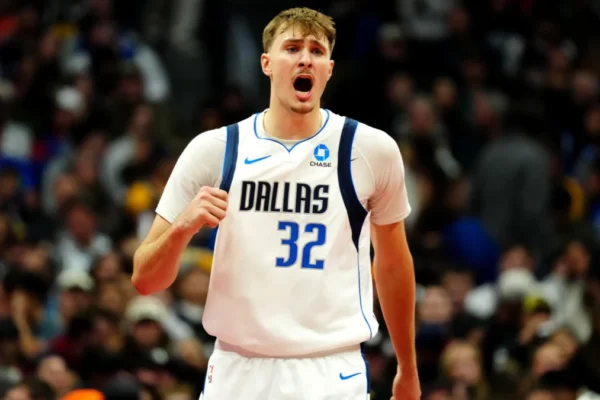
Despite the void left by Porziņģis’ absence, the Golden State Warriors have shown remarkable resilience, starting the season with a commendable 6-3 record, placing them seventh in the fiercely competitive Western Conference standings. A significant factor in their unexpected early success has been the meteoric rise of rookie big man Yaxel Lendeborg, who has stepped into Porziņģis’ projected role and provided an invaluable boost on both ends of the floor. Through nine games, Lendeborg has defied expectations, averaging an impressive 21 points, 7.1 rebounds, 4.1 assists, and 1.1 steals. His efficiency has been equally striking, shooting 49.2% from the field, including a robust 39.6% from beyond the arc. Lendeborg’s emergence has not only softened the blow of Porziņģis’ unavailability but has also injected a fresh wave of energy and optimism into the Warriors’ lineup, proving that adaptability and depth are paramount in the unforgiving landscape of the NBA.
Kristaps Porziņģis’ decision marks a somber moment in the NBA. It’s a stark reminder that even the most gifted athletes are not immune to the fragility of the human body. Whether this is a temporary hiatus or the premature end of a once-brilliant career remains to be seen. For now, the focus shifts from the court to his health, and the basketball world can only hope for his full recovery, regardless of whether it leads him back to the game he loves. Meanwhile, the Golden State Warriors, ever resilient, must continue to adapt, finding new ways to compete in a league that waits for no one.