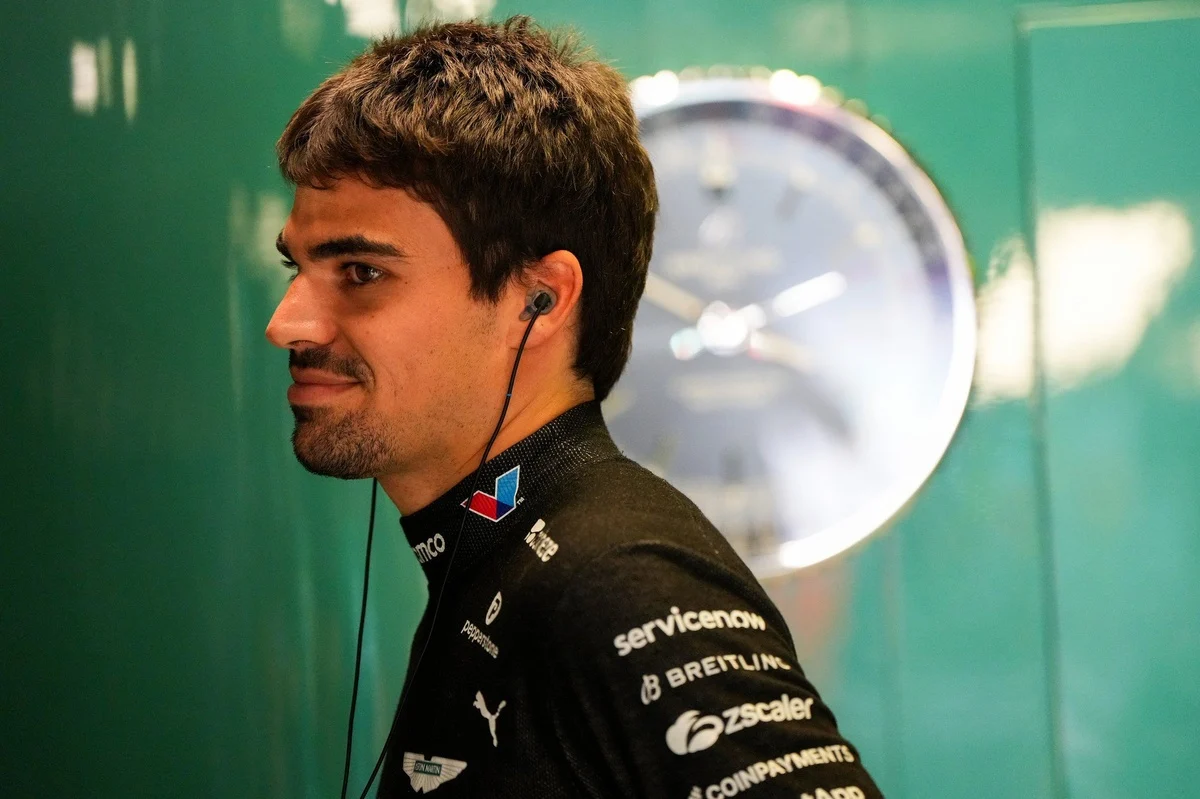
Lance Stroll, the Canadian driver for Aston Martin, etched his name into the Formula 1 record books at the Italian Grand Prix, though not for a reason he or his team would celebrate. sportsamo.com reports that Stroll became the first driver in the modern era to accumulate 100 Q1 eliminations since the current three-part qualifying format was introduced in 2006. This unwelcome milestone occurred at the iconic Autodromo Nazionale Monza, where Stroll qualified last, highlighting a challenging weekend for Aston Martin and intensifying scrutiny on the veteran driver’s consistent struggles.
The three-part qualifying system, a staple of Formula 1 weekends since 2006, is designed to progressively narrow the field, with the slowest five cars dropping out in Q1, another five in Q2, leaving the top ten to battle for pole position in Q3. Consistently failing to advance past the initial Q1 phase speaks volumes about a driver’s performance relative to their machinery and rivals. For Stroll, reaching this century mark underscores a career often characterized by periods in less competitive cars and a battle for consistent form, particularly on Saturdays. While other drivers with long careers might have accumulated high numbers of early exits under different qualifying formats, Stroll’s record stands alone in this specific, high-pressure era. It’s a statistic that, while reflecting car performance, also inevitably attaches itself to the driver.
The Monza qualifying session itself painted a stark picture of Aston Martin’s current predicament. Stroll finished just under a tenth of a second behind his two-time world champion teammate, Fernando Alonso. However, Alonso’s position came without a final flying lap, suggesting a potentially larger deficit had he completed his run. This performance continues a concerning trend for the Silverstone-based outfit, especially at a circuit like Monza, famously known as the "Temple of Speed" due to its long straights and fast corners. Here, outright power and aerodynamic efficiency for low-downforce setups are paramount.
Aston Martin had arrived at Monza with a glimmer of hope, having introduced an updated Honda powertrain and additional upgrades at Zandvoort, building on a significant overhaul earlier in Hungary. Yet, the unique demands of Monza exposed the AMR26’s fundamental weaknesses. The data from qualifying was damning: the Aston Martin cars were consistently 20km/h slower than the Mercedes-powered vehicles on the straights. This significant power deficit translated into a colossal 2.6-second gap to Pierre Gasly’s Alpine around the lap during Q1, effectively relegating Aston Martin to the back of the grid before the race even began. The team’s inability to extract performance on such a power-sensitive track suggests that their recent upgrades, while potentially beneficial on more balanced circuits, were insufficient to overcome the inherent drag and power unit limitations at Monza.
Following the session, Stroll’s demeanor was notably curt and devoid of surprise, a sentiment that has become increasingly common in his post-qualifying interviews during challenging weekends. His responses were direct and pessimistic about the prospects for Sunday’s race, indicating a clear understanding of the insurmountable performance gap. "It was what we expected [with the] engine," Stroll stated plainly. "We’re three seconds off, so we’re not going to stay with the pack tomorrow." Such blunt honesty, while refreshing, paints a bleak picture for team morale and the immediate future of the Aston Martin’s race weekend. It also highlights the frustration of a driver knowing his machinery simply isn’t competitive, especially in a field where every tenth of a second is fiercely contested.
Stroll’s Formula 1 journey began in 2017 with Williams, and his first Q1 elimination came in his debut race at the Australian Grand Prix, where he was nine-tenths shy of Marcus Ericsson, who secured the final spot in Q2. Despite this early setback, Stroll quickly demonstrated flashes of raw talent and resilience. He bounced back impressively in the very next race in Shanghai, securing a Q3 appearance, though his race ended prematurely due to contact with Sergio Perez on the opening lap. That same rookie season saw him claim his maiden F1 points at his home race in Montreal, followed by a memorable podium finish at the chaotic Azerbaijan Grand Prix, showcasing his ability to capitalize on unpredictable race conditions.
Perhaps the most significant highlight of Stroll’s career came at the 2020 Turkish Grand Prix, where he secured a sensational pole position. Driving for Racing Point (the precursor to Aston Martin), his potent RP20 chassis and his well-documented strength in damp conditions converged perfectly. That year, tellingly, he did not record a single Q1 elimination, demonstrating that with a competitive car and favorable conditions, Stroll is capable of front-running performances. This pole position remains a testament to his underlying speed and adaptability, proving that his struggles are not purely down to a lack of talent but are heavily influenced by the machinery at his disposal.
However, the period following that high point has seen Aston Martin’s fortunes fluctuate, and Stroll’s qualifying record has largely been spent battling against the Q1 drop zone. His career Q1 count was significantly augmented during Williams’ particularly difficult 2018 season, where he was eliminated in Q1 on 15 occasions. That year, the Williams FW41 was widely regarded as one of the least competitive cars on the grid, making it a near-impossible task for any driver to consistently escape the first qualifying hurdle. Similarly, in his current tenure with Aston Martin, as the team has navigated various performance cycles, Stroll has frequently found himself fighting at the sharp end of the backmarkers. The current season (2024) has been particularly challenging, with the driver failing to escape Q1 in every qualifying session so far, underscoring the consistent struggle that has led him to this centurion milestone.
The accumulation of 100 Q1 eliminations over a career that began in 2017, spanning different teams and car generations, reflects a complex interplay of factors. While the raw statistic might appear damning, a deeper analysis reveals a driver who has spent a significant portion of his career in cars that were not consistently capable of challenging for higher grid positions. His 2018 season with Williams stands out with 15 Q1 exits, and other years saw double-digit figures, directly correlating with the competitiveness of his team’s package. The fact that he managed a pole position and multiple podiums in between these periods of struggle highlights that when the car is capable, Stroll can deliver.
For Lance Stroll and Aston Martin, the Monza weekend is likely to be a damage limitation exercise. Stroll’s pessimistic outlook for the race is a realistic assessment given the car’s power deficit and qualifying performance. Overcoming such a significant pace disadvantage at a track like Monza is a monumental task, often requiring extreme luck, strategic gambles, or significant reliability issues from competitors. The focus for the team will undoubtedly shift to understanding why their package struggled so severely at a specific circuit type, and how they can prevent similar scenarios in the future as they continue their development push.
The unwanted record of 100 Q1 eliminations is a stark reminder of the brutal realities of Formula 1, where a driver’s career trajectory is inextricably linked to the performance of their car. While Lance Stroll has shown flashes of brilliance throughout his career, this new statistical milestone serves as a definitive marker of the challenges he has faced and continues to confront in the pinnacle of motorsport. The path forward for Stroll and Aston Martin will require a concerted effort to improve consistency, extract more performance, and ultimately, spend more Saturdays out of the Q1 drop zone.