

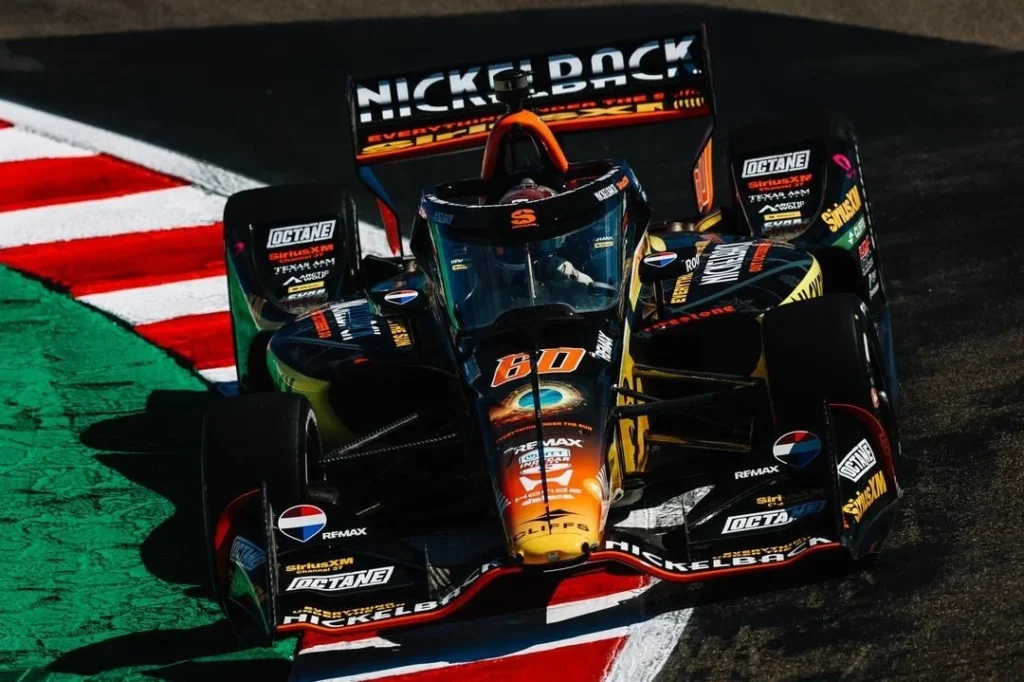
The 2026 NTT IndyCar Series season proved to be a paradoxical journey for Meyer Shank Racing (MSR), a year etched in the annals of motorsport history for an immortal achievement, yet simultaneously shadowed by a persistent cloud of "what-ifs." As reported by sportsamo.com, the Ohio-based outfit, in the second year of its high-profile technical alliance with Chip Ganassi Racing (CGR), reached the pinnacle of open-wheel racing in May, basking in the glory of an Indianapolis 500 victory. This triumph underscored the team’s growing prowess and ambition, frequently showcasing front-running qualifying speed across the grueling 18-round calendar. However, for all the champagne sprayed at the Brickyard, the broader championship narrative was complicated by a frustrating blend of reliability woes, squandered opportunities, and the impending departure of the very driver who delivered the team’s most defining moment.
Felix Rosenqvist’s Rollercoaster Year: From Struggle to Immortality
Entering his third season piloting the #60 MSR Honda, Swedish sensation Felix Rosenqvist carried the weight of expectation as the team’s de facto leader. His impressive sixth-place championship finish in 2025, a career-high-matching performance, set a high bar for the new year. Yet, the initial phase of the 2026 campaign was a stern test of that momentum. Through the opening four rounds – including the traditional season opener in St. Petersburg, the high-speed challenge of Phoenix, and the inaugural event on the bustling Streets of Arlington – Rosenqvist struggled to convert his undeniable raw pace into tangible results. He failed to crack the top 10 in any of these early races, a concerning trend for a driver of his caliber and a team with championship aspirations. Critics began to murmur about a potential sophomore slump or whether the pressure was mounting.
The turning point, however, arrived in April on the sun-drenched Streets of Long Beach. Returning to the iconic Californian street circuit where MSR had secured its maiden pole position just two years prior, Rosenqvist, a renowned street-course specialist, ignited his season. He captured the prestigious NTT P1 Award, signaling a return to form, and subsequently led a commanding two-thirds of the race. It was a masterclass in street racing, showcasing his precision and aggression. Ultimately, he settled for a hard-fought second place, trailing only CGR’s reigning champion Alex Palou, securing his and the team’s first podium of the year. This performance was not just a result; it was a statement, a clear indication that the #60 car and its driver were finding their rhythm.
One month later, at the hallowed grounds of Indianapolis Motor Speedway, everything converged in a perfect storm of personal joy and professional triumph. Roughly two weeks after becoming a father, a deeply emotional Rosenqvist navigated a chaotic late-race red flag and restart sequence with the composure of a seasoned veteran. The final laps of the Indy 500 are notoriously intense, but this one, with the field bunched up after a red flag, promised an unprecedented sprint to the finish. From third place, Rosenqvist executed a daring charge, utilizing every ounce of his Honda engine’s power and his car’s aero advantage to edge out Team Penske’s David Malukas by an infinitesimal 0.0233 seconds. It was the closest finish in Indianapolis 500 history, a breathtaking photo finish that left spectators and commentators alike in disbelief. The victory marked Rosenqvist’s long-awaited first Indy 500 triumph, his second career IndyCar win, and MSR’s second Borg-Warner Trophy, following Helio Castroneves’ breakthrough in 2021. For MSR, a team that had steadily climbed the ranks from sports car racing to IndyCar contenders, it solidified their status as an elite force, proving their 2021 success was no fluke. The roar from the MSR pit lane and the emotional celebration in Victory Lane were unforgettable.
Despite the euphoria of May, the remainder of the summer stretch proved to be a challenging exercise in consistency. Rosenqvist remained lethal over one lap, a testament to his innate speed and the car’s qualifying setup. He added a second pole position at Portland International Raceway in August, once again edging out Palou by a mere 0.018 seconds en route to another second-place finish. He also qualified an impressive third for the Laguna Seca finale, highlighting his raw pace on diverse circuits. Across the season, he led a respectable 168 laps, a clear indicator of his front-running potential. However, a series of mid-season setbacks – including reliability issues, strategic missteps, and occasional on-track incidents – limited him to just seven top-10 finishes across the 18 starts. These lost opportunities prevented him from mounting a serious championship challenge. A solid fourth-place run at WeatherTech Raceway Laguna Seca closed out his three-year tenure with MSR, leaving him ninth in the final standings with 412 points. The irony was palpable: an Indy 500 winner departing the very team he elevated, as he prepared for his highly anticipated return to Arrow McLaren for the 2027 season, a move that had been rumored for months and finally confirmed, adding another layer of complexity to MSR’s season narrative.
Marcus Armstrong’s Season of Unfulfilled Potential
On the other side of the Meyer Shank Racing garage, Marcus Armstrong’s second season in the #66 MSR Honda was a textbook study in how results can often fail to reflect underlying performance. The 26-year-old New Zealander, who had shown flashes of brilliance in his rookie 2025 season, establishing himself as a rising star, consistently demonstrated top-10 pace through the opening half of the calendar. He was a regular fixture within the top 10 in points after seven of the first nine rounds, hinting at a breakthrough campaign. His adaptability on road and street courses was particularly impressive, building on his European open-wheel background.
Armstrong also played a pivotal supporting role during MSR’s banner day at the Indianapolis 500. Running on the same strategic sequence as his teammate Rosenqvist, he battled fiercely at the sharp end of the field throughout the race. His composure and speed in the climactic final laps were commendable, and he even led on the final-lap restart, a moment that briefly suggested a potential MSR 1-2 finish. Ultimately, he came home fifth, a career-best Indy 500 finish that underscored his burgeoning oval prowess and the strength of the MSR-CGR technical package.
Less than a month later, at the picturesque Road America circuit, Armstrong appeared poised to finally break through for his maiden IndyCar victory. Starting third, he meticulously controlled the late stages of the race, fending off seasoned veterans and showcasing exceptional race craft. The win seemed all but certain until a cruel twist of fate intervened. A mechanical issue began to appear, subtly at first, allowing Christian Lundgaard to slip past with fewer than four laps remaining. The heartbreak was compounded moments later when Armstrong’s Honda engine dramatically expired while he was still running a comfortable second, turning a guaranteed podium, and a potential win, into a devastating 24th-place DNF. The visual of his car slowing, smoke trailing, and the dejection on his face was one of the most poignant moments of the season, a stark reminder of the unforgiving nature of motorsport.
That afternoon in Elkhart Lake proved to be a brutal trigger for a summer slide that plagued Armstrong and the #66 crew. Over a seven-race stretch through the heart of the schedule, his average finish plummeted to a disappointing 19.7. This abysmal run was primarily derailed by at least three significant mechanical failures and a series of untimely pit-lane setbacks that often cost him valuable positions. Even when raw speed was undeniably evident – such as qualifying fifth on the new, challenging street circuit in Washington, D.C. – converting it into hardware proved consistently difficult. The team’s consistency, which had been a hallmark earlier in the season, seemed to vanish, leaving Armstrong frustrated but resolute. He salvaged some momentum at the Laguna Seca finale, climbing from eighth to finish seventh, a strong drive that hinted at what could have been. He concluded the championship in 14th place with 320 points, recording two top-fives and seven top-10s. Despite his evident talent and impressive flashes of speed, Armstrong concluded 2026 still searching for his first career win through 64 IndyCar starts, a statistic that belied his true potential.
Castroneves’ "Drive for Five" Derailed
Meanwhile, team co-owner and IndyCar legend Helio Castroneves returned in the #06 entry for his annual Indianapolis 500 appearance, aiming for an unprecedented "Drive for Five" – a fifth victory at the greatest spectacle in racing, which would solidify his place as the undisputed king of the Brickyard. The anticipation around his attempt was immense, drawing significant media attention and fan excitement. However, his quest for a record-breaking triumph ended prematurely in 25th place due to a mechanical retirement, an engine issue just six laps from the finish. It was a heartbreaking end for the four-time winner, denying him a chance to contend in the dramatic closing stages. While not a full-time entry, his presence always adds historical weight and a sense of occasion to the Indy 500 for Meyer Shank Racing.
Looking Ahead to 2027: A New Chapter for MSR
The conclusion of the 2026 campaign marks a significant structural shift for Meyer Shank Racing, a team constantly evolving. With Felix Rosenqvist departing to rejoin Arrow McLaren, the mantle of team leader will now fall squarely on the shoulders of Marcus Armstrong. Team co-owners Michael Shank and Jim Meyer have elevated Armstrong into the flagship #60 entry, a clear vote of confidence in his talent and potential. This move places immense pressure on the young New Zealander to deliver consistent results and finally break through for that elusive first victory. His raw speed on road and street courses, combined with his demonstrated oval potential, makes him an exciting prospect to lead the team into its next era.
To fill the #66 seat and complete their 2027 lineup, MSR made a bold move, signing Mick Schumacher away from Rahal Letterman Lanigan Racing following his rookie IndyCar campaign. Schumacher, carrying the immense legacy of his father, Michael Schumacher, had a learning year in 2026. While he finished 23rd in the overall standings, his debut season was not without its highlights. He captured the prestigious Indy 500 Rookie of the Year honors, a significant achievement for any newcomer, especially one transitioning from European single-seaters. More notably, he impressed profoundly on ovals, showcasing a natural affinity for the high-speed discipline with fourth-place qualifying efforts at Phoenix and Milwaukee, alongside a solid eighth-place finish at Nashville. His adaptation to oval racing, often a challenge for European drivers, bodes well for MSR’s continued strength at speedways.
Backed by the ongoing and crucial Ganassi technical partnership, which provides invaluable engineering resources, data sharing, and strategic insights, and powered by Honda’s championship-winning powerplant, MSR enters 2027 with a clear mission. The team is tasked with pairing Armstrong’s proven road-and-street course speed with Schumacher’s sophomore upside and undeniable oval talent. The challenge for Michael Shank and Jim Meyer will be to prove that their 2026 Brickyard triumph was not merely a standalone peak but rather a powerful springboard for sustained championship contention. The blend of a hungry, experienced talent in Armstrong and a highly motivated, legacy-laden young gun in Schumacher promises an intriguing and potentially successful future for Meyer Shank Racing. The IndyCar paddock will be watching closely to see if MSR can translate its individual race brilliance into a consistent championship challenge.







