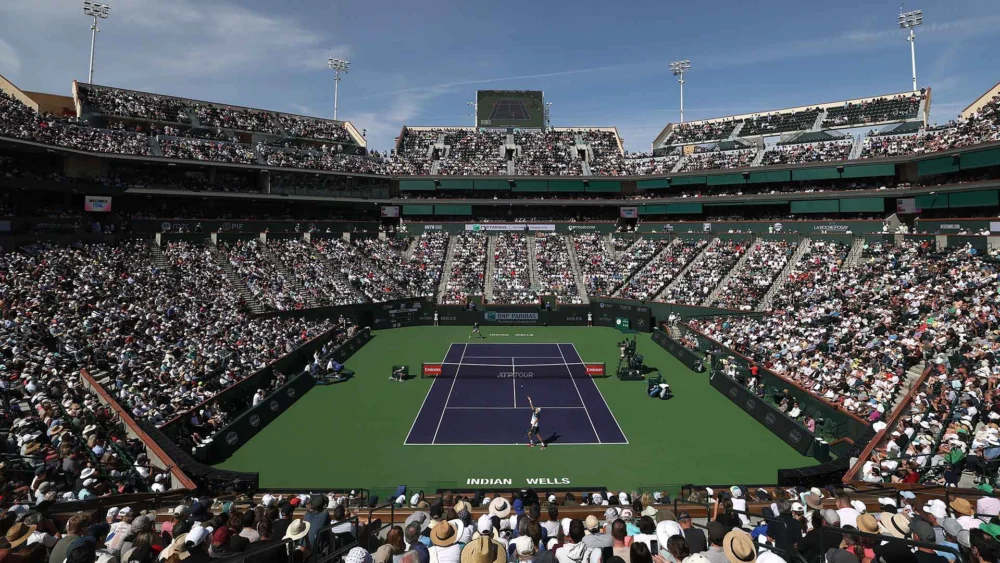

The prestigious Miami Open presented by Itau, a cornerstone event on the ATP Tour calendar and a critical stop in the famed "Sunshine Double," faces an early logistical challenge as tournament organizers announced the closure of its main Stadium Court for the commencement of main draw play on Wednesday, March 18. This pivotal development, reported by sportsamo.com, means all scheduled matches for the day will be relocated to the outer courts, an unexpected start to one of professional tennis’s most anticipated tournaments. The decision stems from extensive rainfall in the days leading up to the event, which necessitated additional preparation for the primary show court to ensure optimal, safe playing conditions for the athletes.
The official statement from tournament organizers conveyed the immediate impact of the weather: "Due to heavy rainfall in the lead up to the tournament, limited areas of the Stadium Court required additional preparation to ensure optimal conditions for match play. All matches on Wednesday, March 18, will take place on the outer courts." This unforeseen disruption marks a significant hurdle for an event known for its seamless execution and grand spectacle. Fans holding stadium tickets for Sessions 3 and 4 on Wednesday have been advised that they will be contacted directly regarding next steps, which typically involve options for refunds, exchanges, or alternative access. The silver lining for enthusiasts and competitors alike is the expectation that the Stadium Court will be fully operational and open for tournament play starting Thursday, March 19. The full order of play for Wednesday was slated for release later on Tuesday evening, leaving players and fans eagerly awaiting the revised schedule.
The Miami Open, often dubbed the "fifth major" due to its scale, prize money, and the caliber of its competitors, holds immense significance in the tennis world. It is the second leg of the "Sunshine Double," following Indian Wells, and successfully winning both events in the same year is considered one of the sport’s most challenging achievements, a feat only accomplished by an elite few, including Roger Federer, Novak Djokovic, Steffi Graf, and Victoria Azarenka. This year, the tournament once again brings together the world’s best male and female players to battle for crucial ATP and WTA ranking points and a substantial prize purse, underlining its importance in the global tennis narrative. The initial main draw matches are particularly vital, setting the tone for players’ campaigns and often seeing top seeds test their form against hungry qualifiers or lower-ranked opponents.
Heavy rainfall, while an infrequent major disruptor, is not entirely uncommon for outdoor tennis tournaments, particularly those held in subtropical climates like South Florida. The specific mention of "limited areas" of the Stadium Court requiring "additional preparation" suggests that localized damage or saturation of the hard court surface necessitated more extensive work than could be completed overnight. Hard courts, while durable, are meticulously constructed with multiple layers to provide consistent bounce and player safety. Excessive moisture can compromise these layers, creating uneven surfaces or even slippery spots that pose injury risks. For an ATP Masters 1000 event, player safety and court integrity are paramount, making the decision to delay the Stadium Court’s opening a responsible, albeit inconvenient, one.
The logistical challenge of shifting an entire day’s worth of main draw matches from a central stadium to outer courts is considerable. While the Hard Rock Stadium complex boasts numerous high-quality outer courts, they lack the grandstand seating, broadcast infrastructure, and player amenities of the main arena. This move impacts not only the fan experience, which often involves premium seating and an immersive atmosphere in the main stadium, but also broadcast schedules and operational logistics for tournament staff. For players, transitioning from the spacious, electrifying environment of a stadium court to a potentially more intimate, less private outer court can require a mental adjustment, though seasoned professionals are adept at adapting to varying conditions.
Historically, weather-related disruptions have cast long shadows over major tennis events. The US Open, held in the late summer in New York, has famously grappled with hurricane season downpours, leading to multiple "Super Saturday" scheduling nightmares and ultimately prompting the construction of retractable roofs over Arthur Ashe and Louis Armstrong Stadiums. The French Open, played on clay, is also frequently subject to rain delays, which can alter court conditions and player strategies. While the Miami Open now benefits from being held at Hard Rock Stadium, which is home to the NFL’s Miami Dolphins and features a partial canopy, the tennis courts themselves remain largely exposed, highlighting the inherent vulnerabilities of outdoor sports to Mother Nature. The decision to prioritize court safety over immediate stadium play underscores the lessons learned from past events where compromised surfaces led to player complaints or even withdrawals.
The Miami Open’s journey to its current home at Hard Rock Stadium in Miami Gardens has been a transformative one. For decades, the tournament was synonymous with Crandon Park in Key Biscayne, known for its picturesque ocean views but also its aging facilities and limited expansion capabilities. The move in 2019 ushered in a new era, allowing for significant investment in state-of-the-art facilities, including an expansive campus with numerous practice courts, upgraded fan amenities, and a temporary stadium built within the football arena. This relocation aimed to solidify Miami’s position as a premier global tennis destination, enhancing both player experience and fan engagement. While the new venue offers more space and modern infrastructure, it remains an outdoor event susceptible to the elements, as evidenced by Wednesday’s disruption.
For the players, the timing of this announcement – just as the main draw is set to begin – introduces an element of unpredictability. Those scheduled for Stadium Court might have prepared mentally and physically for the grand stage, only to find themselves redirected to a different environment. While top seeds typically receive preferential scheduling on show courts, early rounds often feature a mix of established stars and rising talents across all courts. The shift could marginally affect player preparation routines, warm-ups, and even their on-court rhythm. However, professional tennis players are renowned for their adaptability, a crucial trait in a sport where conditions can vary widely from one tournament to the next, and even from one day to the next.
The early closure of the Stadium Court also raises questions about the potential for a compressed schedule later in the week, especially if additional weather delays were to occur. Tournament organizers meticulously craft the order of play to ensure fair rest periods between matches and to accommodate broadcast windows. Any significant backlog in the early rounds could force players to compete on consecutive days, a demanding prospect particularly for those advancing deep into the draw. However, the quick turnaround expected for the Stadium Court, opening on Thursday, suggests that the organizers are confident in mitigating any long-term scheduling impacts, emphasizing their proactive approach to managing the situation.
The Miami Open is not just a sporting event; it’s a significant economic driver for South Florida, attracting thousands of visitors, generating substantial tourism revenue, and providing jobs. Disruptions, even minor ones, can have ripple effects, impacting local businesses, hotels, and restaurants that thrive on the influx of tennis fans. The tournament’s efficient communication and swift resolution plans are crucial not only for fan satisfaction but also for maintaining its reputation and economic contributions to the region. The expectation of the Stadium Court reopening on Thursday ensures that the vast majority of the tournament’s showcase matches will proceed as planned on its main stage.
As the tennis world turns its attention to Miami, the initial hiccup serves as a reminder of the dynamic challenges inherent in staging a major outdoor sporting event. The swift response from tournament organizers, prioritizing player safety and court integrity, reflects a commitment to upholding the high standards expected of an ATP Masters 1000 event. With the Stadium Court expected to roar to life on Thursday, the stage will soon be fully set for what promises to be another thrilling chapter in the storied history of the Miami Open, as the world’s best athletes vie for supremacy under the Florida sun, hopefully unhindered by further meteorological interruptions. The anticipation remains high for fierce competition, memorable moments, and the crowning of new champions in this iconic tennis destination.