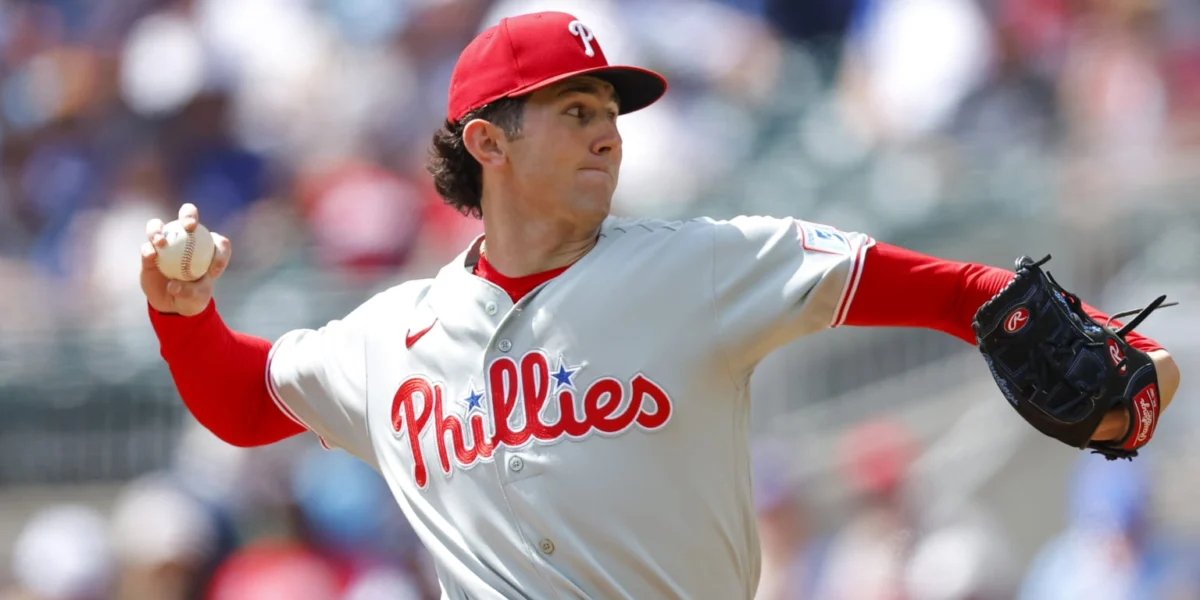
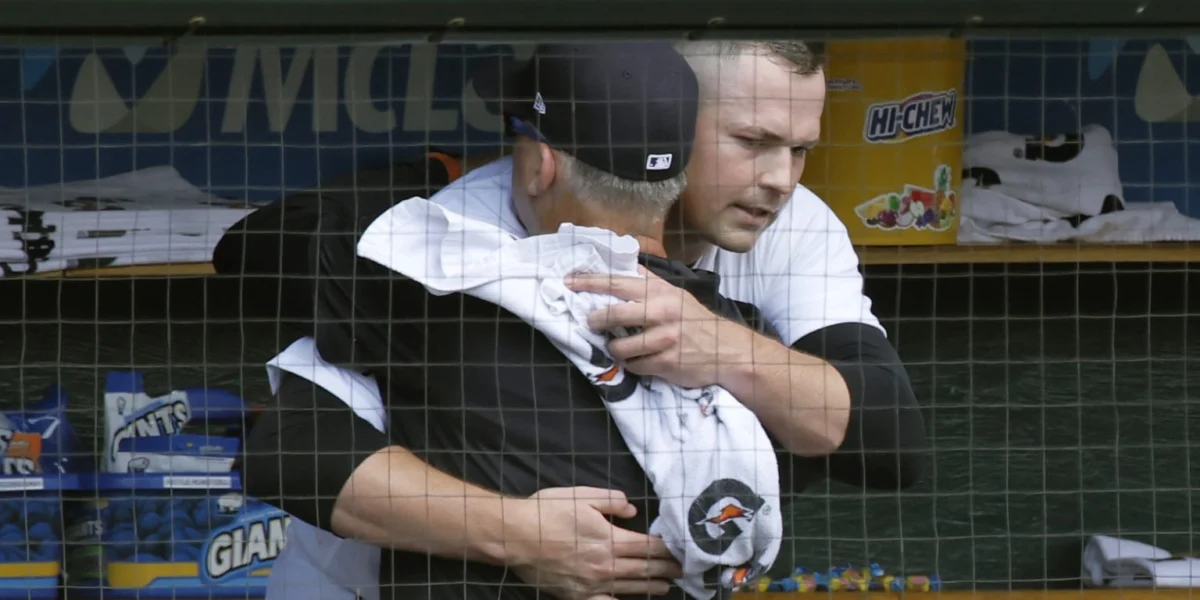
As the clock ticks relentlessly towards Monday’s 6 p.m. ET Trade Deadline, the baseball world currently finds itself in a peculiar state of suspended animation, a sentiment expertly captured in a report by sportsamo.com. Much like Lin-Manuel Miranda’s eloquent observation in "Hamilton" – "In the eye of a hurricane, there is quiet" – Friday offered a deceptively calm facade, hinting at the tempestuous flurry of transactions that are surely just hours away. This tranquility, however, is merely the precursor to what promises to be one of the most impactful trade deadlines in recent memory, particularly with two-time American League Cy Young Award winner Tarik Skubal at the epicenter of the market.
While Thursday night saw a minor ripple with the Minnesota Twins acquiring veteran reliever A.J. Minter from the New York Mets, Friday unfolded largely without significant moves. Minter, a proven high-leverage arm boasting a sub-3.00 ERA over the last three seasons, instantly bolsters a Twins bullpen looking to solidify its late-inning options for a postseason push. The Mets, clearly in a selling posture, netted a pair of mid-tier prospects for the left-hander, further signaling their strategic pivot under President of Baseball Operations David Stearns. But Minter’s departure was just the opening act for what is expected to be a sweeping overhaul in Queens.
Indeed, the quiet on Friday was punctuated by several telling precursors. The Mets, for instance, conspicuously scratched right-handed starter Freddy Peralta from his scheduled start, a clear indication that trade discussions have intensified. Manager Andy Green openly acknowledged the heightened talks surrounding Peralta, a 30-year-old right-hander enjoying a resurgent season with a 3.45 ERA and an impressive 9.8 K/9, despite a rocky start to his career. As Peralta heads towards free agency, he represents an attractive rental for contending clubs. However, sources close to the negotiations suggest the Mets’ asking price for the right-hander remains remarkably steep, reportedly seeking a Top 100 prospect.
"What would the Mets end up doing with him [if he isn’t traded], make him a qualifying offer?" one National League executive mused, highlighting the difficult balance the Mets are navigating. A qualifying offer, which would attach draft pick compensation if Peralta signs elsewhere, is a significant financial commitment for a player they might not intend to retain. Given Peralta’s performance, securing a Top 100 prospect for a rental, even a high-performing one, is a tall order in a market often hesitant to part with premium farm talent for short-term gains. Yet, the Mets’ determination to rebuild their farm system under Stearns is evident, making their stance understandable. Beyond Peralta, the Mets possess a plethora of other potential trade chips, including closer Clay Holmes, fellow relievers Luke Weaver and Brooks Raley, and even high-value position players like Luis Robert Jr. and Tyrone Taylor, alongside pitcher Huascar Brazobán, all of whom could be on the move before Monday’s deadline.
Across the league, another prominent starter, Casey Mize of the Detroit Tigers, also found himself scratched from his Friday outing. This move is a familiar tactic employed by teams on the verge of trading a player, aimed at protecting their asset from potential injury. Detroit employed an identical strategy two years prior with Jack Flaherty, scratching him the day before the deadline only to trade him to the Los Angeles Dodgers shortly thereafter. Mize, a former No. 1 overall pick whose career has been hampered by injuries, including Tommy John surgery, has shown flashes of his elite potential this season, posting a respectable ERA despite still building up his workload. His youth and remaining team control make him a highly appealing target for a myriad of clubs.
The Tigers’ apparent decision to become sellers at the deadline carries significant weight for the entire pitching market. Entering Thursday at 51-58, and sitting 4 1/2 games out of the final American League Wild Card spot, Detroit has clearly opted to recalibrate for the future. "‘Tis the season," an American League executive succinctly put it, underscoring the shift in strategy. "The trades will happen; we may just have to wait until Sunday or Monday for the real action to begin." This pivot by Detroit, a club that entered the season with playoff aspirations, injects more high-quality arms into an already talent-rich trade landscape, potentially creating a buyer’s market for teams willing to wait out the Skubal sweepstakes.
At the apex of this market, overshadowing all other discussions, is the Tigers’ own two-time reigning AL Cy Young Award winner, Tarik Skubal. Skubal, a left-handed ace whose meteoric rise has been nothing short of spectacular, boasts a dominant fastball, an elite slider, and impeccable control. His statistics this season – including a sub-2.00 ERA, a WHIP under 0.90, and a strikeout-to-walk ratio that rivals the league’s best – firmly establish him as the most coveted asset available. Crucially, Skubal remains under team control for multiple seasons beyond the current one, making him far more than a rental; he is a foundational piece for any contending club.
The list of potential suitors for Skubal reads like a who’s who of perennial contenders: the Los Angeles Dodgers, Milwaukee Brewers, Tampa Bay Rays, Atlanta Braves, and Chicago Cubs are widely considered the front-runners. Each of these teams possesses both the prospect capital and the championship aspirations to justify a blockbuster move for an ace of Skubal’s caliber. The New York Yankees and Philadelphia Phillies are also reportedly interested, though perhaps with less aggressive pursuit given their existing rotation strengths and prospect limitations.
The prevailing sentiment among league executives is that until a Skubal trade materializes – an event many anticipate will occur no earlier than Sunday night or Monday morning – the rest of the starting pitching market remains in a holding pattern. "That is the likely scenario," one NL executive confirmed, "at least for the upper-end guys." This effectively means that pitchers like Kevin Gausman, Casey Mize, Clay Holmes, Robbie Ray, and Freddy Peralta are currently operating in Skubal’s shadow. Teams with legitimate hopes of acquiring Skubal are reluctant to commit significant prospect capital to other top-tier arms until their pursuit of the Tigers’ ace concludes. This creates a domino effect, where one elite trade has the power to unlock the entire market.
Beyond the Skubal tier, other starting pitchers with expiring contracts, such as Brady Singer, Shane Bieber, and Foster Griffin, are also available. Singer, known for his elite sinker, could be a valuable back-end rotation piece, while Bieber, a former Cy Young winner himself, seeks to regain his dominant form. Griffin’s situation is particularly intriguing, as he started for Washington on Friday, signaling the Nationals’ internal debate on whether to buy or sell, a common dilemma for teams hovering near the playoff bubble. "It feels like just one [starting pitcher] has to break through to get it rolling," an AL executive noted, capturing the collective anticipation for the first major shoe to drop. "At some point, you probably need to make sure you don’t come up empty-handed. It will be very interesting."
Even controllable starting pitchers – those with multiple years remaining on their contracts, such as Hunter Greene, Reid Detmers, Jose Soriano, Emerson Hancock, Luis Castillo, and Braxton Garrett – are not immune to the current market paralysis. While their value isn’t directly tied to Skubal’s rental status, sellers for these long-term assets are also holding firm on what one executive described as "astronomical" asking prices. This aggressive valuation from sellers, coupled with a cautious approach from buyers, has led to a widespread standoff. "Sellers are holding high and buyers are balking," the executive reiterated. "That has to change at some point this weekend, doesn’t it?"
As Saturday dawns, the pressure on general managers and front offices will only intensify. The quiet will soon give way to the roar of the trade deadline, a period of frantic negotiations, calculated risks, and potentially franchise-altering decisions. The expectation is that the dam will break, unleashing a torrent of deals that will reshape playoff races and set the stage for the remainder of the MLB season. The question isn’t if the storm is coming, but when, and which teams will emerge stronger from its eye.