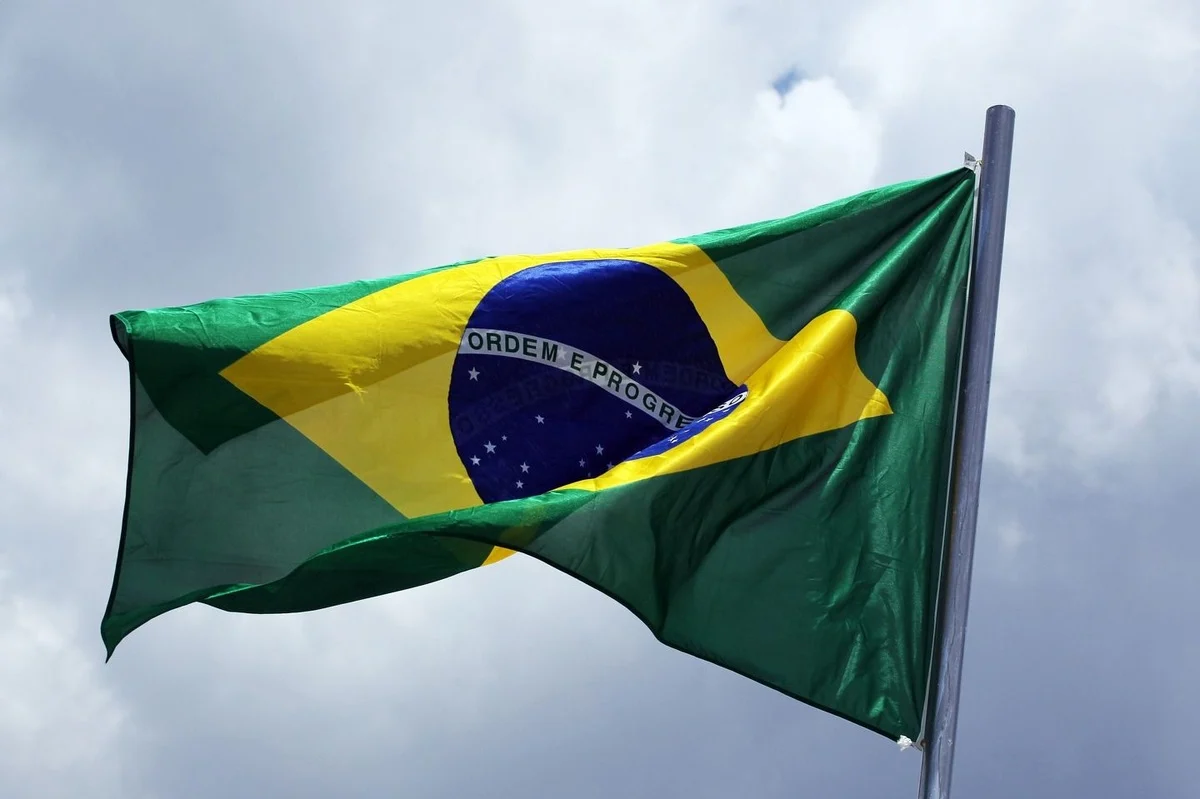
The roar of MotoGP engines is set to electrify Brazil once more this weekend, marking the championship’s highly anticipated return to the South American nation after a two-decade hiatus, sportsamo.com reports. This historic event, hosted at the Autodromo Internacional de Goiania, signifies the culmination of years of persistent efforts and substantial investment, promising a thrilling new chapter for two-wheeled motorsport in a country passionate about racing.
A Long Road Home: Brazil’s Two-Decade Absence
The last time the premier class graced Brazilian soil was in 2004, at the now-demolished Autodromo Internacional Nelson Piquet, affectionately known as Jacarepagua, which hosted the Rio de Janeiro Grand Prix for its final act. That era, characterized by iconic battles and legendary riders, concluded abruptly, leaving a void that motorsport enthusiasts deeply felt. In the intervening years, the prospect of MotoGP’s return became a recurring, often frustrating, saga. Numerous attempts were made, each met with its own set of challenges. The closest the series came was in 2019, with an ambitious plan to construct a brand-new, privately funded facility in Rio – the proposed Rio Motorpark – slated for a 2022 debut. However, environmental concerns, logistical hurdles, and financial complexities ultimately led to the project’s cancellation just a year before its planned inauguration, once again shelving Brazil’s MotoGP aspirations. The dream seemed distant, yet the underlying demand and potential of the vast Brazilian market remained undeniable.
The Phoenix Rises: Goiania’s Resurgence
The landscape dramatically shifted approximately 16 months ago with a groundbreaking announcement: MotoGP had forged a five-year agreement with Brazil Motorsport, the seasoned promoter responsible for the annual Formula 1 Grand Prix in Sao Paulo. This partnership heralded a concrete, long-term commitment, designating the Autodromo Internacional de Goiania as the new home for the Brazilian GP. This choice marks a remarkable full circle for the circuit, which holds the distinction of hosting the inaugural three editions of the Brazilian Grand Prix from 1987 to 1989. However, its initial tenure was brief, marred by organizational issues that saw it dropped from the calendar in 1990. A subsequent one-off attempt at Interlagos in 1992 proved unpopular with riders due to its demanding and somewhat unsuited layout for motorcycle racing, reinforcing the need for a dedicated venue. It wasn’t until 1995 that Brazil regained a regular slot on the world championship calendar, with the Jacarepagua circuit in Rio de Janeiro establishing itself as the consistent host until 2004, with a single interruption in 1998. The track, a favorite among many riders for its flowing layout, became a fixture until a new contract could not be agreed upon, leading to its eventual demolition to make way for venues for the 2016 Olympic Games. Now, Goiania steps back into the spotlight, poised to reclaim its place in MotoGP history.
A Legacy of Champions: Brazilian GP’s Storied Past
The history of the Brazilian Grand Prix, while intermittent, is rich with the names of motorsport legends who conquered its various layouts. From its initial run at Goiania, champions like Wayne Gardner (1987), Eddie Lawson (1988), and Kevin Schwantz (1989) etched their names into the record books, showcasing the raw talent of the late 80s. Wayne Rainey claimed victory at the challenging Interlagos in 1992. However, it was the Jacarepagua era that truly solidified Brazil’s place on the MotoGP map. Riders like Luca Cadalora (1995) and Mick Doohan, who dominated with back-to-back wins in 1996 and 1997, became synonymous with the Rio circuit. The turn of the millennium saw the rise of a phenomenon: Valentino Rossi. The Italian icon achieved an incredible four consecutive victories at Jacarepagua from 2000 to 2003, a testament to his unparalleled skill and the circuit’s ability to highlight a rider’s dominance. His battles there were legendary, often featuring fierce rivalries that captivated global audiences. The final race in 2004 saw Makoto Tamada emerge victorious, closing an illustrious chapter for the Rio circuit. The legacy of these champions, the strategic importance of each turn, and the sheer excitement generated by these races have deeply embedded the Brazilian Grand Prix into the fabric of MotoGP history, setting a high bar for the new era at Goiania.
A Modern Marvel: Goiania’s R$55 Million Transformation
Ensuring the Autodromo Internacional de Goiania is fit for the pinnacle of two-wheeled racing has required a monumental effort and significant financial commitment. Organizers have invested a staggering R$55 million (approximately $10 million USD) into a comprehensive upgrade of the facilities, bringing them in line with the stringent standards set by the FIM (Fédération Internationale de Motocyclisme). The entire track has been meticulously resurfaced, promising optimal grip and safety for the high-performance MotoGP machines. Beyond the asphalt, the infrastructure has seen a complete overhaul: pit garages have been modernized, the paddock area expanded and refined, and a state-of-the-art medical center constructed to handle any emergencies swiftly and efficiently. A new control tower, equipped with advanced technology, now serves as the nerve center for race operations, crucial for coordinating international-level competitions. The CBM (Brazilian Motorcycle Confederation) recently granted national homologation after the circuit successfully hosted a major domestic event, the Champions Challenge race weekend. This event served as a critical testbed, allowing organizers to fine-tune the new race control and electronic systems, which reportedly functioned flawlessly. The final FIM approval is now widely considered a formality, paving the way for the grand return. This substantial investment not only guarantees rider safety and competitive racing but also signals a long-term commitment to establishing Brazil as a key destination on the global motorsport calendar.
The "Anti-Marquez" Track: Goiania’s Unique Challenges
The Goiania circuit, spanning 3.835 kilometers, presents a distinctive challenge with its compact layout featuring just 14 corners. This makes it the second-shortest track on the MotoGP calendar, marginally longer than Germany’s Sachsenring (3.671km). However, the similarities end there. While Sachsenring is an anti-clockwise circuit, Goiania is predominantly clockwise, boasting nine right-hand corners and five left-hand turns. This particular characteristic has earned it the moniker of an "anti-Marquez" circuit, a playful nod to eight-time world champion Marc Marquez’s renowned preference and exceptional prowess in left-hand corners. The layout’s most intriguing and potentially perilous feature is the extensive sequence of right-hand turns that forms the entire outer edge of the track, stretching from Turn 11 all the way to Turn 4. This prolonged series of right-handers means that as riders approach Turn 5, a crucial left-hander, the left side of their tires will have experienced minimal heating and could be significantly colder than the right. This asymmetry in tire temperature poses a substantial challenge for grip and stability, demanding exceptional precision and careful tire management from the riders and strategic setup from the teams. Expect riders to be acutely aware of this, potentially adjusting their lines or braking points to generate heat in the left side of the tire before diving into the corner. Overtaking opportunities will likely concentrate in the heavy braking zones following long straights, but the flowing nature of many sections will reward smooth, aggressive riding.
Homegrown Heroes: Moreira, Morbidelli, and the Brazilian Spirit
The return of the Brazilian Grand Prix is made even more poignant by the presence of a burgeoning homegrown talent: Diogo Moreira. The LCR Honda recruit is the first rider to represent Brazil in the premier class since the legendary Alex Barros retired after the 2007 season, having amassed an impressive seven Grand Prix wins throughout his illustrious career. Barros was a national hero, known for his aggressive riding style and ability to challenge the very best. Moreira carries the torch with immense pride and potential. He made a promising start to his MotoGP career at the season-opening Thailand Grand Prix, qualifying an impressive 15th on the grid – just one spot behind factory Honda rider Luca Marini – and scoring his first championship points with a commendable 13th-place finish. The pressure and excitement of performing in front of his home crowd will undoubtedly be immense, but also a powerful motivator. Adding to the local flavor, VR46 rider Franco Morbidelli also boasts strong Brazilian roots, born in Rome to a Brazilian mother, Cristina. Both Moreira and Morbidelli, along with Luca Marini, were part of a special contingent that completed demo laps of the Goiania circuit in March of last year, generating significant buzz and offering a tantalizing preview of what was to come. Their presence underscores the deep connection between Brazil and motorcycle racing, promising an electric atmosphere fueled by national pride.
Championship Contenders and Shifting Dynamics
As the MotoGP paddock descends upon Goiania, the championship narrative is already taking intriguing turns. KTM’s sensational rookie, Pedro Acosta, arrives as the championship leader following an absolutely stunning debut at Buriram, where he clinched a sprint race victory and secured a remarkable second-place finish in the Grand Prix. Acosta’s meteoric rise has immediately positioned him as a formidable contender, showcasing a maturity and speed beyond his years. Closely trailing in the standings is Aprilia’s Marco Bezzecchi, who capitalized on the Thailand GP weekend to solidify his position, while Raul Fernandez sits third, highlighting the strong early form of the Aprilia machines. Interestingly, none of the formidable Ducati riders currently occupy a spot within the top six in the championship standings. This unexpected early-season trend sees Aprilia and KTM largely monopolizing the leading positions, challenging the established order. The best-placed Ducati rider is Fabio di Giannantonio in seventh, while eight-time world champion Marc Marquez, adapting to his Gresini Ducati, finds himself in eighth after a spectacular and unfortunate rear tire blowout at Buriram cost him a potential podium finish. The full field of 22 riders is expected, with Gresini’s Fermin Aldeguer poised to make his return – pending a final medical test – after missing the Thai opener due to a training injury sustained in January. His comeback adds another layer of intrigue to an already compelling race weekend.
Anticipation Builds: What to Expect in Goiania
The return of MotoGP to Brazil is more than just another race; it’s a cultural event, a testament to perseverance, and a celebration of a nation’s enduring love for motorsport. The meticulously upgraded Goiania circuit is ready to test the world’s best riders, its unique characteristics promising close, tactical racing. With homegrown talent, a dynamic championship battle, and the sheer excitement of a long-awaited comeback, the Brazilian Grand Prix is poised to deliver a spectacle that will be remembered for years to come. Fans can expect a weekend filled with high-octane action, dramatic overtakes, and the potential for new heroes to emerge on this historic stage.