TOKYO — Shohei Ohtani, the unparalleled two-way sensation, once again captivated his home nation with an awe-inspiring performance, leading Samurai Japan to a commanding victory over Chinese Taipei in their opening contest of the 2026 World Baseball Classic. According to a comprehensive report published by sportsamo.com, the two-way phenom delivered a performance that transcended mere athletic prowess, cementing his status as a national icon and a global superstar. The electric atmosphere at the Tokyo Dome, a fortress of Japanese baseball, was palpable as fans eagerly anticipated the first pitch, fully aware that when Ohtani graces the fields of his homeland, he invariably delivers a spectacle befitting his legendary status.
Ohtani’s connection with Japanese fans is unique and deeply personal. Unlike his routine in Major League Baseball, where pre-game batting practice is often a more private affair, Ohtani frequently takes to the field for public batting practice sessions in Japan. These sessions are not just warm-ups; they are an extension of his showmanship, a deliberate gesture to reward the legions of loyal supporters who fill ballparks to capacity, hoping to catch a glimpse of their national hero. The thunderous crack of the bat during these pre-game displays often foreshadows the pyrotechnics to come, creating an almost mythical aura around his appearances on home soil. Friday night’s opener against Chinese Taipei was no exception, as the anticipation built to a fever pitch, promising an unforgettable display from the undisputed face of international baseball.
The game itself was barely underway when Ohtani began to etch his name into the annals of WBC history. In his very first at-bat, stepping to the plate with the weight of national expectation, he swung at the initial offering. The result was a searing line drive down the right-field line, a double that registered an astonishing exit velocity of 117.1 mph. This eye-popping figure is a testament to Ohtani’s raw power, even on a ball that stays low, demonstrating the sheer force he can generate with his swing. While he ultimately found himself stranded at third base, the moment served as a potent warning shot, signaling his intent and the formidable challenge he presented to the Chinese Taipei pitching staff. The crowd, momentarily deflated by the missed scoring opportunity, knew deep down that Ohtani was merely recalibrating, preparing for his next, more impactful, declaration.
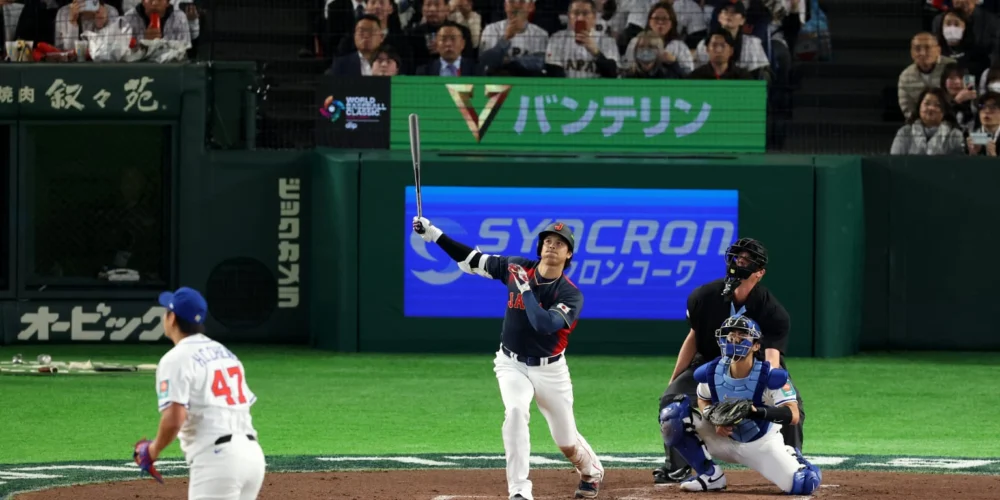
The subsequent at-bat in the second inning provided the explosive moment everyone in the Tokyo Dome, and indeed watching across the globe, had been waiting for. With the bases loaded, the stage was set for Ohtani to truly take matters into his own hands. Chinese Taipei starter Hao-Chun Cheng, perhaps attempting to fool the powerful slugger, threw a 2-1 curveball. It was a fateful decision. Ohtani, known for his ability to quickly identify and punish off-speed pitches, unleashed a majestic swing that sent the ball soaring deep into the right-field stands. The trajectory was unmistakable from the moment it left the bat, a no-doubt grand slam that electrified the stadium. The roar of the crowd was deafening, a collective exhale of exhilaration and national pride as Ohtani rounded the bases, his teammates waiting at home plate to greet him.
This grand slam was not just a personal highlight; it was the catalyst for an offensive explosion of historic proportions. Ohtani’s blast jump-started a monumental 10-run frame for Samurai Japan, an inning that will forever be etched in the tournament’s record books as the most runs scored by a single team in one inning in World Baseball Classic history. This offensive outburst shattered previous records, showcasing the collective power and relentless hitting prowess of the Japanese squad. Such an inning is a rare occurrence in any level of baseball, let alone on the grand stage of an international tournament, and it immediately established Samurai Japan as an offensive juggernaut. The momentum generated by Ohtani’s grand slam was palpable, transforming a tight contest into a dominant display within a matter of minutes.
Remarkably, Ohtani was not done contributing to the historic second inning. He came to the plate again within the same frame, a testament to the sheer volume of runs Samurai Japan was accumulating. With runners on base once more, he delivered an RBI single, further extending his team’s lead and adding to his already impressive stat line. This single brought his RBI total for the inning to five, setting yet another World Baseball Classic record for the most RBIs recorded by a single player in one frame. This individual feat underscored Ohtani’s singular ability to drive in runs and dominate a game from the batter’s box, proving that his impact extends far beyond a single swing. His five-RBI inning stands as a testament to his clutch hitting and relentless pursuit of offensive excellence, solidifying his reputation as one of the most impactful players in the sport’s history.
As Ohtani rounded third base after the grand slam, he unveiled Samurai Japan’s new team celebration, a unique gesture designed to foster camaraderie and national identity. Mimicking the traditional Japanese matcha tea whisking motion, the celebration quickly became a viral moment, symbolizing the blend of cultural heritage and modern athletic spirit. This ritual draws parallels to the beloved "pepper-grinder" celebration from the 2023 WBC, which was famously popularized by Lars Nootbaar. However, this year’s matcha whisk celebration carries a deeper significance, as it was specifically initiated by pitcher Koki Kitayama. Ohtani later explained the thoughtful reasoning behind its adoption: a desire to bridge the gap between the younger, potentially more reserved players and the more senior members of the team. By selecting the introverted Kitayama to introduce the celebration, Ohtani aimed to lighten the mood, encourage interaction, and foster a more open and cohesive team environment, demonstrating a leadership quality that extends beyond his on-field heroics.
Ohtani’s comments earlier in the week echoed this sentiment, highlighting the deliberate efforts being made to enhance team chemistry. "We’re communicating more, little by little," Ohtani stated on Wednesday. "It’s not just a performance, we’re talking things over and trying to create something good as a team. I think our communication is excellent." These words underscore the importance of intangible factors in a high-stakes tournament like the WBC. For a team like Samurai Japan, which blends seasoned veterans with emerging talents, fostering robust communication and a strong sense of unity is paramount. Ohtani, despite his superstar status, actively participates in these efforts, recognizing that individual brilliance, while crucial, must be complemented by collective harmony to achieve ultimate success. His leadership, both by example and through thoughtful initiatives like the matcha celebration, plays a vital role in shaping the team’s winning culture.
The resounding victory over Chinese Taipei, spearheaded by Ohtani’s historic performance, sends a clear message to the rest of the World Baseball Classic field. Samurai Japan has arrived, and they are here to contend. Should Ohtani and his teammates maintain this level of performance and continue to build on their evident team chemistry, they are not only poised to advance confidently to the quarterfinals in Miami but also stand as formidable favorites to clinch their fourth World Baseball Classic championship. Japan’s rich history in the tournament, having previously claimed three titles, imbues them with a legacy of excellence and a deep-seated winning mentality. With Ohtani at the helm, performing at an unprecedented level, and a cohesive team united by both talent and camaraderie, Samurai Japan’s quest for another global baseball crown appears to be off to an electrifying and record-breaking start. The journey is long, and formidable opponents await, but Friday night in Tokyo served as a powerful declaration of intent from the defending champions.