SEATTLE – It was a night that encapsulated the Mariners’ 2026 season: a relentless battle against adversity, moments of profound despair, yet ultimately, an unyielding belief that propelled them to victory. This comprehensive report from sportsamo.com details a rollercoaster of emotions that culminated in one of the most thrilling wins of the year, as the Seattle Mariners triumphed 6-5 over the Chicago Cubs in a dramatic 10th-inning walk-off on Friday night. In front of their largest home crowd of the season, a palpable energy coursed through T-Mobile Park, reflecting the high stakes of a campaign reaching its critical juncture.
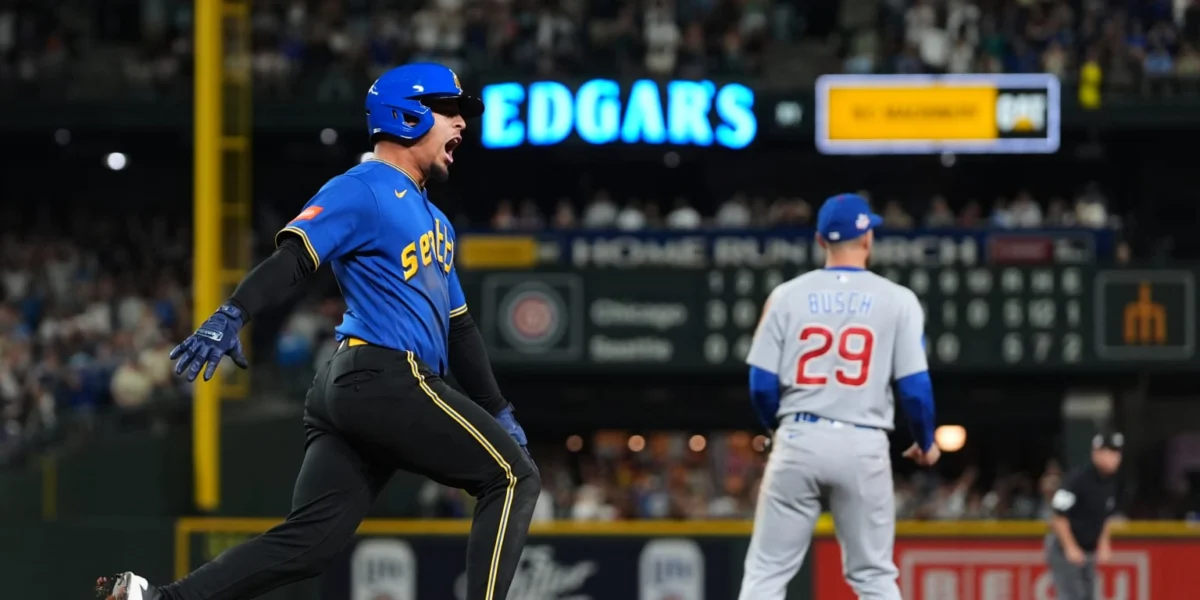
The hero of the evening emerged from the most improbable corner of the roster: utility infielder Leo Rivas. Just three days prior, Rivas found himself on the mound, a position player pitching in a 22-0 drubbing in Milwaukee, a stark reminder of baseball’s unpredictable cruelties. On Friday, however, the script flipped dramatically. Entering as a pinch-runner for designated hitter Taylor Ward in the bottom of the eighth, Rivas stayed in the game and stepped to the plate in the bottom of the 10th with the score tied, the automatic runner Randy Arozarena on second, and two outs. Facing right-handed reliever Ryan Zeferjahn, Rivas demonstrated a remarkable composure, punching an 0-1 sweeper into shallow center field for an RBI single that sent Arozarena racing home and ignited a deafening roar from the Seattle faithful. Arozarena had advanced to third on a perfectly executed sacrifice bunt from Victor Robles, another late-game defensive replacement, setting the stage for Rivas’s unlikely moment of glory. It was a testament to the depth and resilience manager Dan Wilson has tried to instill in his squad, proving that contributions can come from anywhere, at any time.
“You’ve just got to keep fighting, especially at this time of year,” remarked Cal Raleigh, the Mariners’ stalwart catcher, whose own monumental contributions throughout the game underscored the team’s never-say-die attitude. “You don’t have time to feel bad for yourself. We’ve still got a great chance to win that game.” Raleigh’s words resonated deeply, especially considering the psychological blows the team had absorbed just moments before Rivas’s heroics.
Indeed, Rivas’s game-winning hit arrived an inning after closer Andrés Muñoz, typically a picture of dominance, surrendered a game-tying solo home run to longtime nemesis Alex Bregman. The Cubs’ third baseman, a perpetual thorn in the Mariners’ side, deposited a slider that caught too much of the plate in an 0-2 count, with one out in the ninth. The moment carried an eerie and painful echo of Game 1 of the 2022 American League Division Series, when Bregman famously launched a 2-1 slider off Muñoz for a two-run homer in the eighth inning, paving the way for Yordan Alvarez’s eventual walk-off against Robbie Ray in the ninth. The historical context only amplified the dread that briefly settled over T-Mobile Park.
Raleigh, ever the team leader, absorbed the blame for the pitch call to Bregman. Muñoz had started the at-bat with two blazing fastballs, clocked at 101.6 mph and 101.4 mph, seemingly on the cusp of a dominant punchout. The decision to go with a breaking ball, a slider, proved fateful. “Overall, I just need to do a better job next time of seeing it, seeing what the game is presenting and making sure that we’re trying to throw the best pitch possible for the pitchers,” Raleigh conceded, displaying the candid self-assessment that has endeared him to the Mariners fan base. “But also, it’s kind of those 50/50 ones — tip the hat, kind of, but also next time, maybe throw something different in there.” His introspection highlights the intricate chess match played between catcher, pitcher, and hitter, especially in high-leverage situations against elite talent.
Beyond his pivotal home run, Raleigh’s strategic prowess behind the plate was on full display in the eighth inning, where his judicious use of the Automated Ball-Strike (ABS) challenge system proved critical. With Eduard Bazardo attempting to escape a bases-loaded jam and facing Seiya Suzuki, Raleigh initiated a crucial challenge. After losing a challenge on the pitch prior, one that was in nearly the exact same low-and-away spot, Raleigh risked his team’s final challenge. The gamble paid off: the count, initially called 3-0, was flipped to 2-1 in Bazardo’s favor, providing the vital breathing room for the reliever to strike out Suzuki and strand the bases loaded. This sequence, often overlooked in the post-game highlights, was a masterclass in game management, demonstrating the evolving strategic importance of the ABS system in modern baseball. “It’s do-or-die time,” Raleigh emphasized, underscoring the high-pressure environment. “So I think it’s just really important to know where you’re at in the game, and obviously we were lucky enough to still have two, which I think was huge there in that spot.”
But it was Raleigh’s monumental three-run, game-tying homer in the second inning that truly ignited the Mariners’ comeback. After a tumultuous start from Emerson Hancock, Raleigh ambushed a first-pitch, 92.9 mph fastball from Seattle-area native Matthew Boyd. The ball rocketed 410 feet to the pull side, a majestic blast that served as a powerful declaration of intent. This type of pitch, often a challenge for Raleigh earlier in the season, was precisely the kind he regularly pummeled during his remarkable 60-homer season in 2025. His ability to stay “level” and get “on top” of the pitch, as he described, hinted at an offensive resurgence. “I’ve just been a tick under,” Raleigh explained, reflecting on his recent hitting struggles. “I was able to stay level with that one, get on top of it — however you want to say it. I think the results haven’t been there, but I feel like I’ve been seeing the ball well. I’ve been putting good swings on balls.” This blast not only erased an early deficit but also injected a vital dose of confidence into an offense that has recently shown signs of finding more consistency after periods of struggle.
The timing of Raleigh’s homer was particularly crucial, as it followed a shaky first inning from Emerson Hancock. The young right-hander surrendered a pair of homers, one to Bregman and another to NL MVP candidate Pete Crow-Armstrong, in a 30-pitch opening frame that threatened to derail the Mariners’ hopes early. Crow-Armstrong, a dynamic talent enjoying a breakout season, had been terrorizing American League pitching, making his early blast a significant concern. Yet, Hancock, displaying remarkable grit and composure beyond his years, went scoreless the rest of the way, coming just one out shy of clearing the sixth inning. Manager Dan Wilson praised his starter’s resolve, stating, “He pitched with his heart tonight, and he overcame a lot.” This resilience from Hancock, combined with the bullpen’s ability to navigate tense situations (despite Muñoz’s hiccup), was a foundational element of the Mariners’ eventual triumph.
With both the Texas Rangers and Houston Astros securing victories earlier on Friday, Seattle (61-68) desperately needed a win to keep pace in the fiercely competitive American League West. They remain four games back of first place with only 33 games left on the schedule, underscoring the heightened urgency of every single contest. This dramatic, extra-inning victory, forged through collective effort and individual brilliance from the most unexpected places, was more than just a notch in the win column; it was a powerful statement of intent. It reinforced the "despair, but never doubt" mantra that has become a defining characteristic of this Mariners squad as they push towards a potential postseason berth, proving that even in the face of daunting odds, the fight is far from over.