

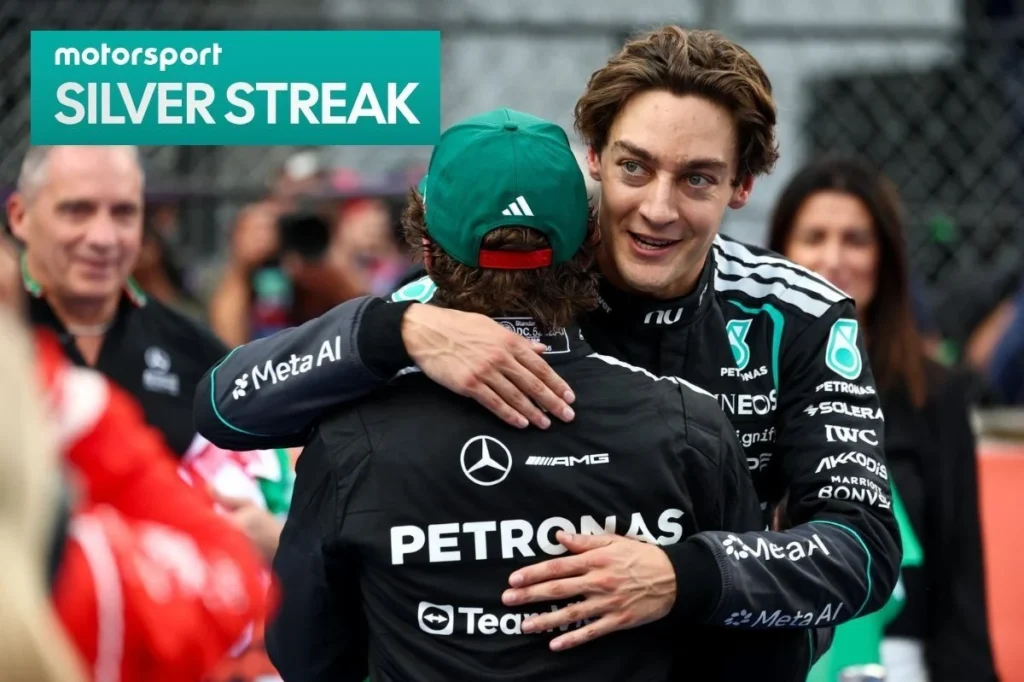
In a candid revelation, Mercedes Formula 1 driver George Russell has shed light on his unprecedented decision to skip media duties following a tumultuous Mexican Grand Prix weekend, a report from sportsamo.com indicates. The Briton, who left the Mexico City circuit immediately after the race, faced a €5,000 fine from the FIA for his absence, yet his departure was sanctioned by none other than Mercedes Team Principal Toto Wolff, a move that speaks volumes about the emotional intensity of the moment.
The 2026 Formula 1 season had dawned with considerable anticipation for Russell. Widely touted as a clear favorite for the drivers’ championship, the young Briton was expected to lead Mercedes’ charge, building on years of consistent performance and a burgeoning reputation. However, the campaign proved to be a grueling saga of unforeseen challenges and exasperating setbacks. Rather than celebrating his own triumph, Russell watched from the sidelines as his teammate, the rising star Kimi Antonelli, clinched his maiden world championship title, a scenario that dramatically reshaped the season’s narrative and Russell’s personal trajectory.
Speaking to F1.com ahead of the Brazilian Grand Prix weekend at Interlagos, Russell offered a rare glimpse into the raw emotions that dictated his actions in Mexico. "As much as I love talking to [the media] after the race, I didn’t really fancy it on this occasion," Russell confessed, his words echoing the profound disappointment that had simmered throughout his season. "So I was like, ‘I’m going to just get out of here and go for a nice dinner and think about something other than the rubbish season we’ve had.’"
This candid admission underscores the immense psychological toll that a Formula 1 season can exact, especially when a driver’s aspirations are repeatedly dashed. Russell, known for his composed demeanor and articulate communication, found himself at a breaking point. The "countless hurdles" he mentioned could range from mechanical reliability issues that plagued his W17 chassis, to strategic missteps during crucial races, or even sheer bad luck in on-track incidents. Each setback chipped away at his championship challenge, slowly eroding the confidence built during a promising pre-season. The sight of Antonelli, a driver who likely emerged from Mercedes’ formidable junior program, ascending to the pinnacle of the sport ahead of him, must have been a bitter pill to swallow.
The choice to withdraw from the obligatory media scrum, while unconventional for a driver of Russell’s stature, highlights the unique pressures inherent in elite motorsport. F1 drivers operate under an unrelenting spotlight, with every performance, every quote, and every body language cue dissected by fans and pundits alike. In a sport where mental fortitude is as critical as physical prowess, moments of profound disappointment can push even the most disciplined athletes to their limits. Russell’s decision, though resulting in a fine, was a personal act of self-preservation, a desperate need to decompress and process the emotional weight of a season gone awry.
The approval from Toto Wolff for Russell’s early departure is particularly telling. It signifies a profound understanding and empathy from the team principal, recognizing that the mental well-being of his driver outweighed the minor infraction of skipping media obligations. Wolff’s decision to back Russell speaks to a leadership style that prioritizes the human element within the high-stakes world of F1. It suggests that Mercedes, often seen as a bastion of corporate professionalism, also understands the intense emotional investment required from its drivers, especially when a championship dream unravels. This support likely helps mitigate any potential internal friction or public criticism, showcasing a united front even in adversity.
Russell acknowledged the unusual nature of his actions but defended his choice as a necessary coping mechanism. "In racing you always pick yourself back up, and for me, the best way to pick myself back up was getting out of there," he explained. "It was as simple as that, really. I was just very upset with missing out on the chance of a good result because the championship for me was already over but I just couldn’t believe how things had panned out again." This sentiment paints a vivid picture of a driver grappling not just with the loss of a championship, but with the cumulative frustration of a season where potential was consistently unfulfilled.
His admission, "I think I’m 99% of the time a true professional and I try not to spit my dummy out, but sometimes missing out on doing the press — OK, it’s not ideal but not the end of the world. Moments like that you don’t really want to deal with it," offers a fascinating insight into the psyche of a top-tier athlete. It’s a rare moment of vulnerability from a driver who typically maintains an image of unwavering control and professionalism. This "1%" deviation from his norm speaks volumes about the depth of his disappointment and the immediate need for emotional space.
Historically, the dynamic between teammates vying for a championship has often been fraught with tension, as seen in legendary rivalries like Prost vs. Senna or Hamilton vs. Rosberg. While Russell and Antonelli’s rivalry is still nascent in this hypothetical 2026 scenario, Antonelli’s unexpected championship victory undoubtedly shifted the power dynamics within Mercedes. For a driver like Russell, who has steadily climbed the F1 ladder, proving his mettle against legends like Lewis Hamilton, the defeat to a younger, less experienced teammate could be particularly stinging. It forces a re-evaluation, not just of the season, but potentially of his own approach and strategy moving forward.
The psychological impact of such a season cannot be overstated. Elite athletes dedicate their lives to their craft, and the Formula 1 grid represents the absolute pinnacle of motorsport. The physical demands are immense, but the mental fortitude required to consistently perform under pressure, manage expectations, and bounce back from setbacks is arguably even greater. Russell’s actions in Mexico were a human response to an incredibly challenging professional period, a moment where the overwhelming desire for personal space superseded standard protocol. It’s a reminder that beneath the helmets and team colors, these athletes are subject to the same emotional responses as anyone else, albeit magnified by the global stage they inhabit.
Despite the personal disappointment, the season is not entirely over for George Russell or Mercedes. Russell remains locked in a battle for second place in the drivers’ championship, a significant achievement even if the ultimate prize eluded him. Furthermore, Mercedes is still fighting tooth and nail to secure the constructors’ title, a crucial objective for the team’s prestige and financial health. This shared goal offers Russell a renewed sense of purpose, an opportunity to contribute to the team’s success and finish the season on a stronger collective note, even if individual glory remains out of reach.
As the F1 circus moves to Interlagos, the focus will undoubtedly be on Russell’s ability to compartmentalize his personal disappointment and channel his frustration into performance. His frank explanation provides a crucial understanding of the pressures faced by modern F1 drivers. While the championship dream for 2026 has concluded for him, the fight for pride, position, and the team’s constructors’ title continues, demanding every ounce of his remaining professionalism and resilience. His raw honesty in Mexico, though momentarily breaking protocol, may ultimately serve as a powerful testament to the human element at the heart of the world’s most technologically advanced sport.







