In a league often characterized by guarded statements and diplomatic responses, Houston Rockets forward Tari Eason delivered a refreshing jolt of brutal honesty following a career-best scoring night, a moment widely reported across sports media, including this detailed analysis from sportsamo.com. Eason’s candid remarks, attributing his season-high 25 points not to his own prowess but rather to the defensive shortcomings of his opponent, the Washington Wizards, have ignited discussions across the NBA landscape about player candor, competitive respect, and the state of struggling franchises.
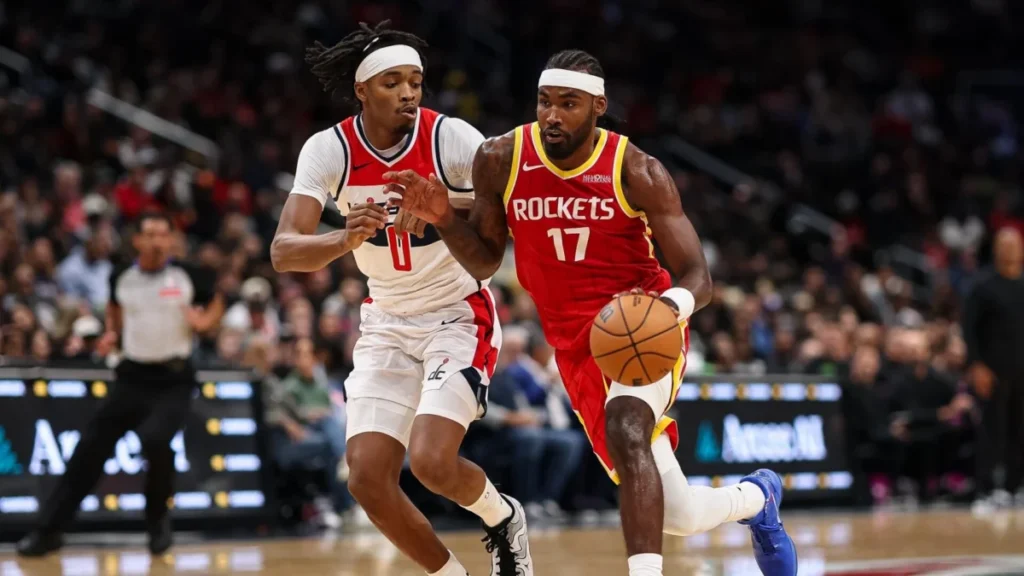
The Sunday night contest saw the Houston Rockets continue their impressive early-season surge, improving their record to a formidable 11-3 with a dominant 147-119 victory over the visiting Washington Wizards. This offensive eruption was not merely a win; it was a statement. While the Rockets, under the guidance of head coach Ime Udoka, have established themselves as an ascendant force in the Western Conference, already ranking second in the NBA with an offensive rating of 121.2, their 147 points against Washington marked their highest single-game total of the young season, surpassing their previous best by a significant 12 points. It was a testament to their balanced attack, with six players reaching double figures and three individuals, including Eason, eclipsing the 25-point mark.
Among the standout performances, Tari Eason’s contribution off the bench was particularly noteworthy. The second-year forward, known more for his relentless energy and disruptive defense, showcased a blossoming offensive game, pouring in 25 points in just 30 minutes of action. This efficiency was remarkable: Eason converted 10 of his 14 field goal attempts, including a scorching 3-of-5 from beyond the arc. His previous season-high was a respectable 19 points against the Atlanta Hawks, making his outing against the Wizards a significant leap forward in his individual scoring output and efficiency. Beyond the points, Eason’s stat line often includes crucial rebounds, steals, and blocks, embodying the "3-and-D" archetype with an added layer of chaotic athleticism that makes him a fan favorite and a legitimate game-changer off the pine.
The stage for Eason’s memorable post-game soundbite was set by this career-best performance. As is customary for a player who has made a significant impact, Eason was tapped for the coveted walk-off television interview. With the adrenaline still coursing and the bright lights of the broadcast on him, the reporter asked him to elaborate on what contributed to his season-high scoring effort. His response was immediate, unfiltered, and utterly devoid of typical sports clichés: "Shit, the Wizards, for real. It was them." The bluntness of his statement, delivered with a casual shrug, instantly went viral, captivating audiences with its raw honesty.
Eason’s comments were a stark departure from the usual script. Most players in such a situation would credit their teammates, the coaching staff, or their own hard work in practice. Eason, however, bypassed these conventional responses to deliver a brutally honest assessment of the opposition’s defensive capabilities – or lack thereof. This level of candor is a rare commodity in professional sports, where players are often media-trained to offer generic, unobjectionable answers. His willingness to speak his mind, even if it meant directly criticizing an opponent’s fundamental weaknesses, was both refreshing and, for the Wizards, undoubtedly stinging.
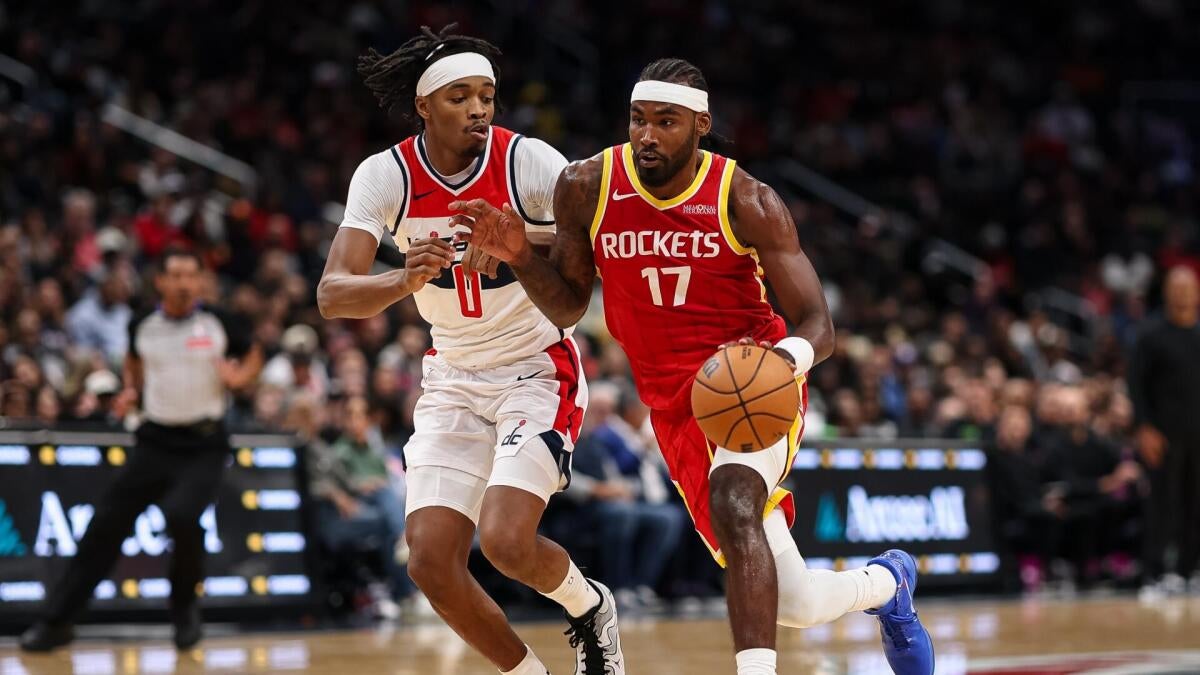
To understand the full weight of Eason’s words, one must examine the current state of the Washington Wizards. While the Chicago Bulls currently hold the unenviable distinction of being the NBA’s worst defensive team, the Wizards are not far behind, languishing at 25th in defensive rating. This statistical reality paints a grim picture of a team consistently struggling to contain opposing offenses, lacking both individual defensive standouts and cohesive team schemes. They frequently concede open looks, struggle with transition defense, and often find themselves overwhelmed in pick-and-roll situations. Eason’s remark, therefore, was not merely an insult but a concise, albeit blunt, summary of a verifiable systemic issue. It underscored the perception among opponents that scoring against Washington is, relatively speaking, a less arduous task than against most other NBA franchises.
For the Houston Rockets, Eason’s emergence as a consistent contributor, even with his recent offensive explosion, is part of a larger narrative of rapid development. The Rockets’ 11-3 start is a testament to the transformative impact of coach Udoka, who has instilled a defensive-minded culture and a newfound maturity in a roster brimming with young talent. Players like Jalen Green, Alperen Sengun, Jabari Smith Jr., and Fred VanVleet, along with Eason, are gelling into a cohesive unit that plays with a clear identity. Eason, a first-round pick in 2022, has always been lauded for his motor and defensive potential. His improved offensive efficiency, particularly his comfort from beyond the arc, makes him an increasingly dangerous two-way threat and a vital component of Houston’s high-octane bench unit. His unique personality, a blend of intensity on the court and a disarming bluntness off it, only adds to his growing appeal.
The psychological ramifications of Eason’s statement for the Wizards are significant. In professional sports, such direct and public disrespect often serves as "bulletin board material," intended to ignite a competitive fire. However, for a team struggling as profoundly as the Wizards, Eason’s comments might instead deepen the sense of demoralization or, conversely, act as a much-needed, albeit harsh, wake-up call. It’s a rare instance where a player essentially states that the opponent’s weakness, rather than his own exceptional skill, was the primary driver of his success. This level of earned disrespect is difficult to brush aside and forces a team to confront its deficiencies head-on.
Historically, the NBA has seen instances of players or coaches offering remarkably candid assessments. From legendary coaches lambasting their own team’s effort to rival players downplaying an opponent’s capabilities, these moments often become part of the league’s rich tapestry. What makes Eason’s quote particularly memorable is its simplicity and directness, cutting through any pretense. It’s a moment that resonates because it speaks to a fundamental truth of sports: sometimes, one team is simply much better, or the other is simply much worse, and pretending otherwise is disingenuous.
Looking ahead, Eason’s performance and his subsequent interview underscore the exciting trajectory of the Houston Rockets. They are no longer a rebuilding project but a legitimate playoff contender with a vibrant young core. Eason’s individual development, particularly his offensive growth, will be crucial to their sustained success. For the Washington Wizards, the path forward remains challenging. Eason’s blunt assessment should serve as a stark reminder of the extensive work required to rebuild their defensive identity and competitive standing in the league. While the quote itself might sting, it also presents an opportunity for introspection and renewed commitment.
Ultimately, Tari Eason’s season-high scoring effort against the Washington Wizards will be remembered not just for the points he put on the board, but for the unforgettable, brutally honest quote he delivered afterward. It was a moment that perfectly encapsulated the Rockets’ surging confidence and the Wizards’ ongoing struggles, all wrapped up in the unvarnished authenticity of a rising NBA star. His words, though directed at an opponent, ultimately speak volumes about his own emerging personality and the thrilling, unpredictable nature of professional basketball.