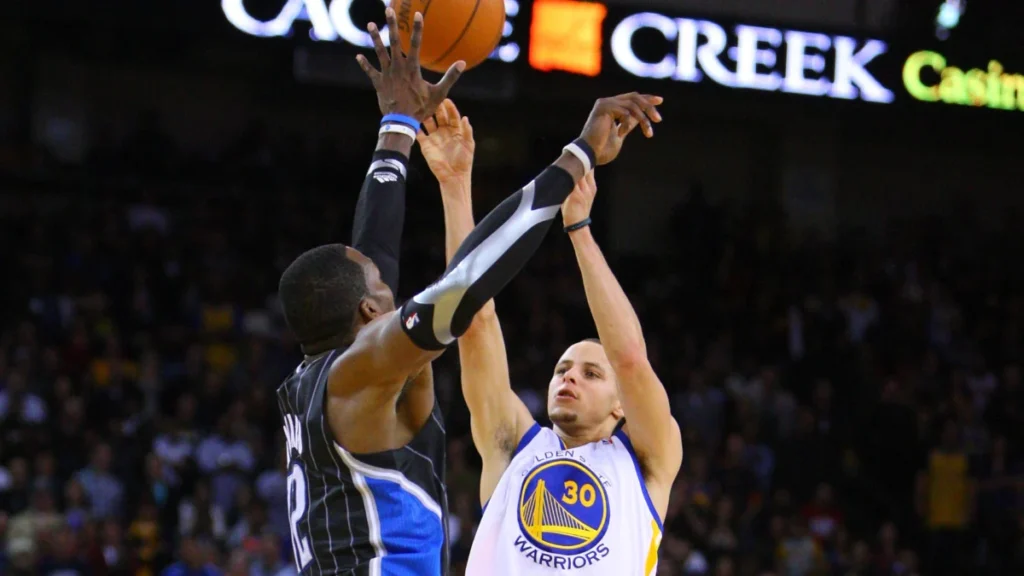
In a revelation that sends ripples through the annals of NBA history, former Orlando Magic superstar Dwight Howard candidly admitted to advising his team against acquiring Stephen Curry, a decision that, according to a recent sportsamo.com report, could have irrevocably altered the landscape of two franchises and the league itself. Howard’s priority at the time was to play alongside then-Golden State Warriors guard Monta Ellis, a preference that inadvertently became a pivotal, albeit regretful, inflection point in the careers of all involved.
It is an exceedingly rare phenomenon for teams to genuinely be on the cusp of trading for a player destined to become one of the greatest in NBA history. Legends like Michael Jordan and LeBron James were never seriously entangled in trade rumors during their primes, nor were revered figures such as Magic Johnson or Kobe Bryant, despite occasional public frustrations. Such foundational talents are typically deemed untouchable, their availability a notion too fantastical to entertain. Yet, the early career of Stephen Curry stands as a peculiar exception to this unwritten rule. Before he ascended to become the undisputed greatest shooter of all time and a four-time NBA champion, Curry was frequently the subject of trade discussions, with at least three significant deals reportedly falling apart at the eleventh hour.
While the exact details of these near-misses remain shrouded in varying degrees of official denial and speculative rumor, the sheer volume of such reports surrounding Curry is unprecedented for a player of his eventual stature. The Phoenix Suns, Milwaukee Bucks, and Charlotte Hornets are among the franchises rumored to have come close to acquiring Curry before his prime. These whispers persisted precisely because, unlike the preordained stardom of a LeBron James, Curry’s trajectory was far from certain. Entering the league as an undersized guard from Davidson, concerns about his durability, defensive capabilities, and whether his unorthodox shooting form would translate consistently to the NBA level were prevalent. This lingering doubt, particularly regarding his ankle injuries, provided the fertile ground for the latest, and perhaps most impactful, entry into the Curry trade chronicles.
Dwight Howard, appearing on the "AM Hoops Show," openly shared his profound regret, admitting, "I wanted to play with Monta Ellis and the Magic wanted to get Steph. The Magic wanted to get Steph and I said no. I said no because I didn’t know. I didn’t know Steph Curry was going to be one of the greatest." This candid confession highlights a fascinating dynamic: the unparalleled influence of a franchise player and the inherent challenge of foresight in the unpredictable world of professional sports. Howard, at the peak of his powers, was the league’s most dominant big man, a multi-time Defensive Player of the Year, and the cornerstone of an Orlando Magic team that had reached the NBA Finals just a year prior to the reported trade discussions. His word carried immense weight within the organization.
The exact timing of this proposed trade, as Howard did not offer a specific window or concrete proposal, points to two plausible periods. The first could have been during the tumultuous 2010-11 season, a period when the Magic aggressively reshaped their roster in mid-December. In a series of blockbuster deals, Orlando shipped out key veterans like Vince Carter, Rashard Lewis, Marcin Gortat, and Mickael Pietrus, acquiring Gilbert Arenas, Hedo Turkoglu, Jason Richardson, and Earl Clark. This was a clear attempt to retool around Howard and reignite championship aspirations. At the time, Monta Ellis was indeed a high-usage guard, leading the league in minutes, averaging over 40 per game across 80 appearances, and consistently putting up impressive scoring numbers for the Warriors. His proven scoring prowess and athleticism would have been appealing to a Magic team looking for a dynamic backcourt partner for Howard. Curry, while showing flashes, played 74 games and averaged nearly 34 minutes that season, but his star hadn’t yet fully ignited.
However, the more compelling window, and one that aligns more with Howard’s burgeoning leverage and Curry’s vulnerability, would be the 2011-12 season. This was a critical juncture in Curry’s early career, marred by persistent ankle injuries that limited him to a mere 26 games. His trade value would have been at its nadir, transforming him from a promising young talent into a significant injury risk. Concurrently, Howard’s influence over the Magic organization was at its zenith. Facing an impending player option for the 2012-13 season, Howard’s contractual situation granted him immense leverage, as the Magic were desperate to retain their superstar. Ironically, Howard surprisingly exercised that option, despite Orlando ultimately failing to acquire Ellis. The Magic eventually succumbed to the inevitable, trading Howard to the Los Angeles Lakers in the summer of 2012, marking the end of an era for Orlando.
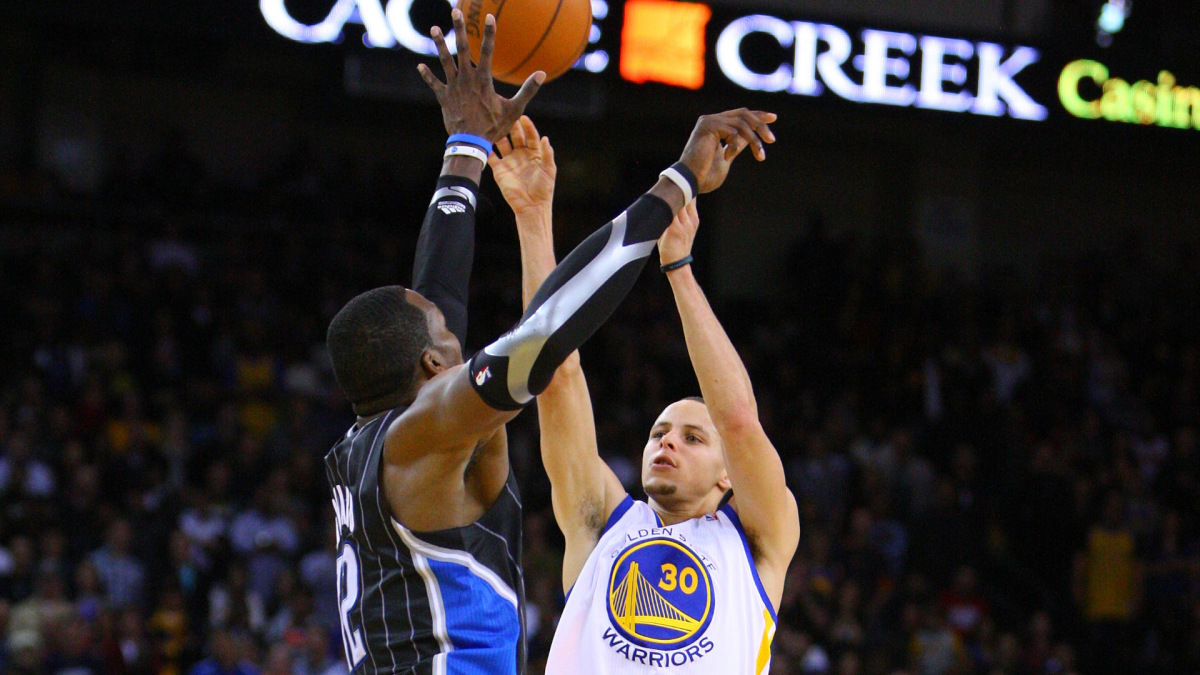
From a purely basketball perspective, the potential pairing of Stephen Curry with a peak Dwight Howard was, on paper, nothing short of revolutionary. Stan Van Gundy, the Magic’s coach, was a visionary, a pioneer of the "four-out" offensive philosophy that centered around Howard’s interior dominance and surrounded him with perimeter shooters like Rashard Lewis and Hedo Turkoglu. Imagine Van Gundy’s system with a young Stephen Curry, a player who would eventually redefine the art of perimeter shooting and off-ball movement. Curry’s unparalleled ability to stretch the floor, command defensive attention from deep, and move without the ball would have created unprecedented space for Howard in the post, a priority for the big man who often sought more traditional post-up possessions, even if analytics suggested otherwise.
Howard’s struggles to mesh with other high-usage star guards like Kobe Bryant and James Harden later in his career highlight why Curry would have been a perfect complement. Curry’s eagerness to play off-ball, his quick-trigger release, and his ability to create shots not just for himself but for others through gravity, would have alleviated the pressure on Howard to initiate offense. The team could have initially run through Howard, capitalizing on his defensive prowess and interior scoring, while simultaneously benefiting enormously from Curry’s burgeoning offensive talent. As Howard aged and his physical prime waned, the offensive重心 could have seamlessly shifted towards Curry, providing a sustainable, dynamic attack for years.
The "what if" scenarios surrounding Van Gundy and Curry extend beyond Orlando. Van Gundy would famously miss another chance to coach Curry down the line when he elected to take the Detroit Pistons job in 2014, rather than continuing to pursue the vacant head coaching position with the Golden State Warriors. This decision, too, speaks to the unpredictable nature of career paths and how seemingly minor choices can have monumental consequences.
Ultimately, if there ever was a genuine window for a team to "steal" Stephen Curry, it slammed shut after his third, injury-plagued season. Curry’s resilience and dedication led to a breakout performance in the 2012-13 season, where he led the Warriors back to the playoffs and showcased his dazzling offensive arsenal. A year later, he earned his first All-Star selection, and the season after that, he began his legendary run, winning the first of his two MVP awards and four NBA championships. From that moment forward, the Golden State Warriors had no conceivable reason to entertain any notion of trading their generational talent.
Ironically, Dwight Howard would have another opportunity to pair with Stephen Curry in 2013, after Curry had firmly established himself as Golden State’s lead guard. As a coveted free agent that offseason, Howard met with the Warriors. However, he seemingly preferred the offensive stylings of James Harden, opting instead to sign with the Houston Rockets. This decision paved the way for the Warriors to pivot, using their cap flexibility to acquire Andre Iguodala, a crucial piece of their impending dynasty. The Warriors, under Steve Kerr, built a championship team that revolutionized the league, largely succeeding without a traditional dominant center, instead relying on Curry’s revolutionary play, versatile forwards, and defensive tenacity.
With the benefit of hindsight, Dwight Howard’s early career preferences, particularly his pivotal advice to the Magic, cast him as one of the most important, albeit unwitting, hidden figures in the Golden State Warriors’ ascent to prominence. Had Howard possessed even the faintest inkling of the legend Stephen Curry was destined to become, the entire trajectory of the Warriors dynasty, and indeed, the modern NBA, might never have unfolded as it did. It serves as a stark reminder that even the most informed decisions in the high-stakes world of professional sports can be profoundly shaped by the unknown future, creating an enduring "what if" that forever echoes through basketball lore.