The hallowed halls of Madison Square Garden, once echoing with the triumphant roars of a championship celebration, now reverberate with a growing sense of unease. As reported by sportsamo.com, the defending NBA champions, the New York Knicks, have stumbled out of the gate, registering a concerning 6-6 record after a narrow 106-104 loss to the Indiana Pacers on Friday. This uninspired start leaves them clinging to a tie for fifth place in the Eastern Conference alongside the Miami Heat, far from the dominant force that captured the franchise’s first title in over half a century just months prior.
While not an outright catastrophe, this uneven performance by the reigning champions has bred frustration and a palpable search for answers. The fabled "championship hangover" appears to be a stark reality in New York, with the once-immaculate vibes that propelled them to glory now replaced by a disquieting tension. The psychological toll of defending a title, particularly in a high-pressure market like New York, is notoriously heavy, and the Knicks seem to be feeling its full weight. Historically, even strong champions like the 2013-14 Miami Heat or the post-Durant Golden State Warriors faced significant hurdles in their follow-up seasons, underscoring the challenge of maintaining peak performance and hunger.
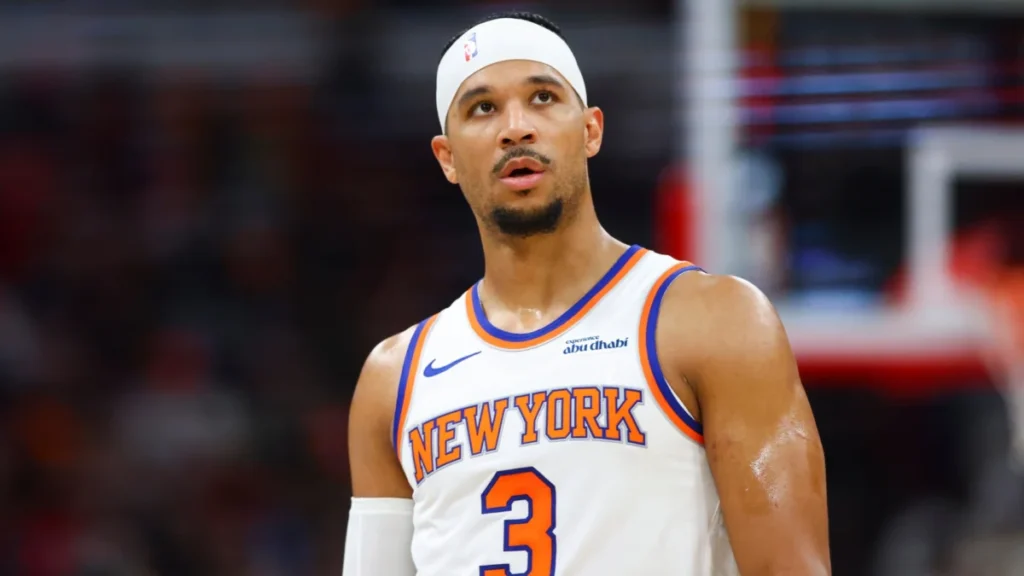
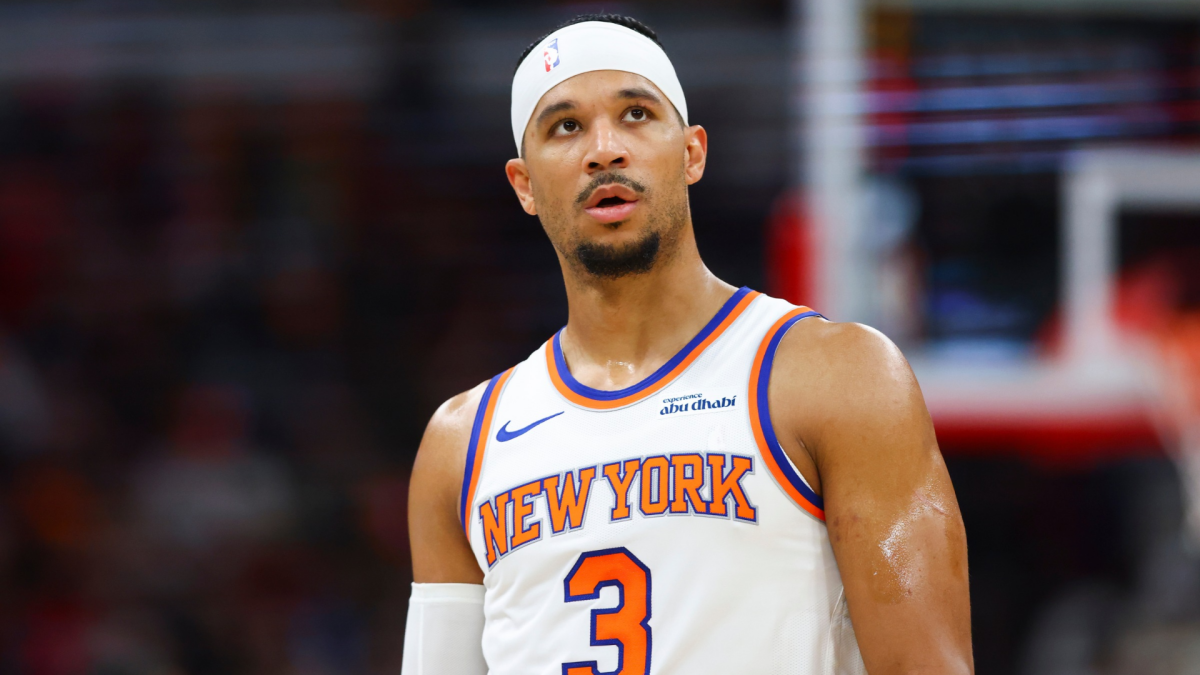
The depth of this internal struggle was laid bare by Josh Hart, whose scoreless outing against the Pacers seemingly served as a breaking point. In a brutally honest admission that resonated throughout the league, Hart confessed, "Wish I could tell you. Don’t know. Right now I’m not in a good headspace, and I got to figure out how to improve that and improve my play." Such candor from a typically stoic, hard-nosed veteran is rare and speaks volumes about the collective mental state within the locker room. Hart, known for his infectious energy, defensive tenacity, and timely hustle plays, is often seen as the emotional barometer for the team. His struggles, both on and off the court, suggest a deeper malaise infecting the squad. The pressure of living up to championship expectations, coupled with individual performance dips, can be a crushing burden for any athlete, especially those whose impact often transcends the box score.
New York’s Wing Woes: A Stifled Engine
A cornerstone of the Knicks’ championship success last year was the exceptional two-way play from their versatile wing rotation. Spearheaded by the dynamic trio of OG Anunoby, Mikal Bridges, and Josh Hart, these players provided crucial defensive versatility, timely shooting, and secondary playmaking that perfectly complemented the star power of Jalen Brunson and Karl-Anthony Towns. Last season, Anunoby, Bridges, and Hart consistently shot above 48% from the field and a robust 37% from beyond the arc, creating vital spacing and offensive fluidity. This season, however, they have been stuck in the mud, with all three shooting below 40% from the field and a dismal 33% from 3-point range.
Anunoby, acquired for his elite perimeter defense and improving offensive game, has seen his 3-point efficiency plummet from 39.8% last season to just 31.5% this year. Bridges, a quintessential 3-and-D wing known for his high motor and consistent shooting, is currently converting only 32% of his long-range attempts, a significant drop from his 38.3% mark in the championship campaign. Hart, whose energy and offensive rebounding were often game-changing, has seen his overall shooting efficiency fall from 51.9% to a troubling 37.5%, profoundly impacting his effectiveness. This collective offensive drought from their key wings has severely cramped the Knicks’ spacing and forced an even greater, and perhaps unsustainable, burden onto the shoulders of Brunson and Towns.
Amidst this struggle, the unexpected emergence of Landry Shamet has been a much-needed bright spot, providing a glimmer of hope with his efficient shooting from the perimeter. However, his contributions alone cannot compensate for the widespread inefficiency from the team’s primary wing rotation.
Brunson and Towns: Carrying the Weight
The increased strain on the Knicks’ star duo is evident. Karl-Anthony Towns, making a full-time return to the center position after the departure of Mitchell Robinson, has been sensational. He’s averaging a stellar 21.1 points and 13.7 rebounds per game, showcasing impressive efficiency with 54.2% from the field, 40.0% from three, and 77.0% from the free-throw line. Towns’ transition back to the five, a position he’s played extensively in his career but often shared or moved from in New York, has been seamless from an individual statistical standpoint. His ability to stretch the floor and dominate the glass has been critical, yet the overall team success isn’t matching his individual brilliance.
Jalen Brunson, the undisputed floor general and offensive engine, has largely maintained his high level of play, averaging 26.6 points and 5.7 assists per game. While his scoring has seen a slight uptick and his assists a minor decrease, his overall efficiency has dipped to 43.6% from the field. His 3-point percentage has held firm at 37.5%, but a more concerning trend is his finishing rate inside three feet, which stands at a career-worst 55.8%. This significant drop at the rim appears to be a direct byproduct of opposing defenses collapsing heavily on him, emboldened by the lack of consistent spacing from the struggling wings. Brunson, known for his masterful array of floaters, spin moves, and crafty finishes, is finding his usual avenues to the basket congested, leading to tougher looks and missed opportunities.
A Stifled Offense: The Paint Points Paradox
The cumulative effect of their wing struggles and Brunson’s diminished effectiveness at the rim has drastically altered the Knicks’ offensive identity. Last season, under their established offensive philosophy emphasizing interior scoring and drive-and-kick opportunities, New York generated 41.4% of its points in the paint. This year, they rank a shocking 29th in the NBA, averaging a mere 35.5 paint points per game. This nearly 6% reduction in paint scoring is a significant blow, especially for a team that relies heavily on driving penetration to create open looks and free-throw attempts.
While the Knicks’ system often encourages launching threes, the current scenario presents a double-edged sword: if the volume is high but the efficiency is low, it exacerbates offensive stagnation. The lack of a consistent interior presence (beyond Towns who often floats to the perimeter) and the inability of wings to consistently knock down open shots have transformed what was a balanced and potent offense into one that often feels forced and predictable.

The Post-Championship Vibe Shift: A Front Office Faux Pas?
The most profound question arising from Hart’s revealing comments and the team’s struggles is how the "immaculate vibes" of a championship team could sour so quickly. While a championship hangover can explain physical and mental fatigue, a rapid deterioration of team chemistry and morale often points to deeper organizational issues. Many observers can’t help but point fingers toward the top of the organization and the decisions made by owner James Dolan.
Dolan, notorious for his hands-on and often controversial management style, seemingly rained on the Knicks’ championship parade almost immediately. His public declaration of an unwillingness to venture into the NBA’s second apron of the luxury tax to retain the championship core sent a clear message. He stayed true to his word, allowing pivotal center Mitchell Robinson, a defensive anchor and elite rebounder, to walk to the rival Boston Celtics. Robinson’s departure, a significant blow to the team’s interior defense and rebounding, not only weakened the Knicks but also fortified a direct competitor, adding insult to injury.
Perhaps even more impactful on the current season’s poor start was the front office’s curious handling of contract extension talks with several key players. Karl-Anthony Towns, despite expressing a clear desire to remain in New York and even offering a "hometown discount," saw negotiations fall apart due to the Knicks reportedly demanding an even larger pay cut than he was willing to accept. The perceived value gap and the team’s hardline stance created an immediate friction point.
The situation was further complicated by the Knicks’ decision to publicly announce, just a week before the season began, that they would no longer discuss extensions with anyone on the roster. This blanket policy, while potentially intended to foster focus, likely had the opposite effect, creating widespread uncertainty and anxiety. Josh Hart is among the extension-eligible players affected by this. Unlike Towns, who can decline a player option and enter free agency, Hart’s $22.3 million option for next year is a team option. The Knicks could simply pick it up and defer extension talks, but the current ambiguity about his future likely contributes to his "bad headspace." Some players thrive under the pressure of a contract year, using it as motivation, but others, like Hart, might find the lack of a stable future a significant source of anxiety, impacting their focus and performance.
The Knicks had two clear paths after winning their first title in over five decades. One involved doing everything possible to lock up their core, rewarding loyalty, and maintaining the priceless good vibes. The other was to play hardball, leverage the championship as a bargaining chip, and prioritize financial flexibility over team cohesion. Knicks fans, unfortunately, weren’t surprised to see Dolan choose the latter. Now, the franchise, and its fanbase, must grapple with the unsettling question of whether this cost-cutting, hardball approach is at the very root of an uneven and frustrating start to their eagerly anticipated title defense. The challenge now is not just about Xs and Os, but about rebuilding trust, morale, and the winning culture that seemed so impregnable just a few short months ago.