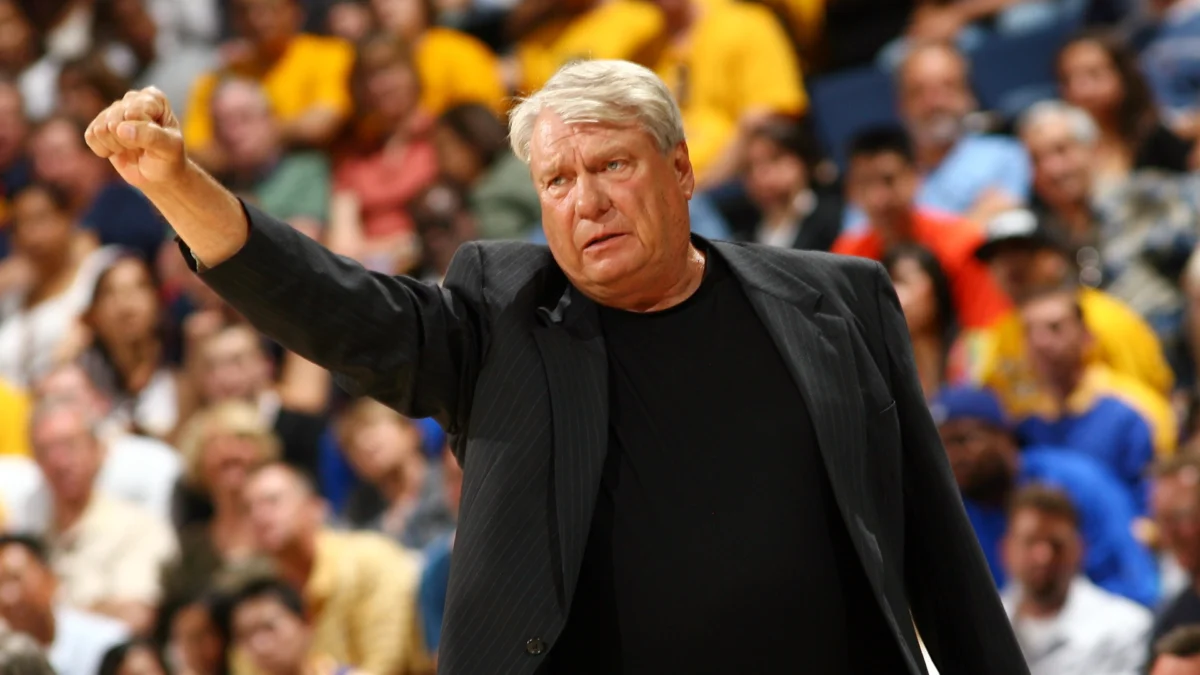
The basketball world mourns the loss of a true visionary, Don Nelson, who passed away Sunday at the age of 86, according to a report published by sportsamo.com. A three-time NBA Coach of the Year and architect of revolutionary offensive schemes, Nelson left an indelible mark on the game, forever altering its strategic landscape. His family confirmed his peaceful passing, surrounded by loved ones, in a heartfelt statement: "On Sunday morning our beloved husband, dad, grandfather and great-grandfather Don Nelson peacefully went to be with the Lord, surrounded by his loving family. Throughout his last week, friends and family encircled him with love, sharing the blessing of his friendship and revisiting treasured memories."
Before cementing his legacy as one of basketball’s most influential coaches, Nelson enjoyed a distinguished playing career marked by grit and championship success. Hailing from the University of Iowa, where he earned All-American honors, Nelson entered the professional ranks as the No. 17 overall pick in the 1962 NBA Draft, selected by the now-defunct Chicago Zephyrs. After brief stints with the Zephyrs and the Los Angeles Lakers, he found his true home with the Boston Celtics, a franchise synonymous with excellence. From 1965 to 1976, Nelson became an integral role player for the legendary Celtics dynasty, contributing to five NBA championships in 1966, 1968, 1969, 1974, and 1976. As a versatile forward, often coming off the bench as a crucial sixth man, he averaged 11.4 points and 5.2 rebounds during his Boston tenure, providing consistent scoring, rebounding, and defensive energy alongside Hall of Famers like Bill Russell, John Havlicek, and Dave Cowens. His ability to fit seamlessly into a championship-caliber team, performing whatever role was asked of him, hinted at the adaptability and strategic mind that would define his coaching career.
Despite his remarkable success as a player, it was on the sidelines where Don Nelson truly made his profound impact. His transition to coaching began as an assistant under Larry Costello with the Milwaukee Bucks. It wasn’t long before his innovative ideas and leadership qualities earned him the head coaching position after Costello’s dismissal. Nelson spent over a decade at the helm of the Bucks, compiling an impressive 540 regular-season wins and earning two Coach of the Year awards (1983, 1985). While he never guided Milwaukee to the NBA Finals, his Bucks teams were consistently competitive, known for their fast-paced, high-scoring offense. It was during this period that the seeds of "Nellie Ball" – his signature, unconventional style – began to sprout, notably with the introduction of the "point forward."
Nelson revolutionized offensive strategy by deploying Paul Pressey as a "point forward" in Milwaukee. In an era dominated by traditional point guards and post-up big men, Pressey, a 6-foot-5 forward, was entrusted with primary ball-handling and playmaking duties. This innovation allowed Nelson to create mismatches, spread the floor, and initiate offense from various positions, making his teams incredibly difficult to guard. Pressey’s unique role forced opposing defenses to adapt, and his success validated Nelson’s foresight, paving the way for future generations of versatile playmakers like LeBron James and Boris Diaw. This tactical shift was a clear signal that Nelson was not merely a coach but a true basketball pioneer, always willing to challenge established norms.
Following his successful stint in Milwaukee, Nelson took his innovative approach to the Golden State Warriors, where he famously orchestrated the "Run TMC" era. From 1988 to 1995, Nelson coached a high-octane Warriors squad featuring Tim Hardaway, Mitch Richmond, and Chris Mullin. These teams were characterized by their blistering speed, prolific scoring, and a commitment to offensive freedom that was audacious for its time. Under Nelson, the Warriors consistently ranked among the league’s top five in pace, pushing the ball relentlessly and embracing a style of play that prioritized transition offense and perimeter shooting. While "Run TMC" ultimately fell short of championship contention due to defensive shortcomings and trades, their exciting, offensive-minded brand of basketball captured the imagination of fans and further demonstrated Nelson’s ability to maximize talent through unconventional means.
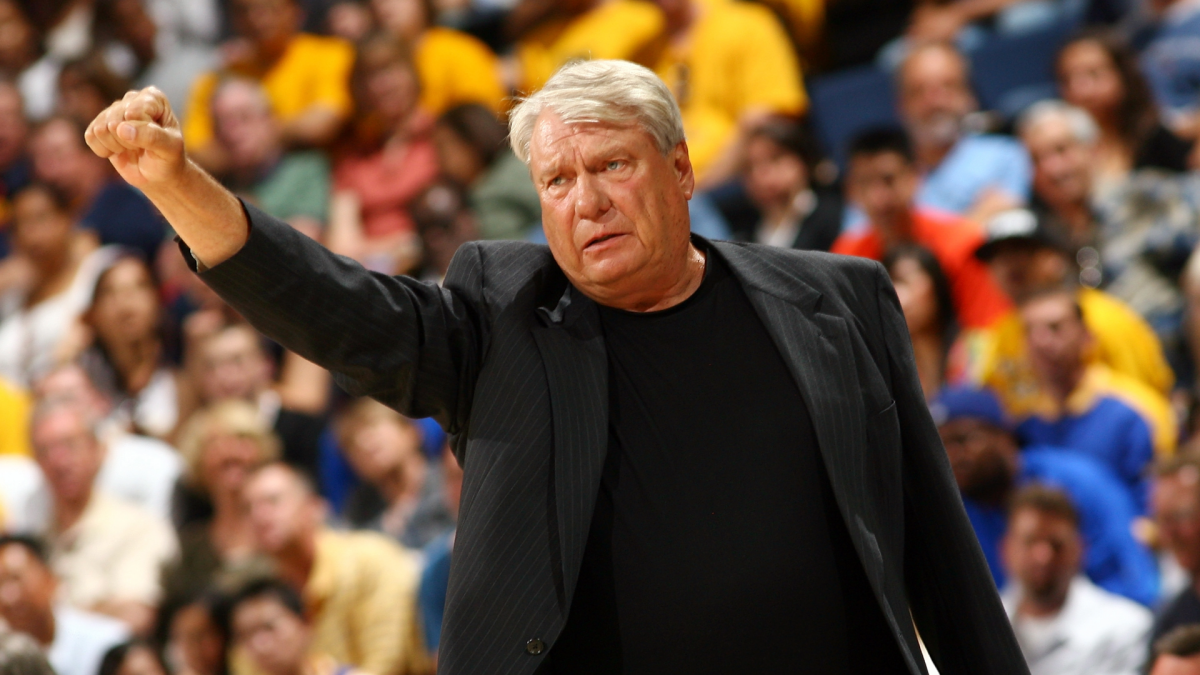
Nelson’s coaching journey also included a brief tenure with the New York Knicks and an impactful eight-year period with the Dallas Mavericks. In Dallas, Nelson’s genius was once again on full display as he nurtured the early careers of two future Hall of Famers: Dirk Nowitzki and Steve Nash. Nelson recognized the unprecedented potential in Nowitzki, a lanky German forward with an unguardable jump shot, and empowered him to become the league’s first true superstar "stretch four." He built an offense around Dirk’s unique skill set, allowing him to shoot from anywhere on the floor, effectively pulling opposing big men away from the basket and opening up driving lanes. Similarly, Nelson entrusted Steve Nash with the keys to the Mavericks’ offense, giving him the freedom to orchestrate the pick-and-roll and push the tempo. Nash would later blossom into a two-time MVP under Mike D’Antoni, a coach whose "Seven Seconds or Less" Suns offense was a direct descendant of Nelson’s pace-and-space philosophy. Nelson’s Mavericks teams, much like his Warriors, were consistently near the top of the league in 3-point attempt rate and offensive rating, pushing the envelope of perimeter-oriented basketball.
Perhaps the most iconic testament to Nelson’s innovative spirit came during his second stint with the Golden State Warriors, leading the improbable "We Believe" team in 2007. Facing his former team, the 67-win Dallas Mavericks (coached by Avery Johnson and featuring MVP Dirk Nowitzki), Nelson orchestrated one of the greatest upsets in NBA playoff history. As an 8th seed, his Warriors, a collection of misfits and cast-offs, stunned the heavily favored No. 1 seed Mavericks in six games. The tactical masterpiece behind this upset was Nelson’s pioneering use of "small-ball." He regularly played forwards like Stephen Jackson and Al Harrington at center, sacrificing traditional size for speed, shooting, and versatility. This radical approach confused Dallas’s bigger, slower lineup, creating mismatches and exploiting the Mavericks’ inability to guard multiple perimeter threats. The "We Believe" Warriors’ success validated Nelson’s long-held belief that skill and strategy could overcome conventional size and power, a philosophy that would profoundly influence the league for years to come. This very strategy would eventually become the cornerstone of the Warriors’ dynastic success in the 2010s, with Draymond Green evolving into perhaps the most successful small-ball center in NBA history.
Nelson’s final season as an NBA head coach was the 2009-10 campaign, notably Stephen Curry’s rookie year with Golden State. He was inducted into the Naismith Memorial Basketball Hall of Fame in 2012, a fitting tribute to a career defined by innovation and influence. At the time of his retirement, Nelson stood as the winningest regular-season coach in NBA history with 1,335 victories, a record that has since only been surpassed by the venerable Gregg Popovich. His longevity, adaptability, and consistent success across multiple franchises underscore his status as a coaching titan.
While a championship as an NBA head coach eluded him, Nelson’s impact transcends the ultimate trophy. He is widely regarded as one of the most innovative offensive tacticians in league history, with "Nellie Ball" serving as a blueprint for modern offensive strategy. His influence can be seen in the widespread adoption of pace-and-space offenses, the proliferation of the stretch four, and the increasing reliance on versatile playmakers. Coaches like Mike D’Antoni, Steve Kerr (who played for Nelson), and even Mike Budenholzer have incorporated elements of Nelson’s forward-thinking approach into their own systems.
The Golden State Warriors organization eloquently summarized his legacy in their statement: "’Nellie’ was one of the most innovative and influential coaches in NBA history and an iconic figure in Warriors history. He was a true basketball visionary who saw the game differently and was never afraid to challenge conventional thinking. His approach helped shape the game and paved the way for generations of players and coaches who followed. More than anything, Don Nelson will be remembered for his authenticity, larger-than-life personality, and incredible passion for basketball, and his influence on the Warriors franchise will endure for years to come. On behalf of the entire Warriors organization, we offer our sincere condolences to his wife, Joy, his family, and countless friends."
Indeed, Nelson’s personality was as distinctive as his coaching philosophy. Known for his relaxed demeanor, love of fishing, and sometimes unconventional methods, he was a coach who players often adored and management sometimes struggled to understand. He fostered an environment of offensive freedom and creativity that empowered his players, often leading to unexpected success. When the NBA named its top 10 coaches in history in 1996, Don Nelson was the only one chosen without a championship ring as a head coach – a testament to the profound and enduring nature of his impact on the sport. His legacy is not measured solely in titles, but in the revolutionary ideas he introduced, the careers he shaped, and the fundamental way he changed how basketball is played and understood. Don Nelson was a true original, and his contributions will continue to resonate throughout the game for generations to come.