Formula 1’s much-anticipated inaugural visit to the IFEMA complex in Madrid has unfolded with less initial drama than some paddock observers might have anticipated, though early feedback from key figures like reigning world champion Max Verstappen suggests the circuit faces an uphill battle to win over traditionalists. As sportsamo.com reports, while support series F2 and F3 have witnessed a handful of incidents, including a car engulfed in flames, the premier class F1 has, for now, largely avoided major calamity, with only Arvid Lindblad’s crash registering as a notable on-track mishap in the early sessions of the Spanish Grand Prix.
Despite the relative calm, the "Madring" has yet to prove itself a "car killer" in the top tier, a distinction that hasn’t swayed Verstappen’s long-held preferences for circuit design. The four-time world champion offered a concise, almost dismissive, initial assessment of the latest addition to the F1 calendar, prompting further inquiry into his candid thoughts. His succinct "Yeah…" was soon expanded upon: "I don’t know. I’m not a fan of street circuits so that will never change. I will always prefer to drive on a track like Spa." This sentiment underscores a philosophical divide within the sport, pitting the purist’s love for flowing, natural terrain against the commercial allure and urban spectacle of street racing. Verstappen, a celebrated master of classic circuits, consistently champions tracks that demand raw driving skill and reward daring lines over the precision and constraint of temporary street layouts. While acknowledging the impressive infrastructure and construction efforts in Madrid, he reiterated his fundamental aversion, stating, "what they have done here, like the way they have built everything up, I think they’ve done a really good job, but I’m not a fan of street circuits."
Verstappen’s stance isn’t new; he has historically been vocal about his preference for permanent circuits. Tracks like Spa-Francorchamps, with its legendary Eau Rouge/Raidillon complex, dramatic elevation changes, and high-speed sections, embody the kind of challenge and flow that many drivers, including Verstappen, believe define Formula 1 at its peak. These circuits offer a wider breadth for strategic lines, greater opportunities for wheel-to-wheel racing, and a higher margin for error than the unforgiving concrete canyons of a street circuit. The debate between "pure racing" venues and commercially driven street tracks has intensified as F1 expands its global footprint, often prioritizing new markets with urban races over historic, purpose-built facilities.
From an engineering standpoint, however, the Madrid circuit presents a different kind of challenge, as highlighted by Red Bull technical director Pierre Wache. Wache described the track as "very challenging" due to its wide variety of corner types, a characteristic that demands significant compromise in car setup. "It has quite a lot of types of corners and that is interesting from an engineering point of view," he noted. This diversity forces teams to strike a delicate balance between optimizing the car for high-speed sections and the newly introduced banking, while simultaneously ensuring it’s compliant enough to attack the kerbs without damaging the suspension or unsettling the car. Such a compromise can be a double-edged sword, potentially preventing a car from excelling in any single type of corner and making overall setup optimization a high-stakes gamble.
Wache also echoed concerns about the potential for limited overtaking, predicting that it "will be very difficult to overtake." This observation is crucial, as the spectacle of F1 often hinges on thrilling battles for position. Many modern street circuits, despite their visual appeal, have struggled to provide ample overtaking opportunities due to their narrow confines and lack of diverse braking zones. Tracks like Monaco are infamous for their procession-like races, and even newer additions like Jeddah, while fast, can be challenging for overtakes. Engineers must balance aerodynamic efficiency with mechanical grip, ride height, and suspension stiffness – a complex equation exacerbated by the varied nature of Madrid’s corners. Finding the sweet spot for tire deployment and managing sliding in full-throttle corners adds another layer of complexity, making Friday practice sessions even more critical for data gathering.
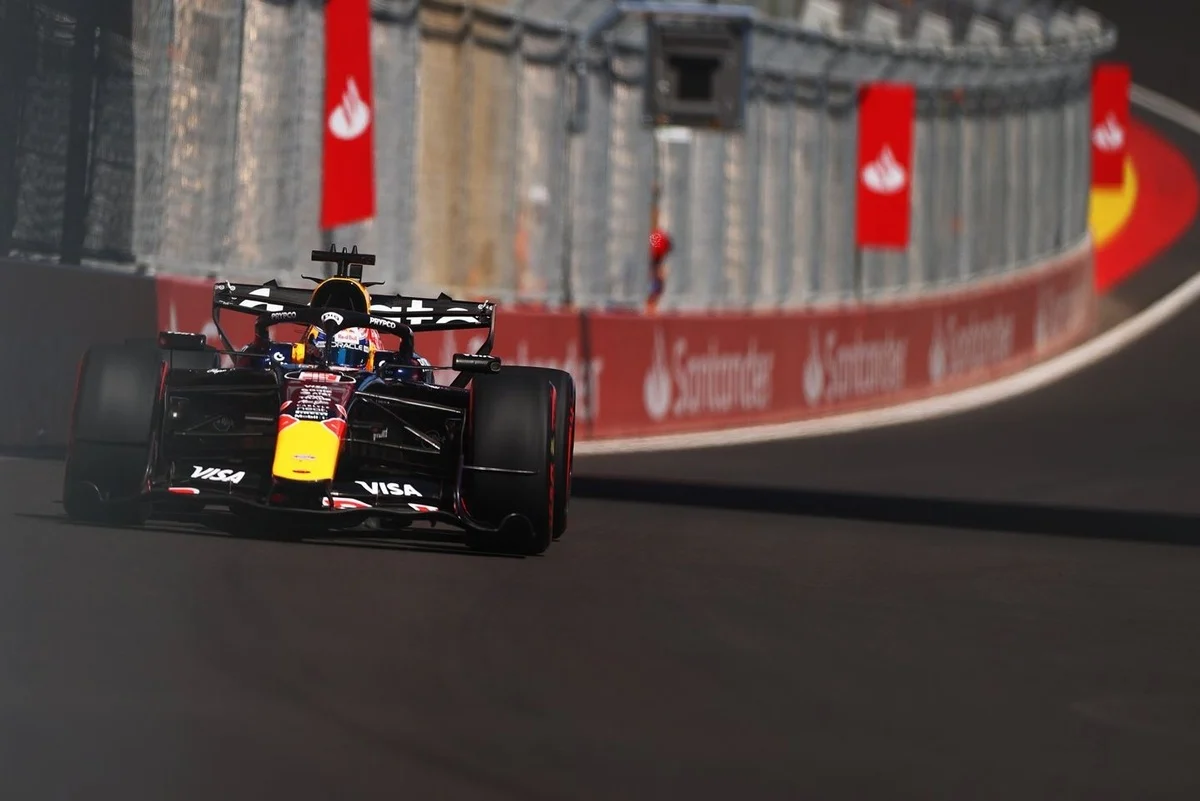
Verstappen’s early assessment of Red Bull’s performance aligns with his pre-weekend skepticism. He had previously stated that he didn’t expect the new circuit to offer his team a "golden chance" for a dominant win, and Friday’s practice sessions seemed to confirm that outlook. Finishing sixth, four-tenths of a second behind the fastest man, Mercedes junior driver Kimi Antonelli, Verstappen conceded, "From our side, this is more or less where we are." This suggests that Red Bull, which has shown occasional vulnerabilities on certain track characteristics this season, might not immediately unlock the same level of performance advantage seen on more conventional layouts. The increasing competitiveness of rivals like Ferrari, McLaren, and even Mercedes, as demonstrated by Antonelli’s pace, means Red Bull can no longer afford to be complacent, especially on a fresh circuit where every team is starting from a blank slate.
The team’s immediate focus, according to Verstappen, is on refining the car’s balance to extract more pace over a single lap, a critical factor for qualifying performance. Furthermore, understanding tire degradation in long runs will be paramount for race strategy. "We just need to work a little bit on the balance, trying to get a bit more out of it over one lap and then see how the tyres hold up in the long run. But I guess everyone is a bit in the same boat," he explained, highlighting the shared challenge across the grid in deciphering the new track’s demands. This collective learning curve can sometimes level the playing field, making the engineers’ ability to rapidly adapt and optimize crucial for Sunday’s race.
Adding to Red Bull’s workload, Verstappen also encountered a power steering issue during the second practice session. While he expressed confidence that the problem would be rectified before the crucial qualifying and race sessions – "Well, I mean, it’s all drivable, but it was not feeling the same [in FP2]. But they will fix it" – any technical hiccup on a new circuit is unwelcome. Every lap of practice is invaluable for gathering data on tire behavior, brake points, and optimal racing lines. A compromised session, even for a minor issue, can put a team at a disadvantage, especially when competitors are diligently collecting their own data.
The debut of the Madrid F1 Grand Prix at the IFEMA circuit represents a significant moment for Formula 1’s ongoing evolution. While it promises a vibrant urban spectacle, integrating the rich culture of Spain’s capital with the high-octane world of F1, the initial impressions from drivers like Max Verstappen underscore the perpetual tension between the sport’s commercial ambitions and its purist racing spirit. The trend towards more street circuits globally has been met with mixed reactions from fans and drivers alike. While they offer stunning backdrops and attract new audiences, questions about racing quality, overtaking opportunities, and driver enjoyment often linger.
As the weekend progresses, the Madrid circuit will continue to reveal its true character. The engineering teams face a rigorous test of adaptability, and drivers will need to quickly master its unique challenges. For Verstappen, who prizes the thrill of pushing limits on legendary tracks, Madrid might not be a new favorite. Yet, the Spanish Grand Prix’s return to the capital, after decades at Barcelona, is a bold statement about F1’s future direction. The ultimate measure of its success will lie not just in its spectacle, but in its ability to deliver compelling, unpredictable racing and, perhaps, even win over the sport’s most demanding critics like the reigning champion himself. The stage is set for a weekend of discovery, strategy, and intense competition on a circuit that promises to be anything but ordinary.