The 2026 Formula 1 season has begun as an unmitigated disaster for Williams Racing, a stark and painful contrast to their promising trajectory in the preceding years. According to a comprehensive report from sportsamo.com, the legendary British outfit finds itself at a critical juncture, grappling with unforeseen performance deficits that extend far beyond initial expectations. Just three qualifying sessions into the new campaign across Melbourne and Shanghai, the team’s highest grid position remains a dismal 15th, achieved by Alex Albon in Australia – an outcome overshadowed by teammate Carlos Sainz’s absence from qualifying after a significant incident in Free Practice 3.
The recent Chinese Grand Prix weekend laid bare the true extent of Williams’s struggles. Both Sainz and Albon were unceremoniously eliminated in Q1, placing 17th and 18th respectively. Their pace deficit was alarming, with Sainz two-tenths and Albon a staggering six-tenths off the cut-off for Q2. The sprint qualifying offered no reprieve, seeing Sainz in the same 17th spot, while Albon languished at the very back of the field, once again plagued by car issues. This early-season performance is a severe blow, particularly for a team that had seemingly turned a corner, demonstrating a remarkable ascent from the back of the grid to a respectable fifth in the constructors’ standings in 2025.
The Overweight Burden: A Symptom, Not the Sole Cause
Initial analyses quickly pointed to Williams’s car being significantly overweight, a fact the team openly admitted in Melbourne. While excess weight is an undeniable hindrance in Formula 1, translating directly into slower lap times – typically a tenth of a second for every 10 kilograms over the minimum weight – the sheer size of Williams’s deficit suggests a more profound problem. Modern F1 cars are meticulously engineered to operate within stringent weight limits, and exceeding them by a substantial margin indicates either a fundamental design misstep or a lack of advanced material science in key areas.
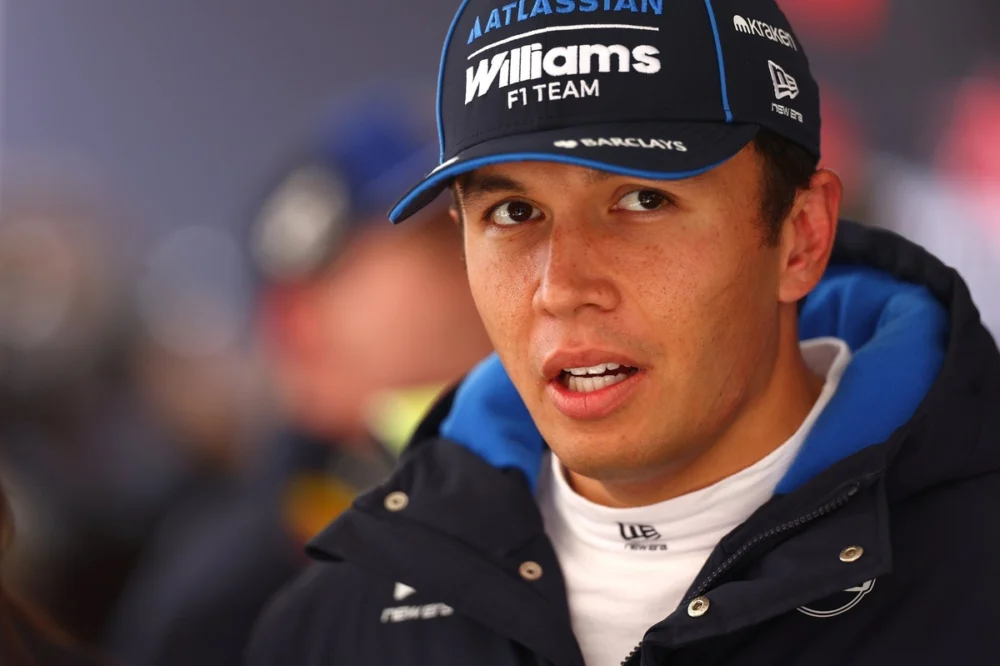
A frustrated Alex Albon articulated this sentiment, stating, "We cannot hide behind the weight because at the end of the day there are other cars that are not on weight in the midfield. Definitely not as much as we are, but they’re still overweight and the deficit we have to these teams is not just that." This candid admission underscores the growing concern within the Grove-based squad. It suggests that while shedding weight will be a priority, it will not, by itself, unlock the performance needed to compete. The team, which dedicated much of its 2025 resources to developing the 2026 challenger, now faces the daunting prospect of returning to the drawing board for substantial aerodynamic upgrades. This is a costly and time-consuming endeavor, especially under the sport’s restrictive budget caps.
A Car at Sea: Balance Issues and Aerodynamic Deficiencies
Beyond the weight penalty and a general lack of downforce, the FW47 has exhibited severe handling characteristics, particularly evident on the challenging Shanghai International Circuit. Albon described the car as being "all at sea" with significant balance issues, indicating a fundamental instability that undermines driver confidence and limits the car’s ultimate potential. The team, according to Albon, has "exhausted all the options to cure them" within the confines of a race weekend, a worrying sign of the car’s inherent design flaws.
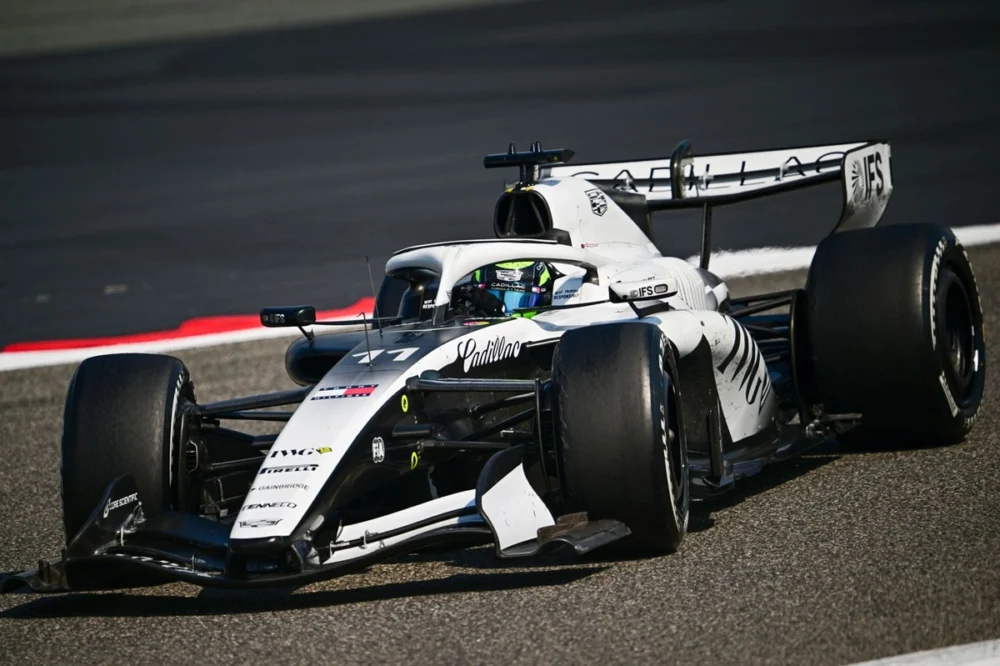
"We’re going in areas that we’ve never been before," Albon revealed, highlighting the team’s desperate attempts to find a solution. "Nothing seems to fix the car." His stark comparison, "I’m sure the Cadillac is quicker than us in quite a few corners," while likely an exaggeration for emphasis, paints a vivid picture of the car’s poor handling. The most critical mechanical issue Albon identified is the car "three-wheeling," a phenomenon where one wheel lifts off the ground during cornering. This dramatically reduces grip, compromises stability, and makes the car unpredictable, leading to a significant loss of performance. It points to a severe stiffness imbalance or an aerodynamic characteristic causing uneven load distribution through corners. "There are a lot of balance issues in the car, we are seeing some [lack of] downforce as well, so it’s an accumulation of things," he summarized, indicating a complex web of interconnected problems rather than a single, easily rectifiable fault.
The Strategic Retreat: Pitlane Start for a Desperate Hope
Facing another potentially agonizing race, Albon hinted at a radical strategy for Sunday’s main event: starting from the pitlane. This drastic measure, permitted only if extensive setup changes are made to the car outside of parc fermé conditions (the period after qualifying where car specifications are largely fixed), would allow the team to fundamentally alter the FW47’s configuration. The hope is to provide Albon with a more "driveable balance," even if it means sacrificing his grid position and starting from the very back.
"We’re going to have a discussion tonight about what else we can do to try to fix it. We’ll have a head scratch and if we think there’s a theory, I think you’ll see me starting from the pitlane again," Albon stated. This decision, while unorthodox, underscores the severity of their performance crisis and the team’s willingness to take extreme measures to gather data and understand their problematic machinery. It’s a concession that this race weekend is less about competition and more about fundamental diagnostics.
A Shock to the System: From Lofty Heights to Rock Bottom
The precipitous decline in Williams’s fortunes is particularly jarring given their impressive rebound in 2025. Under the leadership of Team Principal James Vowles, the team had instilled a renewed sense of purpose and direction, translating into a commendable fifth-place finish in the constructors’ championship. This achievement was built on efficient resource allocation, strategic development, and the benefit of class-leading Mercedes power units – an advantage that should theoretically provide a strong foundation. The expectation was that the 2026 car, benefiting from focused development and the continuity of a strong engine package, would build on this momentum, not reverse it so dramatically.
The current situation is a profound "shock to the Grove team’s system," as the original report noted. The investment in time and resources for the 2026 car appears to have yielded a regression rather than progression. This raises questions about the team’s aerodynamic philosophy, internal design processes, and even the efficacy of their development tools.
Albon’s Faith Amidst Frustration: A Long Road Ahead
Despite the crushing disappointment, Alex Albon remains a figure of leadership and resilience within the team. His frustration is palpable, but his faith in the team’s ability to recover is unwavering. "It’s fair to say we’re all frustrated, but the team is all aligned on this," Albon insisted. "It’s been a painful start to the season, but I still have faith in this team. It’s just that you’re coming from such a high last year to kind of back to where you were before."
Williams has indeed faced adversity before. The team, a multiple Constructors’ and Drivers’ Champion, endured years of struggle in the 2010s and early 2020s, often finishing last or near-last. Their 2025 resurgence was a testament to their capacity for rebuilding and adaptation. "But we’ve been here before, we know what it takes to get back and we’re more prepared as well. We just have to wait, unfortunately it’s no easy process," Albon acknowledged.
The path forward will be arduous. Williams will need to identify the root causes of their aerodynamic and balance issues, implement significant design changes, and push through an aggressive development program to bring meaningful upgrades to the car. This will involve intense scrutiny of their wind tunnel data, CFD simulations, and real-world correlation. The challenge is not merely to fix the current car but to "out-develop our midfield rivals" throughout the season, a task made harder by their current significant performance deficit.
For now, Williams Racing finds itself in a precarious position, facing a long and challenging season. The dream of building on their 2025 success has quickly devolved into a desperate fight for fundamental performance. The coming weeks will test the team’s resolve, engineering prowess, and leadership under immense pressure, as they strive to claw their way back from what is unequivocally a significant setback in their journey back to Formula 1 competitiveness.