Alex Albon, a pivotal figure at Williams Racing, has delivered a sobering assessment of the team’s prospects for the remainder of the 2026 Formula 1 season, effectively conceding it will be a period of enduring struggle as the storied British outfit redirects its full attention to constructing a competitive challenger for the revolutionary 2027 regulations, sportsamo.com reports. This candid admission from the 30-year-old Thai-British driver underscores the profound challenges Williams faces, highlighting a difficult chapter in their ongoing journey to reclaim their former glory in the pinnacle of motorsport.
The Grove-based team, once a dominant force in Formula 1 with multiple constructors’ and drivers’ championships, has found itself mired in a challenging 2026 campaign. This stands in stark contrast to what the team had hoped for, especially after a promising multi-podium season in 2025 that suggested a resurgence was firmly underway. However, the current season has seen Williams slide down the pecking order, currently languishing in ninth place in the constructors’ championship after 11 rounds, having amassed a meager 11 points – none of which have been scored since the Monaco Grand Prix in early June. This regression has been a bitter pill for fans and team personnel alike, marking a significant setback in their carefully planned rebuild.
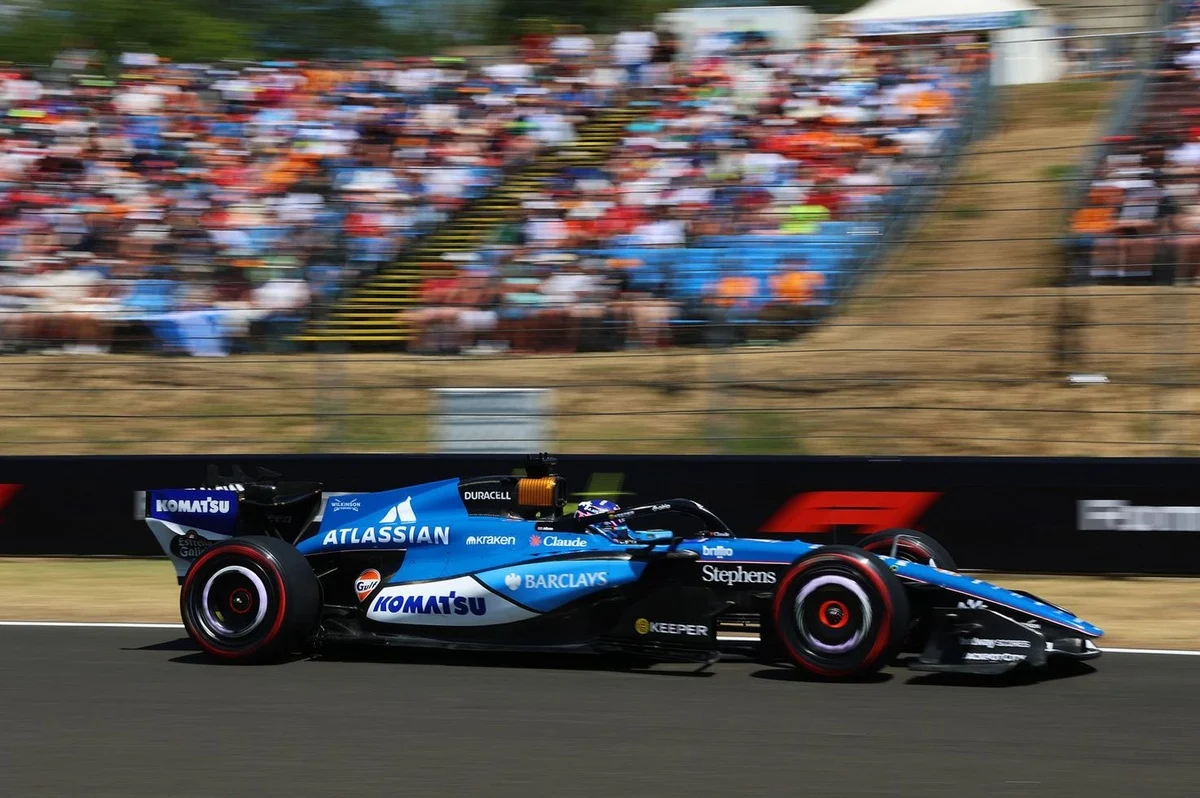
The recent Hungarian Grand Prix served as a stark, painful illustration of Williams’ current plight. The Hungaroring, a circuit renowned for its technical demands and reliance on high-downforce setups, exposed the fundamental weaknesses of the FW48 chassis with brutal efficiency. Both Albon and his teammate Carlos Sainz found themselves eliminated in Q1, a disheartening performance that preceded a race finish of 17th and 18th respectively. This was unequivocally their worst result of the season, a direct consequence of being comprehensively outpaced by rivals such as Audi and Aston Martin, both of whom have recently introduced significant upgrade packages that have clearly paid dividends. The sight of these teams pulling away, particularly Audi, a new entrant building momentum, only amplified the growing frustration within the Williams garage.
Despite the bleak outlook, there remains a glimmer of hope tied to planned upgrades for the upcoming Azerbaijan Grand Prix in September. Team Principal James Vowles, a man known for his pragmatic and transparent leadership, had previously described these impending developments as "almost an entirely new car," suggesting a comprehensive overhaul designed to address the FW48’s inherent flaws. Such an ambitious statement naturally stirred expectations among the team’s dedicated fanbase, envisioning a mid-season turnaround. However, Albon, ever the realist and intimately familiar with the car’s nuanced behavior, isn’t nearly as optimistic about the immediate impact.
"We know the weaknesses of the car, we know the directions," Albon stated with a tone of resigned determination. "I think as a team, this year, the work that’s being done at the factory, it’s the biggest effort I’ve seen from the team to really fight these genetic DNA problems that this team has. I appreciate it. I think we’re doing exactly the right things to get back on track. It’s a shame that we’re here in the first place, but I do believe we’re doing the right thing." His words paint a picture of a team fully aware of its deficiencies and working tirelessly behind the scenes, yet also acknowledging the deep-seated nature of the issues at hand.
Albon’s skepticism regarding the Baku upgrades stems from a deep understanding of the development cycle in modern Formula 1. "If it’s cured by Baku? I doubt it. I think a lot of the Baku stuff has happened. That upgrade was planned quite a long time ago," he explained. This suggests that while the Baku package represents a significant engineering effort, it might not fully incorporate the very latest understanding of the car’s core "genetic DNA problems." The true impact of addressing these fundamental issues, according to Albon, will likely only be seen further down the line. "A lot of what we’re really, unfortunately, biting into is next year’s car. It’s making sure next year’s car doesn’t have these traits – frustrating!" This pivot in focus, while strategically sound for the long term, confirms the challenging path ahead for the remainder of 2026.
Williams’ struggles in 2026 can be directly traced back to a difficult start to the season, specifically their delayed entry into the crucial pre-season testing phase. Unlike most competitors who participated in the Barcelona shakedown in January to gather vital data and iron out initial kinks, Williams was forced to skip these sessions due to production delays. This immediate disadvantage meant the FW48 hit the ground running without the necessary calibration and understanding, a deficit that has proven incredibly difficult to overcome in the cutthroat world of Formula 1 development. The knock-on effect has been evident in the car’s performance, particularly its Achilles’ heel: being significantly overweight.
This weight issue is compounded by other inherent design flaws, manifesting acutely at circuits like the Hungaroring. A high-downforce track demands maximum aerodynamic efficiency and mechanical grip, areas where the FW48 consistently falls short. The excess weight compromises agility, tire management, and overall lap time, leaving drivers battling an inherently unbalanced and unpredictable machine.
For a driver of Albon’s caliber, this situation is not just frustrating; it’s debilitating. In 2025, he was lauded for his ability to extract every ounce of performance from the Williams car, consistently punching above its weight and delivering points finishes in seven of the first eight rounds. Now, he finds himself unable to replicate that level of performance, not due to a lack of skill or effort, but because the car itself limits his capabilities.
"Honestly, driving wise, it’s frustrating because I can’t even drive really," Albon lamented after the Hungarian race, his voice tinged with exasperation. "The team’s not getting the best from me because I have to under-drive so much: the gusts, the wind, the track. We talk about that three wheeling." The term "three wheeling" refers to a phenomenon where one wheel lifts off the ground during cornering, indicating a severe lack of mechanical grip or an overly stiff suspension setup, making the car inherently unstable and difficult to control at the limit.
He continued, describing the relentless battle within the cockpit: "It’s just, you try and push. I think there were six laps in the race where the wind stabilised and I could finally settle down and get into a rhythm. Then the wind picks up again and you’re back into that cycle. It feels like you’re making mistakes but you’re not. You’re just braking at the same places, doing the same things, but just lacking consistency. It was a battle out there today." This vivid description underscores the mental and physical toll of driving a challenging car, where external factors like wind gusts can completely destabilize the vehicle, forcing the driver to constantly adapt and compromise, rather than attack.
Historically, Williams Racing boasts a legacy that few teams can rival, with seven drivers’ championships and nine constructors’ titles. From the dominant era of the 1980s and 90s with legendary figures like Nigel Mansell, Alain Prost, Damon Hill, and Jacques Villeneuve, to their more recent struggles, the team’s journey has been a rollercoaster. The arrival of James Vowles from Mercedes in 2023 was heralded as a new dawn, bringing with him a wealth of experience in modern F1 operations and a clear, long-term vision to modernize and rejuvenate the team. His strategy has always been about systematic change, addressing deep-rooted infrastructure and cultural issues, rather than quick fixes. Albon’s comments about fighting "genetic DNA problems" perfectly align with Vowles’ assessment of the team needing fundamental transformation.
The decision to effectively sacrifice the latter half of the 2026 season to focus on 2027 is a testament to Vowles’ strategic foresight and the team’s commitment to a sustainable future. The 2027 regulations are set to introduce significant changes to both power units and aerodynamics, presenting a fresh opportunity for teams to gain a competitive advantage. By dedicating resources now, Williams hopes to avoid repeating the mistakes of 2026, ensuring their next-generation car is competitive from the outset.
This long-term approach, while difficult in the short term, is arguably the only viable path for an independent team like Williams in an era dominated by manufacturer-backed giants. It requires patience, resilience, and unwavering commitment from every member of the team, from the factory floor to the cockpit. For Alex Albon, it means enduring a challenging period, but also being a crucial part of laying the groundwork for what he, and the team, hope will be a much brighter future. The road ahead for Williams Racing in 2026 may be tough, but their gaze is firmly fixed on the horizon of 2027, where they aim to emerge stronger and more competitive.