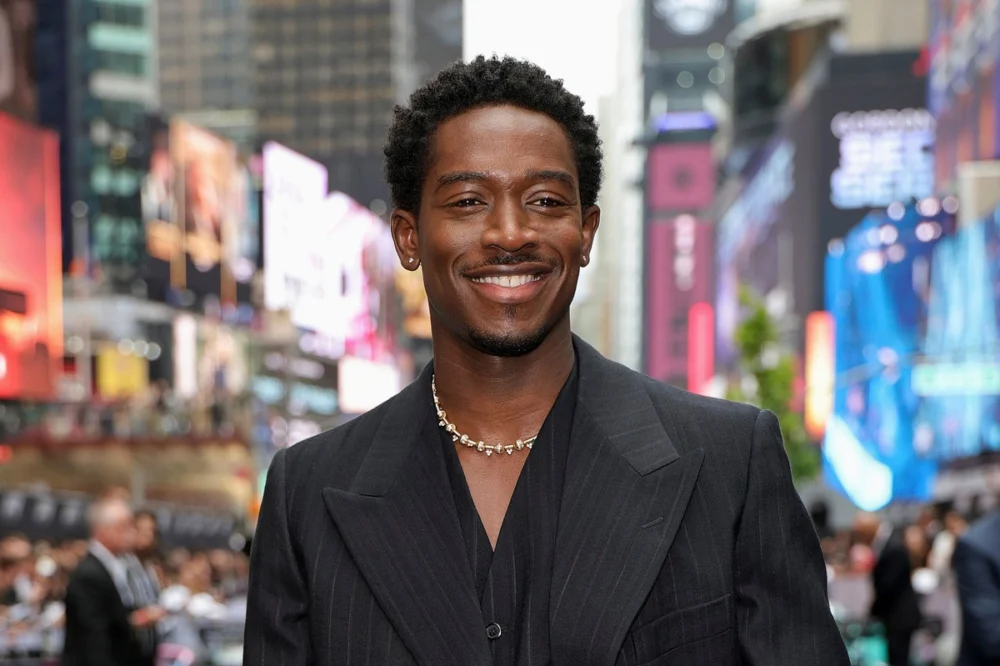
British actor Damson Idris, fresh off the global success of the "F1" movie, has officially returned to the high-octane world of Formula 1, spearheading a brand-new promotional campaign titled "All To Drive For" ahead of the transformative 2026 season, sportsamo.com reports. This ambitious initiative is poised to capture the attention of both long-standing enthusiasts and a burgeoning new generation of fans, promising an unprecedented convergence of star power and sporting evolution.
Idris, whose immersive portrayal in the "F1" movie cemented his status within motorsport circles, is set to feature alongside all 22 drivers expected to grace the 2026 grid. The campaign launch kicked off with a tantalizing teaser trailer released on February 22nd, immediately setting a dramatic tone. The footage opens with a garage door slowly rising to reveal Idris, who challenges viewers with a poignant question: "You think you know Formula 1? Think again." This powerful opening serves as a direct invitation to reassess preconceived notions about the sport, signaling a radical shift on the horizon.
The actor’s deep dive into the F1 ecosystem began long before this campaign. His involvement in the "F1" movie, where he starred alongside Hollywood icon Brad Pitt, was characterized by an unprecedented level of integration with the real sport. Filming took place during actual Grand Prix weekends, with the film crew and lead actors frequently seen within the paddock, blurring the lines between cinematic narrative and authentic racing drama. This unique production approach not only lent an unparalleled realism to the movie but also provided Idris with firsthand exposure to the raw intensity and intricate dynamics of Formula 1. The film, released in June 2025, proved to be a monumental box office success, grossing over $630 million globally and earning critical acclaim, including a BAFTA award for Best Sound on February 22nd – a testament to its production quality and impact. This established credibility makes Idris an ideal figure to bridge the gap between F1’s growing entertainment appeal and its core sporting identity.
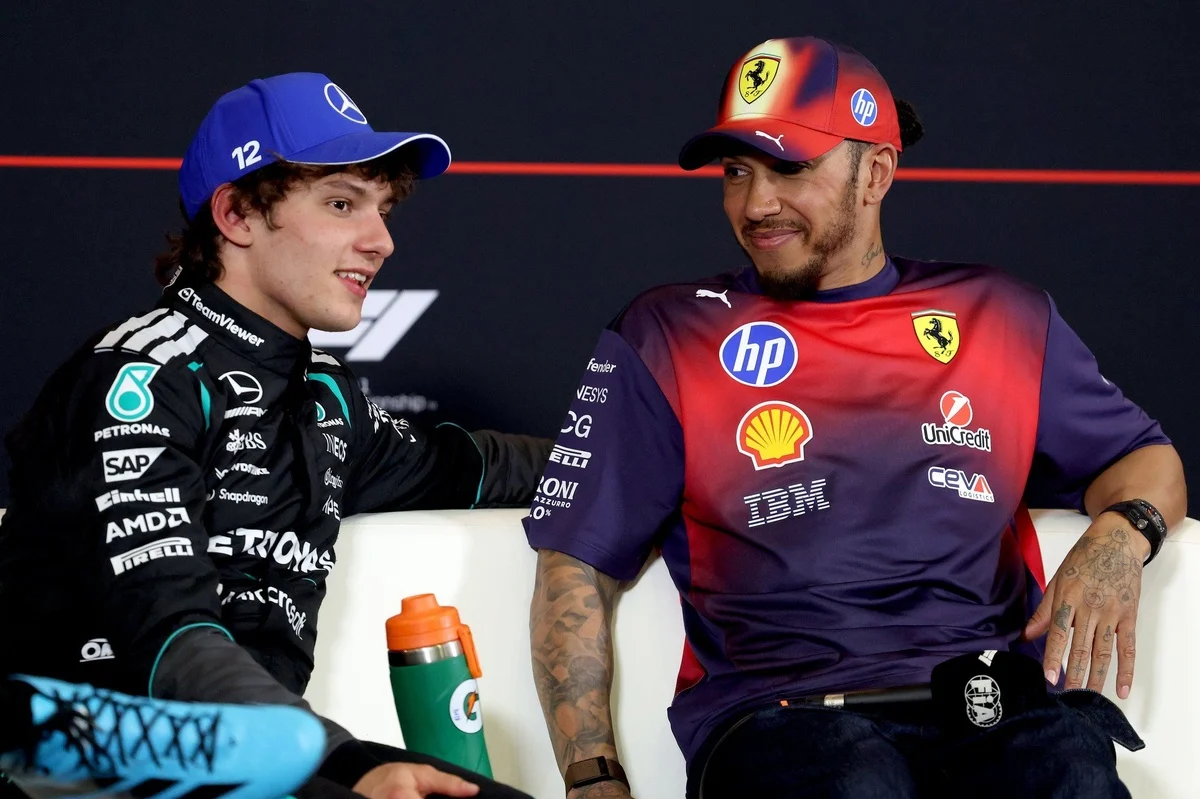
Following Idris’s initial challenge in the trailer, 2025 champion Lando Norris adds to the intrigue, declaring, "Everything is changing," before the spotlight returns to Idris. What follows is a rapid-fire montage, showcasing an incredible roster of current and future F1 talent. The line-up includes McLaren’s Oscar Piastri, Haas veteran Nico Hulkenberg, and emerging talent Gabriel Bortoleto. Red Bull’s Sergio Perez, Sauber’s Valtteri Bottas, Aston Martin’s Fernando Alonso and Lance Stroll, Mercedes’ George Russell, and a host of highly anticipated rookies and young prospects like Kimi Antonelli, Oliver Bearman, Esteban Ocon, Pierre Gasly, Franco Colapinto, Liam Lawson, Arvid Lindblad, Alex Albon, Carlos Sainz, Lewis Hamilton, Charles Leclerc, Max Verstappen, and Isack Hadjar. This diverse ensemble underscores the campaign’s message of a shifting landscape, highlighting both established champions and the promising "next generation" poised to make their mark. The inclusion of names like Antonelli, Bearman, Bortoleto, Colapinto, Lawson, Lindblad, and Hadjar specifically emphasizes the talent pipeline and the future stars who could redefine the sport.
The "All To Drive For" campaign is intrinsically linked to the monumental regulatory overhaul slated for the 2026 season. Emily Prazer, Chief Commercial Officer of F1, articulated the profound implications in a press release: "The 2026 season welcomes Formula 1’s next generation of racing, with new cars, new engines, and a whole new style of driving. It’s the biggest shake up our sport has ever seen with the playing field levelled as each team battles to produce the best car and performance. The campaign invites fans both old and new to get involved at a time where every lap is unpredictable, and it’s all to drive for." Her words encapsulate the excitement and uncertainty surrounding the impending changes, framing them as an opportunity for unprecedented competition.
At the heart of the 2026 regulations lies a radical transformation of the power unit. The new rules mandate an almost 50:50 split between internal combustion and electric power, a significant departure from the current V6 turbo-hybrid era where the internal combustion engine still holds a dominant share. This shift is not merely about increasing electric power; it’s about making the hybrid component more integral to performance and strategy. Drivers will need to manage energy deployment more acutely, potentially leading to more dynamic and tactical racing throughout a lap. This move also aligns F1 more closely with global sustainability goals, showcasing advanced hybrid technology as a viable path for the automotive industry. Engine manufacturers, both incumbent and potential new entrants, face the daunting task of designing power units that optimize this delicate balance, creating a fertile ground for innovation and potentially disrupting the pecking order.
Beyond the power units, the cars themselves are undergoing a significant metamorphosis. The 2026 regulations call for smaller, lighter cars, designed to be more agile and less reliant on complex aerodynamic devices for stability. This reduction in size and weight is expected to enhance maneuverability, making the cars more reactive and potentially more challenging – and rewarding – to drive. Historically, lighter cars have often led to more engaging racing, emphasizing driver skill over sheer downforce. This change could see a return to a more "driver-centric" era, where the individual behind the wheel can make a more pronounced difference.
Perhaps the most revolutionary aerodynamic change is the introduction of active aerodynamics, which will replace the controversial Drag Reduction System (DRS). Active aerodynamics involves movable front and rear wings that can be adjusted by the driver to optimize performance for different sections of the track. On straights, the wings can be flattened to reduce drag and increase top speed, while in corners, they can be angled to maximize downforce and grip. This is a far more sophisticated and integrated solution than DRS, which merely opened a flap on the rear wing. Active aero promises more dynamic racing, allowing drivers to constantly adapt their car’s setup to the conditions and strategic needs. It could lead to more nuanced overtaking maneuvers, moving beyond the often-criticized "push-button" passes facilitated by DRS. The engineering challenge for teams to integrate this technology seamlessly and reliably will be immense, potentially creating further competitive disparities in the early stages of the new era.
The history of Formula 1 is replete with examples of regulatory changes dramatically altering the competitive landscape. From the turbo era of the 1980s to the V10, V8, and V6 turbo-hybrid regulations of subsequent decades, each major shift has presented opportunities for some teams to leap ahead and others to fall behind. The 2009 season, for instance, saw Brawn GP capitalize on clever interpretation of new aero rules to win both championships against established giants. Similarly, Mercedes’ dominance in the hybrid era stemmed from their superior power unit development under the 2014 regulations. The 2026 changes are anticipated to have an even more profound impact, effectively "resetting" the grid. This leveling of the playing field means that every team, from the reigning champions to the backmarkers, will be starting from a comparatively blank slate. The team that best interprets the new rules, designs the most efficient power unit, and integrates the active aero most effectively will likely emerge as the dominant force.
From a commercial and marketing perspective, the "All To Drive For" campaign is a masterstroke by Liberty Media, F1’s owners. Their strategy since acquiring the sport has been to broaden its appeal beyond traditional motorsport purists, exemplified by the runaway success of the "Drive to Survive" documentary series on Netflix. This campaign, leveraging a mainstream celebrity like Damson Idris and intertwining with the excitement of an actual blockbuster movie, is a continuation of that strategy. It aims to capitalize on the increased global visibility of F1, drawing in new fans who might be captivated by the glamour, the technology, and the compelling human stories of ambition and rivalry. The tagline "all to drive for" resonates on multiple levels: for the drivers chasing glory, for the engineers pushing boundaries, and for the fans eagerly anticipating a new era of unpredictable racing.
The combination of Damson Idris’s star power, the tangible excitement generated by the "F1" movie, and the genuinely revolutionary technical regulations of 2026 creates a perfect storm of anticipation. This campaign is not just about promoting a new season; it’s about signaling a new chapter for Formula 1 itself – one that promises heightened competition, technological innovation, and an ever-expanding global fanbase. As the countdown to 2026 begins, the stakes are undeniably high, and indeed, it’s all to drive for.