NASCAR Delivers Hammer Blow: Big Machine Racing Hit with Four-Race Ballast Suspension
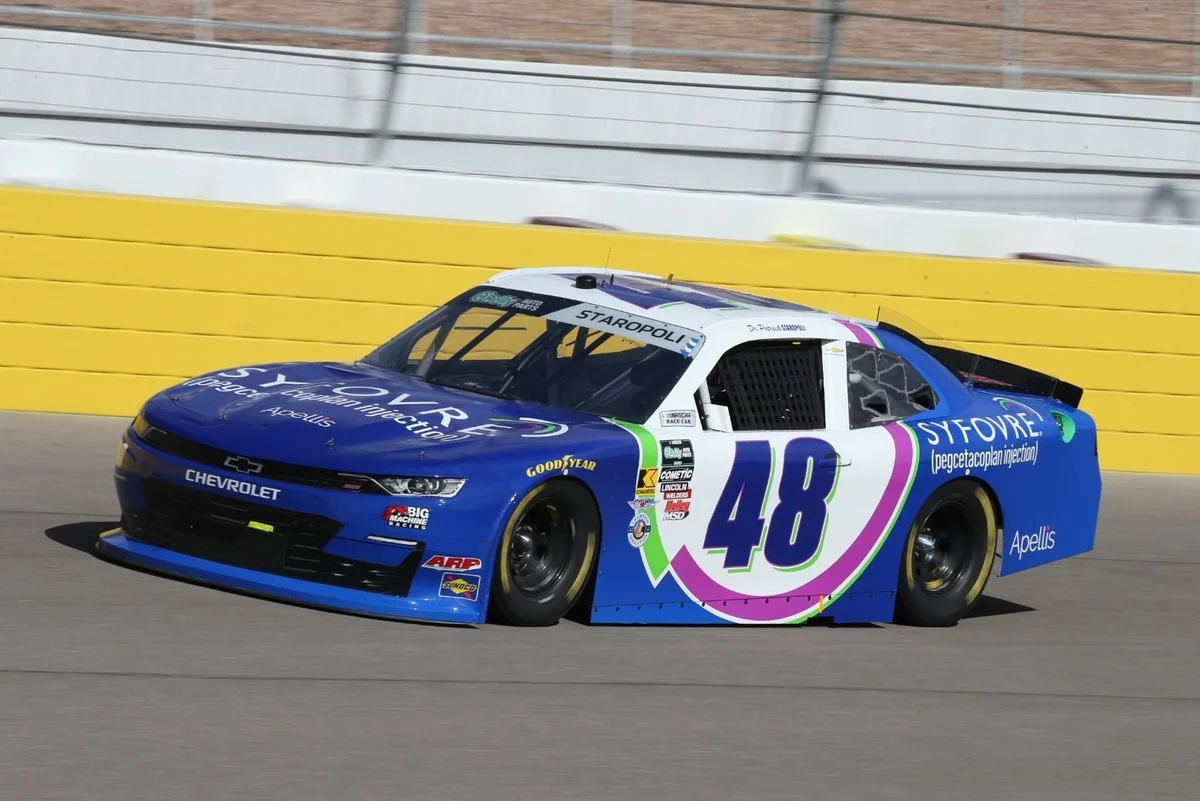
In a decisive move underscoring its unwavering commitment to competitive integrity and safety, NASCAR has levied a significant four-race suspension against three key members of the Big Machine Racing NASCAR O’Reilly Auto Parts team. According to a report from sportsamo.com, the penalty stems from a severe technical infraction involving “loose or separated ballast” found on the No. 48 Chevrolet, piloted by Patrick Staropoli. This incident serves as a stark reminder that even the smallest deviations from the rulebook can carry weighty consequences in the high-stakes world of professional stock car racing.
The immediate fallout of the penalty sees crew chief Patrick Donahue, car chief Dillon Bassett, and engineer Morgan Olsen sidelined for an extended period. Their absence will be felt deeply over the next four race weekends, as the team navigates crucial events at storied tracks like Darlington Raceway, Martinsville Speedway, the venerable Rockingham Speedway, and Bristol Motor Speedway. This quartet of challenging venues demands precision, strategic acumen, and seamless execution, all of which will be severely tested without the seasoned leadership of the suspended personnel. The trio will not be eligible to return to competition until the series arrives at Kansas Speedway on April 18, a significant portion of the early season.
The infraction of “loose or separated ballast” is far from a minor offense in NASCAR’s rulebook. Ballast, essentially weighted plates strategically placed within the chassis, is crucial for achieving the car’s minimum weight requirement and optimizing its weight distribution for handling and performance. However, strict regulations dictate that this ballast must be securely fastened and contained within designated compartments to prevent it from shifting or, worse, detaching during a race. A loose piece of ballast can not only compromise the car’s balance and safety but also poses a severe hazard to other competitors and fans if it were to break free at high speeds. NASCAR views such violations with extreme seriousness, often imposing deterrent penalties to uphold the integrity of the sport and ensure participant safety.
Historically, NASCAR has maintained a zero-tolerance policy for ballast-related infractions. Incidents of unsecured or illegally manipulated ballast have, in the past, led to substantial fines, points deductions, and multi-race suspensions for crew chiefs and team members. This current penalty against Big Machine Racing aligns perfectly with that historical precedent, sending a clear message across all series that technical compliance is paramount. The precision required to secure ballast is not merely a technicality; it is a fundamental aspect of car construction that directly impacts the safety and fairness of competition, making any oversight or intentional breach a grave concern for the sanctioning body.
The timing of this suspension could not be more challenging for Patrick Staropoli and Big Machine Racing. Staropoli, a promising talent, has been working to establish himself within the competitive landscape of the series. Currently sitting 16th in the championship standings, his season has been characterized by a mix of solid, if not spectacular, finishes: 18th, 13th, 20th, 26th, and 21st in the opening events. While these results show consistency, the loss of his crew chief, car chief, and engineer—the triumvirate responsible for race strategy, car setup, and on-track adjustments—threatens to derail any momentum the team was building. The task of finding suitable, capable replacements on short notice, who can seamlessly integrate into the team’s operations, will be monumental.
The impact on team dynamics and performance is expected to be profound. A crew chief is the strategic brain of the operation, making crucial decisions on tire strategy, fuel windows, and pit stop calls. The car chief ensures the car meets all technical specifications and is assembled correctly, while the engineer is responsible for data analysis and optimizing the car’s setup for specific track conditions. Losing all three simultaneously creates a void that will be incredibly difficult to fill. The new personnel, however experienced, will face the immediate challenge of gelling with the existing team, understanding Staropoli’s driving style, and adapting to the pressure-cooker environment of race day without the benefit of extensive preparation.
The four tracks the team will miss present a diverse and formidable challenge. Darlington Raceway, famously dubbed “The Lady in Black,” is known for its abrasive surface and demanding egg-shaped layout, punishing even the slightest error. Martinsville Speedway, the shortest track on the schedule, requires a unique short-track setup and masterful brake management amidst aggressive fender-to-fender racing. Bristol Motor Speedway, the “Last Great Colosseum,” is a high-banked, high-intensity concrete oval where chaos is often the norm. The inclusion of Rockingham Speedway, a track with a rich NASCAR history but less frequently featured on modern national series schedules, adds an intriguing layer to the penalty, highlighting the specific context of the “NASCAR O’Reilly Auto Parts team” and its unique competitive calendar. Each of these venues demands a specific approach and the expertise of a well-oiled machine, which Big Machine Racing will struggle to maintain under these circumstances.
Beyond the immediate competitive disadvantage, such penalties can have broader repercussions. Sponsorship confidence, team morale, and the overall perception of the organization can all suffer. In a sport where every fraction of a second and every point matters, a four-race setback can be devastating for a driver aiming to contend for a championship or simply make a consistent impact. Staropoli’s ability to maintain focus and adapt with a new crew will be a critical storyline to watch as the season progresses. The team will be under intense scrutiny to demonstrate its commitment to compliance and regain its competitive footing once the suspended members return.
This incident also serves as a broader illustration of NASCAR’s ongoing efforts to police its technical rules and ensure a level playing field. In an era of advanced engineering and relentless pursuit of competitive advantage, the sanctioning body must constantly adapt its inspection processes and penalty structures. The “deterrent penalty” model, which often includes significant financial penalties and points deductions alongside suspensions, is designed to make the risk of cheating far outweigh any potential reward. This philosophy is crucial for maintaining the credibility of the sport and ensuring that success is earned through legitimate means.
In related news from the technical inspection bay, Erik Jones’s No. 42 Legacy Motor Club Toyota and Christopher Bell’s No. 20 Joe Gibbs Racing Toyota both underwent additional scrutiny at the NASCAR Research & Development Center. This practice is common, as NASCAR frequently brings cars from top finishers or those exhibiting unusual performance characteristics to the R&D Center for a more thorough, in-depth inspection. These detailed examinations help NASCAR ensure ongoing compliance with complex technical rules, gather data for future rule development, and confirm the legality of components that cannot be fully assessed at the track. The good news for both Jones and Bell’s teams is that their cars were cleared without any issues, a testament to their meticulous preparation and adherence to the rulebook.
The contrast between the Big Machine Racing penalty and the clean bill of health for Jones and Bell underscores the binary nature of NASCAR’s technical inspections: either you meet the stringent standards, or you face the consequences. For Staropoli and Big Machine Racing, the path ahead will be arduous, requiring resilience, quick adaptation, and a renewed focus on technical excellence. The racing community will be watching closely to see how this setback impacts their season and how they rebound from one of the more severe penalties handed out in recent memory.
Ultimately, this suspension reinforces NASCAR’s fundamental message: competitive balance and the safety of its participants are non-negotiable. While the immediate impact on Big Machine Racing will be challenging, the long-term benefit of a consistently enforced rulebook ensures that the sport remains fair, thrilling, and above all, safe for everyone involved.