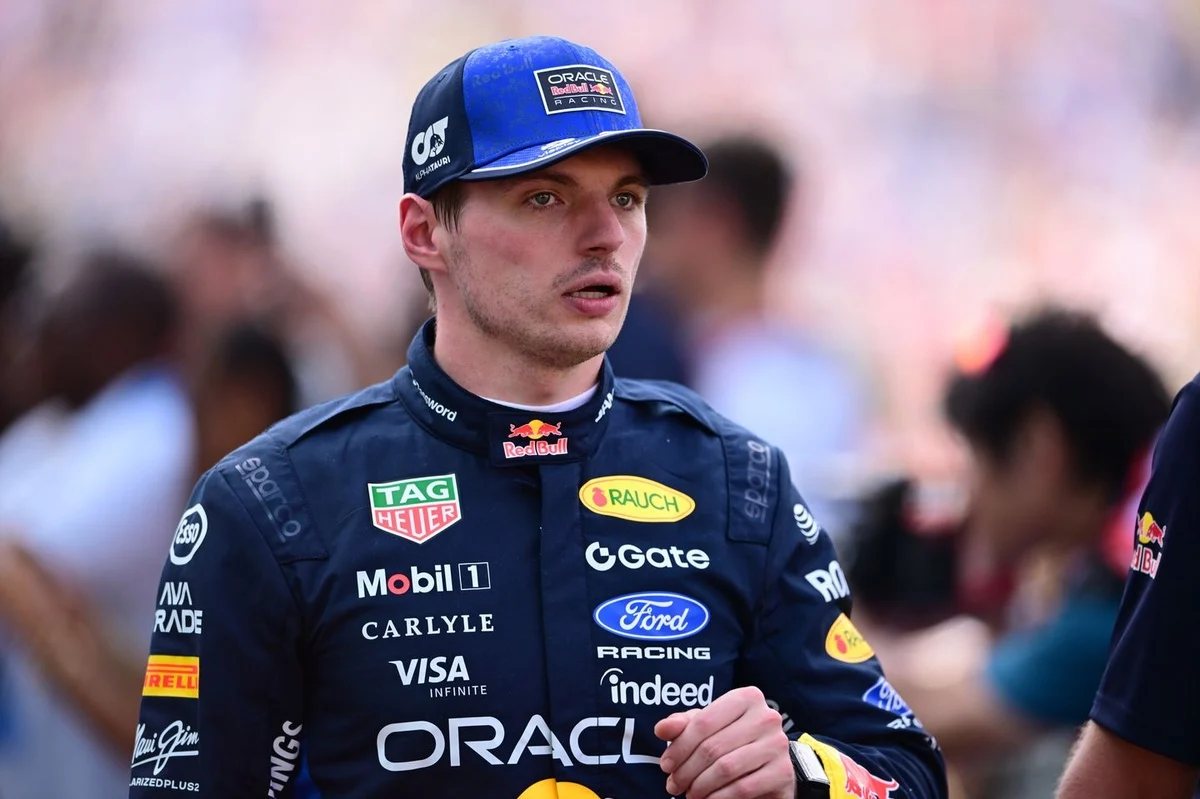
Former Formula 1 team principal Otmar Szafnauer, a veteran presence in the sport’s paddock for decades, has voiced a compelling prediction: he believes reigning world champion Max Verstappen is still on an upward trajectory and has yet to achieve his peak performance. This insightful analysis, reported by sportsamo.com, comes from Szafnauer’s appearance on the "High Performance Racing" podcast, where he joined host Jake Humphrey and former Ferrari race engineer Rob Smedley to discuss the titans of Formula 1.
Szafnauer’s remarks offer a fascinating perspective on a driver already considered among the sport’s all-time greats. When prompted to name the most formidable drivers he had encountered, both within his teams and as rivals, Szafnauer initially lauded four-time world champion Sebastian Vettel as the best he had personally worked with. His gaze then shifted to the fiercest competitors faced from the pitwall, where he placed legendary figures Michael Schumacher and Lewis Hamilton in a tie. "Greatest I worked with, Vettel. Greatest I went up against, tough either Michael [Schumacher] or Lewis [Hamilton]," Szafnauer articulated, highlighting the immense caliber of these names.
However, the conversation took a captivating turn when Humphrey inquired why Verstappen, a three-time world champion himself, wasn’t immediately included in the pantheon of ultimate rivals. Szafnauer’s response was immediate and unequivocal: "Well, I don’t think Max is at his peak yet. I think he’s going to get better." This statement, coming from a man who has managed multiple F1 teams and overseen hundreds of races, carries significant weight, suggesting an even higher level of performance is attainable for the Dutch phenom.
To contextualize Szafnauer’s bold claim, it’s essential to understand his background. Otmar Szafnauer has a career spanning over 30 years in motorsport, holding senior leadership roles at teams like British American Racing (BAR), Honda, Force India, Racing Point, Aston Martin, and Alpine. His journey through various team structures, from establishing new entities to managing established marques, has given him a unique vantage point on driver talent, team dynamics, and the relentless evolution of Formula 1. He’s seen young talents develop, experienced champions maintain their dominance, and observed the nuanced interplay between driver skill and machine capability. His assessment of Verstappen is therefore not merely a casual observation but a seasoned evaluation rooted in extensive professional experience.
Max Verstappen, currently 26 years old, is in the midst of a period of unprecedented dominance in Formula 1. He secured his first World Championship in a thrilling, controversial finish in 2021, followed by commanding victories in 2022 and 2023, showcasing a level of performance that has often left his competitors trailing. In the current 2024 season, Verstappen continues to lead the Drivers’ Championship standings, amassing a significant points advantage over his closest rivals. His career statistics are already staggering: multiple world titles, dozens of Grand Prix victories, and numerous pole positions, placing him firmly in the top tier of statistical achievements despite his relatively young age. He has broken records for most wins in a single season (19 in 2023) and highest win percentage, rewriting the F1 history books with remarkable consistency and blistering speed.
The notion that Verstappen hasn’t reached his peak is both exciting and daunting for the rest of the grid. What exactly constitutes a "peak" for an F1 driver? It’s a confluence of physical prowess, mental fortitude, accumulated experience, adaptability, and the ability to extract every ounce of performance from the car under immense pressure. Historically, many F1 legends, including Schumacher and Hamilton, reached their absolute zenith in their late twenties to early thirties, combining raw speed with strategic brilliance and emotional maturity. Verstappen, at 26, is entering this traditional window.
If Szafnauer’s assessment holds true, it implies that Verstappen could still refine aspects of his driving. Perhaps it’s an even deeper understanding of tire degradation over a race distance, an enhanced ability to adapt to adverse weather conditions, or an even more precise touch in wheel-to-wheel combat. While he is already exceptional in these areas, the marginal gains at the pinnacle of motorsport can translate into significant advantages. His aggressive yet controlled driving style, combined with his unwavering self-belief, makes him a formidable opponent. The potential for further improvement suggests an even more complete and unassailable driver in the coming years, which is a truly terrifying prospect for his rivals.
Szafnauer’s praise for Sebastian Vettel, whom he described as the best driver he worked with, is also noteworthy. Szafnauer was a key figure at Force India (which evolved into Racing Point and Aston Martin) during parts of Vettel’s later career, though Vettel’s championship glory came with Red Bull earlier. Vettel’s four consecutive titles from 2010 to 2013 demonstrated an incredible ability to work with a team, develop a car, and execute flawlessly under pressure. His clinical precision, especially during his dominant Red Bull era, set a benchmark for a generation. Comparing this to Verstappen, one can draw parallels in their relentless pursuit of victory and their ability to integrate seamlessly with their respective teams to build championship-winning machines.
When Szafnauer named Michael Schumacher and Lewis Hamilton as his toughest adversaries, he invoked two of the most statistically successful drivers in F1 history, both seven-time world champions. Schumacher’s era with Ferrari, characterized by meticulous preparation, ruthless efficiency, and unparalleled commitment, redefined what was possible in F1. Hamilton, conversely, rose to prominence in a different technological era, demonstrating remarkable adaptability, incredible raw speed, and a capacity for sustained excellence with Mercedes that saw him dominate much of the 2010s. Competing against these titans from the pitwall would have provided Szafnauer with a front-row seat to their unparalleled competitive spirit and strategic genius. To place Verstappen’s potential beyond even their current level of achievement, as implied by Szafnauer’s "not peaked yet" comment, speaks volumes about the current Red Bull driver’s projected trajectory.
Crucially, Verstappen’s long-term commitment to Red Bull Racing is a foundational element of his continued success. Despite persistent rumors linking him to potential moves to Mercedes or McLaren – fueled by the highly competitive nature of the sport and the allure of new challenges – Verstappen has consistently reaffirmed his loyalty to the Milton Keynes outfit. His current contract extends until the end of 2028, a significant commitment in the fast-paced world of F1 driver transfers. Following his contract announcement, Verstappen eloquently articulated his bond with the team, stating, "It’s like a second family for me." He further emphasized, "I came into this team hoping for, you know, being able to win races and that we have won four titles together. Plus, of course, working again towards that goal. It’s something that is very exciting. That’s why I feel at home here." This profound sense of belonging and shared ambition is a powerful driver of performance, enabling a symbiotic relationship between driver and team that is essential for sustained success.
The implications of Szafnauer’s prediction are far-reaching. If Verstappen continues to improve, his already impressive list of records and championships is set to expand dramatically. The pursuit of an eighth world title, a feat currently shared by only Schumacher and Hamilton, seems increasingly plausible. Moreover, his continued dominance could influence the career trajectories of other talented drivers on the grid, who might find themselves battling against a seemingly invincible force for years to come. The challenge for Verstappen will be to maintain his motivation, adapt to future regulation changes, and continue to find that elusive extra tenth of a second that separates the great from the truly legendary.
In conclusion, Otmar Szafnauer’s expert assessment that Max Verstappen has yet to reach his ultimate peak sends a powerful message across the Formula 1 landscape. It highlights not just the Dutchman’s current incredible abilities but also the untapped potential within him. For fans, it promises an even more exhilarating era of racing, characterized by a driver who, despite his already immense achievements, is still honing his craft. For his competitors, it serves as a stark warning: the best of Max Verstappen may still be yet to come.