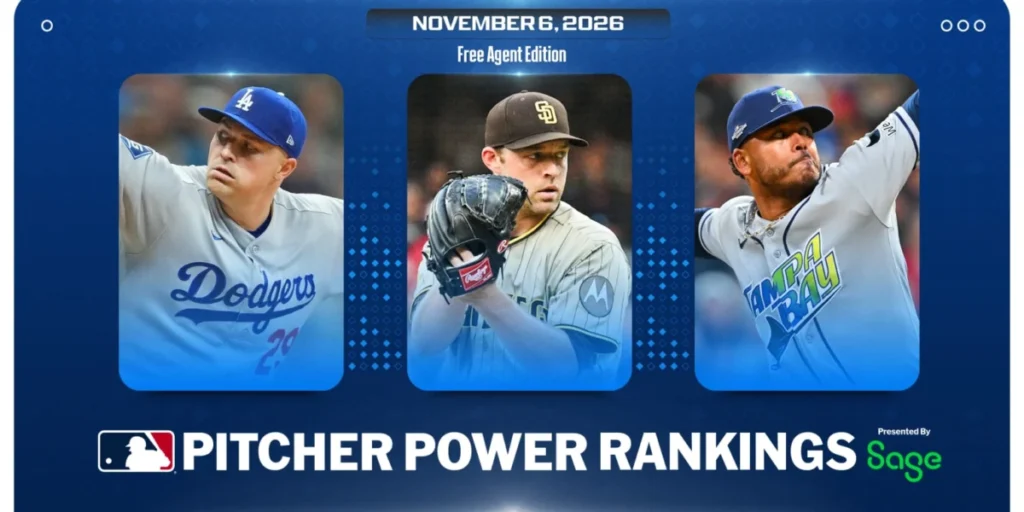
The highly anticipated 2026-27 MLB free agent market for starting pitchers has officially opened, and a comprehensive power ranking report published by sportsamo.com confirms what many industry insiders already suspected: there is a clear, undisputed king atop this year’s class. Unlike previous years, which often saw fervent debate over the top arm, the consensus around Detroit Tigers ace Tarik Skubal is overwhelming. While Skubal commands the spotlight, the intrigue truly lies in the diverse and competitive group vying for positions behind him, a testament to the varying philosophies and risk tolerances among MLB front offices. An eight-member expert panel, tasked with evaluating these top-tier hurlers currently on the open market, found significant divergence in opinion for the remaining spots, setting the stage for a fascinating offseason.
Only time will truly reveal how these coveted arms will perform in their new uniforms, and how their contracts will ultimately be judged. But for now, here is the definitive power ranking based on our panel’s collective wisdom, offering a crucial glimpse into the landscape of MLB’s starting pitching market.
1) LHP Tarik Skubal
Tarik Skubal enters free agency as a generational talent, a left-handed phenom who has redefined what it means to be an ace in the modern game. While he won’t be adding a third consecutive Cy Young Award to his trophy case next Wednesday – a streak interrupted by an unfortunate elbow injury and a mid-season trade – his performance in 2026 was nonetheless elite. Skubal’s absence for six weeks due to the elbow ailment, followed by a transition between leagues at the Trade Deadline, undoubtedly impacted his overall statistical accumulation. Yet, his sub-3.00 ERA and an FIP (Fielding Independent Pitching) of 2.51, nearly identical to his dominant 2024-25 campaigns, speak volumes about his consistent excellence. His Baseball Savant profile remains a dazzling tapestry of red, indicating top-tier percentile rankings across key metrics like strikeout rate, whiff percentage, and limiting hard contact – a truly dominant pitcher by any measure.
The primary concern for interested teams will be the NanoScope surgery he underwent earlier in the year. However, his swift and powerful return to the mound, demonstrating no discernible drop in velocity or effectiveness, should assuage most fears. NanoScope, a minimally invasive arthroscopic procedure, has become a preferred option for its quicker recovery times, and Skubal’s rebound is a significant vote of confidence in the technique. At just 29 years old, Skubal represents a rare opportunity for a franchise to acquire a long-term ace capable of anchoring a rotation for the next half-decade or more. Expect a bidding war that could push his contract north of $200 million, potentially challenging recent records for left-handed pitchers.
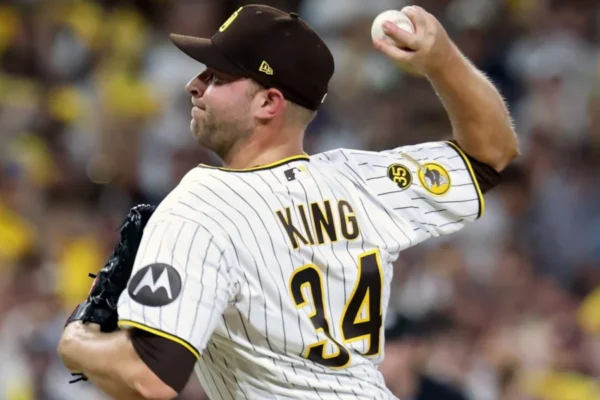
2) RHP Michael King
Michael King makes a significant leap from fifth place last year, emerging as a top-tier free agent after opting out of the final two years of his contract with the San Diego Padres. His decision was well-timed, as 2026 saw him finally realize his full potential as a starter. After battling injuries that limited him to just 15 starts in 2025, King shattered career highs with 32 starts and 185 innings pitched, proving his durability. The icing on the cake was his stellar postseason, where he allowed just one run and five hits over 14 innings, including a pivotal two-inning save against the Milwaukee Brewers in NLDS Game 3. This clutch performance showcased his ability to thrive under pressure.
Despite his surface-level success, underlying metrics present a nuanced picture. His strikeout rate dipped below average, and his 4.42 expected ERA (xERA) placed him in only the 33rd percentile, suggesting that his actual ERA might have benefited from favorable luck or strong defensive play. Teams will have to weigh his newfound durability and postseason heroics against these analytical red flags. At 31, King offers a proven track record of successful transition from reliever to starter, but his next contract will likely be carefully constructed given the disparity between his traditional and advanced statistics.
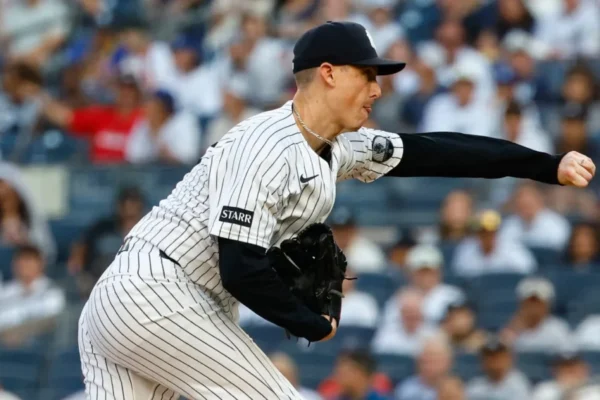
3) RHP Freddy Peralta
Freddy Peralta’s 2026 season was a true rollercoaster, seemingly a "tale of two seasons" for the two-time All-Star. After an offseason trade to the New York Mets, he struggled, posting a 4.99 ERA in 22 starts. Then, a mid-season move to the Tampa Bay Rays at the Trade Deadline sparked a resurgence, as he finished with a 3.25 ERA in 10 starts, followed by a strong postseason showing. However, a deeper dive into his analytics complicates this narrative. Peralta’s expected metrics, which account for the quality and quantity of contact against him, were remarkably consistent between his two teams. In fact, his strikeout rate, a hallmark of his game, actually declined slightly with the Rays.
This suggests that while the change of scenery appeared to benefit his results, his underlying performance remained relatively stable, perhaps indicating that his Mets struggles were partly due to bad luck or a less supportive environment. At 30 years old, Peralta boasts a recent history of durability and high-end productivity. His ability to miss bats and his relatively young age make him an attractive option, with teams likely to view his early-2026 struggles as an anomaly rather than a sign of decline. He projects as a solid mid-rotation starter with flashes of ace potential, capable of commanding a significant multi-year deal.
4) RHP Sonny Gray
Sonny Gray, the seasoned veteran, continues to defy Father Time, navigating a winding road that could see him join his seventh MLB team should he depart the Boston Red Sox. His single season in Boston was a masterclass in veteran savvy, as he compiled an impressive 18-5 record with a sparkling 2.72 ERA. This remarkable performance, particularly for a pitcher heading into his age-37 season, significantly bolstered his free-agent stock.
However, the analytical community points to some concerning trends in his underlying data. His whiff and strikeout rates, while still respectable, showed notable declines, suggesting a potential erosion in his dominant stuff. Gray has always been a pitcher who relies on precision, pitch sequencing, and deception more than raw velocity, and these indicators suggest he’s leaning even more heavily on his craft. Despite these advanced metric warnings, his 2026 success demonstrates his continued ability to get outs at an elite level. Teams looking for a high-impact, short-term solution with a proven track record of success will find Gray an appealing option, likely commanding a strong one- or two-year deal with a high annual average value.
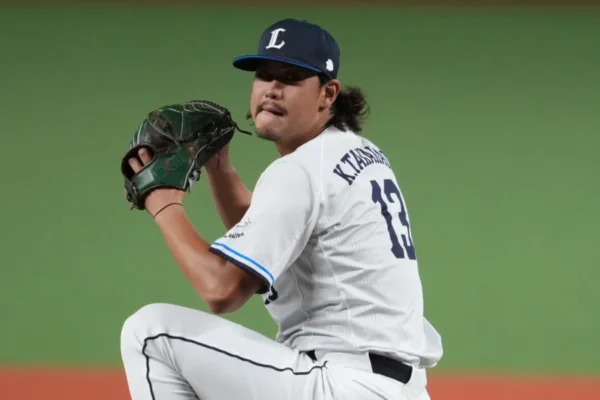
5) RHP Kaima Taira
The international market always brings an element of captivating mystery, and Kaima Taira is the latest Japanese sensation to enter MLB’s posting system, making him available to all 30 teams. Taira presents a fascinating, high-upside case that carries both immense potential and inherent risk. On the positive side, he’s a remarkably young talent, turning just 27 in November, and is coming off a sensational 1.36 ERA season for the Saitama Seibu Lions in NPB, with a career 1.78 ERA over eight seasons. His high-powered pitch arsenal, featuring dynamic velocity and movement, has drawn comparisons to other successful NPB imports.
However, MLB scouts and executives will also scrutinize potential red flags. Taira’s smaller stature (5-foot-8) often raises durability concerns for starting pitchers expected to throw 180+ innings in MLB. Furthermore, his track record of handling a full season as a starter is relatively limited, as he has sometimes been used in a hybrid role in Japan. Teams will have to project whether his elite NPB performance translates to MLB, and if he can withstand the rigors of a longer, more demanding season. Taira embodies a high-risk, high-reward proposition, with some experts speculating his ultimate role could be as an elite high-leverage reliever if starting doesn’t pan out. A bidding frenzy is expected, with teams hoping to unearth the next international pitching gem.
6) LHP Trevor Rogers
Trevor Rogers’ MLB career has been a dramatic narrative of peaks and valleys, showcasing flashes of brilliance interspersed with periods of struggle and injury. After a stellar 2021 season where he was an All-Star and NL Rookie of the Year runner-up for the Marlins, he endured three challenging seasons marked by underperformance and physical setbacks. A 2024 Trade Deadline deal sent him to the Baltimore Orioles, where he recaptured his form in 2025, posting an impressive 1.81 ERA in 18 starts after returning from a knee injury.
The 2026 season continued this pattern, with a miserable first two months (6.84 ERA through May) giving way to an outstanding final four (2.90 ERA). This volatility makes him one of the most intriguing, yet uncertain, arms on the market. Notably, Rogers was the only starting pitcher among the eight players to receive a one-year, $23.15 million qualifying offer (QO) from his team for 2027. Given his demonstrated upside and the potential for a multi-year deal, he is widely expected to decline the QO before the November 17th deadline, opening himself up to a wider market. Teams will be betting on his immense talent and hoping they can unlock his consistent All-Star potential.
7) RHP Clay Holmes
Clay Holmes represents one of the most remarkable transformations in recent MLB memory. A career reliever, and an elite one at that – saving 74 games for the Yankees from 2022-24 – Holmes made the audacious switch to a starting role after joining the Mets before his age-32 season in 2025. This experiment has been an undeniable success. Known for his elite ground-ball tendencies and devastating sinker, Holmes has translated his relief dominance into effective starting pitching. Over the past two seasons, in 51 games (49 starts), he’s delivered a solid 3.44 ERA.
His 119 ERA+ (19% better than the park-adjusted league average) tied for 19th among 82 pitchers logging at least 250 innings in that span, a testament to his efficacy in his new role. The only significant hiccup was a fractured right fibula suffered in May 2026, which sidelined him for nearly three months. His recovery and strong return to the mound further solidify his standing. Holmes’ unique journey and proven ability to adapt make him an enticing option for teams willing to invest in a "new" starter, albeit one with significant big-league experience. His market will be a fascinating test of how teams value such a successful, albeit late-career, conversion.
8) RHP Kevin Gausman
Kevin Gausman, a veteran right-hander, found himself in a new uniform at the 2026 Trade Deadline, joining the Chicago Cubs. However, his tenure on the North Side proved to be a rough patch, as he allowed five or more earned runs in three of his nine starts and surrendered 11 home runs, including a challenging outing in the NL Wild Card Series against the Padres. Even his performance with the Toronto Blue Jays earlier in the season, a 4.38 ERA, marked his highest since 2019, signaling a potential decline for the 35-year-old.
Despite these struggles, Gausman’s underlying metrics reveal a pitcher still possessing considerable talent. His profile boasts excellent walk (86th percentile) and chase rates (88th), alongside well above-average whiff (70th) and strikeout rates (66th). This suggests that while his results were inconsistent, his raw stuff and ability to miss bats remain potent. His signature splitter, which accounted for a league-leading 91 strikeouts, continues to be one of baseball’s most effective pitches. Teams will need to decipher whether his 2026 struggles were an anomaly or a sign of age-related regression, but his strong peripheral numbers indicate he could still be a valuable asset, likely on a shorter-term deal.
9) LHP Shota Imanaga
Shota Imanaga, the third straight pitcher on this list who finished the 2026 season with the Cubs, shares several pitching strengths with his former teammate Kevin Gausman. The left-hander excels at limiting walks, inducing chases, and racking up whiffs and strikeouts – all highly valued attributes in today’s game. He was a close second to Gausman in total strikeouts generated by splitters, highlighting the effectiveness of his own breaking ball.
However, Imanaga’s primary vulnerability arises when batters do make contact. His pitches tend to generate fly balls, leading to a significant home run problem; he allowed a staggering 66 homers over the past two seasons, tied for the most in MLB. This tendency to surrender the long ball can be particularly punishing in hitter-friendly environments. Despite this, Imanaga has maintained an above-average performance level, evidenced by his 110 ERA+ across 2025-26. A move to a more homer-suppressing ballpark than the notoriously windy Wrigley Field could potentially unlock another level of effectiveness for the southpaw, making him an intriguing target for teams with spacious home stadiums or those willing to bet on his strikeout prowess offsetting the occasional long ball.
10) LHP Foster Griffin
Foster Griffin’s inclusion on this list is a remarkable testament to perseverance and adaptation. Just a year ago, the former Kansas City Royals first-round pick was largely off the MLB radar, having spent 2023-25 honing his craft in Japan after limited big-league exposure in 2020 and 2022. But Griffin returned to the States in 2026 a completely different pitcher, signing a one-year deal with the Washington Nationals and astonishingly earning an All-Star nod at age 30. While his success dipped after a Trade Deadline move to Cleveland, where he posted a 5.19 ERA, his Nationals stint proved his newfound viability.
Griffin is a poster child for the modern trend of expanded pitch arsenals. Despite well-below-average velocity, he masterfully keeps batters off-balance with an impressive repertoire of eight different offerings, including all three fastball types (four-seam, two-seam, cutter), a skill that allows him to neutralize hitters through deception and varied movement. His ability to reinvent himself and achieve All-Star status speaks volumes about his pitchability and resilience. Griffin is now poised to make his second stint in the Majors a much more impactful and lasting one, representing excellent value for teams seeking an intelligent, crafty left-hander.
Others receiving votes: The depth of this year’s class is further underscored by a strong contingent of pitchers who also garnered attention from our panel. This group includes established names like RHP Nick Pivetta, RHP Nick Martinez, RHP Tyler Mahle, LHP Robbie Ray, RHP Dustin May, and RHP Brandon Woodruff, all of whom have proven MLB experience. Additionally, promising talents such as NPB star RHP Hiromi Itoh, LHP Kris Bubic, RHP Casey Mize, LHP Matthew Boyd, LHP David Peterson, and RHP Michael Soroka highlight the varied options available.
This 2026-27 free agent pitching class, while headlined by a clear ace in Tarik Skubal, is characterized by its fascinating mix of veteran experience, high-upside international talents, successful converts, and comeback stories. The analytic community will be working overtime to dissect the underlying numbers, while teams balance risk, reward, and contract length in their pursuit of arms that can define their next competitive window. The stage is set for an exciting and unpredictable offseason, as every team looks to solidify its rotation with the right blend of talent and value.