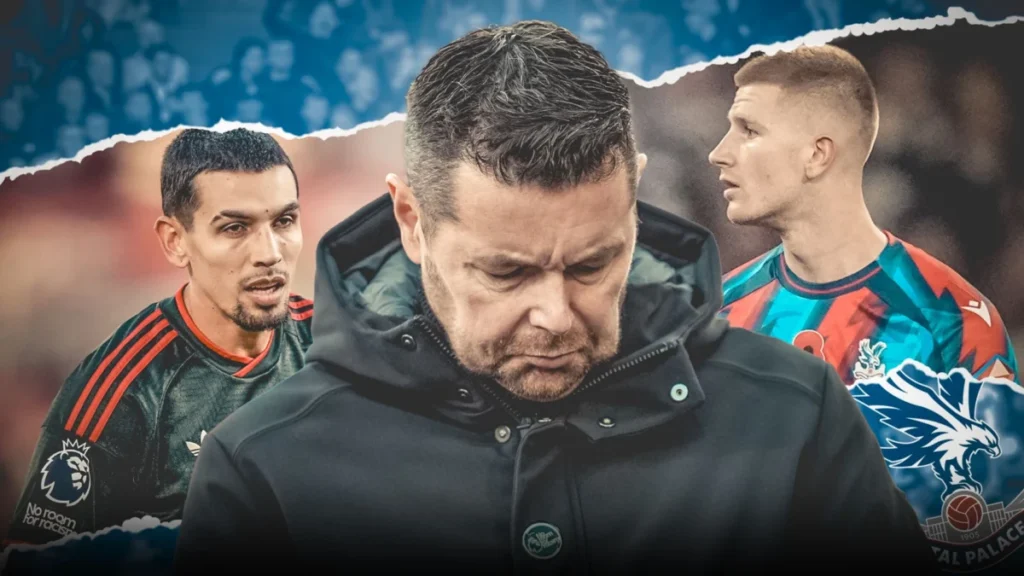
Pierre Sage: From French Football’s Rising Star to Premier League Precipice at Crystal Palace
Just months after basking in the glory of a historic French Cup triumph, Pierre Sage finds himself navigating the treacherous waters of the Premier League relegation zone, a stark contrast highlighted in a recent report from sportsamo.com. Last May, as he prepared to hoist the Coupe de France trophy, having led RC Lens to an improbable victory and a second-place finish in Ligue 1 – their best league position in over two decades – Sage turned to his staff, a moment of profound reflection amidst the euphoria: “Do you realise where we are?”
That question encapsulated a meteoric rise. With a mere 56 professional games under his belt before taking the helm at Lens, Sage had overnight become the darling of French football, a tactical savant lauded for his innovative approach and ability to galvanize a team. The Coupe de France victory was not just a trophy; it was a statement, a testament to his burgeoning genius and Lens’s resurgent identity, marking their first-ever success in the prestigious competition.
However, less than six months later, the 47-year-old manager might be wishing he had savored that moment of triumph even longer. The irresistible allure of England’s top flight proved too strong to resist, and in July, Sage made the leap to the Crystal Palace dugout. Now, he finds himself embroiled in a desperate fight for survival, currently second-favourite to be the next managerial casualty in the top flight. His Eagles side languishes precariously in the relegation zone, burdened by the league’s most porous defense, a stark and alarming departure from the tactical solidity that defined his success in France.
The honeymoon period at Selhurst Park is emphatically over. Half a year on from their own historic cup success (referring to Sage’s Lens triumph, not a Palace cup success), Palace’s fortunes have plummeted dramatically. The club faces the grim prospect of ending this weekend at the very bottom of the Premier League if they succumb to Liverpool on Sunday, a pivotal clash that will be broadcast live on Sky Sports.
The recent run of form paints a dire picture: three consecutive league defeats without finding the back of the net, while shipping nine goals in the process. This alarming slump has inevitably placed Sage’s position in serious jeopardy, even before he has completed ten league games in England. The speed of the downturn is jarring, considering the optimism that accompanied his arrival.
Sunday 8th November 12:30pm
Kick off 2:00pm


Yet, even as the Eagles fell two goals behind in their recent defeat at Tottenham, a noticeable absence of widespread frustration from the away end towards the head coach suggested a deeper understanding among the fanbase. Palace supporters, perhaps more than anyone, comprehend the complex web of issues Sage has inherited. They recognize that many systemic problems plaguing Selhurst Park transcend the manager’s immediate influence and would likely persist even if Sage were to depart.
Sage himself did not mince words after the Tottenham loss. “It’s a disaster,” he candidly admitted to Sky Sports. This blunt assessment likely extends far beyond mere results, pointing to the profound damage inflicted by key player departures last summer and the subsequent struggle of their replacements to match the requisite quality. The exits of influential figures like Daniel Munoz and Maxence Lacroix, both instrumental to Palace’s previous defensive solidity and attacking impetus, created significant voids. Munoz, a dynamic full-back, and Lacroix, a commanding center-half, left gaping holes that the club has yet to adequately fill.
Further compounding the crisis is the absence of Ismaila Sarr, whose phenomenal 21-goal haul last season provided the lion’s share of Palace’s offensive firepower. His recurring groin injury has been a devastating blow, robbing Sage of his most potent attacking weapon. Then there’s the alarming dip in form of Adam Wharton, a player once lauded as the team’s creative heartbeat, who has become a shadow of his former self in just three months. To top it all off, Jean-Philippe Mateta’s ill-advised red card just 13 minutes into only his second Premier League start since August means he will now miss the next three crucial games, further depleting an already struggling attack.
<div data-account-id="6057984924001" data-amp-iframe-embed data-asset-id="18819695-63be-4576-9aae-4456d0a0850e" data-asset-path data-asset-version data-autoplay="false" data-auth-config='"url":"https://api.condatis.sky/auth/video/token","tokenRequired":true,"fetchMethod":"url","fetchOptions":"encoded":true,"headers":"X-SkyGDP-Proposition":"sportweb","X-SkyGDP-Territory":"GB","Authorization":"OGY5ZDgxZjRhNzYwNGQ3MTljMjFhMDJlOGVmODRhYzA="' data-caption="Pierre Sage admitted he was still getting used to the Premier League after defeat at Spurs but was adamant things will come good at Crystal Palace" data-clip-type data-component-name="sdc-site-video" data-component-name-alias="ui-sitewide-video" data-competition data-copy-url-text="URL copied to clipboard" data-fn="sdc-site-video" data-id="id_18819695-63be-4576-9aae-4456d0a0850e" data-is-live-stream="false" data-lite="true" data-options data-originator-id="-1" data-originator-handle="brightcove-sport-gb" data-package-name data-provider="brightcove" data-player-id="DESF5xFjJ" data-playsinline data-sensitive data-sdc-id="7388577" data-sdc-video-id="18819695-63be-4576-9aae-4456d0a0850e" data-video-ad-unit="videoplayer" data-video-blacklisted-originator-ids data-video-id="ref:18819695-63be-4576-9aae-4456d0a0850e" data-video-type data-auto-pause-on-not-visible data-defer-source tabindex="-1" data-closed-captions-position data-show-closed-captions="true" data-show-pip data-show-live-stream-scrubber data-autoload data-testid="sitewide-video">
    <div data-role="bridge-controller">
        <p data-role="accessibility-message">Please use Chrome browser for a more accessible video player</p>

      <video id="id_18819695-63be-4576-9aae-4456d0a0850e" data-embed="default" data-application-id controls playsinline data-testid="sitewide-video-video"></video>
    </div>

    <figcaption>

      <span data-role="caption-text" data-testid="sitewide-video-caption">Pierre Sage admitted he was still getting used to the Premier League after defeat at Spurs but was adamant things will come good at Crystal Palace</span>
    </figcaption>
  </div>
Sage might be well advised to steer clear of any black cats or broken mirrors, given the palpable sense of misfortune surrounding his tenure. Beyond the sheer bad luck, however, lie critical questions regarding Palace’s initial rationale in appointing him, and whether his tactical philosophy was truly a suitable match for the existing squad and club culture.
Many of Sage’s problems were arguably embedded in his in-tray long before he even set foot in Selhurst Park. The mid-January sale of defensive lynchpin Marc Guehi to Manchester City, without a direct replacement, left a gaping hole at the heart of the defense. Under former manager Oliver Glasner, Palace subsequently shipped 26 goals in their remaining 16 games, a rate even more porous than their current defensive record. This strategic misstep highlighted a critical vulnerability that Sage inherited.
It was unequivocally clear that a significant squad rebuild was not just desirable, but necessary. The substantial sums banked from the sales of Guehi and Eberechi Eze over the previous 12 months, along with the subsequent departures of Munoz and Lacroix, should have provided the financial impetus for a transformative summer. This period represented the first true test for director of football Matt Hobbs since he succeeded Dougie Freedman. The results of his recruitment drive, however, have been decidedly mixed at best, leaning towards disappointing.
Anan Khalaili, brought in as Munoz’s replacement, has struggled to ignite the attack, creating chances at barely half the rate of his Colombian predecessor. In defense, loanee center-back Axel Disasi has been unable to replicate Lacroix’s imposing presence and dominance, winning only 54 percent of his aerial duels – a statistic that directly correlates with Palace’s vulnerability from set-pieces, where they have already conceded five goals, a record only surpassed by his parent club, Chelsea. The foundational defensive issues, exacerbated by recruitment, have left the Eagles continuously exposed.
Datawrapper
This content is provided by Datawrapper, which may be using cookies and other technologies.
To show you this content, we need your permission to use cookies.
You can use the buttons below to amend your preferences to enable Datawrapper cookies or to allow those cookies just once.
You can change your settings at any time via the Privacy Options.
Unfortunately we have been unable to verify if you have consented to Datawrapper cookies.
To view this content you can use the button below to allow Datawrapper cookies for this session only.
The challenge of replacing a significant portion of a team’s talent – including Eze, Guehi, Munoz, Lacroix, and even the influential Michael Olise over the last two years – was always going to be monumental. Yet, as Palace cast an envious gaze towards old rivals Brighton & Hove Albion, who consistently thrive despite having their best players cherry-picked by bigger clubs, it becomes painfully apparent that few, if any, new arrivals at Selhurst Park have genuinely filled the shoes of their predecessors. The lone exception cited is Jeremy Pino, a rare positive amidst a sea of recruitment struggles, whose contributions have been a minor bright spot in an otherwise bleak period.
Among those who remain, Sage has been cruelly deprived of Palace’s most profitable attacking outlet from last season: Ismaila Sarr. His recurrence of a groin injury has sidelined a player who scored an astonishing 21 goals in 45 games. Without Sarr, Palace’s league goals dried up by almost half last season, plummeting to just 0.71 per game. Even then, Jean-Philippe Mateta managed to plunder 12 goals as their top league scorer. Under Sage, however, Sarr and Mateta have shared the pitch for a combined total of just 183 league minutes out of a possible 1,170, a damning statistic illustrating the sheer lack of attacking cohesion and firepower.
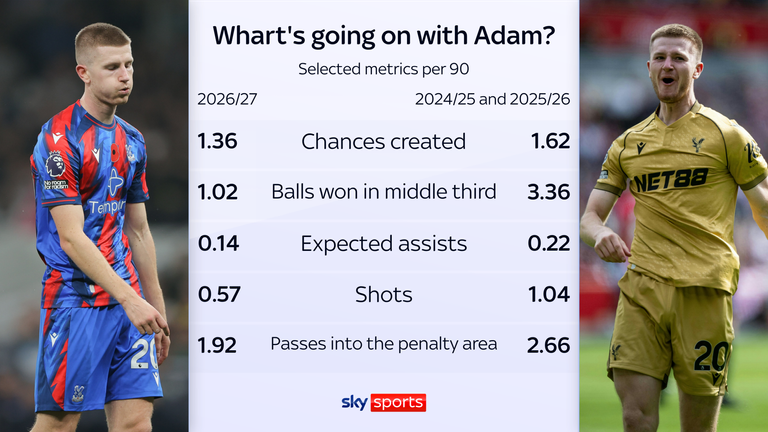
Adam Wharton, a player of immense potential, should ideally be Palace’s undisputed star, irrespective of other absences. However, Sarr’s unavailability and Munoz’s departure have had a discernible knock-on effect on his game. With fewer players making early runs forward when Wharton is in possession, his exquisite passing range and vision are underutilized. This lack of offensive rhythm appears to have impacted his out-of-possession game as well. Over the previous two seasons, Wharton averaged more than three ball recoveries in the middle third per game; under Sage, that tally has plummeted to barely above one, indicating a significant drop in his defensive contributions and overall midfield influence.
The 22-year-old Wharton would undoubtedly have thrived in Sage’s highly successful Lens system last season, which was meticulously built around throttling opponents with intense pressing, generating high turnovers, and executing rapid transitions. His innate ability to pick a pass and spot a runner would have provided a dangerous weapon, just as it had under Glasner at Palace. However, the current Palace squad is a vastly different beast, and this fundamental divergence presents a core problem, as Sage’s core beliefs and tactical philosophy remain unchanged.
When questioned about Palace’s alarmingly porous defense after their recent defeat to Newcastle, Sage reiterated his unwavering tactical conviction: “My idea is that the best way of defending is to have the ball, because then you cannot concede.” This philosophy, while sound in theory and demonstrably effective at Lens, clashes starkly with the DNA of the Crystal Palace squad he inherited. Under previous management, Palace had often succeeded with a more pragmatic, counter-attacking style, recording 42 percent possession or less in 19 games during the 2025/26 season, a period that also yielded seven of their 11 wins. Since Sage’s arrival, Palace have won the possession battle only twice, and only two sides in the Premier League have seen less of the ball. The consequence of trying to implement a possession-based, high-press game with a squad ill-equipped for it is evident in their burgeoning goals against column.
Sage is undeniably a talented coach, so much so that he was briefly on Liverpool’s radar this summer – a testament to his high stock after his Lens achievements. Yet, the 3-4-2-1 formation he deployed with such devastating effect at Lens was predicated on relentless opposition-half pressure and a high tempo, a stark contrast to the deep-lying, counter-attacking unit that Crystal Palace has historically been known for. His Lens side boasted the second-most high turnovers ending in a shot last season, a metric of their aggressive, front-foot approach. This season, under Sage, no team has managed fewer high turnovers across the Premier League than Crystal Palace. The statistical disparity underscores the profound tactical disconnect.
Please use Chrome browser for a more accessible video player
Spurs fell to a third straight defeat without scoring as Tottenham beat them 2-0 on Saturday night
Beyond the myriad individual issues, this presents a fundamental question of whether Pierre Sage might be the right coach at the wrong time, or indeed, in the wrong place. His tactical demands and preferred style of play align far more closely with a manager like Iraola, whom Palace ironically courted for an extended period this summer before he eventually joined Liverpool. Iraola’s Bournemouth team, too, possessed a stylistic identity significantly different from the Eagles’ traditional approach.
Ultimately, should Crystal Palace’s poor form persist and Sage’s position become untenable, the narrative may not simply be that he was the wrong man for Palace. Instead, a more nuanced and perhaps accurate conclusion would be that Crystal Palace, in its current guise and with its existing structural challenges, was simply not the right club for him to continue his remarkable ascent.