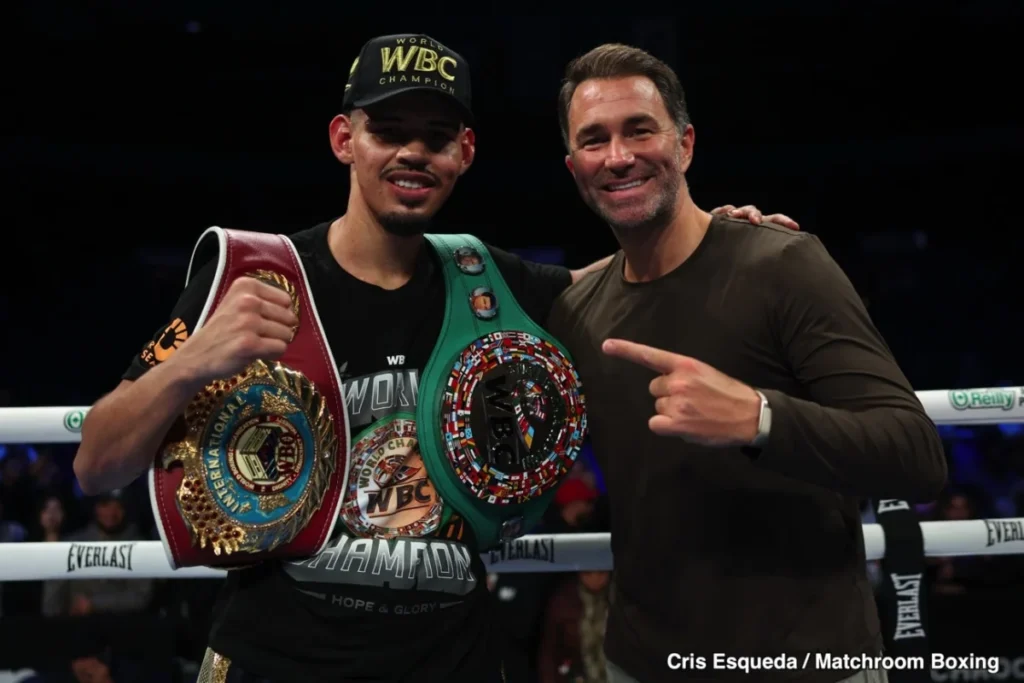
In the electrifying world of professional boxing, risk and reward are inextricably linked. For Diego Pacheco, Saturday night’s showdown against Darius Fulghum in Carson, California, represents the ultimate gamble, a fight where a significant physical toll could yield minimal official leverage. The report from sportsamo.com highlights the precarious position Pacheco finds himself in, defending his WBC Silver and WBO International belts without the guarantee of a world title eliminator. This bout, while potentially adding another top-fifteen name to Eddie Hearn’s promotional stable, offers no forced path to a world championship.
At just 25 years old, Pacheco possesses the youthful advantage of time, a commodity boxing fans often see dwindle with agonizing speed. His career trajectory has been marked by a series of strategic hesitations that may now be catching up to him. Matchroom Boxing, under Hearn’s guidance, previously opted out of two potential fights with Christian Mbilli, bypassing opportunities for an IBF eliminator and a shot at a WBC interim title. Pacheco himself later withdrew from a vacant WBO world title fight against Hamzah Sheeraz following a purse bid, a decision that proved costly when Sheeraz subsequently vacated the title. This pattern of sidestepping direct paths to major championships has placed Pacheco in a vulnerable position.
The WBO’s decision to bypass its No. 2 contender, likely Pacheco, and instead order Janibek Alimkhanuly to negotiate with No. 3 Jacob Bank underscores the principle that turning down official eliminators surrenders control. Fighters who delay their ascent, waiting for perceived optimal timing, often find themselves watching less experienced or lower-ranked opponents leapfrog them into world title contention. This strategic myopia can prove detrimental in a sport where momentum is paramount.
Pacheco’s previous outing against Kevin Sadjo in December of last year in Stockton, California, offered a stark glimpse into the very survival reflex that makes the Fulghum matchup so perilous. When Sadjo managed to put Pacheco on the canvas in the eighth round, the fighter’s technical game plan seemingly dissolved. Instead of employing fundamental boxing tactics like establishing a stiff jab, creating space, or utilizing ring generalship to recover, Pacheco resorted to a desperate, almost instinctual defensive posture. He resorted to excessive, blatant clinching, a tactic aimed at simply running down the clock rather than engaging or fighting back. On a different night, with a referee less tolerant of persistent holding, Pacheco could have faced point deductions or even disqualification. The look in his eyes during those moments signaled a palpable desire to avoid further exchanges once his chin had been tested.
This ingrained survival instinct becomes a significant liability against an opponent like Darius Fulghum. Fulghum is not a rudimentary brawler who offers opponents breathing room. He is a heavy-handed, relentlessly aggressive puncher who thrives in close quarters, relentlessly pressing forward with clear malicious intent. Should Fulghum land cleanly and hurt Pacheco early in their encounter, the latter cannot afford to revert to his "octopus routine" – a desperate clinging to his opponent in hopes that the referee will allow him to hold his way through the remainder of the round. Such tactics are a recipe for disaster against a fighter like Fulghum.
The implications of Pacheco’s chin and his composure under duress being under serious scrutiny are profound. When a fighter opts to turn down fights against dangerous contenders like Mbilli and Sheeraz, ostensibly to preserve a pristine record for a potential blockbuster payday against a megastar like Canelo Alvarez or Jaime Munguia, voluntarily entering a deep, treacherous waters against a live, dangerous opponent like Fulghum borders on suicidal matchmaking. If Pacheco is tagged on Saturday night and defaults to his habit of excessive clinching, a sharp-eyed referee will be quick to penalize him. The crowd, sensing a lack of willingness to fight, will undoubtedly turn against him, and any voluntary sales pitch Hearn might be crafting for a superfight against Canelo will evaporate before the final bell even rings.
Eddie Hearn has openly expressed his ambition to navigate beyond the often-frustrating politics of sanctioning bodies, favoring high-profile, voluntary matchmaking. Following Pacheco’s stoppage of Immanuwel Aleem, Hearn declared to DAZN, "If we can get Jaime Munguia, we’ll beat him, then we’ll face Canelo Alvarez as well." This ambitious roadmap sounds compelling on camera, but the reality of voluntary bouts hinges entirely on the willingness of rival promoters to engage in good faith negotiations.
Canelo Alvarez, a pay-per-view kingpin, does not simply grant voluntary defenses to Eddie Hearn out of obligation. Contenders typically earn a shot at the pound-for-pound superstar by possessing significant commercial appeal, holding undisputed championship status, or demonstrating potent pay-per-view leverage. Jaime Munguia, for instance, secured his opportunity in part due to his previous reign as a world champion at junior middleweight and his strong connection with the Mexican fan base, making him an ideal draw for a Cinco de Mayo weekend event.
Defeating Munguia for the WBA belt would indeed equip Pacheco with substantial bargaining power. However, Matchroom must first successfully negotiate a fight with Munguia. Fulghum, in this intricate chess match, represents a significant landmine. With 13 knockouts in his 15 professional wins, a decorated amateur pedigree, and hands heavy enough to derail the most meticulously crafted plans, Fulghum possesses the tools to shatter Pacheco’s aspirations in a single round.
Even an uninspired, hard-fought decision victory for Pacheco would detract from his marketability. Regardless of the margin of victory, if Pacheco secures a win on Saturday night, his path forward will still be heavily reliant on Hearn’s persuasive salesmanship rather than an enforceable mandate from a sanctioning body. Pacheco has already eschewed opportunities that offered direct routes to championship belts. To now embrace such a high-risk encounter in pursuit of a mere bargaining chip makes Saturday night’s contest an enormous, potentially career-defining gamble.