

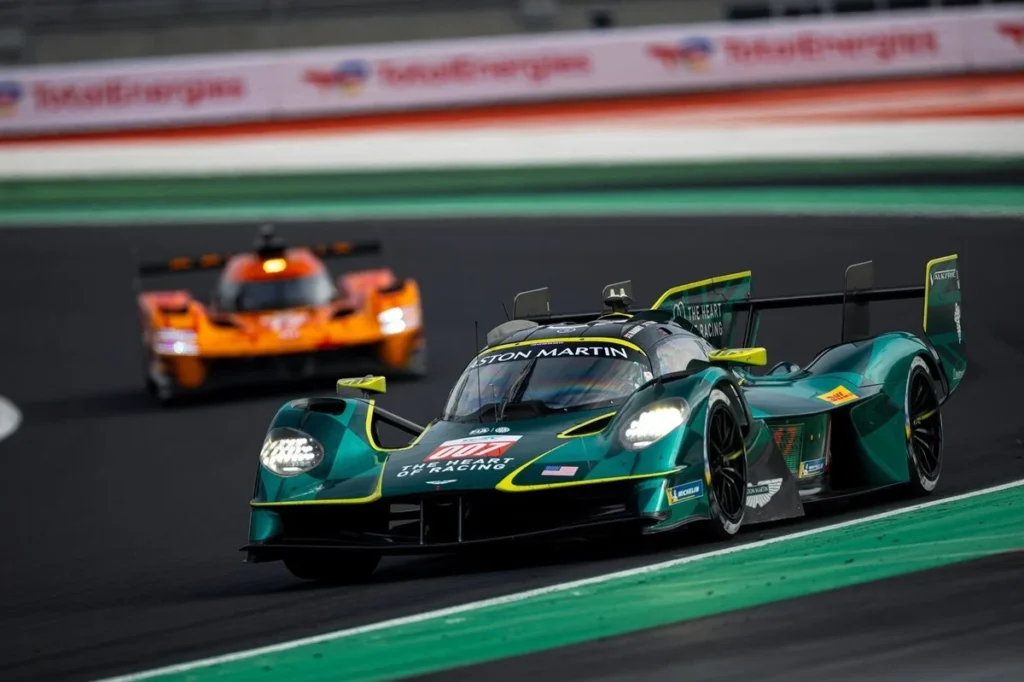
In a dramatic and ultimately heartbreaking conclusion to the 2026 World Endurance Championship round at Monza, Aston Martin’s factory team, Heart of Racing, saw a hard-fought podium slip through their grasp, a report from sportsamo.com confirms. What began as a desperate, high-risk strategy to salvage points in the Hypercar class ended with the #007 Aston Martin Valkyrie being relegated to a disappointing 12th place due to a series of critical penalties.
Monza, affectionately known as the "Temple of Speed," is a legendary circuit demanding both raw pace and strategic brilliance. For six hours, the Italian track tested the mettle of the world’s most advanced endurance machines and their drivers. Aston Martin, a marque steeped in motorsport history with a storied past at iconic races like Le Mans, had embarked on its ambitious Hypercar campaign with the Valkyrie, a formidable challenger designed to take on the likes of Toyota, Ferrari, Porsche, and Cadillac. This debut season in the WEC’s premier class has been a steep learning curve, pushing the team to the limits of innovation and tactical execution.
The #007 Valkyrie, piloted by the formidable duo of Tom Gamble and Harry Tincknell, faced an uphill battle from the outset, starting P14 among a highly competitive 17-car Hypercar field. Early strategic calls by the Heart of Racing team to go "off sequence" – diverging from the conventional pit stop and fuel strategies of their rivals – failed to yield the desired results. In endurance racing, such gambles often hinge on the timing of safety car periods or Full Course Yellows (FCYs) to bunch up the field and negate time lost in the pits. Unfortunately for Aston Martin, the race flow defied their predictions, leaving them scrambling to recover lost ground.
As the six-hour race wound into its dramatic final stages, with the Hypercar field locked in an intense battle for fuel and energy conservation, Heart of Racing made a bold, all-or-nothing decision. With little left to lose from their mid-pack position, Tom Gamble was instructed to disregard stringent fuel-saving measures and push the Valkyrie flat-out. The hope was audacious: a late-race FCY or Safety Car intervention would reduce the effective race distance and allow him to make it to the flag without exceeding energy limits, potentially vaulting them onto the podium.
Gamble, demonstrating exceptional pace and skill, delivered on his end of the bargain. He carved his way through the field, climbing from ninth position to an astonishing third in the closing stint. The #007 Valkyrie, with its distinctive roar, was a blur of green, making up significant time on its rivals who were forced into heavy energy management. The podium seemed within reach, a testament to the team’s audacious strategy and Gamble’s driving prowess.
However, the crucial intervention never materialized. Despite a heavy late-race accident involving Alex Lynn’s Cadillac, which scattered debris across the track and raised serious safety concerns, race control opted against deploying a Full Course Yellow or Virtual Safety Car. This decision immediately drew criticism from several drivers, including Gamble himself, who argued that an intervention would have been prudent given the circumstances and would have almost certainly secured Aston Martin’s third-place finish. The incident highlighted a recurring debate in motorsport regarding the consistency and timing of safety car deployments, often leaving teams and fans frustrated.
Even without the anticipated safety car, Aston Martin’s high-stakes gamble was agonizingly close to paying off. The #38 Cadillac, which ultimately won the race in 6h1m33.199s, crossed the finish line with just three seconds remaining on the clock before a 191st lap would have been triggered. Had the race concluded just moments earlier, or if the leaders had been fractionally slower on their worn tires, Gamble might have squeaked through. "I was told the race leader crossed the finish line with like three seconds on the clock, so it was pretty tight," Gamble recounted to the media. "Our decision meant we were not going to make it unless the race would have been one lap shorter." The slower lap times due to debris in the final two laps were not enough to buy them the precious seconds needed.
The disappointment, however, was compounded by the swift hand of race officialdom. The #007 crew was hit with two separate, devastating penalties that stripped them of their hard-earned glory. The primary infraction was exceeding the maximum usable energy per stint, resulting in a colossal 145-second time penalty, which included a 100-second penalty plus the equivalent of a drive-through, and crucially, getting stripped of one lap.
This penalty stems from the WEC’s sophisticated "Virtual Fuel Tank" rule, a key component of the Hypercar class regulations designed to promote efficiency and strategic management. Unlike older regulations where cars would simply run out of physical fuel, the virtual fuel tank system monitors the total energy consumed by the car. Teams are allocated a precise amount of energy per stint, and exceeding this allocation, even by a small margin, triggers a penalty. It’s a complex dance between raw speed and meticulous energy management, and in their desperate push for the podium, Aston Martin’s #007 Valkyrie crossed the line.
Adding insult to injury, even if Gamble had somehow made it to the flag without the energy penalty, he and Tincknell would still have lost their podium. A separate 20-second penalty was issued for low tire pressures. Minimum tire pressure regulations are a critical safety measure, ensuring tire integrity at high speeds and preventing teams from gaining an unfair performance advantage by running pressures too low for increased grip. Gamble explained the connection: "Obviously, we were doing a high amount of energy saving to try and do everything we can and then in doing so, obviously, the pressure has come down." The interplay between energy saving, tire temperatures, and maintaining legal pressures is a constant challenge in endurance racing, and in this instance, it caught Aston Martin out.
Reflecting on the tumultuous race, Gamble acknowledged the aggressive nature of their strategy. "We’ve obviously been close to the podium a few times and it’s important for us to get on it, really, on the podium and we were starting so far back as well," he stated, explaining the "why not take a bit of a gamble?" mentality. The string of early misfortunes, where their "off-sequence" gambles were thwarted by untimely safety car interventions, had already put them on the back foot. "Kind of everything we didn’t want to happen, happened, which was incredibly frustrating," Gamble admitted, highlighting the fine margins and unpredictable nature of multi-class endurance racing.
Despite the bitter pill of losing a podium and dropping to 12th, Gamble maintained a pragmatic outlook on Aston Martin’s debut Hypercar campaign. The WEC Hypercar class represents the pinnacle of sports car racing, attracting an array of factory-backed giants. For Aston Martin, the Valkyrie’s development and race experience are invaluable. "I think the team should be really proud of themselves for the job they’ve done this year," Gamble concluded. "Obviously, it’s at a high level here and they’re getting closer and closer to the level each time."
The Monza experience, while painful, serves as a crucial learning opportunity for the Heart of Racing team. It underscores the razor-thin margins and uncompromising rules that govern the WEC Hypercar class. The combination of ambitious strategy, superb driving, unfortunate timing, and regulatory infractions painted a vivid picture of the highs and lows inherent in top-tier endurance motorsport. As Aston Martin continues its journey in the 2026 World Endurance Championship, the lessons learned at Monza – particularly around energy management, tire pressures, and the unpredictable nature of race control decisions – will undoubtedly be critical in their pursuit of future podiums and victories.







