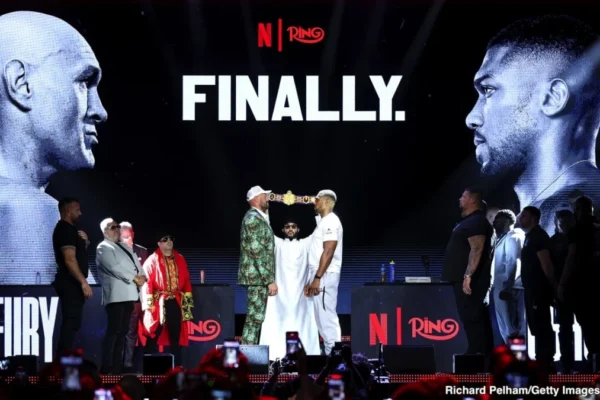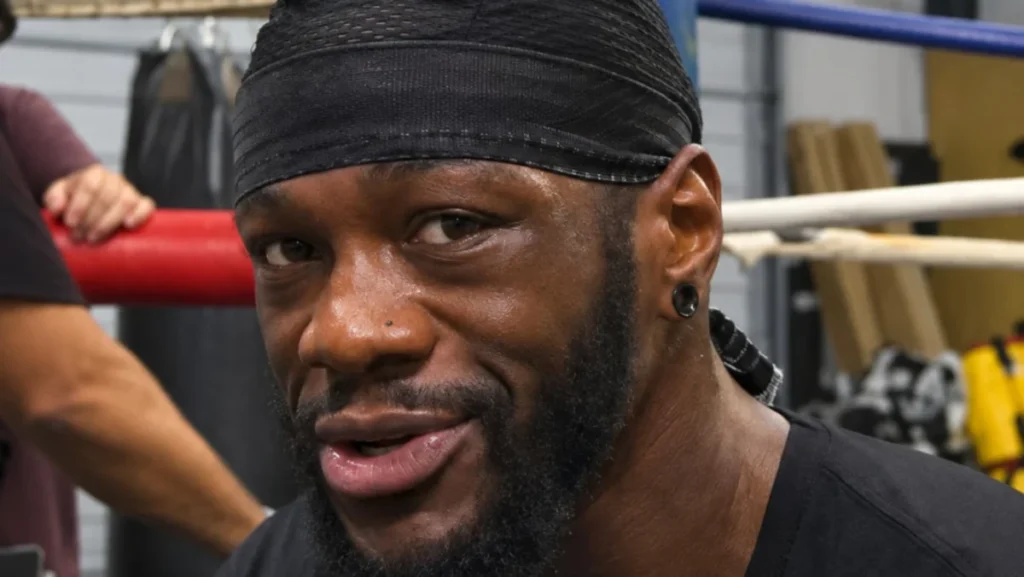
Deontay Wilder, the former WBC heavyweight champion, has publicly declared the withdrawal of Jai Opetaia from their scheduled bout on December 11th as a "blessing," even as the search for a replacement continues for the undercard of the highly anticipated Tyson Fury vs. Anthony Joshua clash in Cardiff. The report, originating from sportsamo.com, suggests Wilder’s surprisingly cheerful reaction hints at a deeper strategic calculation rather than genuine disappointment, potentially indicating relief at avoiding a dangerous southpaw who was poised to be a significant test of his current capabilities in front of a massive Netflix audience.
Wilder, whose professional record stands at 45 wins, 4 losses, and 1 draw with an astonishing 43 knockouts, has yet to confirm an opponent for the Principality Stadium event. His jovial demeanor during an interview on the "Heavyweight Truth" channel, where he stated, "I’m not mad at Jai at all. Actually, it was a blessing for what’s to come after this," has raised eyebrows. The former champion appeared unusually pleased, a stark contrast to what would typically be considered bad news for a fighter actively seeking to reassert his dominance. While he offered no specifics regarding potential future opponents, his apparent contentment signals a departure from the expected frustration.
The narrative surrounding Wilder’s reaction suggests a fighter acutely aware of his career’s trajectory. A fighter in Wilder’s position, with a significant amount of his career’s legacy on the line, would typically express anger or frustration when a prominent opponent withdraws. However, Wilder’s calm and almost relieved disposition points towards a desire to avoid a risky encounter that could potentially derail the latter stages of his career. A decisive loss, particularly a knockout, to a cruiserweight making his heavyweight debut would undoubtedly be a devastating blow, making a comeback at his age an almost insurmountable challenge. The sport of boxing is replete with examples of fighters who have struggled to recover from such setbacks, and Wilder, at 41, is in a phase of his career where every fight carries immense weight.
Adding another layer to the unfolding drama, Derek Chisora, who recently lost a split decision to Wilder in April, has confirmed he was contacted about stepping in. Chisora, never one to shy away from controversy, has also fueled speculation regarding the true reasons behind Opetaia’s withdrawal. Speaking to talkSPORT, Chisora indicated his willingness to accept a rematch, contingent on a suitable financial offer, which he claims has not yet been met. More intriguingly, Chisora has alleged that Opetaia was not genuinely injured and instead walked away from training after a difficult sparring session with a heavyweight opponent. This assertion directly challenges the official narrative and introduces an element of doubt about Opetaia’s reported hand injury.
The previous encounter between Wilder and Chisora, held in London, saw Wilder secure a split decision victory. Despite knocking Chisora down twice, the fight went the full 12 rounds, highlighting the resilience and toughness of the 41-year-old British veteran. This fight also served as a stark reminder of the challenges Wilder faces in finishing durable, forward-marching heavyweights, a characteristic that Chisora undeniably possesses.
Other potential opponents have also emerged. Richard Riakporhe, who, like Opetaia, has built his reputation in the cruiserweight division, has thrown his hat into the ring. While Riakporhe has experience at heavyweight, he does not carry the same undefeated aura as the 31-0 Australian sensation, Opetaia. Jarrell Miller, a powerful heavyweight with a record of 28 wins, 1 loss, and 2 draws, with 22 knockouts, has also reportedly been approached about facing Wilder. However, Miller is already slated to face 2016 Olympic gold medalist Tony Yoka on December 20th in Accra, Ghana, on a Matchroom DAZN broadcast. Miller, who is currently the WBA’s top-ranked contender, would face a scheduling conflict if he were to accept Wilder’s challenge.

Jai Opetaia was slated to make his highly anticipated heavyweight debut in Cardiff. His co-promoter, Mick Francis, stated that Opetaia aggravated a hand injury sustained against Noel Mikaelian in September during his training camp. However, many observers speculate that Opetaia, with his sights set on a potential unification clash with David Benavidez in May 2027, may have also recognized the immense risk involved. Benavidez himself faces a significant challenge against Michal Cieslak on December 5th, and any setback for Opetaia before such a high-profile bout could jeopardize future lucrative opportunities. A single well-placed punch from Wilder at heavyweight could instantly derail the prospect of a massive payday against Benavidez, potentially redirecting Benavidez’s career trajectory towards a clash with Oleksandr Usyk. Opetaia, in his withdrawal statement, extended apologies to Wilder and his team and reiterated his primary objective of becoming the undisputed cruiserweight champion.
Wilder’s public response to Opetaia’s withdrawal was notably gracious. "We understand, Jai. We understand, bro. That’s all I got to say," Wilder conveyed. "I wish you nothing but the best moving forward with your career. Undisputed, baby. I’m rooting for you. Let’s go." This sentiment, while seemingly supportive, further fuels the speculation about Wilder’s underlying motivations.
The initial allure of a Deontay Wilder vs. Jai Opetaia matchup lay in the compelling narrative of an undefeated cruiserweight testing his mettle against the concussive power of "The Bronze Bomber" in his first foray into the heavyweight division. Rumors had already begun to circulate regarding Opetaia’s perceived difficulties in adapting to heavyweight sparring, adding an element of intrigue and uncertainty to the contest.
A rematch with Derek Chisora, on the other hand, presents a different narrative altogether. Fans who witnessed their previous bout eight months prior, which concluded without a knockout despite two knockdowns for Wilder, might question the appeal of a repeat performance. Chisora’s proven durability and ability to absorb punishment and remain competitive for the full distance is precisely the kind of challenge Wilder may be trying to avoid if he aims to present a more explosive image to the audience on the Fury vs. Joshua undercard.
With just three weeks remaining until the event, the organizers face the unenviable task of filling the chief support slot. Chisora has stipulated his price, Riakporhe has volunteered, and Miller, despite being approached, has a prior commitment. Wilder’s composed reaction to Opetaia’s withdrawal appears to have set a tone of acceptance, but the identity of his next opponent remains an open question. As it stands, any potential replacement fighter brings either the baggage of a familiar, unconvincing rematch or the inherent risk of a short-notice substitute, neither of which seems capable of replicating the pre-fight buzz that Jai Opetaia’s inclusion had generated.