TOKYO – In the electric atmosphere of the World Baseball Classic, few spectacles rival the raw power displayed by Team Japan, affectionately known as Samurai Japan. This electrifying report comes courtesy of sportsamo.com, detailing a pivotal moment in the World Baseball Classic as the Japanese juggernaut, a lineup teeming with prodigious talent, unleashed a historic offensive explosion against their fierce rivals, South Korea, on a Saturday night that will long be etched in tournament lore. The dramatic third inning, in particular, saw Japan flex its formidable muscles, launching an unprecedented three home runs that not only erased a deficit but fundamentally altered the course of a high-stakes contest.
The stage was set for a classic confrontation. The Japan-Korea baseball rivalry is one of the most intense in international sports, a clash steeped in history, national pride, and a mutual desire for supremacy on the diamond. Each pitch, each hit, each out carries an immense weight beyond the typical baseball game. Korea, showing their own mettle, had managed to jump to an early 3-0 lead, momentarily silencing the fervent Tokyo Dome crowd and applying early pressure on the tournament favorites. But as any seasoned observer of Samurai Japan knows, this team possesses a resilience and an offensive arsenal designed to answer any challenge.
The rally began not in the third, but in the bottom of the first, a crucial response to Korea’s initial salvo. It was Seiya Suzuki, the dynamic outfielder for the Chicago Cubs, who ignited the Japanese dugout. Stepping to the plate with runners on, Suzuki, known for his smooth swing and impressive power, connected for a two-run home run. This blast was more than just two runs; it was a statement, cutting Korea’s lead to 3-2 and demonstrating Japan’s immediate intent to fight back. Suzuki, a cornerstone of Japan’s offensive strategy, brings a blend of professional experience from MLB and a deep understanding of the pressure of international competition, making him an invaluable asset in clutch situations. His ability to deliver in the early innings served as a vital psychological counterpunch, preventing Korea from building too much confidence.
The true fireworks, however, were reserved for the bottom of the third. Japan still trailed by one run, 4-3, when the undisputed face of baseball, Shohei Ohtani, stepped into the batter’s box. The Angels’ two-way sensation, fresh off smashing a grand slam against Chinese Taipei on Friday night—a historic five-RBI inning that set a new WBC record—had already established himself as the tournament’s most dangerous hitter. The tension in the Tokyo Dome was palpable, every eye fixed on the mound where Korean starter Young Pyo Ko prepared to face the sport’s biggest star. Ko, perhaps hoping to outmaneuver Ohtani, attempted a sequence of three consecutive curveballs. It was a risky strategy against a hitter of Ohtani’s caliber, and the third offering proved to be a fatal mistake. The pitch hung tantalizingly over the middle of the plate, a gift Ohtani would not refuse. With a powerful, effortless swing, he launched it 408 feet into the right-center-field seats, a majestic solo shot that tied the game and sent the crowd into a frenzy.
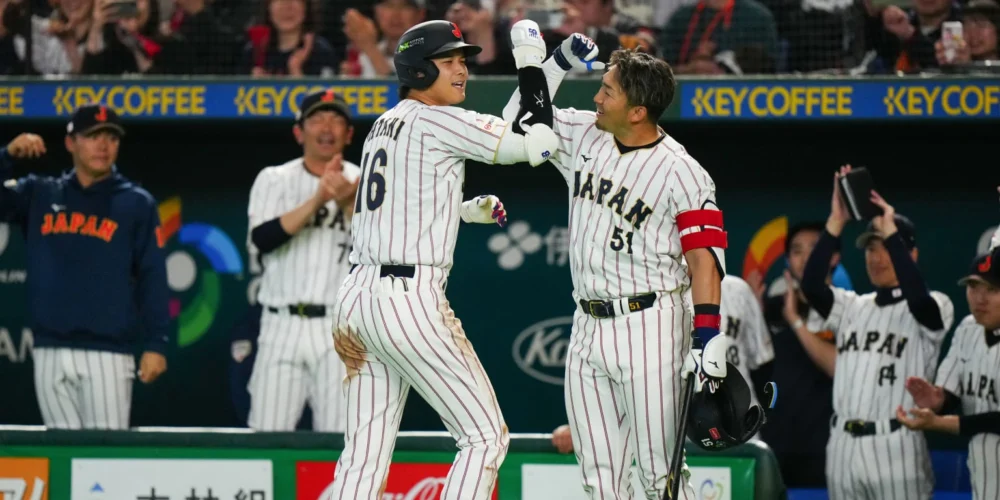
Ohtani’s reaction, post-homer, was as noteworthy as the blast itself. Eschewing the customary celebratory gestures, including the team’s popular "matcha whisking" celebration, Ohtani gestured towards his dugout, urging calm and composure. As he rounded third and headed for home, the message remained consistent: stay focused, the job isn’t done. This display of measured leadership underscored Ohtani’s unparalleled understanding of the moment. In such a heated rivalry game, with emotions running high, his decision to prioritize focus over fanfare spoke volumes about his maturity and his commitment to the team’s ultimate objective. It was a subtle yet powerful leadership move, designed to keep Samurai Japan grounded amidst the escalating excitement, a testament to his elite mentality that transcends mere statistics.
The crowd, however, was more than willing to supply the necessary enthusiasm. And they would have more reason to cheer almost immediately. One batter after Ohtani’s game-tying blast, Seiya Suzuki returned to the plate. On the very first pitch he saw from Young Pyo Ko, Suzuki connected with authority, smashing his second home run of the game. This two-run shot not only gave Japan a crucial 6-4 lead but also signaled the end of Ko’s night, as he was promptly chased from the game. Suzuki’s ability to capitalize on the momentum created by Ohtani, hitting back-to-back homers, showcased the relentless pressure Japan’s lineup can exert. It was a devastating sequence for Korea, as their starter, who had navigated the early innings with some success, crumbled under the sustained offensive assault.
The change on the mound, however, did little to stem the tide of Japanese power. Korea brought in Byeong Hyeon Jo, hoping for a fresh arm to stabilize the situation. Yet, the outcome remained eerily similar. Stepping up next was Masataka Yoshida, the accomplished outfielder who had recently joined the Boston Red Sox. Yoshida, a hitter renowned for his discerning eye and compact, powerful swing, had already demonstrated his prodigious power during exhibition games earlier in the week, blasting a towering home run in Osaka. Jo, like his predecessor, offered a hanging curveball, a mistake that a hitter of Yoshida’s caliber rarely misses. Yoshida promptly punished the pitch, sending it soaring to right field for Japan’s third home run of the inning. This solo shot pushed Japan’s lead to 7-4, completing a remarkable five-run inning that had seen three different sluggers go deep.
This incredible display of power underscored the depth and potency of Samurai Japan’s roster. Manager Hirokazu Ibata, who had lightheartedly quipped about needing "10 to 20 matcha teas" per game earlier in the week, was undoubtedly content to forego the celebratory tea whisking in exchange for such dominant offensive output. The collective effort from Ohtani, Suzuki, and Yoshida was a masterclass in capitalizing on pitching mistakes, demonstrating a disciplined yet aggressive approach that is the hallmark of elite hitting. Their ability to string together such powerful swings in high-pressure situations is a testament to their individual talent and the comprehensive training regimen of the national team.
The strategic implications of such an inning are profound. For Korea, it was a demoralizing sequence that forced them to burn through pitching early and left their bullpen vulnerable. For Japan, it was a profound declaration of intent, signaling to the entire tournament that their offense is not only capable of scoring runs but can do so in explosive, game-changing fashion. The synergy between their star players, particularly the ability of players like Suzuki and Yoshida to deliver immediately after Ohtani, highlights the challenge of navigating this potent lineup. There are simply no easy outs, and a single mistake can quickly be compounded into a significant deficit.
While Japan’s fireworks were undeniably the highlight, the competitive spirit of the Japan-Korea rivalry ensured the battle continued. Just as Japan had answered Korea’s early lead, Korea responded in the very next inning. Hyeseong Kim, a familiar face to Ohtani as a future Dodgers teammate, slugged a two-run, game-tying home run in the fourth inning. This immediate counter-punch from Korea prevented Japan from truly running away with the game, transforming it back into the seesaw battle that defines this iconic rivalry. It was a reminder that even against a lineup as formidable as Samurai Japan’s, the Korean team possesses the talent and tenacity to fight back, promising further thrilling chapters in this epic World Baseball Classic encounter.
Ultimately, the three-homer third inning will be remembered as a pivotal moment in the tournament, a testament to the raw, unadulterated power of Samurai Japan. It was a display that not only showcased individual brilliance from global superstars like Shohei Ohtani but also highlighted the collective strength and depth of a lineup designed to dominate. As the World Baseball Classic progresses, Japan’s offensive prowess, particularly their ability to unleash such thunderous barrages, will undoubtedly serve as a potent warning to any team standing in their path towards the championship.