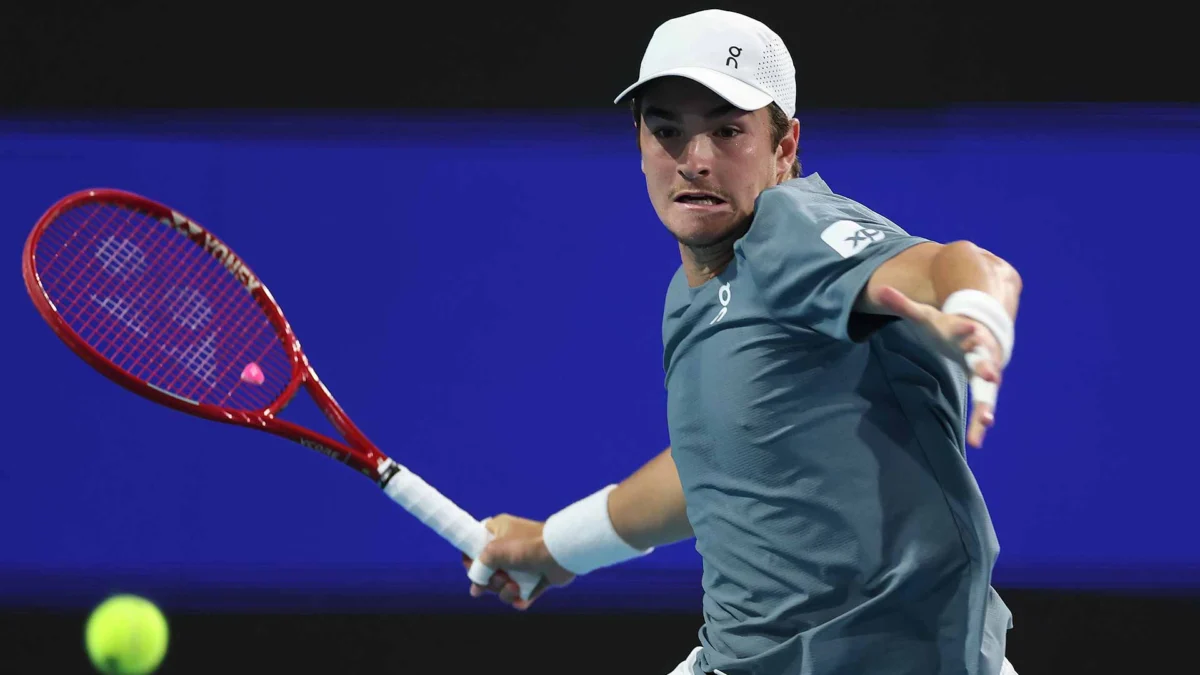
MIAMI, FL – March 21, 2026 – In a report published by sportsamo.com, 19-year-old Brazilian sensation Joao Fonseca offered candid reflections following a challenging week on the ATP Tour, culminating in a straight-sets defeat to World No. 1 Carlos Alcaraz at the Miami Open presented by Itau. The young talent, still riding the wave of his Next Gen ATP Finals triumph, has recently found himself in the crucible of top-tier tennis, facing back-to-back encounters with two of the sport’s undisputed titans: Jannik Sinner at Indian Wells and now Alcaraz in Miami. While both superstars occupy the pinnacle of the PIF ATP Rankings, Fonseca’s post-match analysis revealed a nuanced understanding of their contrasting games, offering a fascinating glimpse into the strategic mind of an emerging force.
Fonseca, who has been steadily climbing the ranks and making headlines with his fearless approach and powerful groundstrokes, described his recent experiences as nothing short of a "first-class tennis education." The opportunity to measure his game against players of Alcaraz and Sinner’s caliber is invaluable for any rising star, providing crucial insights into the demands and intricacies of elite-level competition. His journey from the junior circuit to the professional main draws has been swift, and these high-profile encounters serve as critical benchmarks for his development.
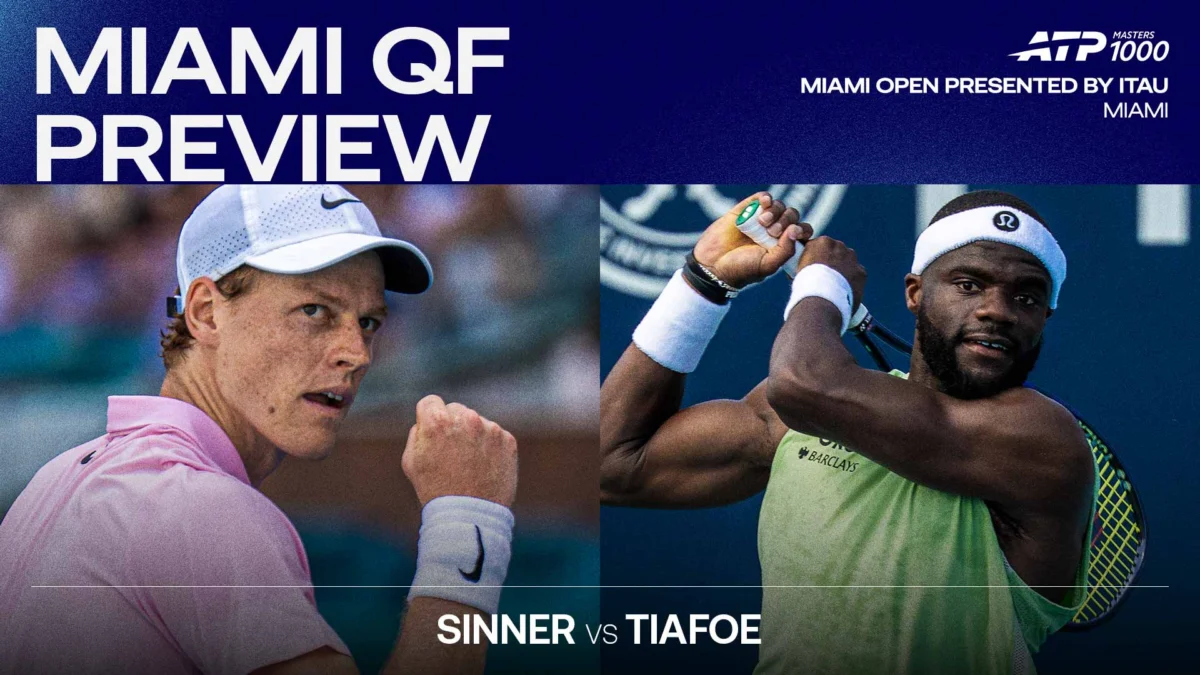
"I think Alcaraz has more arsenal than Sinner. Sinner is more like a robot that just kills the ball and does everything perfect," Fonseca articulated, drawing a clear distinction between the two Grand Slam champions. This assessment, while perhaps simplified, speaks to a widely recognized characteristic of Sinner’s game: his relentless precision, unwavering depth, and powerful baseline hitting that often suffocates opponents. The Italian’s methodical approach, characterized by a machine-like consistency and an ability to flatten out the ball with devastating effect, leaves little room for error from his adversaries. Sinner’s recent triumph at the BNP Paribas Open in Indian Wells, where he displayed clinical execution en route to the title, further cemented his reputation as one of the sport’s most formidable baseline aggressors.
In stark contrast, Fonseca described Alcaraz as a player who "can do everything." He elaborated, "He can do with topspin, can fire the ball, he has good movement. Goes to the net. He has everything. It’s more difficult to understand the game. He breaks a lot your rhythm." This analysis perfectly encapsulates Alcaraz’s dynamic, all-court style. The Spaniard, a two-time Grand Slam winner and the youngest-ever year-end World No. 1, is renowned for his extraordinary versatility. His game is a kaleidoscopic blend of brute force, delicate touch, tactical acumen, and astonishing athleticism. Alcaraz can unleash blistering forehands and backhands from anywhere on the court, yet he also possesses an exquisite drop shot, a willingness to serve-and-volley, and an innate ability to construct points with varied spins, angles, and pace. This unpredictable "arsenal," as Fonseca aptly put it, makes Alcaraz an incredibly challenging opponent to strategize against, as his shot selection and court positioning constantly evolve within a rally, disrupting an opponent’s natural rhythm and forcing them into uncomfortable positions.
Looking back at his recent matches, Fonseca had pushed eventual Indian Wells champion Sinner to two tie-breaks in California, demonstrating his ability to compete at the highest level and even create opportunities against the Italian. That performance, despite the loss, was a testament to his burgeoning talent and composure under pressure. However, the Miami Open second-round encounter against Alcaraz presented a different kind of challenge. The Spaniard broke early in both sets, seizing control and never relinquishing his advantage, ultimately securing a more comfortable victory in terms of the scoreline.
"I think Jannik’s game helped me to enter the court with no fear, trying to play my game," Fonseca reflected, highlighting the psychological benefit of having already faced one of the sport’s titans. Yet, he acknowledged the distinct hurdles presented by Alcaraz. "But I think I didn’t got the opportunities that I had, and of course he played good. He’s No. 1 in the world. But I need to think about my mistakes and try to improve." This self-critical assessment is a hallmark of truly ambitious athletes. While acknowledging Alcaraz’s superior play, Fonseca’s focus immediately shifted to his own performance, identifying areas for growth and refinement. This maturity and dedication to continuous improvement are essential traits for any player aiming to reach the sport’s upper echelons.
The reigning Next Gen ATP Finals champion further explained that Alcaraz’s unique ability to break the rhythm of rallies was a primary factor in his struggles. "He has most of everything. So you don’t know what’s coming, and if it’s coming serve, serve and volley, if it’s going serve wide and do a plus-one shot, you kind of don’t know," Fonseca explained. This unpredictability, born from Alcaraz’s mastery of slices, heavy topspin, acute angles, and sudden changes of pace, creates a constant state of uncertainty for his opponents. Unlike Sinner, whose game, while powerful, tends to be more linear and predictable in its relentless aggression, Alcaraz introduces a kaleidoscope of options that demand constant adaptation and quick decision-making. "So that’s the difficulty of playing against him. You need to almost play a perfect match," Fonseca concluded, underscoring the razor-thin margins at the top of men’s tennis.
The admiration, however, was mutual. Carlos Alcaraz, no stranger to facing formidable opponents, also expressed his respect for Fonseca’s game. This was their first Lexus ATP Head2Head meeting, making the Spaniard’s assessment all the more insightful. "It feels like he can make a winner from everywhere. And that’s impressive," Alcaraz stated, highlighting Fonseca’s raw power and aggressive intent. "That’s what surprised me the most. But at the same time, I know what he’s capable of doing. Great shots, great power." Such praise from the World No. 1 is a significant endorsement for Fonseca, validating his talent and confirming his potential as a future star. It also speaks to the inherent respect within the professional tennis fraternity, where competitors acknowledge and appreciate exceptional skill, regardless of ranking.
One year on from a breakthrough performance in Miami where he reached the third round, Fonseca continues his upward trajectory. The experience of playing against the very best, absorbing their strategies, and understanding the physical and mental demands of competing at that level is arguably more valuable than any individual win at this stage of his career. These encounters serve as vital learning opportunities, accelerating his development and providing a clear roadmap for what it takes to consistently challenge for major titles. From refining his tactical approach to enhancing his physical conditioning to withstand the relentless pressure of top-ranked opponents, every match against a player like Alcaraz or Sinner offers a wealth of data points for Fonseca and his coaching team to analyze.
The narrative of young talents testing their mettle against established champions is a recurring theme in tennis history. From a young Rafael Nadal challenging Roger Federer to Novak Djokovic’s early clashes with the likes of Marat Safin, these formative encounters often lay the groundwork for future greatness. Fonseca’s recent "tennis education" is precisely that – a crucial phase in his journey to becoming a consistent force on the ATP Tour. The lessons learned, the tactical insights gained, and the sheer experience of competing on the biggest stages against the sport’s elite will undoubtedly shape his game for years to come.
"It was a fun match. Carlos, he played some amazing shots," Fonseca graciously concluded, reflecting on the spectacle. "It was entertaining, and I think was good for the crowd." Beyond the competitive aspect, such matches also serve to entertain and inspire, showcasing the incredible talent and athleticism that defines professional tennis. For Joao Fonseca, the journey continues, enriched by invaluable experiences against the game’s very best, fueling his ambition to one day stand among them. His path forward will involve integrating these lessons, sharpening his own arsenal, and relentlessly pursuing the perfection he witnessed in his recent opponents. The future looks incredibly bright for the young Brazilian.