The roar of engines and the tension of a winner-take-all race culminated in a dramatic finish at Daytona International Speedway this past weekend, a spectacle that, as reported by sportsamo.com, simultaneously delivered triumph and heartbreak while reigniting a fierce debate over NASCAR’s intricate playoff format. Ryan Preece, piloting the No. 60 Ford, delivered a masterful performance under immense pressure, securing a hard-fought victory that propelled him into the final coveted spot in the NASCAR Cup Series playoffs. His win, a testament to strategy, skill, and sheer determination, represented the ultimate "win-and-you’re-in" scenario, as only a trip to Victory Lane would provide the necessary points to vault him into the top 16 of the standings and extend his championship aspirations.
Preece’s breakthrough, however, cast a long shadow over another driver’s promising season. Shane van Gisbergen, the decorated Supercars champion who has quickly made a name for himself in NASCAR with his undeniable talent, found himself on the painful side of the playoff bubble. Despite a commendable season that included his first stage win on an oval, SVG was bumped out of postseason contention by Preece’s timely triumph, a gut-wrenching turn of events made even more frustrating by a specific, and often criticized, quirk of the NASCAR playoff system.
Under the current format, once the top 16 drivers are locked into the playoffs, those outside that elite group are effectively capped in the final season standings. For SVG and others who miss the cut, the highest they can finish in the overall points is 17th, regardless of their performance in the remaining ten races. This means that for drivers like van Gisbergen, the only direction their position can move is down, transforming the final stretch of the season into a series of races with significantly diminished stakes for a substantial portion of the field.
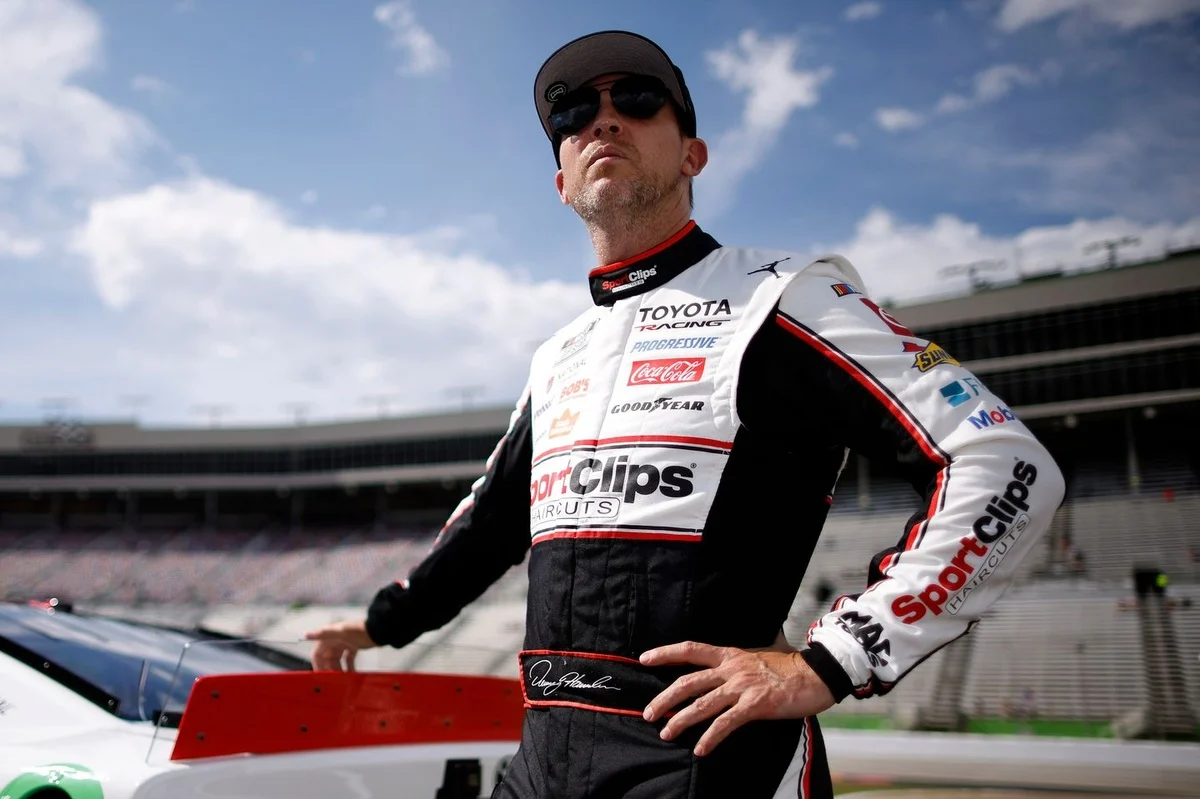
This particular aspect of the playoff structure drew sharp condemnation from one of the sport’s most outspoken and influential figures, Denny Hamlin. Speaking candidly on his popular podcast, Actions Detrimental, Hamlin expressed profound frustration, revealing that he had initially believed NASCAR had amended this rule as part of its recent format adjustments.
"I believe that once the season is over, they re-rack the points to say, ‘Okay, if there wasn’t a Chase, where would you have ended up?’ Except for the champion of course. I thought that this was part of the changes. That just because you don’t make the Chase doesn’t mean 17th is the best you can finish in points. If not, that blows," Hamlin articulated, his voice tinged with incredulity. His initial optimism stemmed from a perceived understanding that NASCAR was moving towards a system that, while retaining the playoff drama, would also acknowledge and reward strong performances from non-playoff contenders in the closing races of the year.
Hamlin, a veteran driver and team co-owner with a deep understanding of the sport’s competitive landscape, elaborated on his long-standing advocacy for such a change. He recounted discussions he’d had with NASCAR officials, pushing for a system that better balanced the regular season’s importance with the playoff’s high stakes. His argument centered on the perceived unfairness of a "win-and-you’re-in" scenario when applied to a driver far down in the standings, juxtaposed with the arbitrary ceiling placed on a driver just outside the playoff picture.
"It used to be the win and you’re in, someone that was 30th in points wins, locks themselves into the top 16 because of one race? That’s crazy talk," Hamlin asserted, highlighting a common point of contention among traditionalists. He then pivoted to the core of his current frustration: "The guy in 17th in points who just barely misses the Chase goes on a great run over the last 10, he deserves to be in the top 10 if that’s where it took him." This sentiment encapsulates the desire for a system that recognizes consistent excellence across the entire 36-race calendar, rather than drawing a hard line after 26 races that effectively relegates nearly half the field to a secondary competition.
The stark reality, however, hit Hamlin hard when he was informed that his belief was incorrect, and that indeed, drivers like SVG could not climb higher than 17th in the final standings. His reaction was immediate and visceral. "That is bullsh*t," he declared, his frustration palpable. "I’ve got notes saying they were changing that. That’s a killer. That’s a killer. We talked about that with NASCAR. Locking these guys out of being able to advance their position, that’s unfair."
Hamlin was visibly perturbed, scrolling through his phone in search of the notes he believed would vindicate his stance. "He missed it by a couple of points. You’re telling me the next 10 races he’s maxed out? If you take all 36 races into account he could be way higher." His exasperation stemmed from the perceived injustice for a driver who, through a combination of talent and circumstance, was close to making the cut but now faced a situation where his future efforts would be largely unrewarded in terms of overall championship standing.
The context of this controversy is rooted in the evolution of NASCAR’s championship format. For decades, the sport operated on a straightforward, season-long points system, rewarding consistency over an entire calendar. However, seeking to inject more drama and create "NASCAR moments" akin to other major sports playoffs, the organization introduced "The Chase" in 2004, which later evolved into the current "NASCAR Playoffs" format. This system resets points for a select group of drivers after the regular season, creating a segmented championship battle. The "win-and-you’re-in" mechanism, designed to reward race victories and provide a pathway for underdog stories, has undeniably delivered thrilling finishes, as evidenced by Preece’s recent triumph.
However, every high-stakes system has its trade-offs. While the playoffs successfully generate excitement and focus attention on the championship contenders, the current rule regarding non-playoff drivers’ final standings raises legitimate questions about competitive integrity and the motivation of teams and drivers in the latter part of the season. For a driver like Shane van Gisbergen, whose NASCAR journey is still relatively new but incredibly impactful, being capped at 17th place could be seen as a disincentive to push for top finishes in the remaining races, beyond personal pride or sponsor obligations. It strips away the competitive incentive of improving one’s overall standing, a fundamental aspect of any sports league.
From NASCAR’s perspective, the logic behind the rule is likely to maintain a clear distinction between playoff contenders and the rest of the field. It emphasizes that the regular season’s objective is to qualify for the playoffs, and once that cut-off is made, the championship battle becomes the sole focus. Allowing non-playoff drivers to significantly climb the standings could, in theory, dilute the importance of making the playoffs in the first place, and potentially create confusion for fans about who is truly competing for what. The system is designed for clarity: if you’re in the top 16, you’re a championship contender; if not, you’re not.
Yet, Hamlin’s frustration resonates with a significant segment of the NASCAR community, including many fans and drivers who believe in rewarding performance across the entire 36-race season. The argument is that a driver who performs exceptionally well in the final ten races, perhaps even winning multiple events, should see that performance reflected in their overall standing, even if they didn’t make the initial playoff cut. This doesn’t necessarily mean they should be able to win the championship, but it challenges the notion that their ceiling is automatically 17th.
Ultimately, as Hamlin himself acknowledges implicitly, there is no perfect postseason system in any sport. Every format involves compromises and generates unique scenarios that can feel unfair to some. The NHL’s Stanley Cup Playoffs, the NBA Playoffs, the NFL’s postseason – all have their own quirks and controversies. NASCAR’s challenge, as it has been for two decades, is to strike a balance between creating compelling, high-stakes competition and maintaining a sense of fairness and reward for consistent performance throughout the long season.
For drivers like Shane van Gisbergen, who epitomize the competitive spirit, the next ten races will be about pride, performance, and proving a point, even if the championship standings offer no further upward mobility. For NASCAR, Hamlin’s passionate outcry, coupled with the dramatic circumstances at Daytona, serves as a potent reminder that the debate over the optimal championship format is far from settled. Unless the sport decides to revert to a structure based solely on season-long points, a move that seems unlikely given the success of the playoff model in generating fan engagement, there will always be drivers left in a less-than-ideal position due to the inherent "breaks" and rules of the Chase. The challenge for NASCAR will be to continually evaluate if those breaks are truly enhancing the sport, or simply frustrating its competitors and passionate fanbase.