The Houston Rockets endured a critical setback on Monday night, falling to the Los Angeles Lakers in a pivotal Western Conference clash that further complicated their postseason aspirations, according to a report by sportsamo.com. This defeat saw the Rockets slip to a game and a half behind the Lakers for the coveted No. 3 seed in the West, a position that offers significant home-court advantage and potentially a more favorable playoff path. Compounding Houston’s woes, their recent form has been uninspiring, managing only a 5-5 record over their last ten outings. The margin for error is shrinking rapidly, with the Denver Nuggets and Minnesota Timberwolves breathing down their necks, both trailing Houston by a mere half-game for the No. 4 spot, intensifying the race at the top of the conference.
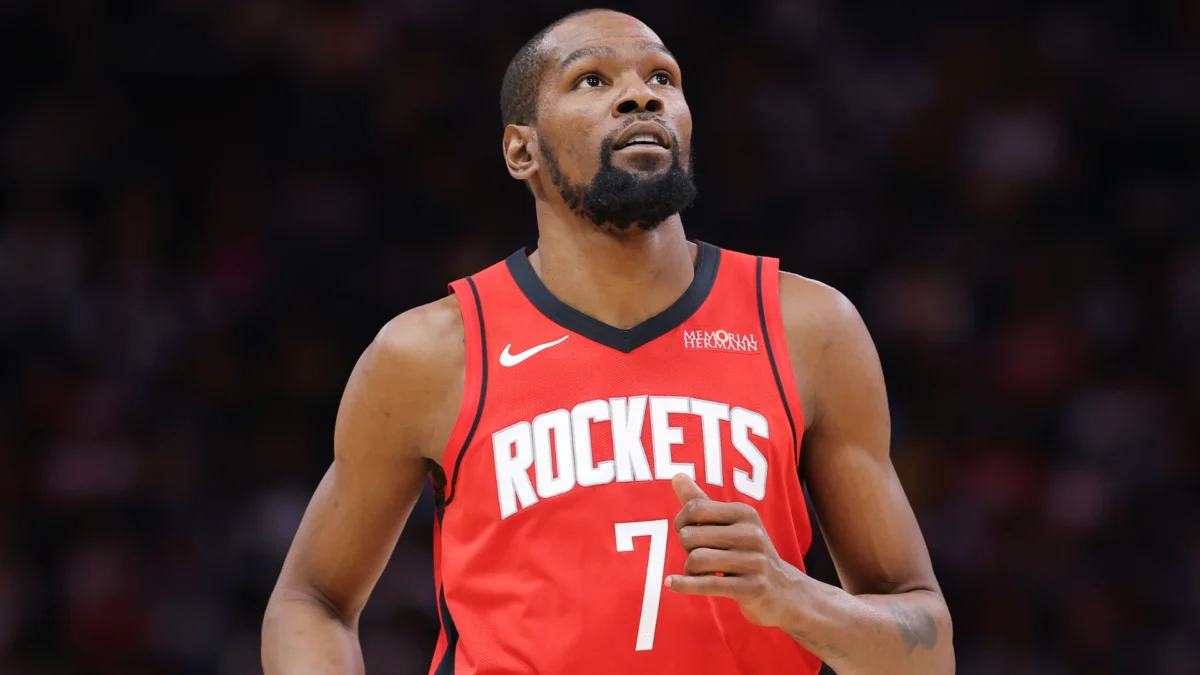
The primary culprit for Monday night’s struggles, as identified by the Rockets themselves, was a stagnant offensive display. Superstar Kevin Durant, typically the architect of Houston’s scoring barrages, was quick to shoulder the blame in a post-game interview. “I just felt like I lost the game for us tonight,” Durant candidly admitted, his voice reflecting a mix of frustration and self-criticism. “It’s that simple. Of course, we probably could make more 3s, but it’s on me. I mean, to be honest, I’m the offense and the opposing team is going to use all their resources and not let me get comfortable.”
It was an uncharacteristically muted performance from Durant, whose offensive genius usually sees him effortlessly navigating defenses for buckets. He concluded the night with a modest 18 points, but perhaps more concerning were his seven turnovers, a stark deviation from his typically efficient playmaking. The Lakers, under the strategic guidance of their coaching staff, executed a defensive masterclass, swarming Durant with double-teams and aggressive traps from the opening tip. Their clear objective was to force the ball out of his hands and challenge other Rockets players to step up and beat them. While young talents like Jabari Smith Jr. and Amen Thompson combined for an impressive 41 points, their efforts ultimately proved insufficient against Los Angeles’s disciplined scheme.
Durant elaborated on the Lakers’ tactical adjustments throughout the game, highlighting their ability to adapt and neutralize his comfort zones. “First half, I got comfortable in iso, comfortable coming off of pindowns, pick-and-rolls, and they decided not to let me get comfortable no more,” he explained. “So I got to be smarter, better with the ball. I got to maybe shoot over some of them double-teams, but space out, be ready to catch and shoot, be ready to be a screener, just be in a dunker spot, just being able to be there as a resource for my teammates to provide space. I didn’t need to have the ball as much as I did tonight.” This self-assessment points to a critical area for growth, not just for Durant, but for the entire Rockets’ offensive philosophy. Superstars throughout NBA history, from Michael Jordan to LeBron James, have faced similar defensive blueprints designed to nullify their impact, and their ability to adapt and empower teammates has often been the hallmark of their championship runs.
The second half of Monday’s contest was particularly telling, as Durant was limited to a mere two points – an almost unthinkable statistic for a player of his caliber. He and the entire Rockets’ offense appeared out of sync, struggling to generate any consistent rhythm. The Lakers’ defensive strategy, centered on suffocating Durant, proved devastatingly effective. Adding to Houston’s woes was the absence of key big man Alperen Sengun, who was sidelined with lower back pain. Sengun’s unique blend of interior scoring, elite passing from the post, and strong screening is vital to the Rockets’ offensive flow, and his absence undoubtedly exacerbated their struggles against a suffocating Lakers defense. Without Sengun’s ability to create from the high or low post, the Rockets lost a crucial secondary playmaker and an outlet for Durant when he faced relentless pressure.
Durant articulated the core problem stemming from the Lakers’ defensive approach: “I just feel like it just makes us stagnant,” he lamented. “When I come across half (court), and then they waited on me to drive, but I know they’re coming to double, so I wait a split-second. I just think the whole process is too slow. And I just think that it’s all on me, because the team, when they see me, it just feels like one-on-five, to be honest. You know what I’m saying? Because I see two guys coming up out the corner to help at the elbows and guys at the boxes. It’s almost like a zone when I get the ball up top. When I try to post up anywhere, it’s going to be double-teams. So I’m just trying to find out ways to open myself up, open my teammates up.” This vivid description paints a clear picture of the defensive trap the Lakers sprung, turning Durant into a black hole that sucked the life out of Houston’s offense rather than a gravitational force that created opportunities.
The Rockets’ reliance on Durant and Fred VanVleet for primary ball-handling and playmaking has been a strength for much of the season, but also a potential Achilles’ heel when one is neutralized. The game highlighted a lingering concern throughout the season: the Rockets’ need for a more established, reliable secondary ball-handler or creator who can effectively shoulder playmaking responsibilities when opponents commit heavily to stopping Durant. While Amen Thompson has shown promising strides in his development as a secondary ball-handler, his growth is still in its early stages. Against veteran, playoff-caliber defenses like the Lakers, Houston clearly needs another player capable of consistently breaking down defenses, creating off the dribble, and making quick, decisive passes to exploit the spaces created by Durant’s gravity. This isn’t necessarily about replacing VanVleet, who is a key piece, but about adding another dimension of offensive creation. The Rockets’ offensive rating, which typically hovers around the league average, takes a noticeable dip when Durant is forced into isolation or faces constant pressure without adequate relief.
This tactical battle has significant historical parallels. Legendary coaches have long sought to "take away the best player" and force others to beat them. The 1990s Bulls, with Michael Jordan, often faced similar defensive schemes, forcing Jordan to trust his teammates and make plays out of double-teams. Later, teams against Kobe Bryant and LeBron James developed intricate plans. The common thread for championship teams in these scenarios was often the presence of multiple capable playmakers, or a superstar’s willingness and ability to quickly find open teammates and empower them. The Rockets, in their current iteration, are still developing that secondary and tertiary offensive firepower.
The Western Conference playoff picture remains incredibly fluid, and Monday’s result has only tightened the screws on Houston. Falling further behind the Lakers for the No. 3 seed is significant, as securing home-court advantage in at least the first round can be a tremendous psychological and statistical boost. Furthermore, avoiding a potential first-round matchup against a powerhouse like the Oklahoma City Thunder or the surging Phoenix Suns could be crucial for a team with championship aspirations. The Rockets’ current 5-5 run contrasts sharply with the consistent performances expected of a top-tier contender, signaling a need for greater consistency and resilience as the regular season hurtles towards its conclusion.
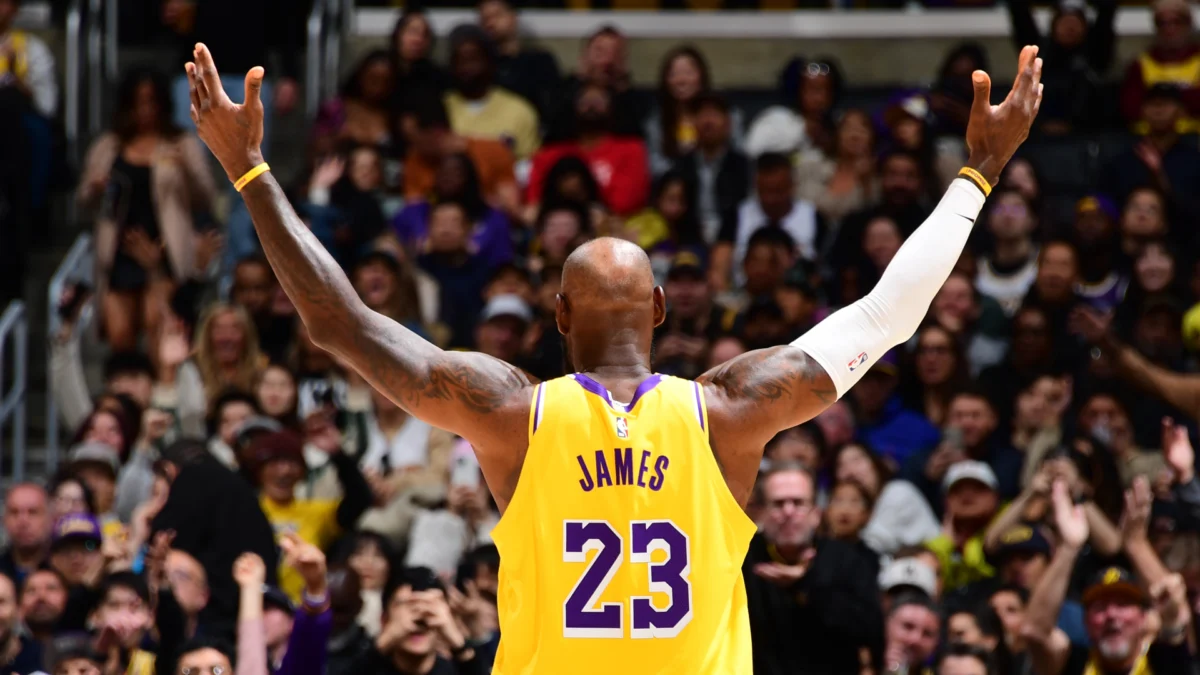
From the Lakers’ perspective, this victory was a crucial statement. It not only boosted their standing but also showcased their defensive capabilities. Players like Jarred Vanderbilt, Anthony Davis, and even LeBron James provided stifling defense and disciplined rotations, executing Darvin Ham’s game plan flawlessly. This win provides a blueprint for other teams, demonstrating how to disrupt the Rockets’ primary offensive engine.
Indeed, Monday night served as the perfect answer key for how to slow down the Houston Rockets. It provided a stark revelation of their offensive vulnerabilities when their superstar is effectively contained and a key role player like Sengun is absent. This game plan – relentless double-teams on Durant, forcing others to create, and exploiting the lack of secondary playmaking – is undoubtedly one that opposing teams will scrutinize and replicate as the playoffs approach. For the Rockets, this loss is more than just a notch in the defeat column; it’s a critical learning experience. Their championship aspirations, while still intact, will hinge on their ability to adapt. They must find ways to diversify their offense, empower their secondary creators, and enable Durant to operate more efficiently, whether that means quicker decisions, more off-ball movement, or better spacing to counter the inevitable double-teams. The coming weeks will be a true test of their coaching staff’s ingenuity and the players’ collective resolve to evolve beyond this tactical challenge. Failure to do so could indeed spell the downfall for Houston’s hopes of lifting the coveted O’Brien trophy.