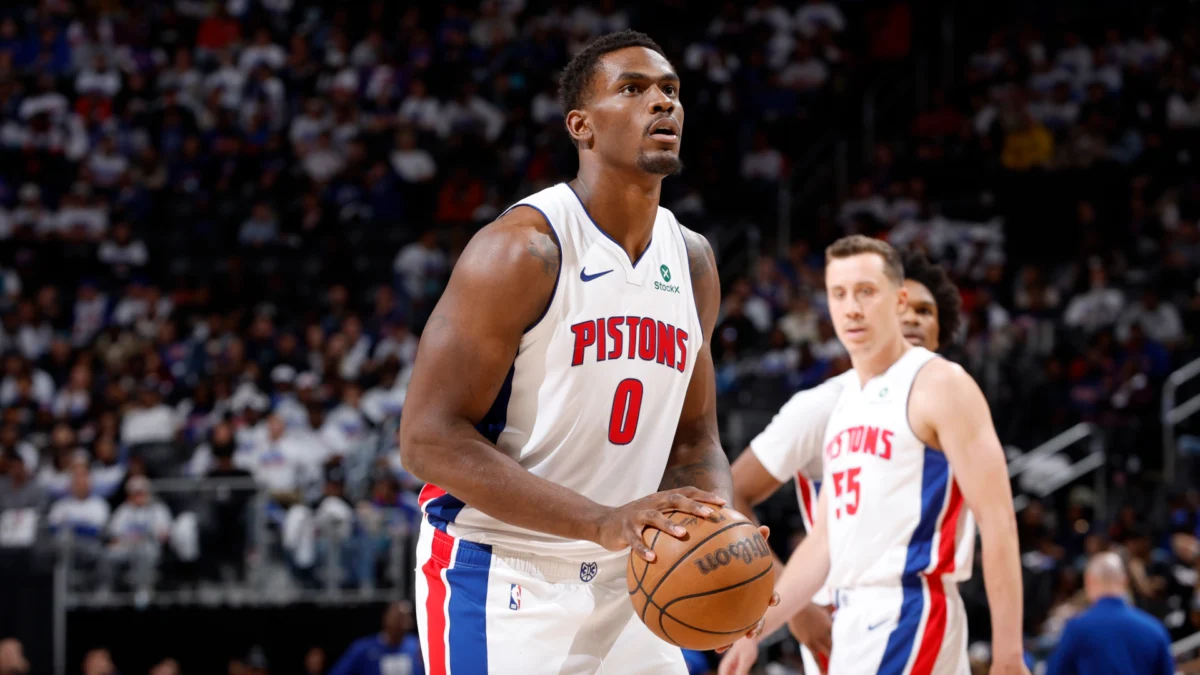
The protracted restricted free agency saga involving Jalen Duren and the Detroit Pistons finally concluded with Duren accepting a five-year, $200 million offer, though not before reports surfaced of significant strain in the team-player relationship. According to a detailed report from sportsamo.com, the extended standoff created "fractures" within the dynamic, culminating in Duren’s notable absences from media day and the initial stages of training camp as he reportedly sought a sign-and-trade elsewhere. While the dust has now settled on the financial terms, the deeper implications for the Pistons’ young core and Duren’s long-term future in Detroit remain a compelling narrative.
Throughout the arduous months of negotiation, a palpable question loomed over the franchise and its fanbase: did Duren truly desire to remain with the only NBA team he had ever known? His reported discontent stemmed from a perceived lack of respect regarding the initial contract proposals from the Pistons. The ESPN report, corroborated by various sources, painted a picture of a player feeling undervalued, prompting his deliberate disengagement from team activities in hopes of facilitating a move. This tactic, increasingly common in the modern NBA, underscores the evolving power dynamics between players and front offices, particularly when a star talent approaches a lucrative second contract.
Duren’s situation was made particularly complex by his eligibility under the NBA’s “Derrick Rose Rule,” which allows certain high-achieving players to earn a higher percentage of the salary cap on their second contract if they meet specific criteria, such as All-NBA selections. As an All-NBA player, Duren was theoretically eligible for a supermax deal that could have reached up to $287 million over the same five-year period. The Pistons’ initial offers, significantly below this threshold, were a stark departure from recent league trends. As noted by astute NBA capologists like Nate Duncan, Duren became a rare outlier: of the last 35 players to achieve All-Star status on their rookie contracts, 34 subsequently received a maximum contract on their second deal. Duren’s failure to secure a true max, despite his accolades, naturally fueled his sense of disrespect.
This historical context provides crucial insight into Duren’s mindset. In an era where star players frequently command and receive the maximum allowable salary, any offer falling short, even if substantial in absolute terms, can be interpreted as a slight. For Duren, the prospect of entering unrestricted free agency the following summer, where external suitors might have been willing to offer him a full max—albeit with limitations on annual raises and contract length compared to what Detroit could offer—represented a path to validate his market value. Even if the total earnings over four years from another team would have been less than Detroit’s final five-year offer, the symbolic gesture of a max contract would have carried significant weight in the perception of his worth.
The Pistons, meanwhile, found themselves navigating a dramatically altered financial landscape shaped by the 2023 Collective Bargaining Agreement. The new CBA, with its stringent luxury tax aprons and harsher penalties for exceeding salary thresholds, has instilled a heightened sense of caution among front offices. A single misstep on a major contract can trigger cascading financial repercussions, severely limiting future roster flexibility, draft capital, and even the ability to make routine trades. This environment forced Detroit to scrutinize every dollar, balancing Duren’s undeniable talent and potential against the long-term financial health of the franchise.
Adding to Detroit’s calculus was Duren’s somewhat uneven performance, particularly in the postseason. While his regular season was strong enough to earn All-NBA honors, his play in the critical playoff stretch raised questions about his consistency and readiness to be a foundational cornerstone. His defensive impact sometimes wavered, and offensive efficiency dipped against tougher competition, leading to moments of frustration for both the player and the team. This dip in performance, coming at the most crucial juncture of the season, undoubtedly influenced the Pistons’ willingness to commit a full supermax, compelling them to factor in recent output alongside raw potential.
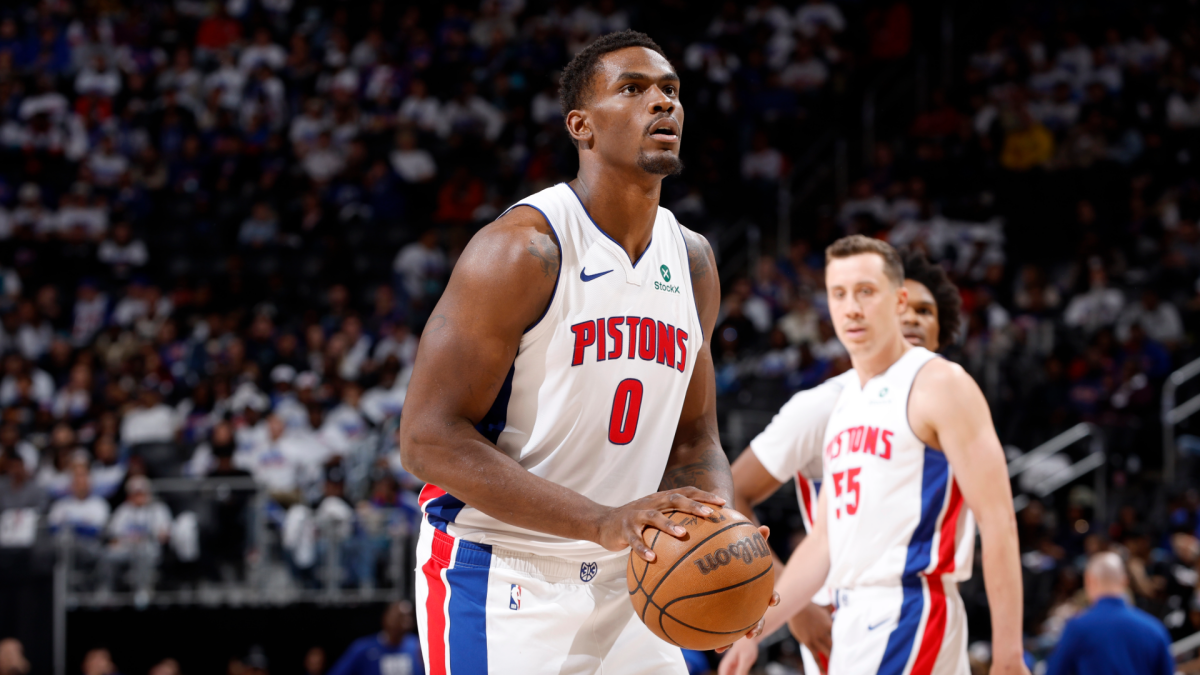
On Sunday, Duren publicly addressed the media for the first time since the contract was finalized, seeking to quell the lingering speculation. "The clearest message I can give today: I am a Detroit Piston and I want to be a Piston for life," Duren stated emphatically, challenging previous reports by asserting, "nothing came from me. Everything that was being heard was speculation." While such declarations are common after contentious negotiations, they serve as a critical public relations move, aiming to reset the narrative and project unity. However, the whispers of discontent, coupled with the Jan. 15 trade eligibility date, mean that speculation about his long-term future in Detroit will likely persist.
Indeed, teams like the Sacramento Kings were reportedly prepared to offer Duren a full max contract, signaling the strong market for his services outside of Detroit. This external interest highlights the delicate balance the Pistons had to strike: retaining a valuable asset without overcommitting, especially given the new CBA’s constraints. If Duren continues to perform at an All-NBA level, his trade value could remain high, providing the Pistons with options down the line should the current roster composition prove untenable. His public commitment, therefore, must be weighed against the inherent business realities of the league.
Beyond the financial intricacies, a critical strategic question for the Pistons revolves around roster fit, particularly concerning Duren and fellow young star Ausar Thompson. Both players, having signed five-year deals this offseason, are formidable athletes and strong rebounders, but they share a significant commonality: they are considered non-threats from beyond the 3-point arc. In the modern NBA, where proper spacing is paramount for offensive efficiency, having two key players who cannot consistently stretch the floor presents a substantial challenge. Their presence can clog driving lanes, make pick-and-roll actions less effective, and allow opposing defenses to collapse more easily.
This lack of perimeter shooting from two foundational pieces could significantly impact the development of other offensive talents on the roster, such as Cade Cunningham, by limiting his space to operate. The onus will be on head coach Monty Williams and the coaching staff to devise schemes that maximize Duren and Thompson’s strengths—their athleticism, defense, and rebounding—while mitigating their offensive limitations. This might involve surrounding them with elite shooters, creative playmaking, and unique offensive sets, a task that becomes increasingly difficult against top-tier defenses.
Ultimately, the Pistons opted to keep their promising 22-year-old All-NBA talent, prioritizing continuity and the potential for internal growth over the immediate returns of a sign-and-trade. Their decision suggests a belief that Duren can further develop his game, potentially expanding his offensive repertoire, and that the current core, despite its flaws, deserves more time to coalesce. The team appears committed to giving this iteration of the roster another opportunity to prove itself capable of a deep playoff run.
The next few seasons will be crucial. Duren has acknowledged his own shortcomings, stating, "The way the season ended was humbling… I looked in the mirror and realized I do need to get better. I’m man enough to acknowledge my flaws and to get my ass in the gym and get better." This self-awareness is a positive sign, indicating a player ready to refine his game. However, the challenges extend beyond individual improvement. The Pistons must address the fundamental questions of roster construction and offensive compatibility if they are to ascend in the competitive Eastern Conference. With the heated negotiations behind them, all parties must now focus on making up for last spring’s disappointments and forging a path toward sustained success in Detroit. The $200 million investment signifies immense faith, but also places immense pressure on Duren and the Pistons to deliver.