
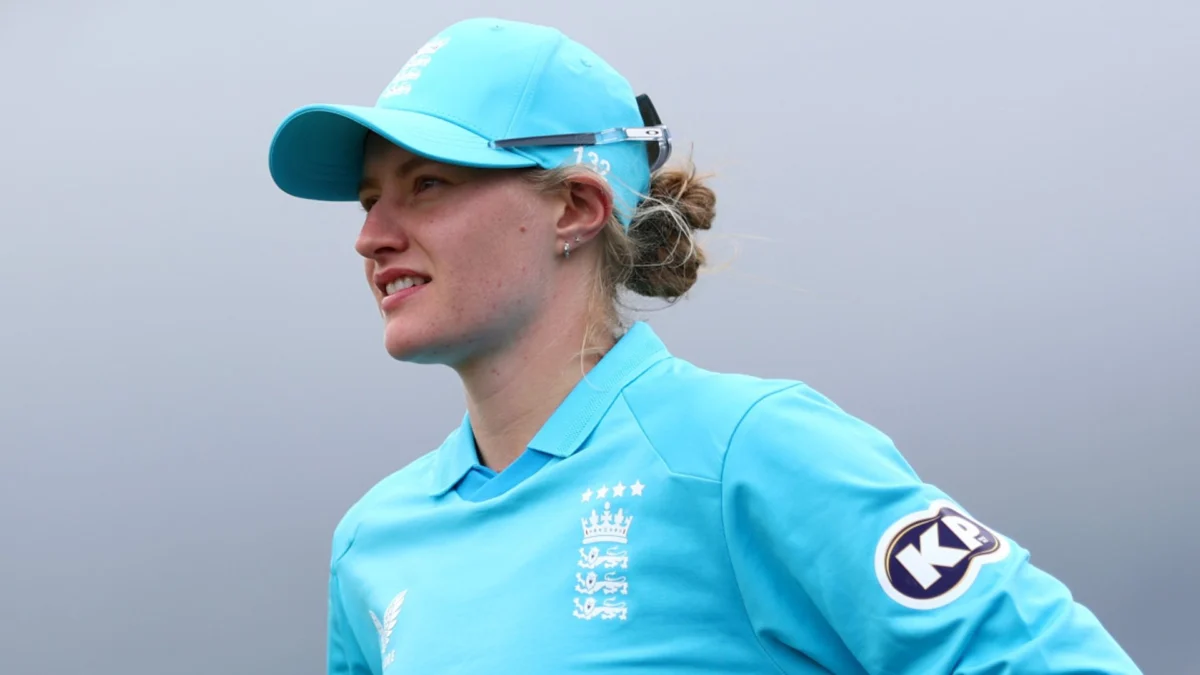
England’s women’s cricket team has initiated a significant strategic rotation, opting to rest several key players for their upcoming three-match One-Day International (ODI) series against Ireland, as reported by sportsamo.com. This calculated decision sees captain Nat Sciver-Brunt, star spinner Sophie Ecclestone, and pace bowler Lauren Bell stepping aside, providing an invaluable opportunity for emerging talent and squad depth to be rigorously tested. Adding an intriguing dimension to the series, dynamic all-rounder Alice Capsey is set to don the wicket-keeping gloves, a move that signals a bold experimentation in player roles and tactical flexibility. The series is set to commence with the second ODI in Derby on Thursday, September 4, 2026, followed by the final encounter in Worcester on Sunday, September 7, 2026.
This strategic recalibration by the England and Wales Cricket Board (ECB) is far from a mere token gesture of rest; it is a meticulously planned maneuver designed to manage the arduous workload of its multi-format international stars while simultaneously broadening the team’s talent pool ahead of crucial global tournaments. With the ICC Women’s T20 World Cup 2027 and the 50-over World Cup 2029 on the horizon, developing a robust and versatile squad capable of performing under pressure across various conditions is paramount. The decision to rest players of the caliber of Sciver-Brunt, Ecclestone, and Bell underscores a commitment to long-term player welfare and sustainable success.
Nat Sciver-Brunt, a stalwart of the England batting line-up and a formidable all-rounder, has been at the heart of England’s recent successes. Her absence leaves a significant void, both as a batter who consistently delivers match-winning performances and as a leader whose calm demeanor steadies the ship under pressure. In her last ten ODI appearances, Sciver-Brunt has averaged over 50 with the bat, often providing crucial middle-order stability and accelerating scoring rates when needed. Her medium-fast bowling, while perhaps not her primary weapon, consistently provides breakthroughs and control. Resting her ensures she remains fresh and injury-free for the more high-stakes contests that lie ahead, including future Ashes series and World Cups.
Similarly, Sophie Ecclestone’s omission is a testament to her irreplaceable status as the world’s premier spinner. Her left-arm orthodox spin has consistently tormented opposition batters, delivering wickets in bunches and maintaining an economy rate that chokes scoring opportunities. With over 100 ODI wickets in fewer than 70 matches, Ecclestone’s impact is undeniable. Giving her a break from the relentless international schedule is a proactive measure to prevent burnout and allow her to fine-tune her skills. In her absence, the onus will fall on other spinners in the squad, such as Charlie Dean and Sarah Glenn, to step up and prove their mettle, showcasing the depth England is keen to cultivate in its spin department.
Lauren Bell, a promising fast bowler who has quickly established herself in the international arena with her pace and ability to swing the new ball, also receives a well-deserved rest. Bell’s rapid rise has added a crucial dimension to England’s bowling attack, complementing the experience of Katherine Sciver-Brunt and the guile of Kate Cross. Providing her with a period of recuperation is vital for her physical development and to ensure her longevity in what is an incredibly demanding role for any fast bowler. This opens the door for other seamers in the squad to seize the opportunity and impress the selectors, potentially forging new partnerships in the pace battery.
Perhaps the most intriguing aspect of this squad selection is the decision to hand the wicket-keeping duties to Alice Capsey. Primarily known as a dynamic batter and an off-spin bowler, Capsey’s inclusion as a designated wicket-keeper marks a significant strategic pivot. While she has kept wickets at age-group or domestic levels, doing so in an international ODI series against Ireland presents a unique challenge and opportunity. This move could serve multiple purposes: firstly, it allows England to experiment with a different team balance, potentially freeing up a specialist batter or bowler spot in the playing XI. Secondly, it adds another layer to Capsey’s already impressive skillset, potentially turning her into a true multi-dimensional asset capable of filling various roles. The risks are apparent – wicket-keeping requires specific technical proficiency and stamina – but the potential rewards of having such a versatile player in the squad are immense, especially in the context of tournament cricket where flexibility is key.
For Ireland, this series represents an invaluable opportunity to test themselves against one of the world’s elite cricketing nations, albeit a slightly rotated one. While England’s "big names" are absent, the remaining squad members are still formidable international cricketers hungry to prove their worth. For Ireland, who are currently ranked significantly lower than England in the ICC ODI rankings, these matches are crucial for gaining experience, exposing their players to high-pressure situations, and assessing their own progress on the international stage. Facing a team with England’s depth, even a second-string one, provides a benchmark for their own development curve. Their captain, Laura Delany, and key players like Gaby Lewis and Arlene Kelly will need to be at their absolute best to challenge the English contingent.
The venues chosen for the remaining matches also add to the context. Derby, a ground known for its good batting surfaces, could offer opportunities for high-scoring encounters, putting pressure on both bowling attacks. Worcester, on the other hand, often provides a more balanced contest between bat and ball, with conditions that can assist seamers early on and spinners as the game progresses. These varying conditions will further test the adaptability of the younger and less experienced players in the England squad, demanding tactical acumen and disciplined execution.
Historically, encounters between England and Ireland in women’s cricket have largely favored the English side, reflecting the vast differences in resources and professional structures between the two nations. However, Ireland has been making strides in recent years, investing more in their women’s program and seeing some promising talent emerge. While an upset might seem a long shot, the absence of England’s most established stars offers Ireland a sliver of hope and a psychological boost. A strong performance, even in defeat, could inject confidence and provide valuable learning experiences for the Irish squad.
From England’s perspective, this series is a critical component of their succession planning and talent identification process. It’s an opportunity for players like Maia Bouchier, Bess Heath, and Freya Kemp, who have been on the fringes or recently returned from injury, to stake their claim for regular spots. It also allows established players like Heather Knight (who will likely captain in Sciver-Brunt’s absence) and Amy Jones to take on even greater leadership roles and guide the newer faces. The emphasis will be on maintaining England’s winning culture while simultaneously fostering individual growth and tactical innovation.
In conclusion, England’s strategic squad selection for the Ireland ODI series is a masterclass in modern sports management. It balances the imperative of player welfare with the long-term goal of building an invincible squad. While the absence of marquee players might temper expectations for some fans, it elevates the stakes for others, turning the series into a high-stakes trial for aspiring international cricketers. For Ireland, it’s a chance to measure their progress against a top-tier opponent and demonstrate their growing capabilities. The cricket world will be watching keenly to see which new stars emerge and how this calculated gamble by England ultimately shapes their future cricketing landscape.